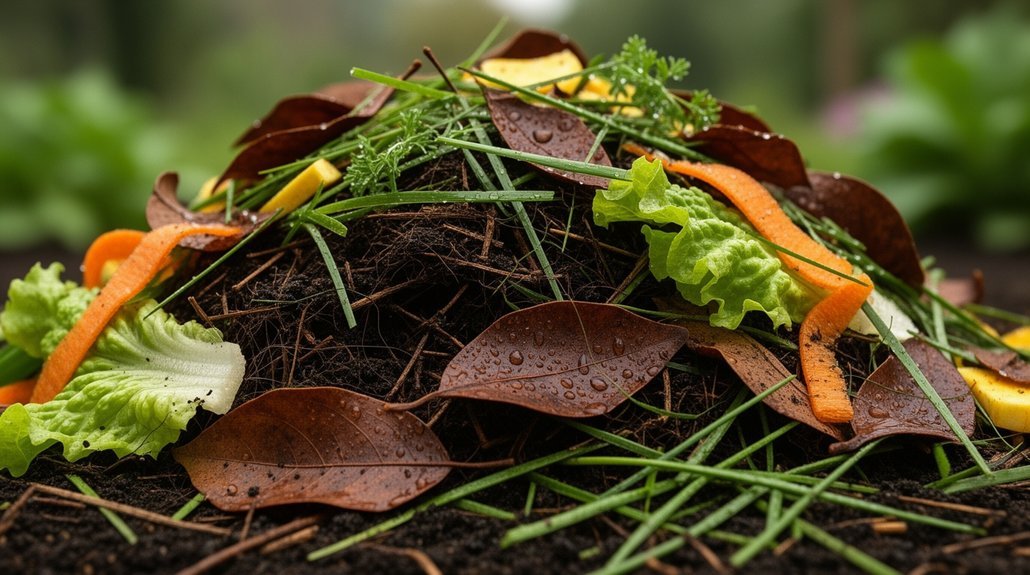
Aim for about three parts carbon‑rich browns to one part nitrogen‑rich greens by volume. This 3:1 mix—think three handfuls of shredded newspaper, dry leaves, or straw for every handful of kitchen scraps, grass clippings, or garden trimmings—keeps the pile hot, aerated, and odor‑free. Adjust if it’s too green by adding dry browns, and if it’s too brown by tossing in moist, nitrogen‑dense greens and a splash of water. You’ll discover more tricks for fine‑tuning the balance as you go.
3:1 Brown‑to‑Green Ratio: Basics

Ever wondered why most home‑compost guides swear by a 3:1 brown‑to‑green mix? You’ll find that three buckets of carbon‑rich browns—dry leaves, straw, cardboard, shredded paper—paired with one bucket of nitrogen‑rich greens—food scraps, grass clippings, fresh plant trimmings—forms a practical starting point. The rule is expressed by volume, not weight, because densities vary and bucket measurements are quick. Most guides place 3:1 in the middle of a 2:1‑to‑4:1 range, labeling it “ideal” for backyard piles. It’s a flexible shortcut that approximates a 20:1‑30:1 carbon‑to‑nitrogen target, though exact chemistry depends on your specific feedstocks. Small deviations are fine; you’ll adjust based on moisture, size, and how the pile looks and smells. Adding the right balance of browns and greens helps maintain optimal moisture and heat levels. For those with limited space, bokashi systems offer an alternative composting method that handles all food waste including meat and dairy, which traditional compost ratios cannot easily accommodate.
Why the 3:1 Ratio Matters for Heat and Odor
When you keep a 3:1 brown‑to‑green mix, microbes get the carbon and nitrogen they need to multiply fast, so the pile heats up quickly.
That balanced activity also stops excess nitrogen from turning into ammonia, keeping the odor earthy instead of sour.
In short, the ratio fuels heat while blocking the smells that signal an out‑of‑balance compost. For additional odor control, consider using activated carbon filters designed for composting applications.
Adding a layer of coarse wood chips helps improve airflow and prevent compaction, which is essential for maintaining the optimal aeration throughout the pile.
Boosts Microbial Activity
A 3:1 brown‑to‑green mix gives your microbes the carbon‑nitrogen balance they need to multiply quickly, which fuels both heat production and odor control. By hitting the ~30:1 C:N target, you let microbes grow faster, turning waste into heat and breaking down organics efficiently. The extra browns create air pockets, keeping aerobic microbes thriving, while greens supply moisture without drowning the pile. This balance pushes the pile into thermophilic temperatures, accelerating decomposition and stabilizing odor. Small tweaks—like chopping material or turning the heap—keep the environment advantageous for microbial vigor. For additional odor management in enclosed composting systems, consider using activated carbon filters to capture remaining odors.
- Carbon source fuels energy, nitrogen builds proteins.
- Dry browns add structure, preventing compaction.
- Aerobic microbes thrive with good airflow, generating heat.
- Greens provide moisture; browns absorb excess water.
- Frequent turning maintains balance and boosts activity. Browns provide bulk and allow air to filter through the pile.
Prevents Ammonia Smell
Why does the 3:1 brown‑to‑green mix keep your compost from stinking? Because the extra carbon from browns dilutes nitrogen, preventing excess ammonia from off‑gassing. When you add dry leaves, straw, or shredded cardboard, you create air pockets that let heat rise without the pile turning slimy. A balanced pile stays warm, moist, and earthy, while a green‑heavy mix smells sharp and unpleasant. Turning the pile mixes the browns and greens, spreading microbes evenly and cutting off concentrated ammonia pockets. For bokashi composting systems, anaerobic conditions and fermentation rely on proper material layering to maintain odor control and efficient decomposition.
Adjusting Browns: Handling Very Absorbent or Dry Materials

You’ll notice that highly absorbent browns like shredded cardboard need far fewer scoops than you’d normally use, while dry browns demand extra moisture or wetter greens.
Adjust the pile by feeling for a damp‑like‑a‑wrung‑out‑sponge texture, adding more dry material when it feels too soggy and more water or greens when it’s bone‑dry. Maintaining proper moisture control features in your compost system helps prevent pest problems while supporting beneficial microbial activity.
This tactile balance lets you fine‑tune the brown‑to‑green ratio for any material type.
Ideal ratio guidance recommends aiming for at least twice as much brown material as green material.
So Absorbent Browns: Reduce Quantity
Ever wonder why a pile packed with cardboard or shredded newspaper suddenly goes cold and sluggish? Those highly absorbent browns soak up moisture fast, so they can dominate the carbon side and stall microbial activity. When you add too much, the pile stays cool, dry, and slow to heat up, especially if the greens are already damp. The trick is to cut the brown amount below the usual 2:1–4:1 ratio and distribute it in small, chopped batches. Keep an eye on texture—if the surface feels dry while the core is still damp, you’ve likely over‑added. Incorporating bokashi bran can help absorb excess liquid and restore balance to an overly carbon-heavy pile.
- Use a handful of shredded paper instead of a full layer.
- Add absorbent browns gradually, mixing each addition with greens.
- Chop or crush browns to increase surface area and reduce volume needed.
- Balance with extra greens if the pile feels too carbon‑heavy.
- Monitor temperature; a cold pile signals excess browns.
Correct ratio helps maintain microbial activity.
Dry Browns: Add Moisture Layers
How do you keep a compost pile from drying out when the browns are bone‑dry? First, mist the dry layer—leaves, straw, shredded cardboard—just before you add it. A quick spray lets the material soak up water, preventing dust and creating a sponge that will later draw moisture from the greens. Then, place a thin, wet green layer on top; the browns will absorb excess liquid, spreading it evenly and keeping the pile aerated. If you’re using highly absorbent browns like sawdust or wood pellets, add them in small, repeated batches rather than a thick mat. Turn the pile after each addition to mix moisture, break up clumps, and maintain airflow. Watch for a brittle texture or stalled heating—those signs mean you need to add a little more water to the dry sections. Quality coir materials exhibit exceptional water-holding capacity, allowing absorption of several times their weight in water, making them ideal alternatives when traditional browns become too dry. A balanced C:N ratio helps prevent the pile from becoming too dry or too wet.
Balance Moisture: Adjust By Feel
Wondering how to keep your compost from turning into a dry, crumbly mess when you add super‑absorbent browns? You’ll feel the right balance, not count ratios. A wrung‑out sponge feel tells you the pile is moist enough; too dry means you need more greens or a splash of water, too wet calls for extra absorbent browns and a turn.
Mix dry leaves, shredded cardboard, or paper throughout rather than layering; crush them to increase surface area and speed rehydration. Test by squeezing a handful—if a few drops escape, you’re on target. For smaller-scale composting, compostable bag liners can help contain kitchen scraps before adding them to your pile. Adjust by feel each time you add a batch, and the pile will stay airy, active, and odor‑free.
- Squeeze test: a few drops = ideal moisture
- Crush or shred dry browns for quicker absorption
- Mix greens and browns in a bucket before adding to the pile
- Add absorbent browns when the pile feels soggy or slimy
- Turn regularly to distribute moisture evenly
Understanding the C:N ratio helps you avoid over‑loading the pile with nitrogen‑rich greens.
How Different Green Materials Affect Your Brown‑to‑Green Compost Ratio?

What makes a compost pile thrive or falter is the nitrogen level of the greens you add, and not all “green” materials are created equal. Fresh grass clippings are nitrogen powerhouses; a thin layer can push the pile “too green,” making it wet, dense, and smelly unless you add extra browns. In contrast, leafy garden trimmings, weeds before seeding, and fresh plant cuttings sit near the ideal C:N range, demanding fewer corrective browns. Some “greens” still contain substantial carbon, so their effective nitrogen contribution drops. Consequently, the denser the nitrogen source, the higher the brown‑to‑green ratio you’ll need. Observe temperature, odor, and moisture rather than relying solely on volume. For additional odor management, consider using compostable bags to contain food scraps before adding them to your main compost pile, which can help regulate moisture and smell in your composting system.
Balancing High‑Nitrogen Sources (Manure, Kitchen Scraps)
Ever wondered why a pile heavy with fresh manure or kitchen scraps can turn soggy and stinky? High‑nitrogen sources dump moisture and ammonia, so you must counterbalance them with dry carbon. Aim for roughly three parts browns to one part greens when manure or kitchen waste dominates. If you’re using especially wet or nitrogen‑dense material like poultry manure, add extra browns to keep the mix airy and damp‑like a wrung‑out sponge. Layer or mix scraps with leaves, straw, or shredded paper to absorb excess liquid and prevent compaction. Regularly turn the pile to maintain airflow and avoid surface overactivity.
- Use 3:1 browns‑to‑greens as a starting point.
- Add more browns for poultry or heavily wet scraps.
- Incorporate dry carbon (leaves, straw, paper) to soak up moisture.
- Keep the pile damp, not soggy, and turn it often.
- Watch for ammonia smell; increase browns if it appears.
Fresh poultry manure has a 7:1 green‑to‑brown ratio, making it especially nitrogen‑rich.
Quick Fixes for Too‑Green or Too‑Brown Piles

Is your compost pile turning into a soggy, smelly mess or a dry, lifeless heap? If it’s too green, sprinkle dry browns—shredded cardboard, leaves, straw, or paper—about twice the volume of the sticky material. Then pitchfork it, loosening compacted spots to restore airflow and cut odor. If it’s too brown, toss in nitrogen‑rich greens like grass clippings, kitchen scraps, or fresh garden waste. Add water gradually until the mix feels like a wrung‑out sponge, not a dry dust cloud. Mix greens into the pile’s core rather than just layering on top to jump‑start microbes. In both cases, turn the pile after each amendment to keep oxygen flowing and the balance steady. For smaller indoor compost systems, mini trowels can help efficiently mix and turn amendments throughout your pile. Moisture must be monitored regularly to prevent anaerobic conditions.
DIY Tools to Track and Fine‑Tune Your Compost Ratio
Curious how to keep your compost on track without guessing? You can use a few DIY tools to monitor moisture, temperature, and balance, letting you tweak the brown‑to‑green ratio with confidence. A low‑cost moisture meter tells you if a “ratio problem” is really a water issue, while a long‑probe thermometer shows internal heat and microbial activity. Smart compost monitors combine carbon‑nitrogen, moisture, and temperature data, syncing to your phone for trend analysis. Finally, a sturdy pitchfork or hand tiller ensures even mixing, spreading greens and browns uniformly. Adding a compost thermometer helps you know when the pile has cooled enough for turning, ensuring consistent heat retention.
DIY tools keep compost balanced—moisture meter, long‑probe thermometer, smart monitor, pitchfork, and hand tiller.
- Soil moisture meter for quick water checks
- Long‑probe compost thermometer for internal heat
- Multi‑function smart monitor with phone app
- Pitchfork for thorough turning and blending
- Hand tiller for tall bins and ergonomic mixing
Frequently Asked Questions
Can I Use Garden Soil as a Brown Material?
You can use garden soil sparingly, but treat it as a microbial inoculant, not a brown. It adds little carbon, so rely on dry leaves, straw, or shredded paper for the bulk of your browns.
Do I Need to Weigh Browns and Greens for Accuracy?
You don’t have to weigh them; just eyeball a 3:1 brown‑to‑green volume mix, then tweak by watching moisture, odor, and heat. If it’s soggy, add browns; if dry, add greens.
How Often Should I Turn the Pile to Maintain the Ratio?
You should turn the pile every 3‑7 days during the active phase, adjusting to once a week if it stays warm and airy. This keeps oxygen flowing and the brown‑to‑green balance effective.
Will Adding Water Change the Required Brown‑Green Balance?
Adding water won’t alter the carbon‑nitrogen ratio, but it will push you to add more browns to soak up excess moisture and keep aeration, so you maintain a balanced, active compost.
Can Compost Tea Affect the Brown‑To‑Green Proportion?
You can’t let compost tea change the brown‑to‑green proportion; it’s a liquid add‑on that tweaks moisture and microbes, but the solid ratio stays the same unless you adjust the feedstock.
In Summary
Stick to a roughly 3:1 brown‑to‑green mix, but don’t stress over exact numbers. If the pile smells or stays soggy, add more dry browns; if it’s slow to heat up, toss in extra greens. Keep an eye on moisture—think a wrung‑out sponge—and adjust as needed. With a little tweaking, you’ll get fast, odor‑free compost that turns kitchen scraps and yard waste into rich soil in no time.