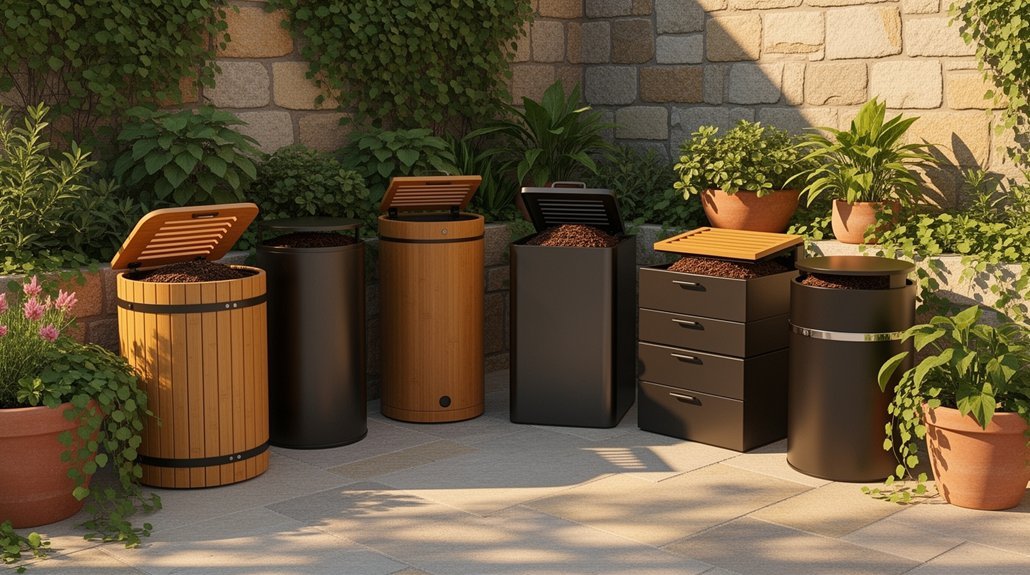

You’ll love how a minimal compost bin fits on a countertop or shelf without crowding your kitchen, and its airtight lid and charcoal filter keep odors locked away. The compact design speeds up microbial activity, so food scraps break down fast, while you can freeze excess waste to avoid pests. You can choose vermiculture or Bokashi for low‑maintenance processing, and use city drop‑off sites when the bin fills up. Keep reading to discover the best bin size and balancing tricks.
Start Composting in Your Apartment in 3 Simple Steps

Ever wondered how to turn kitchen scraps into garden gold without leaving your apartment? First, pick a countertop composting bin that fits indoors and has a charcoal filter to mask odors.
Ever wondered how to turn kitchen scraps into garden gold without leaving your apartment?
Second, adopt a space‑saving method like Bokashi or vermicomposting; both handle dairy and meat (Bokashi) and need only a small container.
Third, freeze any scraps you can’t process right away, then dump them into your bin when you’re ready to start the cycle.
If space runs tight, use city drop‑off sites or neighborhood gardens for the final step.
Choose a low‑maintenance setup—no daily turning or aeration—so you keep the process simple while staying aligned with local composting programs. Two-bin system helps you process new scraps continuously while fermenting, which suits apartment living. This three‑step routine gets you composting bins and apartment composting up and running fast.
Key Benefits of Apartment Composting
After setting up your countertop bin, you’ll quickly see why apartment composting is a game‑changer. You’ll notice less waste heading to the landfill, a fresher kitchen, and a tangible step toward greener living in urban apartments. The bin’s charcoal filter and sealed lid keep odors at bay, while vermicomposting or Bokashi lets you handle dairy and even meat scraps without fuss. You’ll also feel connected to a community of eco‑savvy neighbors who share curbside drop‑off points, making the process seamless and space‑efficient. This approach aligns with compact system options like the Exaco ECO 2000-NP Kitchen Compost Pail and the EAST OAK Dual Chamber for efficient aeration and odor control, which are well-suited for apartment living. odor control
How Compact Bins Turn Scraps Into Soil Quickly

You’ll notice the bin’s airtight lid and charcoal filter keep odors out while its compact shape fits any countertop. Its built‑in airflow channels and moisture‑balancing media accelerate breakdown, turning scraps into usable soil in weeks instead of months. Because you never have to turn or aerate, the system stays low‑maintenance and space‑efficient. The design also leverages a durable stainless steel exterior with rust‑resistant properties, ensuring it stays looking fresh in a small urban kitchen. odor-control
Rapid Decomposition Mechanics
Because the bin is tightly packed, microbial activity heats up, accelerating the breakdown of food scraps into soil far faster than an open pile. In this compact composting system, you balance carbon‑to‑nitrogen at about 30:1 and keep moisture like a wrung‑out sponge, which fuels rapid decomposition. The sealed environment forces microbes to work efficiently, while the tight walls increase surface contact. Red wigglers thrive, turning waste into worm castings, and Bokashi fermentation pre‑processes dairy and meat, cutting the timeline to weeks. Heat‑generated microbes boost enzymatic action. OK Compost Home and other certifications validate disposal and composting standards, strengthening trust in the system. -0
Space‑Saving Design Features
The sealed, micro‑rich environment that speeds up decomposition also lets you fit a compost bin on any countertop without sacrificing space. You’ll notice how a compact countertop bin slides into a narrow kitchen nook, its space‑saving design turning a tiny footprint into a powerful waste‑reduction tool. Charcoal filters and airtight seals lock odors inside, so even a studio apartment stays fresh. Regular maintenance with replaceable charcoal filters helps maintain odor control over time odor control. Lightweight bamboo, stainless steel, or recycled plastic construction makes the bin easy to lift and move when you need to empty it. Low‑maintenance features mean you won’t be turning or aerating constantly, which fits a busy urban lifestyle.
Pairing the bin with municipal or community garden programs lets you divert scraps from landfills and watch nutrient‑rich soil appear quickly.
Choose the Right Bin Size for Apartment Composting
You’ll want a space‑efficient bin that fits your countertop without crowding the kitchen. Pick a capacity that matches the amount of food scraps you generate each week, so you’re not emptying it constantly or overfilling it. Look for models with quiet operation and odor‑control features like charcoal filters and airtight seals to keep your apartment fresh. The Stonespace option offers adaptable mounting, which can maximize space in tight kitchens space-saving design.
Space‑Efficient Bin Options
Ever wondered how to fit composting into a tiny apartment? You can keep waste management low‑key by picking a compact countertop bin that seals tightly and uses a charcoal filter to block odors. For even tighter spaces, consider a vermicomposting kit or a Bokashi bucket—both sit on a shelf or balcony and need only a few inches of depth. If you lack room entirely, a community drop‑off or curbside service handles the heavy lifting off‑site, letting you stay green without a permanent bin. A key consideration is choosing models with dual installation options or wall‑mounting capabilities to maximize space efficiency in compact kitchens compact countertops.- Compact countertop bins with airtight lids and charcoal filters
- Vermicomposting units with red wiggler worms and bedding
- Bokashi fermenters that accept dairy and meat before burial
- Off‑site drop‑off or curbside collection for space‑free composting
Capacity Matching Kitchen Waste
How much kitchen waste do you actually generate each week? You’ll want a compost bin capacity that mirrors your kitchen waste output, so the bin never overflows or smells. Estimate the amount of peels, coffee grounds, and leftovers you produce, then choose a bin that holds roughly that volume for a week to two. If you’re on a community program that picks up every other week, a slightly larger bin prevents last‑minute rushes. For tight kitchens, a countertop bin with a charcoal filter can handle modest output while staying odor‑free. Bokashi or vermicomposting systems let you pack more scraps into a compact unit. Freezing leftovers between drops‑offs also stretches capacity and cuts down on pests.
Quiet, Odor‑Control Features
Why settle for a noisy, smelly kitchen when a compact countertop bin can stay quiet and fresh? You’ll notice that a well‑designed bin keeps the kitchen calm while managing odors. Odor control comes from airtight seals and charcoal filters that trap smells before they escape. Non‑porous materials like stainless steel or bamboo composites resist staining and make cleaning a breeze, so the bin remains odor‑free storage. Proper moisture management prevents soggy waste, and tight lids keep pests out, preserving both silence and scent.
- Charcoal or bio‑char filters absorb volatile compounds.
- Airtight silicone gaskets create a sealed environment.
- Stainless steel or bamboo composite walls resist absorption.
- Integrated moisture trays balance wetness and dry material.
Balance Greens & Browns for Fast, Odor‑Free Compost
When you mix green scraps—like kitchen waste and coffee grounds—with plenty of brown materials such as dry leaves, shredded paper, or cardboard, you create the ideal carbon‑nitrogen balance that accelerates decomposition and keeps odors at bay. Aim for roughly one part green to two parts brown; this ratio feeds microbes nitrogen while the carbon‑rich browns absorb excess moisture. Layer a handful of food waste, then cover it with a thin blanket of dry leaves or shredded paper, repeating the pattern each time you add new material.
The brown layer acts like a filter, preventing soggy pockets that could smell. By maintaining airflow through the compact bin, you keep the microbial community active, speeding up breakdown and delivering ready‑to‑use compost faster.
Control Odor With Charcoal Filters, Airtight Lids, and Layering

Ever notice how a simple countertop bin can stay fresh without turning your kitchen into a stinky lab? You can keep odors at bay by combining three tricks: charcoal filters, airtight lids, and smart layering. The filter adsorbs volatile compounds, while the lid locks in air and blocks smells from escaping. Meanwhile, alternating wet scraps with dry browns creates channels for airflow, preventing the mix from turning sour. This trio lets you compost in apartments, shared kitchens, or tiny studios without annoying neighbors or roommates.
Fresh kitchen compost: charcoal filter, airtight lid, dry layers—odor‑free, apartment‑friendly.
- Place a charcoal filter at the bin’s top opening.
- Snap on an airtight lid after each addition.
- Layer a thin sheet of dry leaves or shredded newspaper over fresh scraps.
- Finish with another dry layer before sealing.
Manage Moisture to Keep Your Compost Dry Enough
How do you keep a tiny kitchen compost from turning into a soggy mess? Aim for moisture that feels like a wrung‑out sponge. When the mix gets too wet, toss in dry browns—shredded paper, dried leaves, or cardboard—to soak up excess water and boost airflow. Cover the bin with a snug lid, but leave a vent or open it briefly each day so fresh air circulates and moisture doesn’t stagnate. Layer every handful of green scraps with a thin layer of brown material; this spreads moisture evenly and prevents clumping. If you notice a drip‑y pile, add more dry material right away. By balancing wet and dry inputs, you keep the compost dry enough to avoid odors and pests while still feeding the microbes.
Freezing Food Scraps to Prevent Pests and Odors
You can keep food scraps fresh longer by popping them in the freezer right after you finish cooking. The cold storage stops microbial activity, so odors and pests never get a chance to develop.
When you’re ready to compost, just transfer the frozen bits to your bin or community drop‑off without worrying about flies or rodents.
Freezing Scraps Extends Freshness
Ever wondered why your kitchen smells stay fresh even when you’re busy? Freezing scraps puts microbial activity on pause, so odors don’t creep out while you’re juggling work and errands. The ice barrier also locks in moisture, keeping pests at bay until you’re ready to compost. You can collect a week’s worth of peels, coffee grounds, and veggie trimmings without worrying about a sour scent or critters. When you finally transfer the frozen batch to a larger bin, it thaws and joins the normal decomposition process, extending freshness and cutting the frequency of drop‑off trips.
- Halts microbial growth, preventing odor spikes
- Locks moisture, deterring insects and rodents
- Lets you accumulate more material before composting
- Reduces trips to curbside programs, saving time and effort
Prevent Odors With Cold Storage
Why let kitchen odors linger when a simple freezer can keep them at bay? You can freeze food scraps right after a, halting microbial activity that produces smells and attracts pests. Freezing locks in freshness and eliminates Odors, letting you store scraps in a bag or container without worrying about flies or a stinky kitchen.
This cold‑storage trick works perfectly for apartment dwellers who rely on community compost pickups or curbside services, because you can accumulate frozen scraps until the next collection day. You won’t need to empty a bin daily, and your minimal‑bin setup stays tidy and odor‑free. By decoupling immediate decomposition from the pickup schedule, you keep your living space clean while still contributing to urban composting.
Compare Vermiculture and Bokashi for Low‑Maintenance Composting
What sets vermiculture apart from bokashi is the way each method handles waste and space. You’ll find vermiculture thrives on a small bin with red wiggler worms, shredded paper bedding, and careful moisture control, making it perfect for indoor balconies and apartments.
Bokashi, on the other hand, ferments nearly any kitchen scrap—dairy, meat, citrus—inside an airtight container with bokashi bran, and only needs a few weeks before you bury the fermented material. Both stay low‑maintenance, but vermiculture gives you ready‑to‑use worm castings, while bokashi requires a second finishing step.
- Worms turn waste into nutrient‑rich castings
- Airtight bokashi bins curb odor
- Vermiculture needs temperature monitoring
- Bokashi accepts a wider range of scraps
When to Use City Compost Drop‑Offs?
If you’ve decided that maintaining a worm bin or bokashi system isn’t feasible, city compost drop‑offs give you a hassle‑free way to recycle organic waste. Use them when you lack balcony space, proper ventilation, or the time to turn a bin. They’re ideal for apartment dwellers who generate kitchen scraps but can’t store a container without odor concerns. Schedule a drop‑off after you’ve accumulated a modest batch—usually a few days’ worth—so the load stays manageable for municipal crews. Take advantage of local composting programs that often pair city drop‑offs with free or discounted bins, encouraging regular participation. By depositing your waste at community centers or curbside stations, you cut landfill contributions and support nearby gardens and green spaces.
Weekly Cleaning Routine to Preserve Bin Life
Keeping your compost bin fresh each week is essential for preventing odors, pests, and mold while preserving the microbes that turn scraps into rich soil. Start with a warm‑water rinse, then scrub with a natural cleaner like vinegar or baking soda. Rinse thoroughly, then let the bin air‑dry before the next load. Use biodegradable bags and certified compostable liners to simplify disposal and protect local programs. Avoid harsh chemicals; they kill beneficial microbes and degrade the final product. A consistent cleaning routine keeps the bin hygienic, reduces pest attraction, and prolongs its lifespan in tight urban spaces.
- Warm‑water rinse after each use
- Deep clean with natural cleaners once weekly
- Thoroughly dry to prevent mold
- Use biodegradable bags and compostable liners
Put Finished Compost to Work on Balconies and Rooftops
Ever wondered how a few handfuls of finished compost can transform your balcony or rooftop garden? You can sprinkle it directly into balcony planters, boosting soil structure and moisture retention without extra watering. The nutrient‑rich mix replaces chemical fertilizers, letting herbs, veggies, and ornamental containers thrive in tight urban spaces. When you spread finished compost on rooftop substrates, you close the nutrient loop, turning kitchen scraps into usable soil amendments. Minimal‑bin systems make this recycling effortless, even on small terraces. The result is healthier plant growth, fewer fertilizer runs, and a greener micro‑farm that fits your city lifestyle. Embrace the simplicity and watch your elevated garden flourish.
Frequently Asked Questions
Do Compost Bins Help the Environment?
Yes, you help the environment by diverting food waste from landfills, cutting methane emissions, creating nutrient‑rich soil for gardens, and reducing the need for synthetic fertilizers, all while supporting urban green spaces.
What 14 States Allow Human Composting?
You can legally compost human remains in Colorado, Washington, Oregon, California, Maine, New York, New Mexico, Vermont, Nevada, Massachusetts, Texas, Illinois, Pennsylvania, and Rhode Island.
Are Small Composters Worth It?
Yes, they’re worth it. You’ll slash kitchen waste, cut odors with filters, and feed local gardens—all without a balcony. They’re low‑maintenance, fit any counter, and keep your urban lifestyle greener.
What Are 5 Disadvantages of Composting?
You’ll face limited capacity, frequent emptying, odor risk, slower breakdown from poor airflow, and material restrictions that demand extra steps like freezing meat or using filters.
In Summary
By keeping a compact bin in your apartment, you turn everyday scraps into nutrient‑rich soil without hassle. The right size, balanced greens and browns, and a quick weekly clean keep odors at bay, while vermiculture or bokashi handle the heavy lifting. When the bin’s full, drop it off at a city site or spread it on your balcony garden. You’ll cut waste, boost green spaces, and make urban living greener and easier.