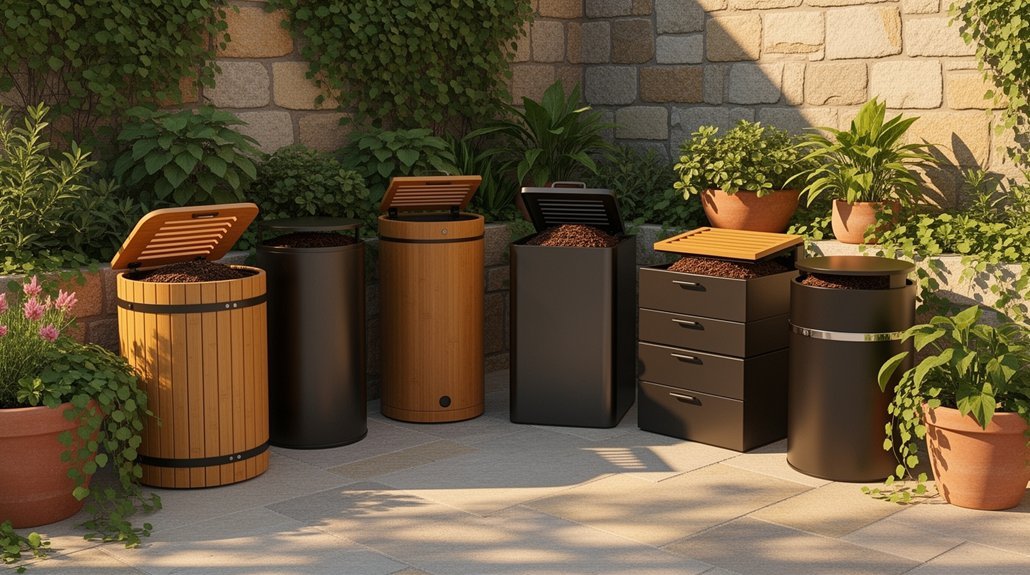

You keep indoor compost odor‑free by sealing a tight‑fit lid that blocks 99 % of smells, storing the bin in a cool, dark spot like under the sink, and balancing greens and browns to about a 25:1 carbon‑to‑nitrogen ratio. Add a one‑inch layer of dry browns on top to absorb moisture and block odors, stir or shake every few days for aeration, and rinse the container weekly. If you follow these steps, the next sections will show you how to troubleshoot fruit flies and compare passive bins, Bokashi, and electric composters.
How to Keep Indoor Composting Odor‑Free With a Tight‑Fit Lid Bin

Ever wonder why your kitchen smells like a trash heap instead of fresh compost? You can fix that by choosing a bin with a tight‑fit lid that seals completely; a secure lid blocks 99 % of odor escape.
Slip the bin into a cool, dark spot—under the sink works great—to keep heat low and slow decomposition.
Never toss meat, dairy, oils, or sauces in; those trigger the worst smells.
After each load, add a thin layer of dry browns like shredded paper or cardboard; this absorbs moisture and starves fruit flies.
If you still notice odor, empty the bin more often—every 4–5 days or weekly—and give it a quick soap‑and‑water wash to wipe out bacterial residue.
This routine keeps your indoor compost fresh‑smelling and mess‑free. Odor-control
Freeze Scraps for Zero‑Odor Indoor Composting
You can keep kitchen waste odor‑free by tossing it into a freezer‑safe container right after you finish cooking. Use a sturdy plastic bin or reusable bag that seals tightly, and avoid compostable bags that can’t handle the cold. When you’re ready to compost, transfer the frozen scraps to your outdoor bin, making sure no thawed moisture stays indoors. Regularly replace the container to maintain a tight seal and minimize any potential odors odor control.
Freezing Scraps Safely
Freezing your kitchen scraps puts the decomposition process on pause, so you can store them without any odor until you’re ready to empty the bin. Choose a dedicated, airtight container or a reusable freezer‑grade bag; regular plastic bags or old Tupperware often leak smells. Avoid freezer‑safe compostable bags—they need heat to break down and won’t keep the scent sealed while frozen. Label the container, then tuck it into your freezer storage area, where the low temperature guarantees odor control for indoor composting. When the bin is full, simply transfer the frozen pile to an outdoor compost bin or drop‑off site; the scraps stay odor‑free until they thaw and decompose outside. This method lets you accumulate scraps for days without compromising a fresh kitchen atmosphere. Urban Worm Coco Coir Soil Amendment and Bedding can be used as a bedding or soil amendment in worm-rearing systems to help maintain moisture balance and aeration in composting setups, supporting healthier worm populations and better bin conditions sustainable material source.
Zero‑Odor Storage Tips
How can you keep kitchen waste completely odor‑free until it reaches the outdoor compost pile? Freeze the scraps right after you generate them. Use a freezer‑safe container or reusable bag—never a regular plastic bag. The freezing step halts microbial activity, giving you instant odor management and moisture control. When you’re ready, transfer the frozen bits to your outdoor bin or drop‑off, then thaw or empty promptly to avoid soggy messes. This method shines for onion skins, fruit peels, and any moisture‑heavy waste that would otherwise stink.
| Tip | Why it works |
|---|---|
| Use airtight freezer bags | Prevents freezer odors from seeping in |
| Label each bag | Keeps track of storage time |
| Pack flat | Saves space and speeds thawing |
| Keep temperature ≤ 0 °C | Guarantees microbial freeze |
| Empty within 2 weeks | Maintains odor‑free storage |
Balance Greens & Browns for a 25:1 C:N Ratio (Odor‑Free)

You’ll want a 25:1 carbon‑to‑nitrogen mix, so start by alternating layers of greens and browns. If the pile feels wet or starts smelling, toss in extra dry browns and check the moisture. Keep turning it regularly to let air in and the balance stay steady. Odor control can be enhanced by using a bin with an airtight lid or built-in charcoal filter system odor control.
Aim for 25:1
Balancing greens and browns to hit a 25:1 carbon‑to‑nitrogen ratio keeps indoor compost odor‑free. You should aim for at least that C:N ratio by weight, mixing carbon‑rich browns with nitrogen‑dense greens. When the pile feels slimy or overly wet, add more browns; they absorb excess moisture and raise the carbon count, nudging the ratio back toward 25:1. Proper aeration is essential—stir or shake the container every few days to introduce oxygen, which keeps the microbes aerobic and suppresses ammonia. Moisture management works hand‑in‑hand: keep the mix damp, not soggy, and adjust with dry material as needed. Maintaining a balance between airflow and moisture helps sustain a steady, odor‑free composting process airflow balance.
Layer Greens, Browns
After keeping the pile’s moisture in check, the next step is to build the compost layer by layer. You’ll want to alternate greens and browns to hit a 25:1 C/N ratio, which is the sweet spot for odor control. Put a thin layer of browns over each batch of greens; the carbon‑rich material soaks up excess liquid and creates air pockets that keep the process aerobic. If you ever notice a sour smell or a slimy texture, add more browns to boost carbon and dry things out.
- Greens supply nitrogen and speed decomposition.
- Browns provide carbon, absorb moisture, and improve aeration.
- Alternating them maintains structure, airflow, and a stable C/N ratio.
Additionally, using labeled, modular storage ideas like those in organized pantry systems can help you keep greens and browns sorted and ready for layering, ensuring consistency in your compost routine organizational efficiency.
Adjust Moisture Regularly
Wondering how to keep your compost from turning sour? You’ll want to check moisture daily and keep the mix at a wrung‑out sponge level. If it feels soggy, sprinkle more browns—dry leaves, shredded paper, cardboard—to boost carbon, soak up excess water, and improve aeration.
When the pile looks dry or sluggish, add greens like fruit and veggie scraps to raise nitrogen and kick‑start microbes.
Alternate layers of browns and greens so air can flow through, preventing anaerobic pockets that cause smells.
A quick squeeze test tells you if the moisture is right: a few drops should drip out, but the material shouldn’t drip continuously.
Balancing moisture with proper aeration and the right C:N ratio keeps your indoor compost odor‑free. Ventilation helps avoid anaerobic conditions while promoting microbial activity and odor control.
Layer Browns on Top to Absorb Moisture and Block Smells

Ever notice how a simple layer of brown material can keep your indoor compost from turning into a stinky mess? By spreading shredded newspaper, cardboard, or dry leaves over your kitchen scraps, you create a carbon‑rich cap that does three things: it soaks up excess liquid, it blocks odors from escaping, and it adds structure for airflow. This thin brown blanket also deters fruit flies, because they can’t reach the damp waste beneath. When you smell a whiff, just toss more browns on top and the moisture absorption kicks back in, restoring odor control and keeping your compost pile fresh.
- Use dry paper, cardboard, or leaves as the top layer.
- Keep the layer about one inch thick for optimal absorption.
- Add more browns whenever the pile feels soggy or smells.
Place Your Bin in a Cool, Dark Spot for Odor Control
Could you keep your indoor compost fresher by simply choosing the right spot?
Place your bin in a cool, dark area to boost odor control. A cooler temperature slows microbial activity, which delays the breakdown that produces strong smells.
Darkness prevents light‑driven heat spikes, keeping the bin’s interior consistently lower.
Ideal spots include under the kitchen sink or a cabinet away from stoves, radiators, and sunny windows.
By keeping the bin out of direct heat sources, you preserve the scraps longer and reduce the chance of foul odors.
This simple placement strategy works hand‑in‑hand with other odor‑reduction tricks, making indoor composting more pleasant and manageable.
Avoid Meat, Dairy, Oils, and Sauces in Kitchen Compost
Why keep meat, dairy, oils, and sauces out of your kitchen compost? Those ingredients unleash the toughest odors and invite pests, turning a neat bin into a stinky mess. By excluding them, you let plant‑based scraps break down predictably, keeping the air fresh and the bin low‑maintenance. If you notice lingering smells, the first fix is to remove any meat or dairy that slipped in before tweaking moisture or browns.
- Meat & dairy ferment quickly, producing sour, rancid odors.
- Oils and sauces coat fibers, slowing decomposition and trapping smells.
- Plant‑only waste stays dry, aerates well, and stays odor‑free.
Stick to veggie peels, coffee grounds, and fruit skins, and your kitchen compost will stay pleasant and pest‑free.
Use Baking Soda Only as a Last‑Resort Odor Masker
Wondering if a pinch of baking soda can truly keep your indoor compost smelling fresh? You can sprinkle a little, but treat it as a backup, not a primary tool. Baking soda only masks odor, so relying on it for odor control gives a false sense of progress while ignoring moisture management and aeration. Use it sparingly after you’ve balanced your C/N ratio, added enough browns, and sealed the bin properly. If the scent still creeps out, a modest shake of baking soda can help, but it won’t fix the root cause. Remember, it’s a last‑resort measure; the real solution lies in maintaining proper moisture, good airflow, and a healthy C/N balance.
Empty, Rinse, and Refresh Your Bin Weekly
Ever notice how a full bin starts to smell before you even open it? Emptying it weekly stops the odor before it builds. When you dump the scraps, rinse the bin with soap and water, using an old sponge to scrub away residue that feeds bacteria. Then restore the right balance of greens and dry browns to keep moisture in check and the compost fresh.
- Empty the bin at least once a week (or every 4‑5 days if you cook a lot).
- Rinse thoroughly with soap, water, and a scrubber to eliminate lingering waste.
- Top the fresh layer with dry browns to absorb excess moisture and maintain odor‑free balance.
Troubleshoot Fruit Flies, Anaerobic Pockets, and Over‑Saturation
After you’ve emptied and rinsed the bin, you may start noticing fruit flies buzzing around, soggy spots, and that unmistakable rotten‑egg smell.
After rinsing the bin, fruit flies appear, soggy patches linger, and a rotten‑egg odor fills the air.
First, trap the flies by covering fresh scraps with a thin layer of dry browns—coffee grounds, shredded newspaper, or straw. This also tackles over‑saturation; the dry material soaks excess liquid, restoring proper C/N balance.
Next, improve moisture management by wiping any standing water and never adding more than a handful of wet waste at once.
Finally, boost aeration: stir the pile daily, loosen compacted zones, and consider a small vent or perforated lid. By keeping the compost dry, airy, and covered, you prevent anaerobic pockets, curb ammonia, and send fruit flies packing.
Compare Passive Bins, Bokashi, and Electric Composters for Odor‑Free Indoor Composting
How can you keep indoor compost odor‑free while choosing the right system? You’ll find that passive bins, Bokashi, and electric composters each handle odor control, moisture management, and the brown/green balance differently.
- Passive bins rely on tight lids and a dry brown/green balance. They need frequent emptying and careful moisture control, especially in warm, humid kitchens, to avoid anaerobic fermentation smells.
- Bokashi uses anaerobic fermentation with inoculated bran, offering strong odor control. You must layer dry browns, keep meat/dairy out, and later compost the fermented material outdoors.
- Electric composters accelerate turnover, regulate temperature, and automate moisture management. Proper venting and regular cleaning keep odors at bay, though some models still need off‑site processing.
Choosing the right system hinges on how well you can maintain moisture balance and keep anaerobic pockets from forming.
Frequently Asked Questions
Do Potato Peelings in Compost Attract Rats?
You won’t attract rats if you bury potato peels under a thick brown layer, keep the bin sealed, and maintain proper moisture and aeration; otherwise, exposed, wet scraps can draw rodents.
How Do Amish Compost?
You’ll build an open‑air pile, layer dry carbon‑rich browns like straw or shredded paper, add greens in moderation, turn it regularly, keep moisture balanced, and avoid meat or dairy to stay odor‑free.
Do Indoor Composters Smell?
Yes, indoor composters can stay smell‑free if you seal the bin tightly, balance browns and greens, keep moisture low, turn it often, and avoid meat, dairy, and oily foods.
What Is the Best Indoor Compost Bin Without Smell?
You should pick a sealed, airtight bin with a charcoal filter, like the OXO Good Grief or the Lifesaver, because they lock in odors, block flies, and keep your kitchen fresh.
In Summary
By sealing your bin, freezing scraps, balancing greens and browns, and keeping it cool and dark, you’ll lock away odor at the source. A top layer of browns absorbs moisture, while weekly rinses prevent buildup. If smells sneak in, a pinch of baking soda can help, but the real fix is proper aeration and avoiding soggy pockets. Stick to these steps, and your indoor compost will stay fresh and odor‑free.