
You’ll see decomposition jump when you spray a liquid EM blend—lactic‑acid bacteria, yeasts, and phototrophic microbes—right after each turn, because EM instantly boosts aerobic activity and balances odors. It keeps moisture at a wrung‑out‑sponge level, so microbes stay active and the pile doesn’t get soggy. The microbes speed up breakdown, cutting weeks to days, and the added odor‑control agents keep your apartment fresh. If you keep going, you’ll discover even more tricks.
EM‑Driven Microbial Boost for Fast Apartment Composting
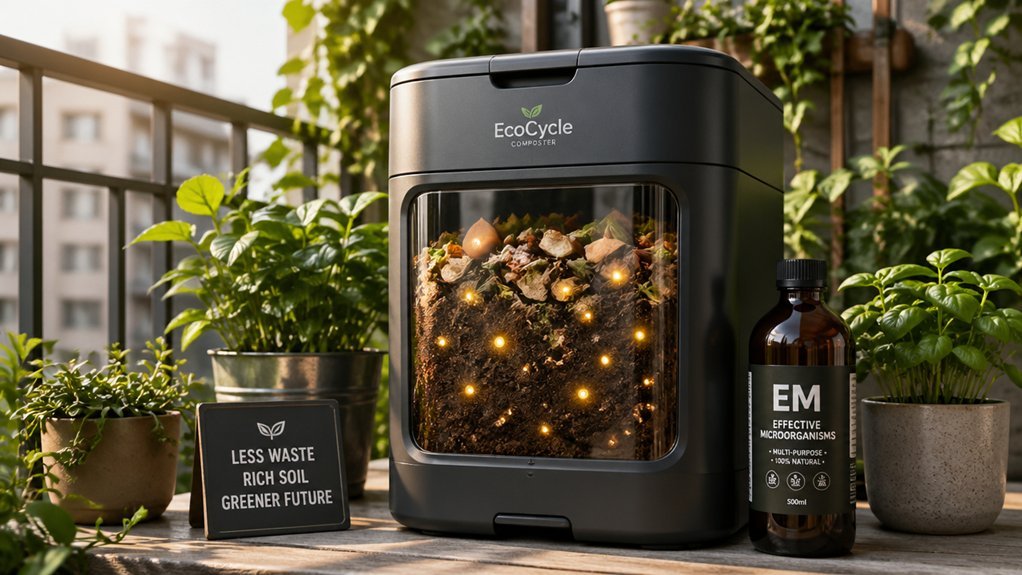
How can you turn a tiny balcony bin into a rapid‑decomposition powerhouse? You start by spraying EM onto your composting mix, then stir to spread the solution evenly. EM floods the pile with a cocktail of beneficial microbes that outcompete sluggish bacteria, boosting aerobic activity. Those microbes crank up oxygen consumption, which raises internal temperature just enough to accelerate breakdown without overheating. In a few weeks you’ll see food scraps turning into crumbly, dark matter, cutting the usual timeline by up to 30 %. Keep the bin moist, cover it to retain humidity, and repeat the spray every few days. The result is a fast, odor‑free compost that feeds your plants and keeps your apartment garden thriving. Activated carbon filters help control odors, aligning with the odor‑control strategies highlighted for stainless steel indoor composters.
What Is EM and Why It’s Ideal for Apartments?
What exactly makes Effective Microorganisms (EM) perfect for apartment composting? You get a probiotic blend of lactic‑acid bacteria, yeasts, and phototrophic bacteria that jump‑starts microbial activity in tiny bins. EM works fast, cutting odors and accelerating breakdown so your kitchen scraps turn into nutrient‑rich vermicompost without a stinky mess. By spraying EM regularly, you keep aerobic and anaerobic microbes balanced, which means the pile stays healthy even in limited space. The living soil it creates boosts seed germination and plant resilience, so you can grow herbs on a windowsill with richer fertilizer. In short, EM delivers a compact, low‑maintenance solution that fits apartment life while delivering robust composting performance.
Choosing the Right EM Formulation for Small Spaces

Ever wondered which EM blend will thrive in a tiny kitchen bin or balcony shelf? For small-space composting you need EM formulations that kick in quickly and keep smells at bay. Look for products labeled “rapid activation” – they contain a higher proportion of lactic and photosynthetic bacteria that surge within 24 hours, jump‑starting decomposition even in a compact container. Choose a blend with built‑in odor control agents, such as Bacillus subtilis, which suppresses volatile compounds while maintaining aerobic activity. Verify that the formulation is liquid‑based, so you can dose just a few milliliters without over‑watering. By matching these criteria you’ll keep your indoor or balcony compost lively, fast‑acting, and virtually scent‑free. rapid activation
Preparing Your Compost Bin for Optimal EM Performance
Ready to boost your bin’s efficiency? First, clean the container to eliminate old residues that could compete with EM microbes. Then, layer coarse browns—like shredded newspaper or straw—to create channels for aeration. Add a thin mist of water; the compost pile should feel like a wrung‑out sponge, not soggy, because proper moisture lets EM thrive without drowning aerobic activity. Sprinkle the ready‑to‑use EM solution evenly over the top layer, then stir gently to distribute microbes throughout the pile. Cover the bin with a breathable lid or tarp to retain humidity while allowing airflow. Finally, turn the pile every few days, maintaining steady aeration and moisture. This routine primes the compost for faster, odor‑free decomposition, and choosing a 1 gallon capacity ceramic crock with odor‑control features can help maintain portability and ease of use in compact kitchens. odor-control
When & How Much EM to Add for Speed

You should spray EM onto the pile right after you turn it, when the material is still warm and moist, to kick‑start microbial activity.
Aim for about 1 – 2 % EM solution by volume per batch, adjusting up if the compost looks dry or down if it’s soggy.
Remember that EM works best when the moisture stays at a wrung‑out sponge level, so balance the liquid addition with your watering routine.
Inspect the pile with a compost sifter or screen to ensure you’re mixing beneficial microbes evenly as you turn, which helps parts of the pile reenter the active phase interchangeable screens.
Optimal Timing for EM
When should you add EM to your compost pile for maximum speed? Add EM right after you mix the first layer of greens and browns, before the pile heats up. This timing lets EM jump‑start the aerobic pathways, boosting composting speed by up to 30%.
If you prefer an anaerobic, covered system, sprinkle EM before sealing the pile and focus on moisture control; the microbes will ferment efficiently, reducing heat and eliminating the need to turn. In both cases, a light mist of water after application ensures the microbes stay active and the pile stays uniformly damp. Crawl-out systems
Dosage Guidelines for EM
Adding EM at the right moment is only half the battle; the amount you use determines how quickly the pile will fire up. For most kitchen‑scrap piles, a dosage of 1 % – 2 % EM solution by volume works well—mix 10 ml of EM into 1 liter of water, then drizzle evenly over each layer. If you’re handling a larger garden‑waste heap, scale up to 2 % – 3 % to keep the microbes thriving. Apply the solution after each turn, ensuring the wetting moisture is uniformly distributed; this prevents dry spots where microbial activity stalls. Too little EM leaves the compost sluggish, while excess can cause foaming and waste. Stick to the recommended range, and you’ll see a 30 % faster decomposition rate and richer, healthier compost.
EM Interaction With Moisture
A few drops of EM mixed into a wrung‑out‑sponge‑like moisture level can ignite the compost pile within hours. When you keep the material damp but not soggy, EM thrives, boosting aerobic digestion and speeding up microbial activity. Aim for a moisture feel like a wrung‑out sponge; add 1–2 ml of EM per kilogram of dry material, then spray water until the mix holds together without dripping. Too much water dilutes EM, slowing composting efficiency, while too little starves the microbes. Moisture management helps ensure the EM works effectively by maintaining consistent humidity and microbial activity.
Balancing Carbon & Nitrogen With EM to Prevent Odor
Balancing carbon-rich browns with nitrogen-rich greens is essential for a odor-free compost pile, and EM (Effective Microorganisms) makes that balance easier to achieve. When you sprinkle EM into the mix, its microbial boost speeds the breakdown of carbon materials while simultaneously feeding nitrogen‑hungry bacteria. This rapid, aerobic activity prevents the formation of anaerobic pockets that generate foul smells. Incorporating a compact bokashi-style approach with an airtight setup helps manage odors further odor-control features and supports reliable leachate management in tight spaces.
Keeping Moisture at a Sponge‑Like Level With EM
Moisture is the glue that holds a compost pile together, and EM helps you keep it at a sponge‑like level without constant monitoring. When you spray a diluted EM solution onto your bin, the beneficial microbes immediately start breaking down organic particles, creating a natural gel that locks in water. You’ll notice the pile feels damp but not soggy, because EM’s aerobic activity reduces excess liquid runoff.
To maintain this balance, add a thin layer of shredded newspaper or straw after each EM mist; the fibrous material acts like a sponge, absorbing surplus moisture and releasing it slowly as microbes consume it. This steady moisture level speeds up composting, cuts odor, and yields a richer, more resilient soil amendment.
Enhancing Aeration & Turning Using EM‑Activated Microbes
Why settle for a stagnant pile when you can supercharge aeration with EM‑activated microbes? Adding EM to your bin creates a buzzing community of microbes that love oxygen, so each turn injects fresh air and fuels faster breakdown. Mix the solution into the material before you start turning, then rotate the pile every few days. The microbes respond quickly, boosting aerobic activity and cutting decomposition time by up to 30 %. You’ll notice less odor, richer compost, and stronger plant growth when you finally spread it. Pair EM with vermicompost or bokashi for even richer aeration, and keep moisture balanced so the microbes stay active. Consistent turning and EM together keep the pile alive, airy, and productive.
Monitoring & Managing Heat in Small Indoor EM Piles
Place a thermometer near the pile’s center but not touching the walls to get an accurate read on microbial activity.
Choose insulation like a thin foam board or a blanket to keep temperature steady without trapping excess moisture.
Keep an eye on moisture levels, adding a spray of water if it drops below a damp‑sponge feel, and adjust ventilation accordingly.
Thermometer Placement Tips
Ever wondered how to keep your indoor EM composting at the right temperature? For accurate temperature monitoring, place a compost thermometer in the center of the pile or just below the surface, where compost heat builds. Mark the probe 0–2 inches above the pile so surface cooling won’t skew readings. Track the temperature daily, aiming for the 130–160 °F (54–71 °C) range that defines the Berkeley hot‑compost method. When temperatures stay high, you can turn the pile less often; a drop signals it’s time to mix and aerate. Record each reading to spot trends, gauge process speed, and predict when the compost will be ready for soil use.
Insulation Materials Selection
How do you choose the right insulation for a small indoor EM pile? Start with readily available straw or dry leaves; they form a cheap, breathable insulation layer that traps heat while letting air circulate. Spread a 2‑inch blanket over the compost pile during cold spells, then lift it before each turn to aerate and re‑cover afterward. In winter, position the pile near a sunny window so sunlight adds warmth to the insulation’s heat retention. Select materials that are easy to remove and replace, ensuring you can still perform regular turning and moisture management. Avoid plastic sheets that seal moisture in; instead, use natural fibers that absorb excess dampness and keep the pile’s temperature stable for efficient microbial activity.
Moisture Level Monitoring
After setting up a breathable insulation layer, the next step is to keep the pile’s moisture in check. Aim for a wrung‑out sponge level: the material should feel damp but not soggy, allowing microbes and worms to stay active while EM indoors accelerates decomposition.
Use a simple moisture monitoring routine—press a handful of compost into your hand; if a few drops appear, you’re on target. Adjust by spraying water or adding dry leaves, then re‑check after 24 hours. Consistent moisture monitoring prevents anaerobic pockets and supports the rapid heat cycle EM creates.
Troubleshooting Common EM Issues in Apartment Composting
What’s the most common cause of stalled compost in an apartment? You probably missed moisture, aeration, or EM spray/application, leading to odor control failure. Keep the bin damp but not soggy—aim for a wrung‑out sponge feel. If it’s too dry, microbes go dormant; if too wet, anaerobic pockets form and smell rises. Stir or shake the container every few days to introduce fresh air and break up compacted layers. Spray EM solution lightly after each stir; a thin mist re‑activates the beneficial microbes and maintains the aerobic balance. Watch for foul odors—adjust moisture or increase aeration promptly. By monitoring these three factors, you’ll keep the compost lively, fast‑moving, and odor‑free.
Frequently Asked Questions
How to Speed up Home Composting?
You speed up home composting by regularly spraying EM, turning the pile weekly, balancing greens and browns, keeping moisture like a wrung‑out sponge, and ensuring good airflow to boost microbial activity.
What Is a Natural Accelerator for Compost?
You can use Effective Microorganisms (EM) as a natural accelerator for compost; spray it onto your pile, and it’ll boost microbial activity, cut decomposition time, and keep odors low while enriching the soil.
Do Coffee Grounds Speed up Composting?
Yes, coffee grounds speed up composting. They add nitrogen, boost microbial activity, and, with EM they can cut decomposition time up to 30 %, giving you richer compost faster.
How Can You Accelerate the Composting Process?
You can speed composting by adding EM solution, balancing greens and browns, turning regularly, keeping moisture like a wrung‑out sponge, and maintaining temperatures between 55‑65 °F for optimal microbial activity.
In Summary
Now you’ve got the perfect EM‑driven system to turn kitchen scraps into rich compost in your apartment. By picking the right formulation, keeping moisture sponge‑like, aerating regularly, and monitoring heat, you’ll speed up decomposition without the hassle. Troubleshoot any hiccups quickly, and watch your indoor pile transform waste into garden‑ready gold—all while staying eco‑friendly and space‑savvy. Enjoy the fresh, sustainable boost to your home garden.