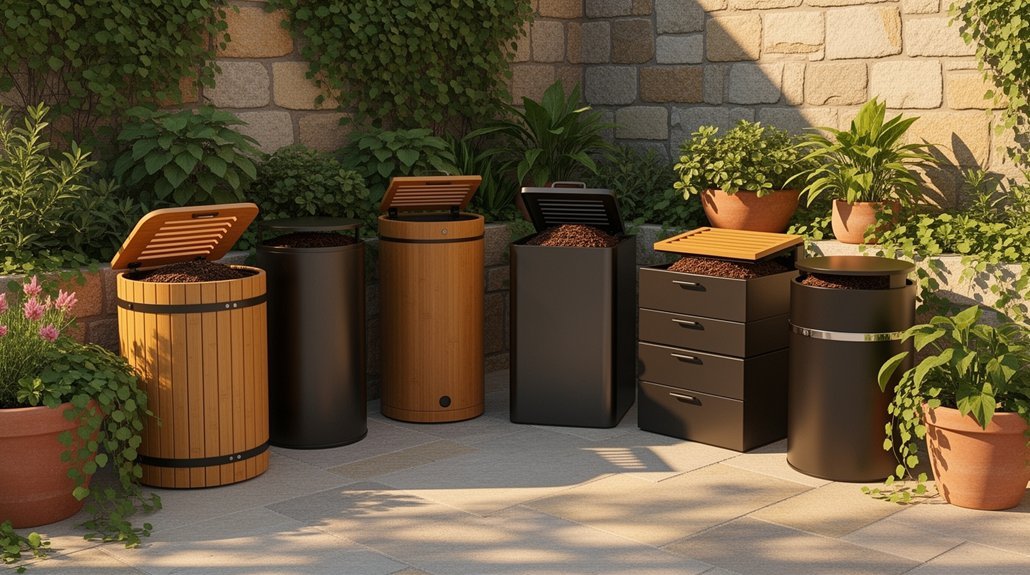

You don’t need a yard to compost—you just need the right system for your space. Vermicomposting fits in one square foot and processes weekly food scraps year-round. Bokashi fermentation handles meat and dairy in an airtight bucket. Electric composters finish the job in 24 hours. Each method tackles different waste streams and timelines, so matching your food scraps to your chosen system prevents odor and ensures success. Discover how to seal against neighbor odors and share your finished compost throughout your building.
Choose the Right Composting Method for Your Apartment
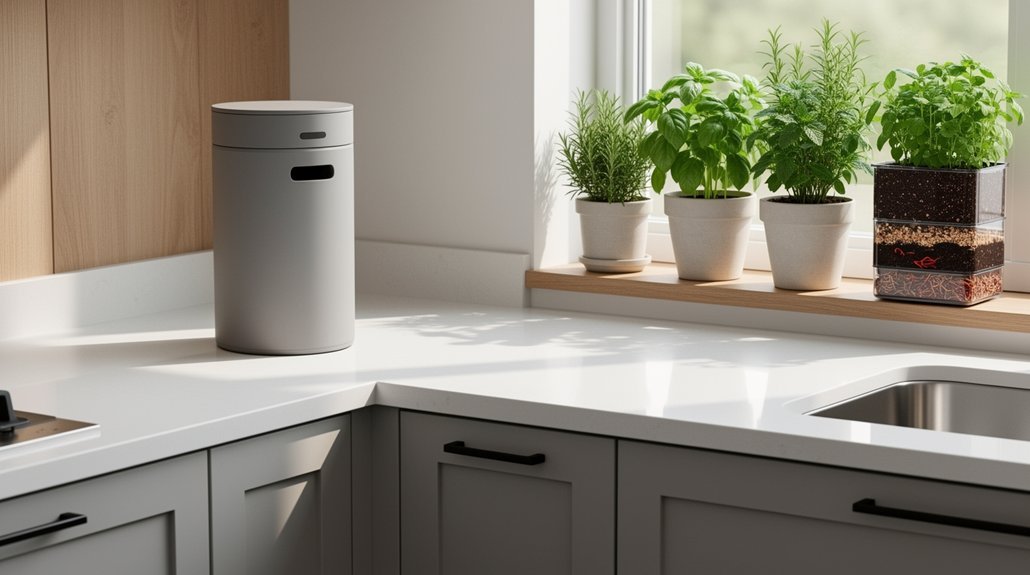
How do you compost in a space where outdoor room doesn’t exist? You’ll need to evaluate your apartment’s constraints and pick a method that fits your lifestyle.
Vermicomposting offers a compact solution if you’re willing to maintain a worm bin. Red wigglers process 5–10 lb of food waste weekly in roughly 1 sq ft of space, producing nutrient-rich castings. A well-maintained worm bin produces a few pounds of castings every 2–4 months, making it ideal for single-person households that generate 4–7 lb of scraps per week. Consider checking local regulatory considerations before setting up your worm bin, as some apartments have specific restrictions.
Bokashi fermentation works if you don’t mind a two-step process. It accepts meat, dairy, and oily foods in an airtight bucket, completing fermentation within two weeks.
Electric food recyclers suit you best if you want minimal effort—they process scraps in 24–48 hours without worm care or odor concerns, though they cost $300–700 upfront.
Finally, curbside pickup requires only a small collection container and works where municipal compost access exists.
Match Your Food Waste to Your Chosen System
Success with apartment composting hinges on understanding what your chosen system can—and can’t—handle. Vermicomposting thrives on fruit, vegetable scraps, coffee grounds, and shredded paper, while bokashi ferments a broader range including meat and dairy. Electric composters tackle cooked foods quickly, depending on machine specifications. Balcony tumblers work best with food scraps balanced by carbon-rich browns like dry leaves and cardboard.
The key is matching your waste stream to your system’s capacity. Overloaded systems breed odor, pests, and incomplete breakdown. If you generate lots of wet scraps, you’ll need sufficient dry materials to maintain balance and prevent anaerobic conditions. Conversely, bokashi’s sealed fermentation process handles moisture differently than open bins, producing bokashi tea as a valuable byproduct alongside fermented compost. Choose your method based on what you’ll actually compost and how much you’ll generate. For apartment dwellers with limited space, vermicomposting is presented as the most practical Zero Waste solution due to low public infrastructure needs.
Speed Matters: Get Compost in Weeks, Not Months
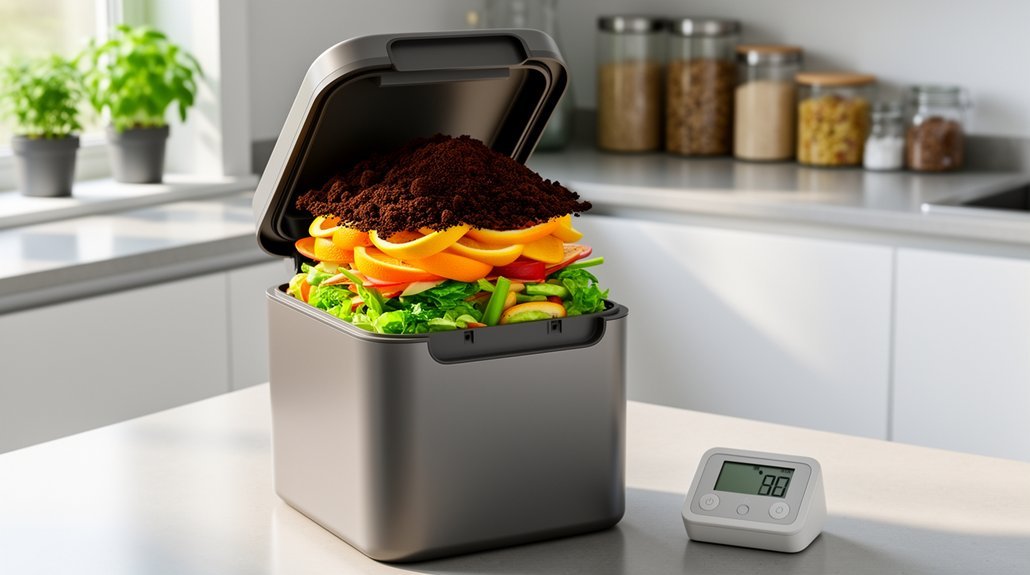
Why wait months for finished compost when apartment systems can deliver results in weeks or even days? Electric composters process food waste in about 24 hours, making them your fastest option. Vermicomposting produces usable castings in 3 to 4 months through efficient worm activity. Bokashi ferments scraps in an airtight bucket, shortening the pre-compost stage substantially.
You can accelerate any system by cutting food scraps into small pieces, turning material weekly, and maintaining proper moisture levels. These practices increase surface area for microbes and distribute oxygen throughout your bin. Compost tumblers speed decomposition through frequent aeration, while regular mixing helps break down material faster than static piles. Indoor vermicomposting bins require minimal space compared to traditional outdoor systems, allowing year-round decomposition without weather delays. Stainless steel countertop pails with charcoal filters provide convenient indoor storage for food scraps before they enter your composting system.
Choose your speed preference based on your lifestyle and space constraints.
Odor Control That Works in Shared Walls
Speedy composting means nothing if your neighbors smell it first. You’ll need to seal your apartment’s shared walls systematically, because even one missed opening defeats your entire odor-control strategy.
Start by identifying common leakage paths:
- Electrical boxes, plumbing penetrations, and baseboards where air sneaks between units through small cracks and gaps
- Shared HVAC ducts and return-air pathways that transport odors throughout the building if left unsealed
- Floor-joist cavities and wall-top gaps hiding in older buildings where unblocked cavities connect neighboring spaces
After sealing everything, consider mild pressurization—a small outdoor-air supply creates positive pressure that pushes indoor air outward, reducing neighbor odor infiltration. Take incoming air from a clean outdoor location. Inspect floor by floor, back-to-back electrical services, and utility chases. Continuous sealing prevents air exchange through your wall assembly. For concealed walls, fluid-applied barriers like specialized coatings perform better than paint alone, which often fails to maintain an effective seal over time at brick and mortar interfaces. A powder-coated finish provides superior durability and maintains seal integrity compared to standard paint applications in high-moisture composting environments.
Use or Share Your Compost Without a Yard
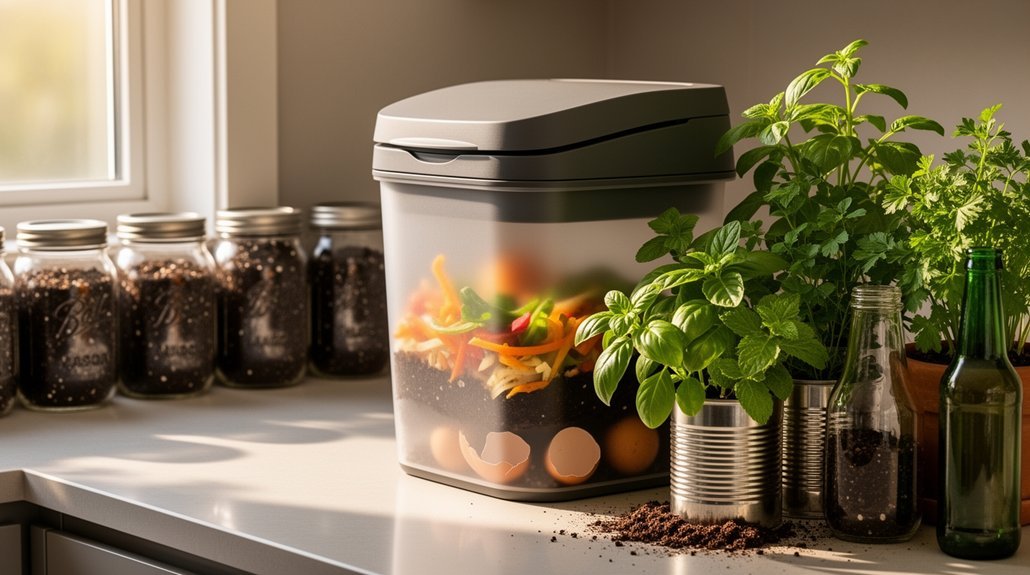
Once you’ve completed your apartment composting system, you’ll face a practical question: what happens to all that finished compost when you don’t have a yard?
You’ve got several options. Share your compost through Facebook Marketplace or Craigslist—people with container gardens, raised beds, and houseplants actively seek it. An inch of compost substantially benefits potted plants, making your finished product genuinely valuable to neighbors. Worm castings from vermicomposting systems are particularly nutrient-dense and highly sought after by indoor plant enthusiasts. The fermentation process in bokashi systems produces nutrient-rich compost that’s especially valuable for sharing with urban gardeners.
Alternatively, donate it to community gardens that welcome compost additions. Local farms and gardening groups often accept finished material too, especially those connected through composting networks.
These sharing pathways transform your apartment composting into a neighborhood resource. Instead of storing excess compost, you’ll create meaningful connections while closing the composting loop sustainably.
Frequently Asked Questions
Are Regular Earthworms From My Garden Suitable for Indoor Worm Composting Bins?
You shouldn’t use regular garden earthworms for indoor bins. They’re adapted to deep soil, not confined moist conditions. Red wigglers thrive in bins because they’re surface feeders. You’ll have better success with the right composting species.
How Much Floor Space Do I Need for a Functional Apartment Composting System?
You’ll need minimal floor space—just a few square feet. Worm bins fit under sinks, bokashi systems occupy small corners, and countertop composters sit on kitchen surfaces, making apartment composting feasible in tight spaces.
Can I Compost Meat, Dairy, and Cooked Foods in My Apartment Safely?
You can safely compost meat, dairy, and cooked foods in your apartment using bokashi fermentation. Other methods like worm bins or traditional bins aren’t suitable for these items due to odor and pest risks.
What Should I Do if My Compost Starts Smelling Bad Indoors?
If your compost smells bad indoors, you should add dry brown material like shredded paper or cardboard, mix the contents to improve airflow, and reduce high-odor foods like onions and dairy temporarily.
How Often Do I Need to Maintain My Apartment Composting System Weekly?
You’ll need to maintain your apartment composting system weekly. Check your bin to prevent overfilling, monitor moisture levels, turn wormless systems, and rotate tumblers. You should also collect scraps daily for consistent results.
In Summary
You can successfully compost in your apartment by selecting a method that fits your space and lifestyle. You’ll manage odors effectively, process your food waste quickly, and maintain a thriving system despite shared walls. You’ll then share your finished compost with friends, donate it to community gardens, or use it for your indoor plants. You’re not limited by lacking a yard—you’re empowered to reduce waste responsibly.