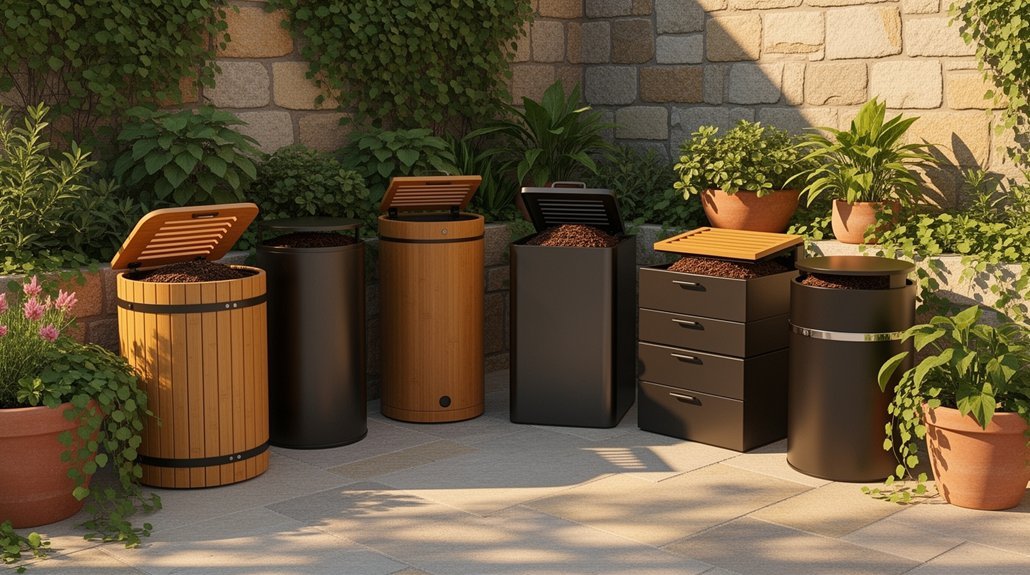
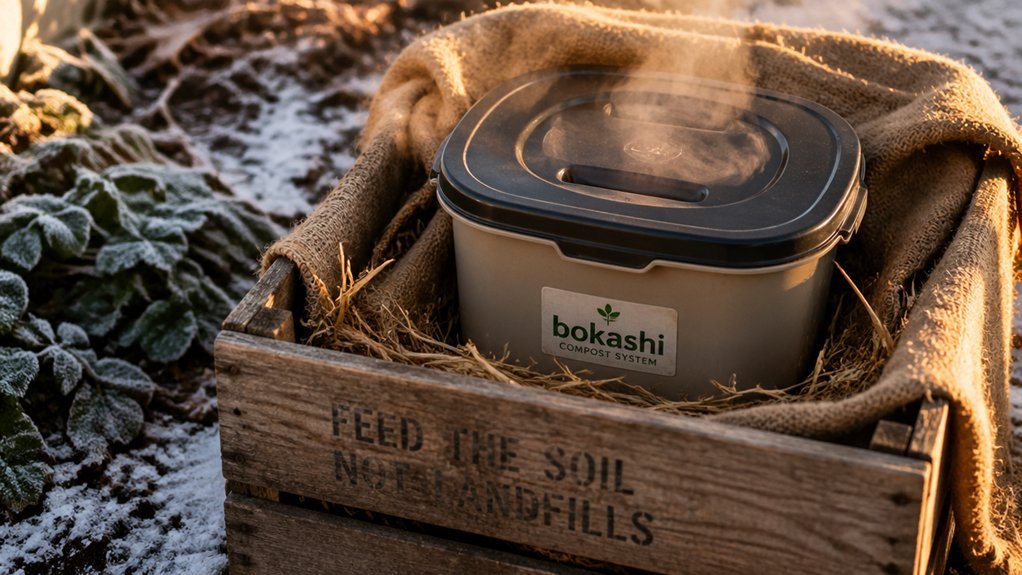
Place your bokashi bucket in a sealed, room‑temperature spot like a pantry or insulated closet and keep the lid tight to block drafts. Aim for about 24 °C (75 °F); if it drops, wrap the bucket with a towel or a reusable heat pack, but avoid overheating. Add extra room‑temperature bran when fermentation slows, and shake to redistribute moisture so it feels like a wrung‑out sponge. Store finished bokashi, tea, and cake in airtight containers indoors to protect the microbes, and you’ll discover more tips for handling winter transitions.
Set Up a Winter‑Ready Bokashi Bin
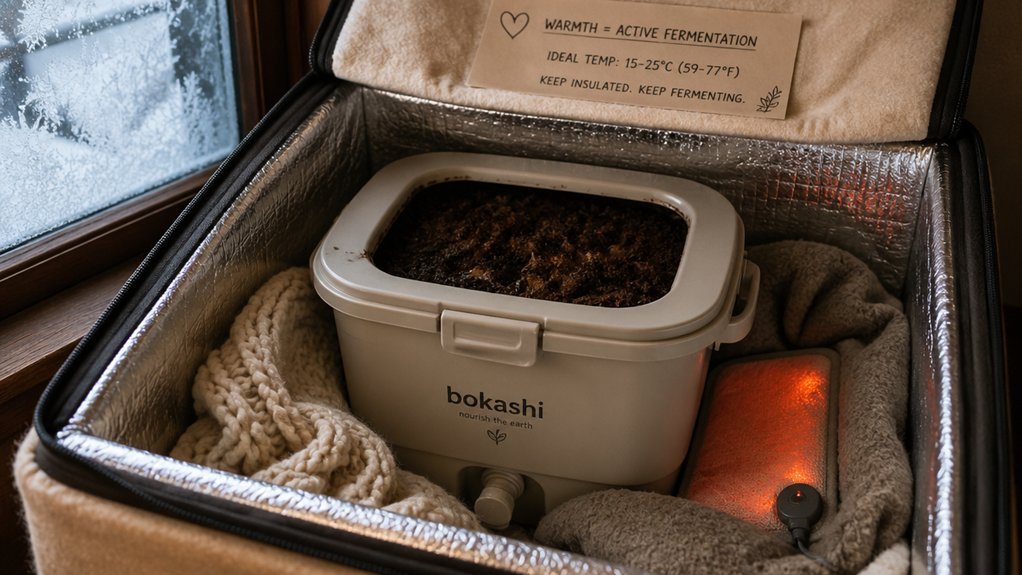
How can you keep your bokashi fermenting smoothly when temperatures drop? First, place your Bokashi buckets in a room‑temperature spot, like a pantry or utility closet, so fermentation stays steady throughout the winter months. Keep the lid sealed; an airtight container prevents cold drafts from reaching the microbes. If your home’s heating is off, move the sealed buckets to a non‑heated indoor area such as a garage, but never leave the lid off during the transition. Store the finished bokashi in a sealed container for later use, protecting the EM microbes from freezing. Expect a slightly longer fermentation period—add a few extra days before you transfer the pre‑compost outside. This simple storage strategy ensures your bin remains active until spring. Temperature management
Keep Fermentation Temperature Near 24 °C
Since winter can pull indoor temps down, aim to keep your bokashi fermenting around 24 °C (75 °F) for optimum microbial activity.
Aim for steady 24 °C (75 °F) indoor temperature to keep bokashi fermenting optimally.
Choose a sealed, temperature‑controlled indoor storage spot—like a kitchen cabinet or insulated closet—to maintain a steady 24°C.
Place the bucket away from drafts and direct heat sources, and keep the lid closed to trap warmth.
If you notice the fermentation temperature dropping, add a small towel or a reusable heat pack to the surrounding area, but avoid overheating the bokashi bran.
For winter composting, monitor the temperature daily; a slight dip may just extend the process by a few days.
To help sustain consistent heat, consider selecting a model with a tight seal and minimal airflow that supports a stable environment temperature stability.
Prevent Bokashi From Freezing in Winter
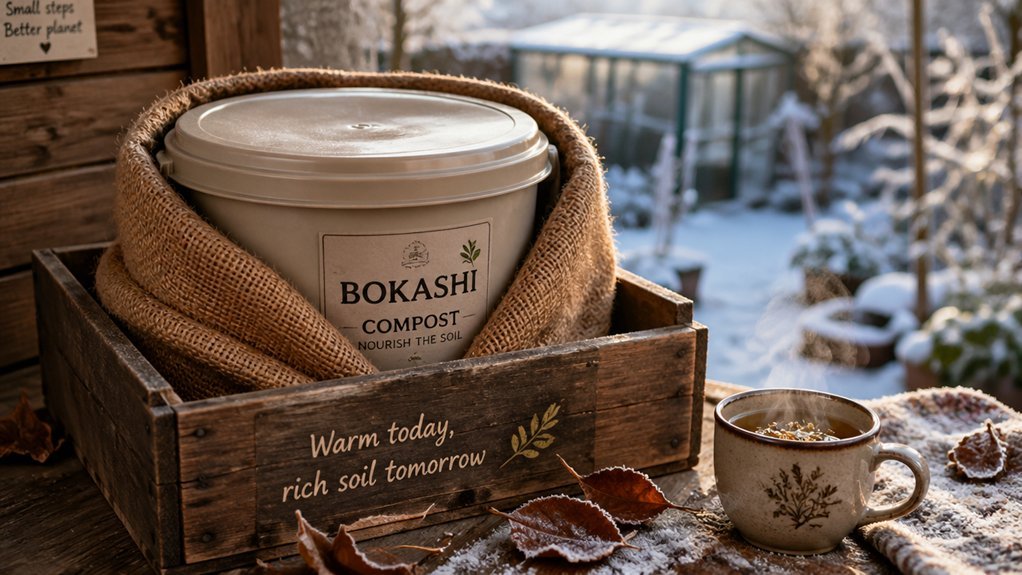
Wondering how to keep your bokashi from turning into ice? Move the bucket indoors while you’re filling it, letting fermentation stay near room temperature. If you must store finished bokashi for winter, seal it in airtight containers and tuck the jars in a cool, dark spot away from direct sun and drafts. Avoid letting the bran or pre‑compost freeze; sub‑zero temperatures kill EM microbes and force you to add extra bran come spring. When transitioning to colder months, shift sealed buckets gradually to a non‑heated area like a garage, keeping lids on to trap heat and block odors. This simple winter storage routine preserves microbial activity and ensures your bokashi stays alive until you can bury it in spring microbial activity.
Control Moisture and Add Bran When Cold Slows It
Ever notice fermentation stalling as temperatures dip? When the cold drags down microbial activity, you can revive it by adding extra bokashi bran. Keep the bran at room temperature—don’t let it freeze—so its microbes stay potent. Toss a handful into the bucket, seal it, and give the mixture a gentle shake to redistribute moisture. Moisture control is key; the blend should feel like a wrung‑out sponge, not soggy or bone‑dry.
Store the bucket in a sealed, odor‑controlling container away from direct sun and wind, maintaining indoor temperature close to room temperature. This winter storage setup preserves the EM community, lets fermentation continue, and prepares the cake for a spring burial or soil mix.
Store Bokashi Tea and Fermented Cake Safely
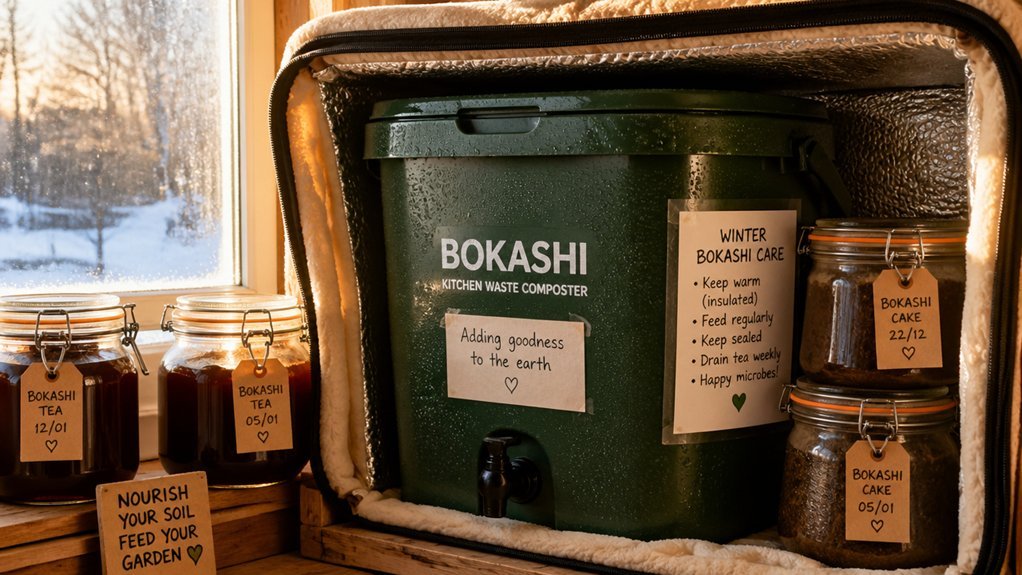
When winter slows down your bokashi routine, keep the tea and fermented cake safe by storing them in airtight containers indoors. Use a clean, sealed jar for bokashi tea and a sturdy, airtight container for the fermented cake; both should sit at room temperature or warmer to preserve microbial activity.
The tea can stay good for up to one month, but dilute it to roughly 1:200 before watering indoor plants.
The cake, kept inside during winter indoors, avoids freezing that would kill its beneficial microbes.
Check seals weekly, and if you delay burying pre‑compost, add an extra bucket to keep fermentation going.
This simple storage routine ensures your bokashi stays effective until spring.
Troubleshoot Winter Issues: Odors, Microbes, and Freezing
You’ll notice stronger smells if the temperature drops too low, so keep the bin in a warm spot and tighten the lid to trap gases.
Make sure the bran stays above freezing; otherwise the EM microbes die and the compost stalls.
If you see signs of freezing, add fresh bran in spring to revive the microbial community and restore activity.
Odor Prevention Strategies
If you keep your bokashi bucket sealed and at room temperature, you’ll prevent the cold from freezing the EM microbes and stop unpleasant odors from escaping. Use odor‑tight bokashi buckets or sealed containers for indoor storage, ensuring the lid snaps shut and the gasket is intact. Keep the bin away from drafts and direct sunlight, but maintain a stable room temperature of 65‑75 °F to support fermentation.
When you add fresh waste, press it down firmly to eliminate air pockets that can release smells.
Store any pre‑compost in an airtight container, and avoid opening it repeatedly; a single, quick vent is enough to release pressure without compromising odor prevention.
Regularly check seals and replace worn lids to keep the system airtight throughout winter.
Microbe Viability Tips
Because winter temperatures can slow or even halt the EM microbes in your bokashi, keeping the bin at a steady 65‑75 °F and protecting it from drafts is essential. You’ll want to monitor temperature daily, seal the container, and adjust fermentation time to preserve microbial viability. Here’s how to keep your bokashi thriving:
- Insulate the bin – wrap it in a blanket or place it inside a cooler box to maintain temperature and prevent drafts.
- Extend fermentation – add 2–3 extra days to the usual two‑week cycle; slower microbes need more time to finish breakdown.
- Refresh the inoculant – if the bran froze, sprinkle fresh bokashi bran in spring to repopulate microbes and boost viability.
Indoor winter storage in a sealed container also curbs odor while keeping fermentation on track. Shelf life
Frequently Asked Questions
What to Do With Bokashi Compost in Winter?
Store the bokashi in a sealed container indoors, keep it above freezing, and let it ferment until spring. When soil’s workable, bury the pre‑compost, adding extra bran if microbes slowed.
Does Bokashi Work in the Cold?
Yes, bokashi still works in the cold, but fermentation slows. Keep it above freezing, ideally around 24 °C, to maintain microbial activity, and expect a few extra days for full breakdown.
How to Get Compost Hot in Winter?
You’ll heat compost by adding fresh kitchen scraps, mixing in active bokashi bran, and keeping the bin in a insulated, sunny spot or near a radiator; stir daily to release trapped heat.
What Are Common Bokashi Composting Mistakes?
You often freeze the bran, overload the bucket, skip draining the tea, seal containers poorly, or ignore the two‑stage process; each mistake kills microbes, slows fermentation, and creates odors.
In Summary
By keeping your bokashi bin insulated, maintaining a steady 24 °C temperature, and adjusting moisture and bran when the cold slows fermentation, you’ll guarantee a healthy, odor‑free process all winter long. Store the fermented cake and tea in a cool, dark spot to prevent freezing, and watch for any off‑smells or mold as early warning signs. With these simple steps, your bokashi will stay active and productive until spring arrives.