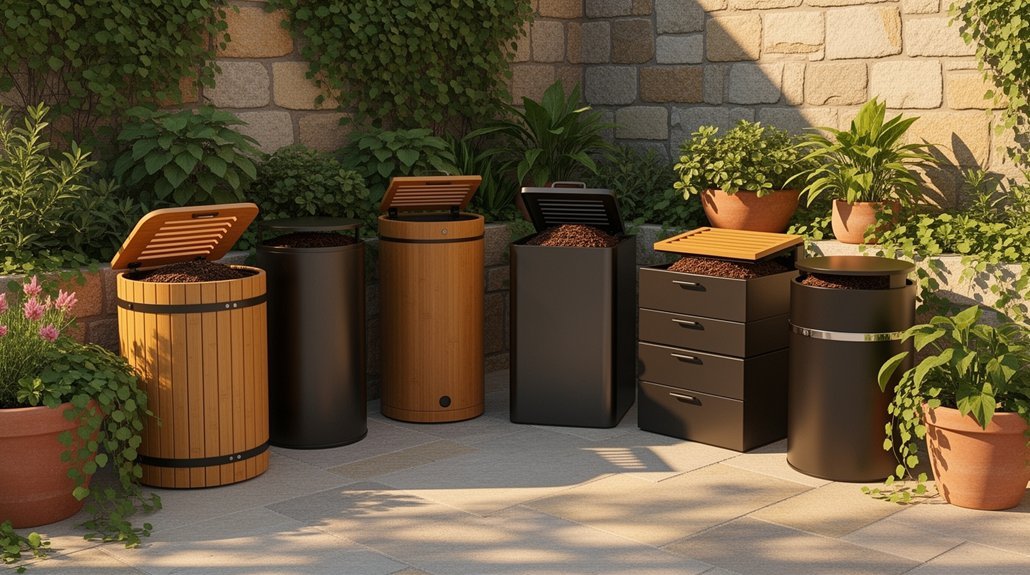

Keep your indoor compost in the 55 °F‑140 °F sweet spot to signal healthy microbes without stinky odors. Check the core temperature every two to three days with a compact compost thermometer or a heat‑sensitive lid; a mild warmth means activity, while a sudden drop hints at drying or compaction. Turn the pile regularly, keep it as moist as a wrung‑out sponge, and balance greens and browns roughly 1:2 by volume. Adjust aeration and moisture as needed, and you’ll see stable heat and a pleasant composting process—more tricks await if you keep exploring.
What Temperature Should Your Apartment Compost Reach?
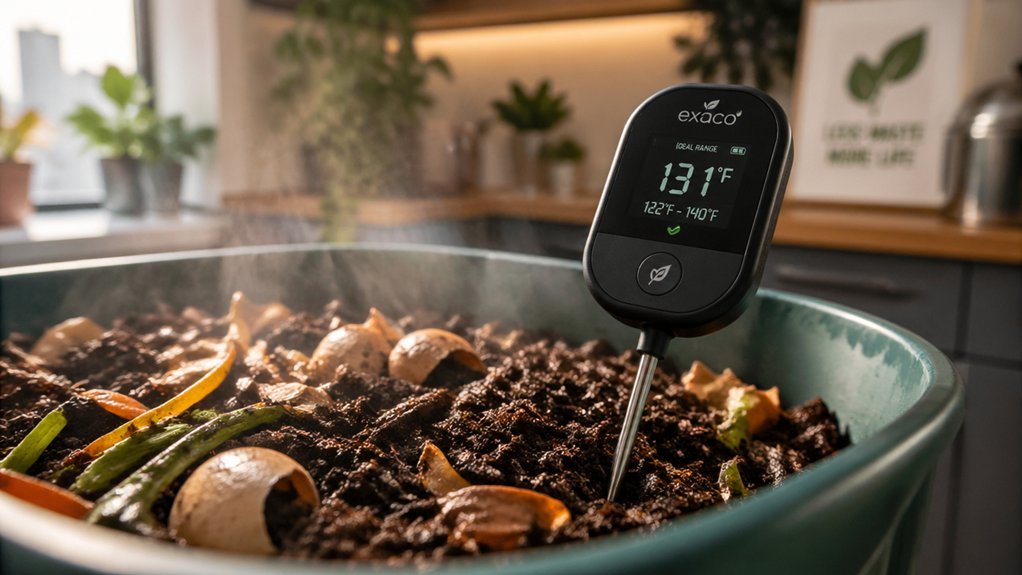
How warm should your apartment compost feel? You want a temperature that signals active microbial activity without crossing into odor‑producing heat. In indoor composting, aim for a compost pile that feels comfortably warm to the touch—roughly ambient temperature plus a few degrees—so aerobic decomposition proceeds efficiently. Turn and monitor regularly; airflow and moisture keep the heat level steady and prevent hot spots that can trigger smells. A mild warmth at the center indicates the microbes are thriving, while the outer layers stay cooler. This balance supports odor control and fits apartment living constraints. When the pile matures, it will naturally cool, signaling that the process is complete. Adjust your routine if the pile feels too hot or too cool to maintain optimal composting conditions. Early monitoring benefits from a temperature regulation focus to sustain steady microbial activity.
Why Stable Compost Heat Matters and Typical Ranges
Because stable heat shows that microbes are actively breaking down organic matter, keeping your compost at a steady, warm temperature is essential for efficient decomposition. In apartment composting, compost heat between 55 °F and 140 °F tells you that both mesophilic activity (50–70 °F) and thermophilic activity (120–140 °F) are occurring, driving rapid microbial digestion. A stable temperature signals proper moisture balance and aeration, while a sudden drop points to drying or compacting issues that could stall progress and cause odors. Regular heat monitoring lets you adjust water or airflow before the pile cools, keeping the organisms happy and moving toward finished compost. Aim for consistent warmth without overheating, and avoid direct sun that could dry the container maintain odor control.
Pick a Small Compost‑Specific Thermometer or Heat‑Sensitive Lid
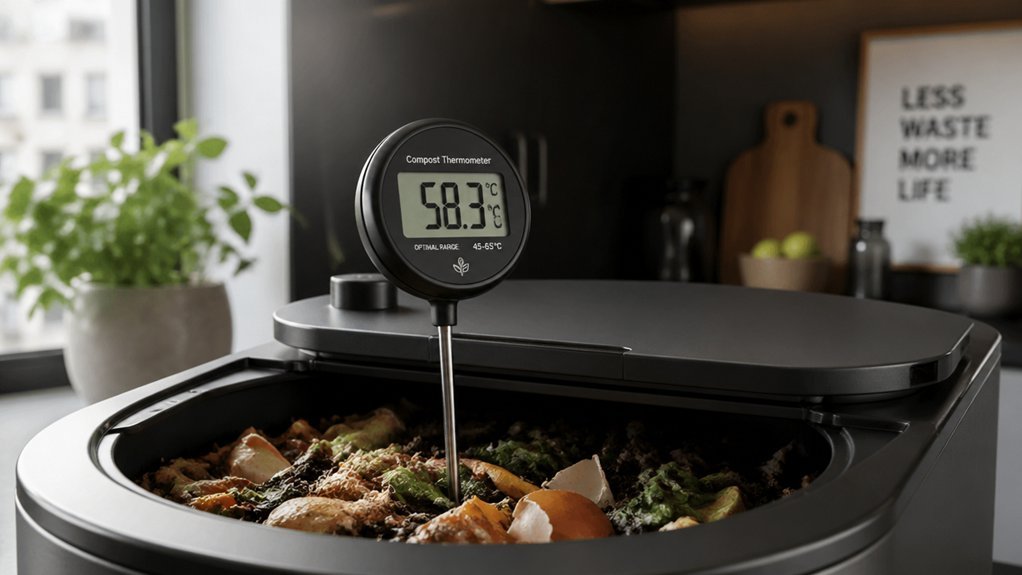
Looking for a reliable way to keep your apartment compost in the sweet spot? Choose a compact compost‑specific thermometer or a heat‑sensitive lid that fits your indoor composting bin. A comet thermometer gives you exact pile temperature readings, so you can spot the 135–160 °F window where active decomposition thrives. The compact thermometers listed include 16-inch and 39.4-inch models designed for deep readings, but for apartment use a shorter, kitchen‑friendly option provides quick feedback without massive setups temperature measurement tools. A heat‑sensitive lid changes color or moves a gauge as the compost heat rises, letting you glance at the status without opening the bin. Check the reading every two to three days during the first few weeks, then adjust greens, browns, and moisture to sustain microbial activity. For colder corners, add insulation or place the bin in sunlight to keep the thermometer within the productive high‑heat range.
Turn, Aerate, and Manage Moisture for Stable Compost Heat
Ever wondered why your compost sometimes cools down after a few days? You can keep compost heat alive by turning the pile every few days, which creates aeration and breaks up anaerobic pockets. Aim for a moisture balance like a wrung‑out sponge; too wet smothers oxygen, while too dry stalls microbes.
Mix greens and browns in roughly a 1:2 ratio by volume to fuel steady microbial activity and heat stability.
During indoor composting, use insulation and block drafts to retain warmth, and watch humidity control to prevent soggy spots.
Smell the pile: earthy notes mean good odor management, while sour smells flag imbalance. Adjust moisture or add more browns or greens to rebalance heat and maintain a healthy, warm compost heap. Jar compatibility and design features of bokashi tamper tools highlight the importance of proper handling and tool integrity in maintaining efficient processing and avoiding contamination during preparation and transport of materials.
Frequently Asked Questions
How Often Should I Check the Compost Temperature?
You should check the compost temperature at least once a day, preferably in the morning, to catch any spikes early and adjust moisture or airflow before the heat gets out of control.
Can I Use a Smartphone App to Monitor Compost Heat?
Yes, you can download a Bluetooth thermometer app, pair it with a sensor, and view real‑time compost temperature on your phone, letting you track heat trends without leaving the apartment.
What Is the Safest Way to Seal the Compost Bin?
Seal the bin with a tight‑fitting lid or reusable wrap that’s breathable yet keeps pests out. Use a silicone gasket or rubber seal for extra insulation, and avoid plastic that could melt from heat.
Do Different Kitchen Scraps Affect Heat Generation?
Yes, you’ll notice that high‑nitrogen scraps like coffee grounds, vegetable peels, and meat leftovers boost heat, while low‑nitrogen items such as citrus, bread, and dairy keep the pile cooler. Adjust ratios for optimal temperature.
How Long Does It Take for Compost Heat to Stabilize?
You’ll see compost heat stabilize in about one to two weeks, depending on moisture, aeration, and the mix of scraps you add; keep turning it regularly to speed up the process.
In Summary
By keeping your compost at the right temperature, you’ll speed up decomposition, kill off pests, and keep odors in check. A small, compost‑specific thermometer or a heat‑sensitive lid lets you monitor heat easily. Remember to turn, aerate, and adjust moisture regularly—these steps stabilize the temperature and keep your apartment compost healthy and efficient. Follow these tips and you’ll enjoy a thriving, low‑maintenance compost system right in your home.