
Pick an airtight, leak‑proof bin—preferably a Bokashi‑style container with a gasketed seal and a spigot for draining liquid—to block odors and roach entry. Bury each kitchen scrap under a generous layer of brown material like shredded paper or wood shavings, creating a physical cap that masks scent and deters pests. Keep the pile thermophilic (130‑140 °F), maintain 50‑60 % moisture, and turn it weekly to preserve heat, aeration, and roach‑unfriendly conditions; the next steps will show you how to fine‑tune the process.
Pick a Sealed Bin for Roach‑Free Indoor Compost
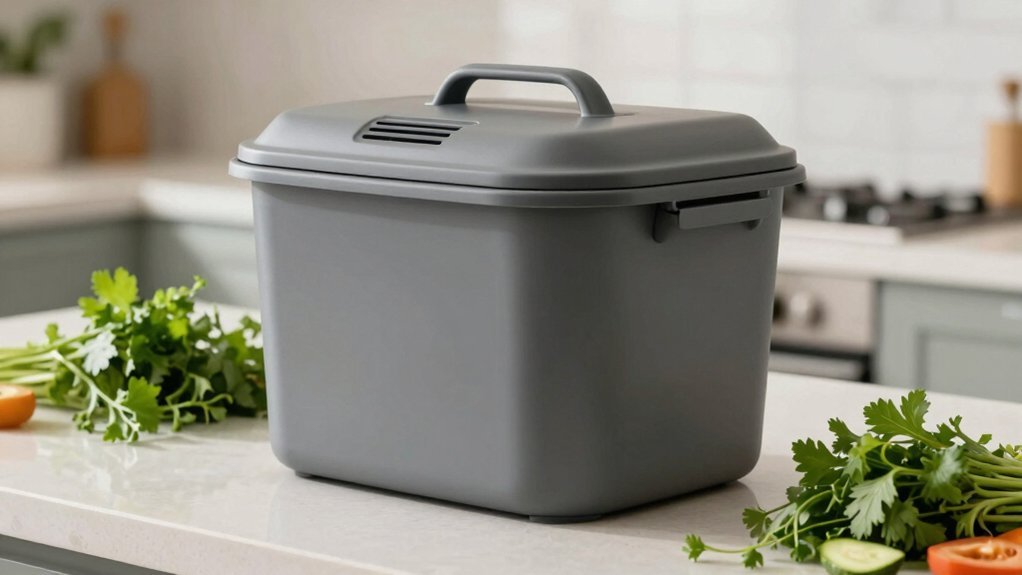
Why settle for an open‑top bucket that invites roaches when a truly sealed bin can keep your kitchen compost odor‑free? Choose a bin with an airtight, leak‑proof lid—preferably a gasketed or locking seal—to block smells that attract pests. Bokashi‑style containers are ideal; they come with airtight seals and a spigot for draining liquid, keeping the interior dry and odor‑free. Use stainless steel or durable plastic bins that fit snugly under a sink or in a small kitchen. Manage moisture by draining liquid regularly and adding absorbent newspaper or wood shavings. For additional odor control, consider pairing your sealed bin with natural odor absorbers like activated charcoal to eliminate any remaining smells. Empty the bin often, freeze scraps before storage if you’ll wait days, and clean the interior routinely. These habits keep roaches at bay while you compost indoors. The All Seasons Indoor Composter Kit includes a dual strainer and spigot for easy draining of nutrient‑rich compost tea.
Bury Scraps Under Brown Material to Hide Odors
Burying your kitchen scraps under a generous layer of brown material effectively masks the smells that draw roaches. Cover fresh waste with dried leaves, shredded cardboard, straw, or sawdust to create a physical cap that blocks scent and keeps flies, ants, and rodents out. Add scraps in a thin layer, then pile several inches of browns on top; the dry cover so leachate and lowers surface moisture, deterring the damp, food‑rich environment roaches love.
In trench composting, dig 8‑12 inches deep, drop the waste, and refill with soil or brown material. Rotate burial spots and replenish the cover after each addition to maintain a barrier. Using charcoal filters or similar odor-control methods indoors can complement outdoor composting efforts by reducing attractants near your home.
Avoid meat, dairy, and oily foods, and use thicker layers for larger piles to keep odors hidden.
Including brown material helps balance nitrogen‑rich scraps and speeds decomposition.
Keep the Pile Hot, Moist, and Turned for Roach‑Free Indoor Compost
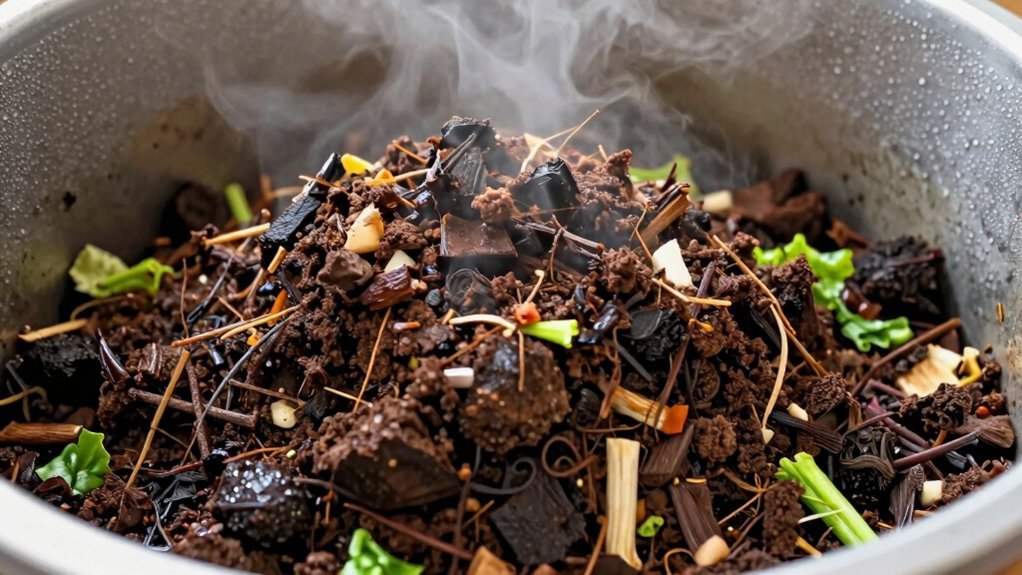
Ever wonder how a hot, moist, and well‑turned compost can keep roaches at bay?
Keep the core in the thermophilic range—aim for 130‑140 °F—to make the environment hostile to roaches and their eggs.
Insulate the bin and add enough water so the mix feels like a wrung‑out sponge; 50‑60 % moisture is ideal.
Check the temperature weekly with a probe; if it drops, turn the pile, rebalance carbon‑nitrogen, and mist it.
Turn at least once a week to aerate, break compaction, and disrupt nesting sites. Dual-chamber tumblers enable continuous composting while one chamber processes finished material.
Use a sealed tumbler or a bin with fine‑mesh covers to block insects while preserving heat and airflow.
Watch for foul odors—signs of excess moisture or anaerobic spots—and adjust promptly.
Consistent heat, moisture, and turning keep indoor compost roach‑free.
Provide a thick biocover over the pile to retain moisture and protect against evaporation.
Frequently Asked Questions
How Often Should I Add Water to Maintain Proper Compost Moisture?
You should water your pile every three to seven days, adjusting for weather—daily in hot, dry conditions, weekly in humid climates. Check the “damp sponge” feel and turn while watering to distribute moisture evenly.
Can I Compost Coffee Grounds Without Attracting Roaches?
Yes, you can compost coffee grounds ro attracting roaches if you keep them sealed until you mix them into a balanced, active pile, bury them under browns, and avoid excess moisture or open exposure.
What Temperature Indicates My Compost Is Hot Enough for Pest Deterrence?
You need to see 130 °F‑160 °F (55 °C‑71 °C) in your pile; hitting at least 135 °F for a few days shows it’s hot enough to deter roaches and other pests.
Do I Need to Use a Specific Type of Brown Material for Covering Scraps?
You don’t need a specific brown; just use any dry, carbon‑rich material. Shredded leaves, cardboard, straw, or plain paper work fine as long as they’re free of wax, plastic, or chemicals.
Is It Safe to Use Essential Oils Inside a Sealed Compost Bin?
Yes, you can use essential oils inside a sealed compost bin, but keep them light—dilute a few drops, apply only to surfaces, and avoid the active compost to prevent irritation and microbial disruption.
In Summary
By sealing your bin, burying scraps under brown material, and keeping the pile hot, moist, and turned, you’ll keep roaches out and your indoor compost thriving. Stick to these steps, and you’ll enjoy nutrient‑rich soil without any unwanted pests.