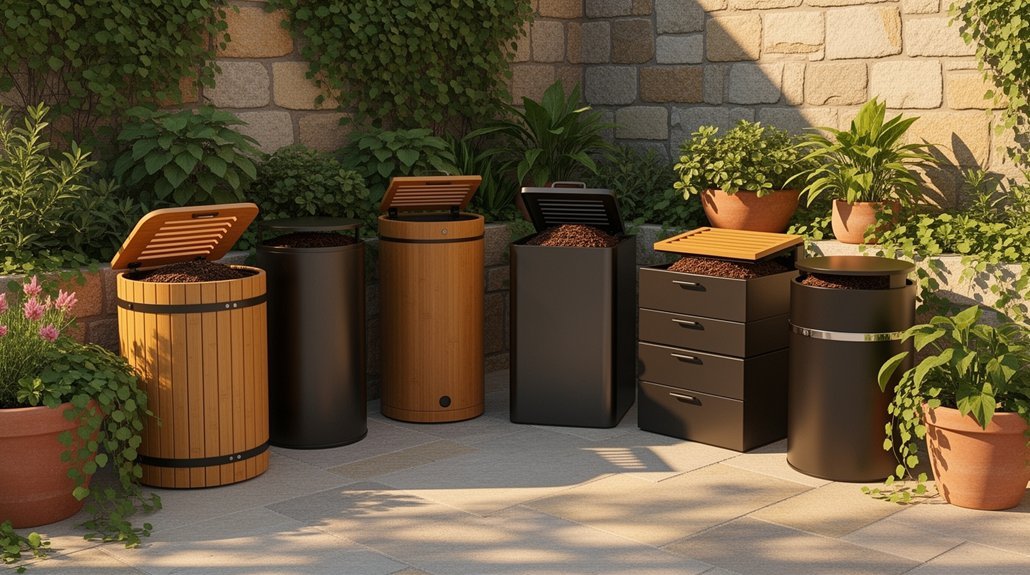

Cover your kitchen scraps with a dry, carbon‑rich layer—shredded cardboard, leaves, or wood shavings—right after you add them, and seal the bin tightly with a click‑shut or charcoal‑filtered lid. Keep the pile aerated by turning it every two weeks and maintain a damp‑but‑not‑dripping moisture level, adding more dry browns as needed. Use hot or fully enclosed compost systems to raise the temperature, and set apple‑cider‑vinegar traps nearby. If you follow these steps, you’ll find even more tricks to keep flies out.
Cover Kitchen Scraps With Dry Materials to Block Fruit Flies

A simple dry layer over your kitchen scraps creates a physical barrier that keeps fruit flies out. You spread up to an inch of fresh bedding—shredded paper, newspaper, or a brown paper towel—right after you add scraps. If flies have already appeared, add two to three inches of wood shavings, which block their entry and exit routes. The dry cover absorbs excess liquid, slows odor release, and prevents flies from reaching the yeast‑rich material they love.
Keep the scraps fully buried under at least one inch of material, and never let the top become soggy; a dry, fluffy layer stays effective longer. Add a new dry layer each time you toss in food, secure the lid, and empty the pail every day or two to stay ahead of any fly pressure. Consider using airtight food storage containers with proper sealing to further prevent fruit fly access to your composting materials. Use a bagless vacuum to verify that caught flies are dead.
Add Carbon‑Rich Browns to Balance Moisture and Nitrogen
You’ll want to sprinkle dry carbon‑rich browns—like shredded cardboard, dead leaves, or straw—through every layer of your bin. These materials soak up excess liquid and keep the C:N ratio in the sweet spot, so the pile stays dry and odor‑free. When the moisture stays low, fruit flies lose their breeding ground and the compost breaks down faster. Adding small wood chips helps balance the carbon‑nitrogen ratio and further reduces moisture. Maintaining proper moisture levels also prevents the odor-causing bacteria that attract fruit flies to your composting system.
Dry Carbon Materials
Dry carbon materials—like shredded newspaper, cardboard, leaves, straw, and wood chips—absorb the excess moisture that fruit waste brings to a home compost bin. They pull water from wet scraps, making the pile less damp and less inviting to fruit flies, which love soggy, decaying matter. By spreading a thick (≈12 in.) top layer of these browns, you create a physical barrier that blocks flies from reaching exposed food and reduces egg‑laying sites. The dry layer also seals in odors, cutting the scent cues that attract adults. Shredded and bulky browns improve airflow, preventing slimy surfaces and keeping the pile aerated. This structure speeds heat buildup, fostering hotter, faster decomposition that further discourages flies and limits larval survival. Adding a generous amount of dry leaves as a cover layer helps maintain the proper moisture balance. For apartment dwellers seeking odor-free alternatives, Black Soldier Fly composting systems offer an effective solution that eliminates fruit fly problems through sealed, self-harvesting designs.
Balance C:N Ratio
Why does a balanced C:N ratio keep fruit flies at bay? Because a 25–30:1 carbon‑to‑nitrogen mix absorbs excess nitrogen, prevents the wet, fermenting environment flies love, and limits exposed food waste where they lay eggs. When you add dry leaves, straw, shredded twigs, or paper after each fresh‑scrap drop, you raise the carbon side and keep the pile from turning slimy or sour. Aim for a near‑ideal ratio, turn the heap regularly, and watch for ammonia smells or compacted spots—signs you need more browns. By maintaining this balance, decomposition stays fast, odors stay mild, and the surface food source that fuels fruit‑fly breeding disappears. For indoor composters, activated carbon filters provide an additional layer of odor control that complements proper C:N balance. Adding a carbon‑rich top layer further reduces moisture and deprives flies of a breeding ground.
Prevent Moisture Buildup
How can you keep fruit flies out of your compost while still maintaining a healthy, active pile? Moisture control is key. Adding dry, carbon‑rich browns so up excess water, improves airflow, and blocks the soggy spots flies love. Use coarse, fibrous material—like straw, wood chips, or shredded leaves—to create channels for drainage and prevent compaction. Layer or mix browns over kitchen scraps, capping wet surfaces and spreading moisture evenly. If rain or over‑watering saturates the pile, toss in more dry browns, turn the heap, and cover it to keep extra water out. Maintaining a damp‑but‑not‑dripping consistency (the wrung‑out sponge test) discourages fruit flies and keeps microbes thriving. For kitchen waste specifically, consider using an odor-control crock with a charcoal filter to store scraps indoors before adding them to your outdoor pile, which reduces the attraction of flies to your composting area.
- Add a generous layer of dry browns after each green addition.
- Choose coarse, fibrous carbon sources for better structure and drainage.
- Mix or layer browns thoroughly to eliminate wet pockets and cover food waste.
Apply a thick biocover to armor moisture and protect from wind and sun.
Turn and Aerate the Pile Every Two Weeks for Oxygen
You’ll want to turn your pile every two weeks to let fresh oxygen in and keep aerobic microbes thriving.
This regular aeration breaks up wet, stagnant spots that fruit flies love, spreading moisture evenly throughout the compost. Adding turning helps distribute microbes and moisture, speeding up decomposition. Layering waste with moisture control aids helps prevent soggy scraps that slow microbial activity and create conditions fruit flies find attractive.
Boost Oxygen Flow
Ever wonder why a simple turn every two weeks can keep fruit flies at bay? You’re giving microbes oxygen, speeding breakdown of fruit scraps before flies can exploit them. Aerobic conditions also curb the sour odors that lure pests. By turning, you break up compacted layers, expose trapped food, and keep the surface dry and unappealing. When temperatures stay between 70-80°F, fruit fly activity peaks, making consistent aeration even more critical during warm months.
- Insert aeration tools – poke holes or slide perforated pipes to create permanent air channels.
- Add bulky carbon – twigs, straw, shredded paper maintain gaps and prevent compaction.
- Use a breathable base – a pallet or mesh lets air rise from below, sustaining flow as the pile settles.
These steps keep the pile lively, reduce fly‑friendly pockets, and let you compost without unwanted visitors.
Including high‑carbon bulking material like sawdust further enhances airflow and prevents compaction.
Prevent Moisture Buildup
Why let soggy spots turn your compost into a fruit‑fly haven? You can stop that by turning and aerating the pile every two weeks. Each turn breaks up wet pockets, redistributes moisture, and injects oxygen, keeping the environment aerobic. Dry, brown materials absorb excess liquid, while fresh scraps stay covered and less attractive to flies. Regular aeration releases trapped heat, speeds drying, and prevents the sour, anaerobic conditions that lure fruit‑fly larvae. Keep an eye on odor and dampness; if a handful yields more than a drop or two of liquid, add more dry carbon. Carbon filters designed for compost bins can also help neutralize odors that attract fruit flies to your pile. Adding a layer of high‑carbon material before each turn helps maintain optimal moisture levels throughout the process.
| Action | Effect |
|---|---|
| Turn pile bi‑weekly | Breaks wet pockets |
| Add dry browns | Absorbs excess moisture |
| Cover fresh scraps | Reduces exposed wet surfaces |
| Monitor liquid runoff | Signals over‑wetness |
| Maintain 65‑70% moisture | Keeps pile aerobic |
Control Moisture and Ensure Proper Drainage

Is your compost too soggy? You’ll notice a wet, heavy pile that smells must and attracts fruit flies. First, run the squeeze test: if water drips out, you’ve got excess moisture. Next, add dry browns—shredded paper, cardboard, or straw—to soak up liquid and restore the 2‑to‑3 brown‑to‑green ratio. Finally, improve drainage by checking for cracks, clearing blocked holes, and placing a layer of absorbent bedding on top.
- Mix in dry carbon materials after each wet addition.
- Turn the pile regularly to aerate and evaporate water.
- Inspect the bin’s base and drainage channels weekly.
These steps keep the compost aerobic, reduce soggy pockets, and deny fruit flies a breeding ground. Consider using a secure compost container with built-in drainage holes to prevent water accumulation and maintain optimal moisture levels.
Rapid lifecycle makes it essential to keep the pile dry and well‑ventilated.
Seal Kitchen Compost Bins and Empty Them Frequently
After balancing moisture, the next step is to keep fruit flies out of the kitchen bin by sealing it tightly and emptying it often. Use a lid that clicks shut, preferably airtight or leak‑proof, so flies can’t slip through the gaps. If you transport the bin to an outdoor pile, the sealed lid also blocks odors that attract pests. Empty the contents at least once a day, especially in a warm kitchen where fruit peels decompose quickly. Regular removal stops flies from laying eggs and cuts down on smell.
Choose a breathable lid with a charcoal filter for extra odor control, but still rinse the bin after each emptying. A smooth, washable container makes quick cleaning easy, keeping residues that lure flies at bay.
Using a stainless steel mixing bowl provides a durable, low‑odor option that can be sealed with its lid for effective pest control.
Set Apple Cider Vinegar Traps Near the Compost Area

Ever wondered how a simple bowl of apple cider vinegar can keep fruit flies off your kitchen compost? You can turn that bowl into a magnetic trap. Fill a shallow jar with ½‑2 inches of apple cider vinegar, add a few drops of dish soap, and place it right next to your compost pail. The fermentation scent lures flies, while the soap breaks surface tension so they drown. Cover the jar with plastic wrap punched with tiny holes, or use a paper funnel to block escape. Refresh the mixture every few days to keep the lure strong. For additional odor control in your compost bin, consider using bokashi bran which absorbs excess liquid and minimizes odors that attract fruit flies.
- Use a shallow bowl or jar with ½‑2 inches of vinegar.
- Add 1‑4 drops of dish soap to reduce surface tension.
- Cover with plastic wrap or a paper funnel, punching holes just large enough for flies to enter.
Fruit flies are attracted to fermenting liquids and will quickly congregate near any source of such scent.
Use Fully Enclosed or Hot Composting Systems
Why settle for a swarm of fruit flies when a sealed or hot compost system can shut them out? A fully enclosed bin blocks entry, traps odors, and lets you control moisture with drainage or absorbent liners. Hot composting raises the core temperature, killing eggs and larvae while rapid decomposition prevents scraps from staying exposed. Pair a sealed lid with carbon filters to absorb volatile compounds, and balance greens with dry browns to keep the mix dry. Small, frozen additions are easier to cover, and frequent lid checks limit buildup. Both approaches work best when you manage inputs and insulation, turning your compost into a fruit‑fly‑free zone.
| Feature | Enclosed System | Hot Compost System |
|---|---|---|
| Insect barrier | Sealed lid, airtight cover | High core temperature |
| Odor control | Carbon filter, trapped gases | Fast decay reduces smell |
| Moisture management | Drainage, absorbent liners | Insulation retains heat |
| Input handling | Small, frozen additions | Balanced greens/browns |
| Best use | High pest pressure, indoor | Well‑managed, insulated piles |
Troubleshoot Persistent Infestations With Combined Tactics

Even with a sealed lid or hot pile, fruit flies can still find a foothold if the mix isn’t balanced, moisture isn’t controlled, or odors slip out. You’ll need a layered strategy: rebalance your greens‑to‑browns ratio, bury scraps under a thick carbon blanket, and add physical or chemical barriers. Use these three combined tactics to choke the infestation.
- Adjust C:N and moisture – Mix every wet fruit batch with equal dry carbon (leaves, straw, shredded paper) and keep the pile damp, not soggy. Insufficient carbon
- Cover and conceal – Tuck fresh waste a, then spread a 2‑inch layer of dry browns, soil, or wood ash; wrap especially smelly bits in newspaper first.
- Deploy traps and amendments – Set bottle traps with banana peel, sprinkle diatomaceous earth after turning, and consider a thin lime dusting to deter adult flies.
Maintain Long‑Term Fly‑Free Compost With Routine Checks
How can you keep fruit flies out of your compost for the long haul? Check moisture every week and do the squeeze test—your pile should feel like a wrung‑out sponge. If it’s soggy, mix in shredded paper, cardboard, or sawdust and turn it to restore airflow. Whenever you add kitchen scraps, bury them deep, then cover with a brown layer to block flies and odors. Turn the pile regularly; disturbing eggs and larvae every few days stops their life cycle and reveals wet spots or compacted zones. Remove finished compost promptly, wipe bin walls, and seal any gaps. Inspect each addition for exposed food, especially in warm months, and keep a simple routine of adding browns, covering scraps, and monitoring moisture to stay fly‑free. Increase sun exposure to boost pile temperature and further deter flies.
Frequently Asked Questions
Can I Compost Meat or Dairy Without Attracting Flies?
You can compost meat or dairy, but only if you bury it deep under plenty of dry carbon material, keep the pile hot, and seal it tightly; otherwise flies will be attracted.
How Deep Should the Brown Material Layer Be for Effective Fly Prevention?
You should aim for at least six inches of brown material, preferably ten to twelve inches when you can, to fully cover scraps, block scent, and keep fruit flies out.
Do Different Types of Kitchen Bins Affect Fly Infestation Rates?
You’ll see fewer flies when you use sealed, tight‑fitting kitchen bins with carbon filters; open‑top or loose‑lid containers let odors escape, inviting infestations, while step‑on trash cans block entry entirely.
Will Adding Garden Soil to the Pile Increase or Decrease Flies?
You’ll see fewer flies if you sprinkle a thin, dry layer of garden soil over fresh scraps, but avoid thick, wet patches—those trap moisture and can actually invite more fruit flies.
How Often Should I Replace Apple Cider Vinegar Traps for Optimal Results?
You should swap the vinegar trap every two to three days, or sooner if it looks cloudy, smells faint, or fills with dead flies—daily checks in active compost areas keep attraction strong.
In Summary
Keep your kitchen scraps covered with dry, carbon‑rich material and turn the pile every couple of weeks to give it oxygen. Monitor moisture, seal the bin, and use cider‑vinegar traps if flies appear. If problems persist, switch to an enclosed or hot compost system and combine tactics. Regular checks and maintenance will keep your compost fly‑free, letting you recycle waste efficiently without the nuisance of fruit flies.