
Keep your worm bin at about 80 % moisture—squeeze the bedding and if water drips, it’s too wet. Add a fluffy, carbon‑rich top layer of shredded paper, cardboard, or brown bags to smother flies and mites. Bury food scraps under the bedding and rotate feeding spots to block roaches and ants. Seal the bin with a tight lid and small screened vents, and place it on a raised, shaded spot for airflow while keeping pests out. Continue on and you’ll discover even more tips.
Why Proper Moisture Is the Foundation of a Healthy Worm Bin
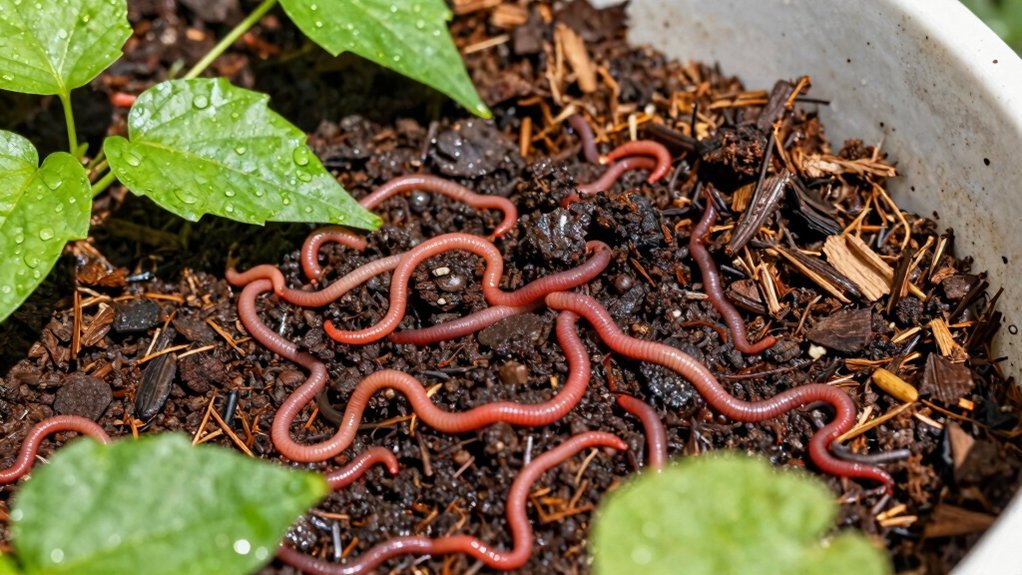
A healthy worm bin starts with the right moisture level, because it keeps the environment aerobic and lets the worms breathe through their skin. Aim for about 80 % moisture—think of a wrung‑out sponge: damp, not dripping. This balance supplies oxygen, lets worms move freely, and keeps their skin respiration efficient. When bedding is too wet, oxygen drops, microbes turn anaerobic, odors rise, and worms slow down.
Too dry, and skin gas exchange stalls, making them sluggish and reducing food breakdown. Good bedding—shredded newspaper, cardboard, coir, straw—acts as a water buffer, holding moisture while preserving air pockets. The porous structure of quality materials enhances aeration for beneficial microorganisms while maintaining consistent moisture levels. Adjust for high‑water scraps, climate, and ventilation by misting, not pouring, and add dry material if leachate appears. This steady moisture foundation supports rapid composting and a healthy worm community. Worms breathe through their skin, so moisture is essential for their survival.
Keep Worm Bin Moisture Just Right to Deter Flies & Mites
Ever wondered why flies and mites suddenly appear in your worm bin? Keep moisture in the sweet spot—damp like a wrung‑out sponge, not soggy—to starve them. Aim for 60‑80% moisture; test by squeezing a handful of bedding. If water drips, you’re over the limit.
- Buried food only – cover wet scraps with dry bedding to prevent fermenting hotspots.
- Fluff regularly – break up compacted layers, boost airflow, and spread moisture evenly.
- Adjust feed size – add smaller, more frequent portions, especially water‑rich produce.
- Ventilate wisely – use a lid with holes; avoid large openings that let flies in.
Watch for condensation, wet clumps, or foul smells—those are early warnings to tweak moisture before pests explode. Excess water can lead to leachate formation, which indicates overly wet conditions. Consider implementing auto start/stop features similar to modern equipment designs to maintain consistent aeration timing in your bin system.
Add a Thick, Carbon‑Rich Top Layer to Smother Pests
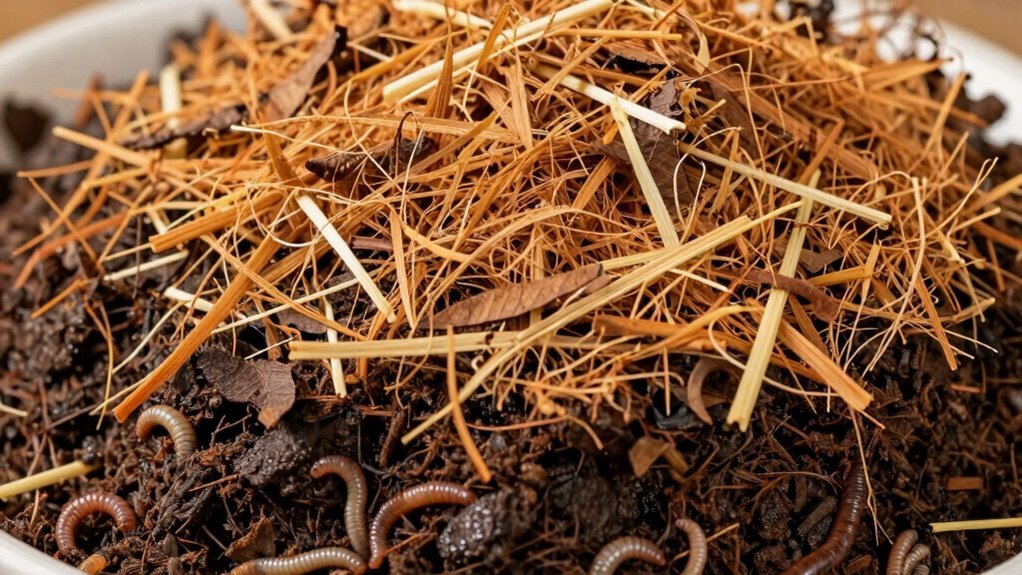
Wondering how to keep flies and mites from colonizing the surface of your worm bin? Spread a thick, carbon‑rich cap of shredded paper, cardboard, or brown grocery bags over the bedding. The loose, breathable blanket smothers pests, blocks egg‑laying, and cuts odors that attract insects. Keep the layer fluffy, not compacted, so air circulates and worms can move. Refresh the cap regularly; as it breaks down, add fresh material to maintain a protective barrier. Overfeeding can cause food rot and attract pests, so maintain a balanced feed schedule. Using biodegradable ingredients like compostable paper pulp helps break down naturally while maintaining an effective pest barrier.
| Material | Why Use It | How to Apply |
|---|---|---|
| Shredded cardboard | High carbon, creates air pockets | Spread 2‑3 cm loosely |
| Newspaper (black‑ink) | Reduces odor, cheap | Layer 1‑2 cm, avoid glossy |
| Brown grocery bags | Durable, adds structure | Tear into strips, scatter evenly |
| Compostable paper pulp | Moisture‑retaining | Lightly damp, fluff on top |
| Worm blanket | Extra protection, moisture lock | Lay over other layers, replace weekly |
Bury Food in Your Worm Bin to Stop Roaches & Ants
After laying a carbon‑rich blanket, the next step is to hide your food scraps beneath the bedding. Burying the scraps cuts off the scent and surface access that ants, roaches, and fruit flies love. Use a generous layer of plant‑based material to seal the odor and keep moisture from pooling. Rotate feeding spots so no hot spot forms, and keep each burial small enough for worms to consume quickly. Freezing scraps before you add them kills any hidden eggs, then thaw and cover them for a clean, dry zone. Storing your food waste in a cool, dry place before composting can further reduce pest attraction by minimizing decomposition odors.
- Dig a shallow trench in the center of the bin.
- Place a modest amount of food in the trench.
- Cover with at least 2‑3 cm of bedding.
- Move to a new spot each feeding.
Add a thin layer of dry bedding after covering to further reduce moisture that attracts pests.
Seal Your Worm Bin and Ventilate Properly to Block Flying Pests
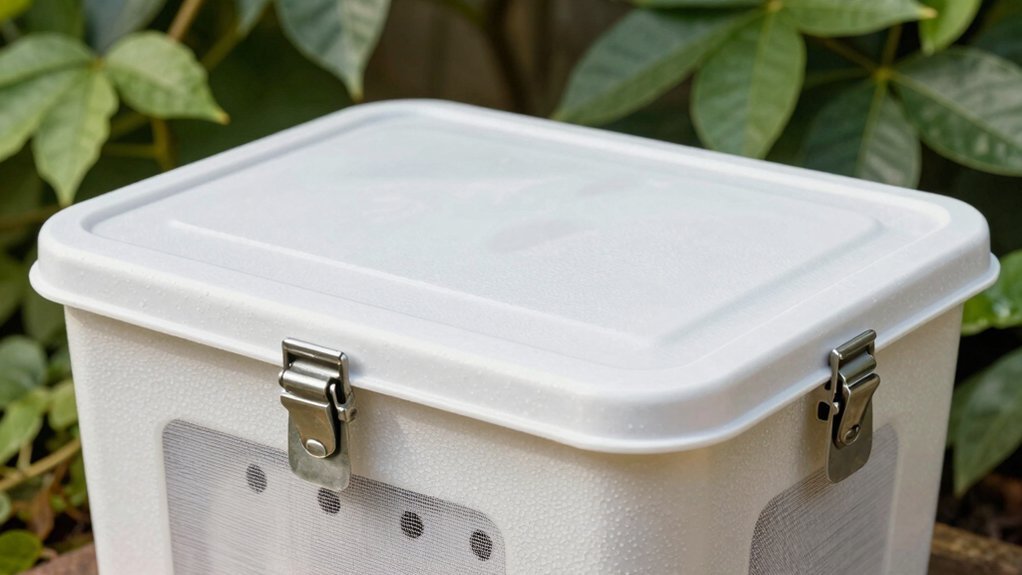
How can you keep fruit flies and gnats out while still giving your worms the airflow they need? Use a tight‑fitting lid that seals around the edges but leaves a few small, screened vents. Check the lid regularly for warping or gaps, and replace any torn mesh. The vents should be just large enough for air to circulate yet small enough that insects can’t slip through. Mesh screens over each opening block flying pests while maintaining airflow, preventing moisture buildup and odor that attract gnats. Position the bin on a raised, shaded spot to deter ground‑dwelling pests and overheating. Consider using a wheeled cart to easily reposition your bin for optimal shade and drainage. By balancing a sealed lid with fine‑mesh ventilation, you keep the bin humid enough for worms yet hostile to flies. Maintain proper moisture levels to avoid creating a breeding ground for pests.
Frequently Asked Questions
Can I Use Coffee Grounds Without Attracting Fruit Flies?
Yes, you can use coffee grounds if you bury them in the bedding, mix them with cardboard, and keep the surface covered. This blocks flies from laying eggs and prevents them from being attracted.
Should I Add Lime to Control Odor and Pests?
You shouldn’t rely on lime for odor or pests; use it sparingly only if acidity spikes. Instead, balance feeding, keep moisture low, add crushed eggshells, and maintain good aeration to keep pests away.
Are There Safe Natural Predators to Introduce for Pest Control?
You won’t find safe natural predators for a worm bin; introducing insects or animals usually harms the worms. Focus on covering waste, controlling moisture, and sealing the lid instead.
How Often Should I Rotate Bedding to Prevent Mite Buildup?
You should turn the bedding lightly every two to three weeks, or whenever it feels soggy. A gentle fold during each feeding helps dry hotspots, disrupts mite habitats, and keeps oxygen flowing.
Can I Keep a Worm Bin Outdoors Without Extra Pest Barriers?
You can keep an outdoor worm bin without extra barriers if you maintain a tight‑fitting lid, cover food scraps, keep bedding dry, and monitor moisture. Consistent upkeep and proper ventilation will prevent most pests.
In Summary
By keeping the moisture balanced, adding a carbon‑rich cover, burying food, and sealing while ventilating your bin, you’ll starve flies, mites, roaches, and ants. Those simple steps create an environment worms love and pests can’t survive. Stick to them, and your vermicompost will stay healthy, productive, and pest‑free.