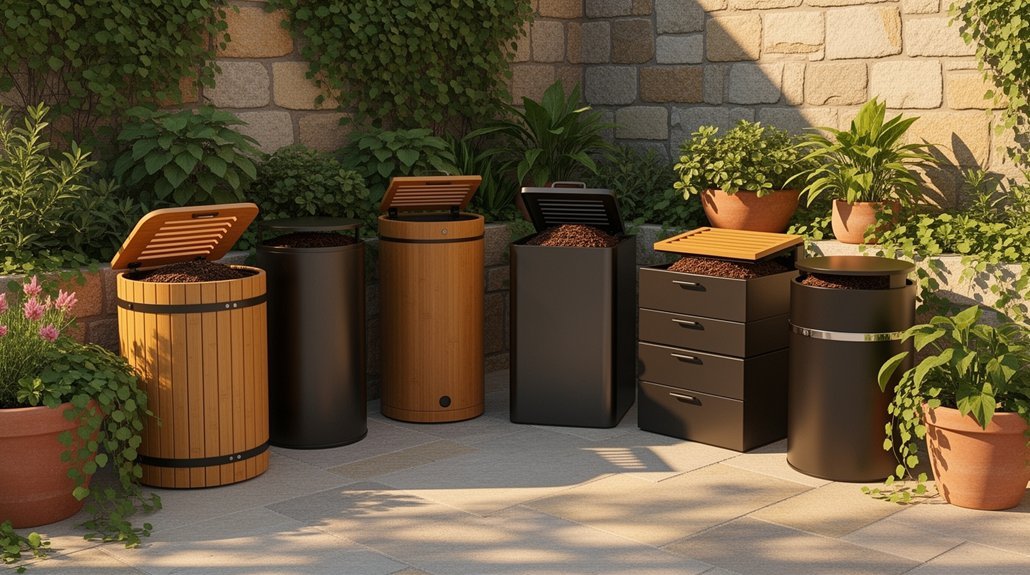

A compact compost bin on your balcony turns everyday kitchen scraps into nutrient‑dense soil, cuts waste, and fuels healthier container plants right where you live. It fits tight spaces, drains and aerates through bricks or blocks, and keeps odors and pests at bay with a sealed, vented lid. By balancing greens and browns, you maintain a damp‑sponge texture that speeds decomposition. The bin also lets you winter‑proof your balcony garden and easily mix finished compost with potting mix for thriving plants. Keep going to discover the exact setup steps.
What a Compact Compost Bin Does on a Balcony

Ever wondered how a tiny bin on your balcony can turn kitchen scraps into rich soil for your pots? You place a compact compost bin on bricks, allowing airflow and drainage, then layer greens with browns to keep the greens‑browns balance right. The side and bottom holes provide aeration, while a drip tray catches excess leachate, protecting your balcony floor. You monitor moisture, aiming for a damp‑sponge feel, and turn the pile regularly to boost oxygen flow. By shielding the bin from direct sun and extreme cold, you maintain ideal temperature for microbes. Sealing the lid keeps rain, pests, and odors out, turning everyday waste into nutrient‑dense substrate for your container garden. BPI certification
Choosing the Right Size & Material for a Balcony Compost Bin
What size and material will keep your balcony compost bin functional yet unobtrusive? You’ll want a compact size of 3–75 liters, small enough to sit on a railing or a corner shelf but big enough for a week’s worth of scraps. Choose materials that resist rust and UV, like food‑grade plastic or stainless steel, and make sure the lid seals tightly. Drill drainage holes and aeration vents to avoid soggy clumps and keep odors at bay. Elevate the bin on bricks or blocks to improve airflow and moisture control, and consider a shallow, vertical shape that fits tight spaces while allowing easy turning. The design should balance privacy considerations and airflow to support efficient composting and minimize visibility from adjacent spaces. UV‑resistant materials
Balancing Greens & Browns in a Small‑Space Compost System

Choosing the right size and material gets your compost bin set up, but the next step is keeping the mix healthy. To master balancing greens browns in a small‑space compost, start with a 1:1 to 1:3 volume ratio of kitchen scraps to carbon sources. Alternate layers—greens first, then a generous browns layer of shredded paper or dryer lint—to boost aeration and prevent sogginess. Since balcony browns are scarce, keep a stash of newspaper and lint ready for quick top‑ups. Place your balcony compost bin in a plastic container with drainage holes, and use a drip tray to catch excess liquid. Regularly check moisture; if the pile feels slimy, add more browns and stir to maintain airflow and proper moisture management. Using a bokashi starter can help accelerate fermentation and odor control when you’re able to integrate Bokashi bran in small batches odor control.
Managing Moisture, Odor, and Pests in Your Balcony Compost Bin
You’ll keep your balcony bin humming by balancing moisture—add dry browns when it feels soggy and stir it gently to bring in air.
Prevent smells by alternating greens with browns, using a drip tray, and ensuring proper drainage through holes or vents.
Seal the lid, tuck scraps under bedding, and stash the bin in a shady, sheltered spot to keep birds and insects out.
Introducing a vented lid in addition to the existing design can further improve airflow and reduce moisture buildup vented lid.
Balcony Moisture Control
Ever wondered why your balcony compost smells sour and stays soggy? You’re probably missing the right moisture balance. Aim for a texture like a wrung‑out sponge—damp, not dripping. Layer greens and browns to regulate moisture and boost aeration. Add dry leaves or shredded paper when it feels too wet, and stir gently to introduce oxygen. Keep a drip tray beneath the bin for proper drainage and to protect your balcony floor.
- Use a leachate catch tray to collect excess liquid.
- Adjust the greens‑to‑browns ratio weekly based on feel.
- Rotate layers every few days to maintain aeration and prevent waterlogging. Stability and ergonomics
Odor‑Free Pest Management
Wondering how to keep your balcony compost bin odor‑free and pest‑free? Start with odor management by balancing moisture. Add extra brown materials—shredded paper, dry leaves—whenever the mix feels soggy, then stir gently to distribute water evenly.
Layer greens and browns, and place a drip tray beneath the bin for drainage; this catches leachate, protects balcony surfaces, and removes standing moisture that attracts insects.
Drill small holes in the lid and turn the pile regularly for aeration, preventing anaerobic zones that emit rotten‑egg smells.
Seal Bokashi or worm bins and bury finished scraps; avoid meat or oily foods in open containers.
These simple steps give you effective pest deterrence while keeping your balcony composting system fresh and clean, and consider choosing a compact ceramic bin with a sturdy handle for easier transport and cleaning to further minimize odors and pests odor-control features.
Winter‑Proofing Your Balcony Compost Bin for Year‑Round Activity

How can you keep your balcony compost thriving when temperatures plunge? Start by picking a sheltered location that shields the bin from wind and direct sun. Wrap the container in bubble‑wrap insulation to retain heat, and place it near a south‑facing wall or a warm vent for extra warmth. Keep moisture balance steady—spray lightly if it dries out, but avoid soggy conditions. Raise the bin on bricks so cold ground moisture can’t freeze the pile, and poke a few holes for aeration to keep microbes active. Insulating the bin helps maintain a stable microclimate for worm and microbial activity during colder periods insulation benefits and using a moisture-aware approach supports consistent decomposition across seasons.
- Move the bin to a garage or utility room during extreme cold.
- Use bubble‑wrap or a foam blanket for insulation around the bin.
- Position the bin near a heat source while maintaining airflow for aeration.
Turning Finished Compost Into Soil for Container Plants
Mixing your finished balcony compost with potting soil creates a light, nutrient‑rich medium perfect for container plants. You’ll want a 1:3 ratio—one part finished compost to three parts potting soil—to keep nutrients balanced and avoid burn. After blending, spread a thin layer of worm castings on the surface; they release steady nourishment and boost soil life. If you’ve used bokashi pre‑compost, bury it in the mix and let it sit a week or two to fully integrate. This combination enriches the soil, improves moisture retention, and supports healthy root development. Keep your compost bin handy for future batches, and enjoy the thriving, vibrant growth of your container garden.
Frequently Asked Questions
Can You Have a Compost Bin on a Balcony?
Yes, you can keep a compost bin on your balcony; just choose a compact, aerated container, balance greens and browns, ensure drainage, and monitor moisture so the process stays odor‑free.
Are Small Composters Worth It?
Yes, they’re worth it. You’ll turn waste into nutrient‑rich soil, cut trash fees, and enjoy fresher plants. Just manage moisture, balance greens and browns, and keep the bin ventilated for odor‑free results.
Do Compost Bins Attract Termites?
No, properly sealed compost bins don’t attract termites, but if you use untreated wood, keep them damp, or place them near wood and mulch, you’ll invite termites, so choose plastic or metal and keep it dry.
Do Potato Peelings in Compost Attract Rats?
You won’t attract rats if you bury potato peels under dry browns, keep the bin well‑aerated, and avoid soggy piles. Proper layering and regular turning hide food, discouraging rodents.
In Summary
By keeping a compact compost bin on your balcony, you turn kitchen scraps into nutrient‑rich soil for your container garden while reducing waste. Choose the right size and material, balance greens and browns, and control moisture, odor, and pests. With a little winter‑proofing, your bin stays active year‑round, delivering finished compost that fuels healthier plants and a greener, more sustainable balcony space.