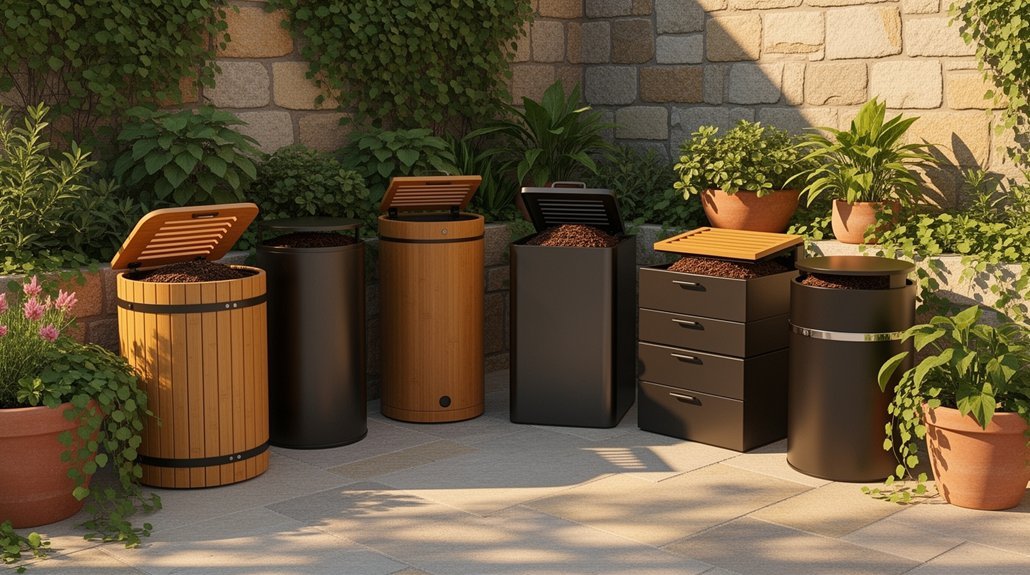
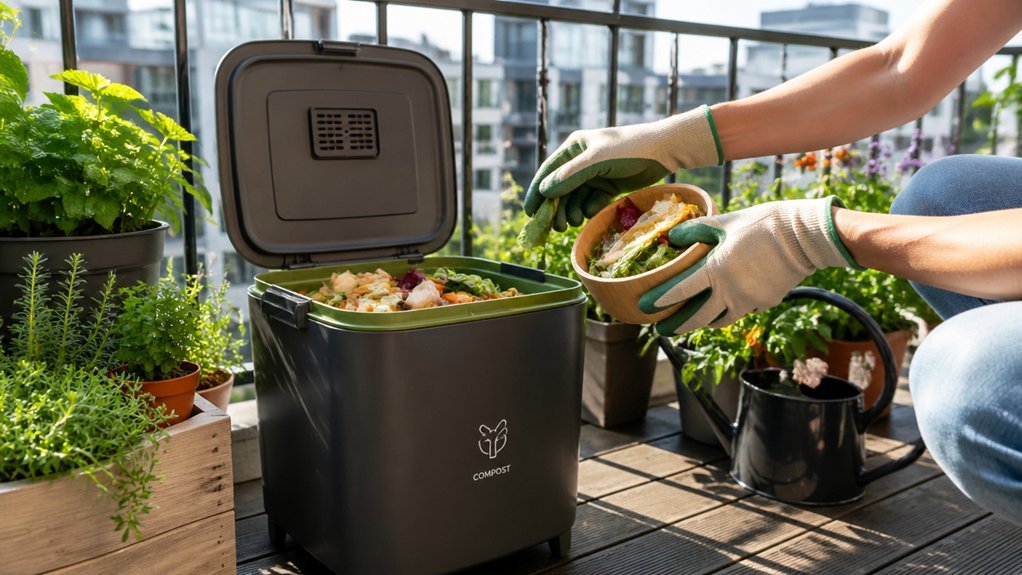
First, verify your lease and HOA allow compost bins on balconies. Then check NYC’s waste‑management rules: if you keep the operation on‑site, under the tonnage limits, and use a sealed, rodent‑proof container, you usually qualify for an exemption and won’t need a permit. Balance greens and browns, keep moisture like a wrung‑out sponge, and store the bin in shade with a drip tray. Keep a simple log of feedstock, moisture, and any odors. Follow these steps and you’ll avoid complaints, while the next section shows how to handle any enforcement notices.
Check Rental & HOA Rules for Balcony Compost
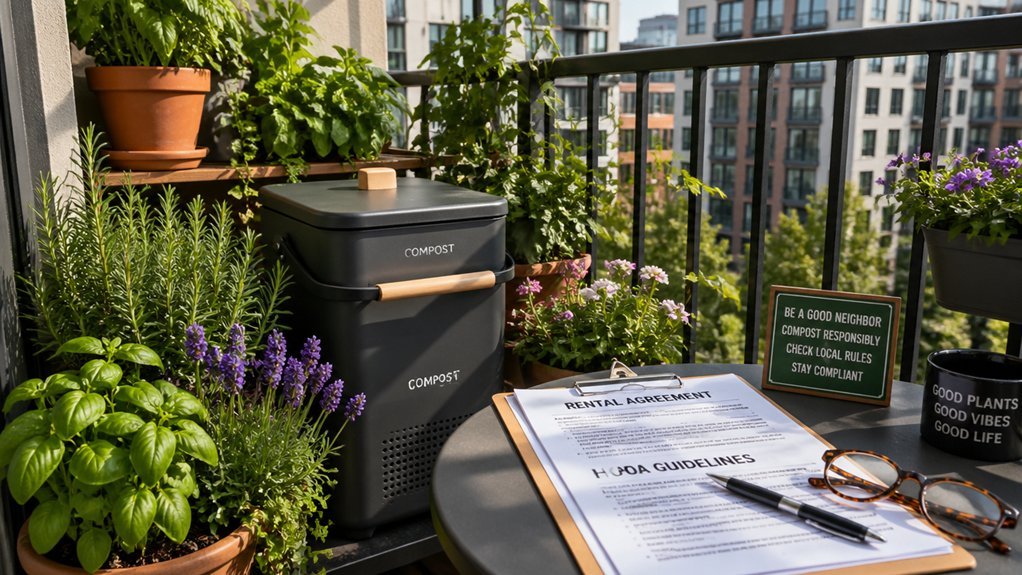
Ever wonder if your lease even allows a compost bin on the balcony? Start by scanning the rental rules in your lease; many agreements explicitly ban balcony composting or require landlord approval. Next, pull up HOA or condo association documents—look for clauses about odors, visible storage, or prohibited bin types. If the community mandates rodent‑resistant containers with openings no larger than a quarter inch, you’ll need to comply or switch to an approved enclosure. Ask whether the HOA expects off‑site pickups or resident drop‑offs, and note any penalties for violations. Some associations allow vermicomposting or Bokashi with a variance, so request clarification before you set up anything. Staying on top of these details prevents fines and keeps your composting project hassle‑free. A clear understanding of design and odor controls helps ensure your setup remains compliant while still meeting practical needs.
NYC State Compost Rules for Balcony Compost
Wondering how NYC’s state compost rules affect your balcony setup? You can join the city‑wide curbside composting program through the NYC Compost Project or NYC Compost Collective, which includes groups like Big Reuse, BK Rot, Cafeterera Culture, and GrowNYC. For guidance, contact the Department of Sanitation or any partner organization for drop‑off locations listed on ShareWaste. State law still mandates permits for agricultural‑scale composters who accept off‑site food scraps, but residential balcony composting usually falls outside that scope. You may be exempt if your bin produces minimal odor, handles only kitchen waste, and remains on private property. Keep records of your waste stream and monitor odor levels to stay compliant without needing a formal permit. The guidance in these programs helps ensure odor control and proper drainage practices, which are key considerations for balcony systems like the all‑in‑one and two‑bucket setups odor control.
When Is a Municipal Permit Required for Balcony Compost?
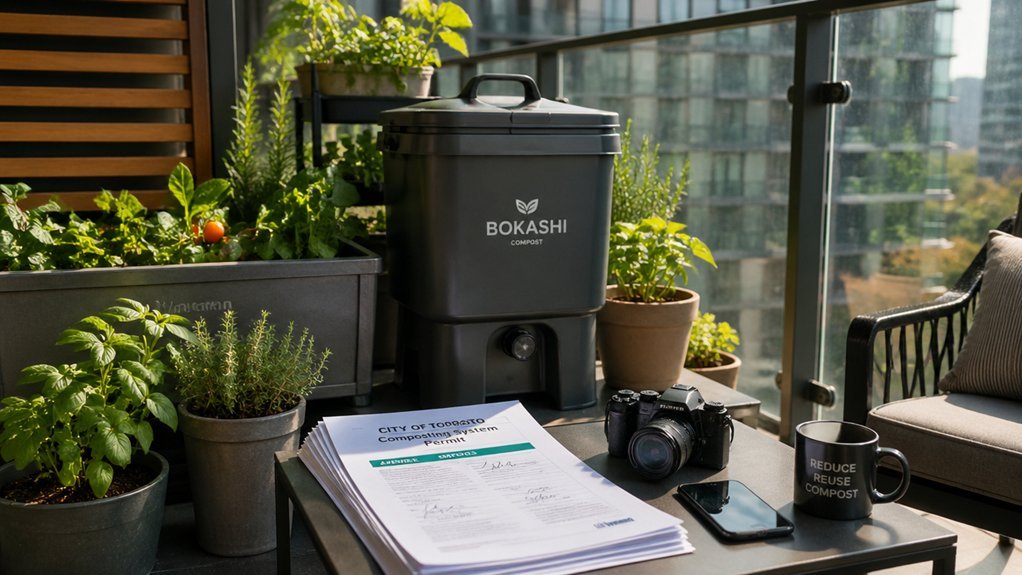
NYC’s curbside compost program lets you recycle kitchen scraps without a permit, but the moment you start accepting waste from neighbors or other off‑site sources, a municipal permit becomes mandatory. In New York, any agricultural‑type compost operation that gathers off‑site food scraps triggers the NYSDEC requirement for a permit. Even if you keep the bin on your balcony, once you expand beyond your own household waste, you must register and obtain the appropriate permit. Properly documenting and labeling your compost setup can also help when communicating with city inspectors and ensuring compliance with local guidelines, especially for on‑site, low‑odor, low‑dust operations that stay under guidance limits permit requirements.
Exemptions for Small‑Scale or Vermicomposting Balcony Compost
What qualifies a tiny balcony bin for an exemption? You must keep the operation small‑scale, avoid pest vectors, and limit odor or dust. NYC and NYSDEC allow exemptions when the compost stays on‑site less than 36 months, processes only locally generated food scraps, and stays under tonnage thresholds. Vermicomposting meets the same rules if you manage moisture, airflow, and harvest regularly. Non-woven fabric and cardboard offer lightweight convenience, but plastic baskets provide rigid, drop-resistant construction for outdoor storage where moisture may be present.
Rodent‑Resistant Bins for Balcony Compost
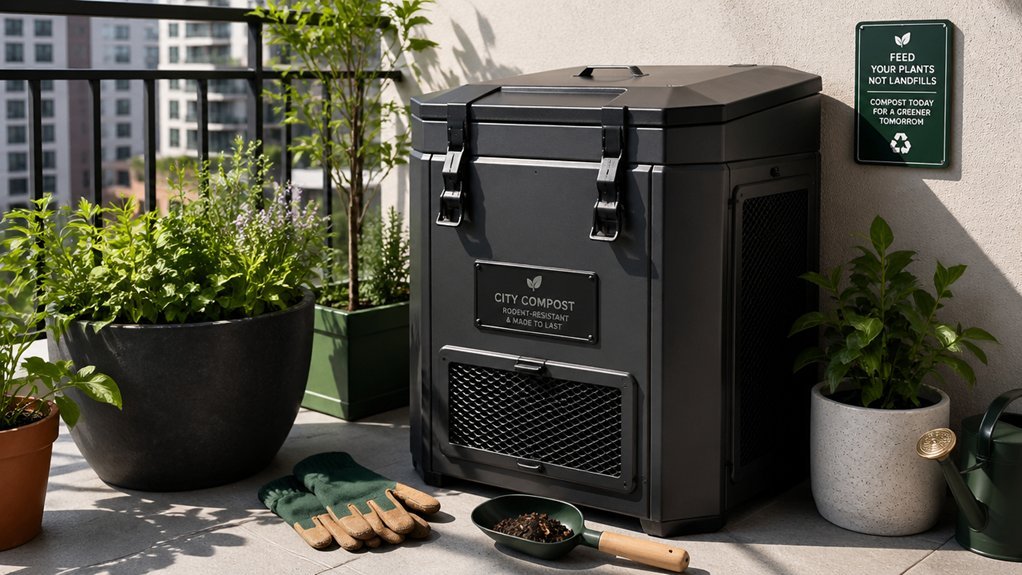
Because rodents can turn a tidy balcony compost into a nuisance, you’ll need a bin that blocks any entry points larger than a quarter‑inch. Choose a rodent‑resistant container with a lid that seals tightly and a bottom lined with 1/4‑inch hardware cloth or wire mesh. Make sure the mesh covers every gap, even around hinges and handles, because pests can squeeze through tiny spaces. Keep the bin’s interior balanced—mix greens and browns, avoid excess moisture, and turn the pile regularly to reduce odors that attract rodents. In urban settings, a well‑maintained, rodent‑resistant bin not only complies with local ordinances but also prevents neighbor complaints and protects your balcony composting effort from unwanted foragers. Regularly inspect the exterior for any new gaps, and ensure moisture levels remain balanced to deter pests rodent-resistant design.
Set Up Your Rodent‑Resistant Balcony Compost Bin
You’ll start by choosing a rodent‑proof bin with a lid no larger than ¼ inch and line the bottom with hardware cloth or wire mesh. Then elevate the container on bricks or wood blocks to boost airflow and keep pests away while you layer greens and browns, turn regularly, and manage drainage. Finally, keep a tight‑fitting lid on and monitor moisture to stop odors that attract rodents. Activated charcoal filters with a proper fit help maintain odor containment and prevent gas escape from the bin lid compatibility.
Rodent‑Proof Bin Design
Ever wondered how to keep rodents out of your balcony compost? Start with a solid rodent‑proofing plan that tackles every entry point. Choose a bin with a lid that latches tightly and a body made of sturdy plastic or metal. Line the bottom with hardware cloth or wire mesh, ensuring every opening is no larger than ¼ inch. Elevate the bin on a balcony or non‑soil surface to stop ground‑level access. Keep the interior clean and dry, and empty it regularly to avoid odors that attract pests.
Install ¼‑inch mesh on sides, lid, and base. Use secure latching lids with tight seals. Elevate the bin on a stable, non‑soil platform. lid design
Secure Mesh and Openings
After installing the ¼‑inch mesh on the bin’s sides, lid, and base, the next step is to seal every opening so rodents can’t slip through. You’ll want to check each seam, hinge, and latch for gaps; a thin strip of silicone caulk or weather‑proof tape works well for a tight, rodent‑proof seal. When you attach the lid, align the mesh openings perfectly and fasten the latch so the lid can’t be pried open. For the base, verify that the hardware cloth sits flush against the floor of the bin and that any vent holes are covered with the same ¼‑inch mesh. Finally, test the bin by gently shaking it—if you hear no rattling of loose mesh, you’ve secured all mesh openings and minimized pest entry.
Routine Maintenance Practices
Regularly turning the compost—about once every one to two weeks—keeps airflow steady, prevents compaction, and speeds decomposition while maintaining the rodent‑proof seal. For effective compost bin maintenance, follow these steps:
- Check moisture – Touch the mix; it should feel like a wrung‑out sponge. If it’s soggy, add dry browns; if it’s bone‑dry, mist lightly.
- Layer wisely – Alternate greens and browns to balance moisture and odor, ensuring each new layer is thin and well‑mixed.
- Inspect seals – Verify that openings stay under ¼ inch and that the bottom screen is intact; replace any damaged hardware cloth promptly.
Remember to keep the drip tray empty, elevate the bin on bricks, and clear ventilation holes of debris. Proper moisture management and routine turning keep your balcony compost healthy and rodent‑free.
NYSEDDEC Food‑Scrap Guidelines for Balcony Compost
Wondering whether your balcony compost can include food scraps without violating NYSDEC rules? You can add fruit peels, vegetable trimmings, coffee grounds, and tea bags, but you must steer clear of meat, fish, poultry, bones, dairy, pet waste, and plants with rhizomes or woody stems. NYSDEC requires a permit only if you accept off‑site food scraps or exceed specific tonnage limits; on‑site, small‑scale balcony composting usually qualifies for the exemption. Keep the bin sealed, turn it regularly, and monitor odor and moisture to stay within the non‑vector, minimal‑impact criteria. If you ever need guidance, consult the NYSDEC map of drop‑off programs or their troubleshooting tips. This ensures your composting stays legal and odor‑free.
Curbside Compost Partnerships for Balcony Compost
Balcony composting stays legal when you keep food scraps on‑site, but expanding to curbside collection lets you handle larger volumes and reduces odor risk. Partner with NYC programs—NYC Compost Project, NYC Compost Collective, Big Reuse, BK Rot, Cafeteria Culture, Compost Power, Earth Matter, and GrowNYC—to set up regular curbside collection. Use ShareWaste listings to locate nearby drop‑off sites and arrange pick‑ups from restaurants, grocers, or coffee shops. Consistent waste streams keep your balcony tidy and your community happy.
- Contact a city‑approved curbside service and schedule weekly pickups.
- Form composting partnerships with local eateries for supplemental drop‑offs.
- Map NYSDEC‑approved drop‑off locations to fill gaps when curbside collection runs low.
Register Your Balcony Compost With the City
First, check your city’s code to see if a permit is needed for balcony composting. Then, confirm that your unit’s zoning allows a compost bin, vermicompost setup, or Bokashi system. Finally, fill out the registration form with your address, method, and estimated feedstock volume to stay compliant.
Determine Required Permits
How do you know if your balcony compost needs a city permit? First, check whether you accept off‑site food scraps; NYC requires a permit for any agricultural composters doing so, even on a balcony. Next, assess the exemption criteria: non‑vector operations, minimal odor or dust, a stay under 36 months, or single‑facility ownership may qualify you for a waiver. Finally, review material restrictions—crop residues and animal manure often fall outside permit requirements.
- Contact the NYC Compost Project for a quick compliance quiz.
- Use the DEC’s drop‑off map to see if your waste type is exempt.
- Submit a short application to the Department of Health if you don’t meet any exemption.
Identify Zoning Restrictions
If your city has zoning codes that cover residential balconies, you’ll need to check whether they apply to composting before you start. First, locate the municipal zoning ordinance and search for sections on balcony use, waste management, and outdoor storage. Identify any zoning restrictions that limit odors, bin size, or distance from property lines and shared spaces. Note whether the code requires you to register your balcony composting system with the solid‑waste department and what documentation you must submit—address, contact info, bin type, placement, and a maintenance plan. Verify if you must disclose anticipated feedstock sources and outline odor‑control and pest‑prevention measures. Collect this information now so you can meet compliance requirements and avoid fines later.
Submit Registration Application
Having identified the zoning limits, the next step is to file the registration application with the city. For balcony composting, gather all required documentation before you submit. First, list your feedstock sources and expected throughput; the city wants to know what you’ll process. Second, describe odor‑control measures, containment design, and pest‑management plans. Third, attach proof of compliance with NYSDEC’s drop‑off map and any exemption criteria, such as on‑site waste under 36 months.
- Compile a concise project summary.
- Complete the city’s online registration application form.
- Upload supporting documents, then schedule any required inspection.
Following these steps ensures your balcony composting system meets municipal regulations and avoids costly delays.
Odor‑Control Tips for Balcony Compost
Ever wondered why some balcony compost bins stink while others stay fresh? You can master odor control for balcony composting by balancing greens and browns, dodging oily scraps, and keeping the mix as damp as a wrung‑out sponge. Turn the pile weekly to stay oxygen flowing and prevent anaerobic pockets. Use a drip tray to catch leachate, and place the bin in shade to avoid heat‑driven smells. For Bokashi, seal the lid tightly and dilute the weekly tea before spreading.
| What to Do | Why It Works | How to Implement |
|---|---|---|
| Alternate greens/browns | Balances carbon/nitrogen | Add dry leaves after kitchen scraps |
| Turn aer weekly | Introduces oxygen | Use a small garden fork |
| Use drip tray | Controls runoff | Position tray beneath bin |
Document Your Balcony Compost Operations
You’ll want a simple log template that captures start dates, feedstock mixes, bin type and balcony spot so you can spot trends.
Pair it with a compliance checklist that flags moisture, aeration, odor and pest checks each week.
Together they give you a clear record and a quick way to stay within local regulations.
Record Log Templates
What’s the simplest way to keep your balcony compost thriving? Use a record log that captures every detail of your balcony composting routine. Jot down the date, container type, feedstock source, moisture level, and any aeration actions. Note odors, pests, and maintenance milestones like irrigation, browns‑greens balance, drainage checks, and lid security. Track temperature, turning frequency, and troubleshooting steps to refine future batches.
Key log entries
- Daily inputs and weekly outputs, including finished compost readiness (dark, crumbly, earthy).
- Maintenance milestones such as irrigation, browns‑greens balance, drainage checks, and lid security.
- Maturity indicators and approximate time to readiness (2–6 months).
Compliance Checklists
How can you prove your balcony compost meets city rules while keeping the process smooth? Keep a compliance log that captures bin type, location, odor observations, pest checks, and maintenance activities. Record every feedstock source with dates and quantities—kitchen scraps, coffee grounds, garden waste—to show a traceable, diversified waste stream. Note your permit status and any exemptions, especially on‑site waste time limits (under 36 months) and ownership criteria required by New York regulations. List safety measures like rodent‑resistant bin designs (openings ≤ ¼ inch) and bottoms lined with rodent screens or hardware cloth. Maintain an accessible contact list for NYS DEC drop‑off programs, NYC DSNY, and local compost groups, so you can quickly verify compliance and get guidance when needed.
Handle Neighbor Complaints & Enforcement Notices
Ever wonder how to keep peace with neighbors while staying compliant with local codes? You can curb complaints by mastering odor control and sealing enclosure integrity. First, keep the compost moist but not soggy, turn it weekly, and use a tight‑fitting lid. Second, show neighbors your plan: share bin type, containment measures, and a maintenance schedule, then give a contact point for questions. Third, document every action—turning frequency, moisture tweaks, and drain checks—so you have proof if an enforcement notice arrives.
- Maintain odor control with proper moisture and aeration.
- Preserve enclosure integrity using rodent‑proof openings and screens.
- Record maintenance to demonstrate compliance.
Frequently Asked Questions
Can I Compost on My Apartment Balcony?
Yes, you can compost on your apartment balcony; just choose a 3‑foot container, use perforated bins, balance greens and browns, keep moisture sponge‑like, turn regularly, and move it indoors in winter.
What Are the Rules of Composting?
You must keep compostable scraps meat‑free, dairy‑free, and bone‑free, avoid pet waste, and exclude plants with rhizomes or woody stems. Follow NYC’s curbside rules, obtain permits for off‑site collection, and partner with local compost programs.
Where Do You Put Toilet Paper When Using a Composting Toilet?
You put the toilet paper directly into the composting chamber, breaking it into small pieces or shredding it first. Use modest amounts, add carbon material if needed, and keep the system well‑ventilated.
What Three Items Should Not Be Placed in a Compost Pile?
You should keep meat, dairy, and oily foods out of your balcony compost pile; they attract pests, cause odors, and slow decomposition, so avoid adding them to maintain a healthy, odor‑free system.
In Summary
By following the rules, registering, and using a sealed, rodent‑proof bin, you can compost on your balcony without breaking the law or annoying neighbors. Keep odors under control, document your process, and stay ahead of any complaints. With these steps, you’ll turn kitchen scraps into rich soil while staying compliant and keeping the peace.