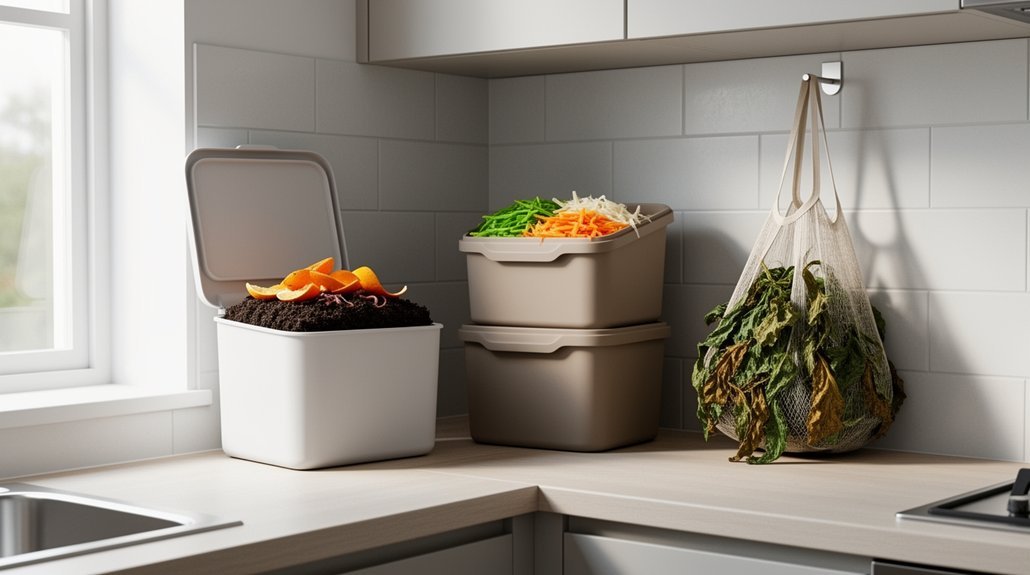
You don’t need much space to compost successfully. Start with a budget-friendly garbage can bin—drill holes, layer brown and green materials, and you’re set. Prefer something indoors? Build a shallow worm bin for your kitchen scraps; you’ll get nutrient-rich castings in weeks. Want faster results? A countertop electric processor reduces waste by 90% in just hours. Each method transforms your scraps into garden gold without consuming precious square footage, and there’s plenty more to discover about optimizing whichever suits you best.
Build a Budget Compost Bin From a Garbage Can
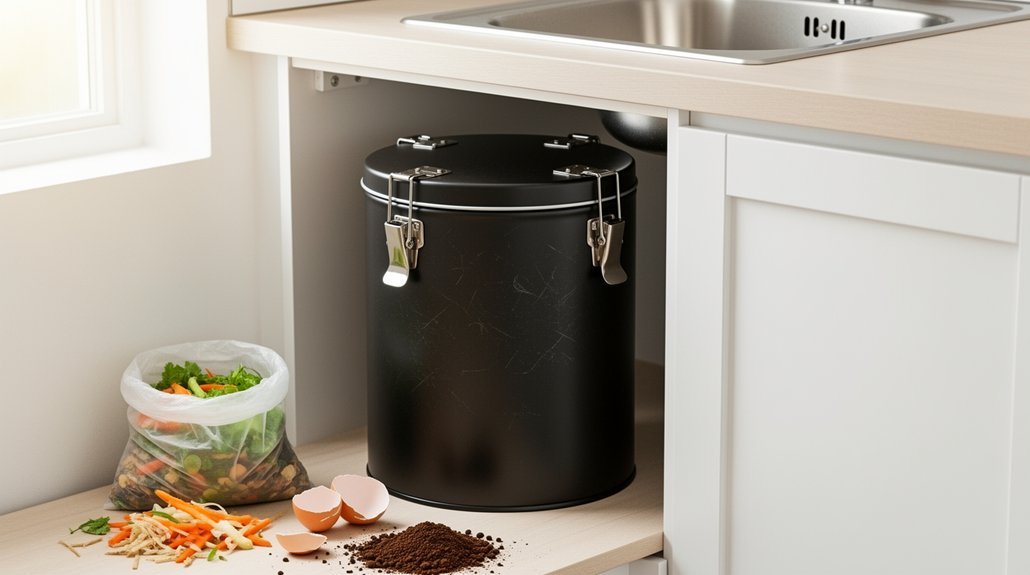
A budget-friendly compost bin starts with a heavy-duty plastic garbage can—typically a 32-gallon model that balances capacity with manageability. You’ll spend as little as $0 using repurposed materials or up to $10 for a sale-priced can.
Start by drilling holes throughout the sides, bottom, and lid using a 1/4-inch or 1/2-inch bit, spacing them 5–6 inches apart. Remove any plastic burrs to avoid sharp edges. Raise your bin on bricks or stones to improve drainage and airflow underneath, or place it directly on the earth to invite worms and ease natural processing.
Fill your bin with balanced layers: three parts brown materials like dried leaves and cardboard to one part green materials like fruit scraps. Maintain a carbon-to-nitrogen ratio around 25–30:1 to optimize decomposition speed and minimize odors. Keep contents moist but not wet, turning weekly. You’ll have usable compost ready in time.
Start an Indoor Worm Bin for Kitchen Scraps
Indoor worm composting offers an excellent solution for processing kitchen scraps in tight spaces, requiring nothing more than an inexpensive plastic storage bin and some red worms.
You’ll want a shallow bin around 15 inches deep with drainage holes in the bottom and ventilation holes in the sides.
Fill it with roughly 8 inches of bedding—shredded newspaper, leaves, or potting soil—moistened to a wrung-out sponge consistency.
Add a handful of soil for grit and beneficial bacteria. The ideal temperature range for indoor composting is between 55-77°F to ensure optimal worm activity and decomposition.
You can bury vegetable and fruit scraps weekly under the bedding to minimize odor and pests.
A 2-pound worm population processes about 1 pound of scraps daily. The worm castings produced from this process create a nutrient-rich natural fertilizer for your plants.
Keep your bin moist, dark, and covered to maintain ideal conditions for your worms.
Use a Countertop Electric Processor for Compact, Fast Results
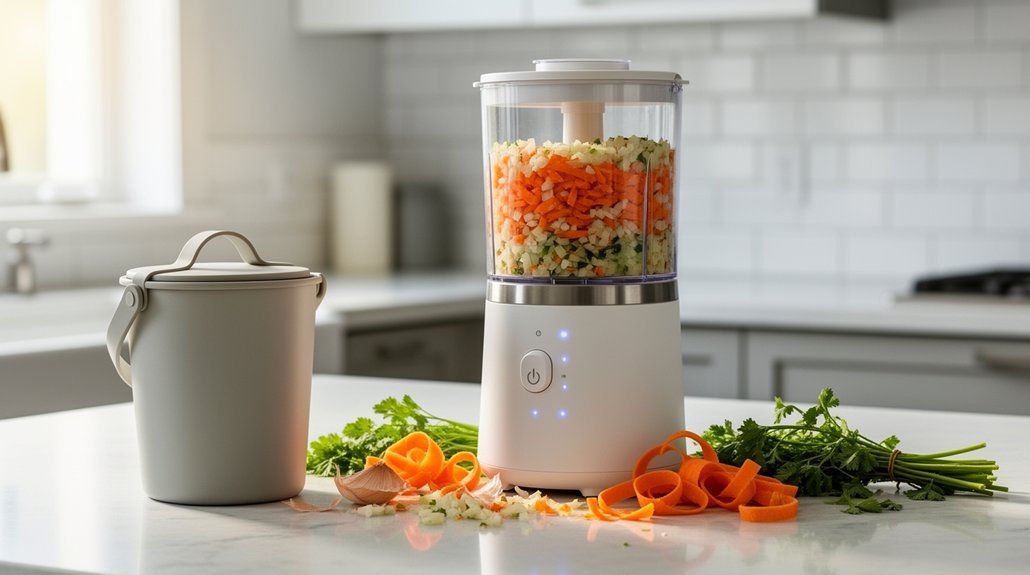
How can you process kitchen scraps without dedicating floor space to a worm bin or outdoor compost pile? A countertop electric processor offers a compact solution that transforms food waste into dry, reduced-volume material in hours rather than weeks.
| Feature | Benefit |
|---|---|
| Heat & grinding | Breaks down scraps quickly |
| Carbon filters | Controls odor effectively |
| 2.5-liter capacity | Fits standard countertops |
| Up to 90% volume reduction | Minimizes storage needs |
These appliances work indoors, eliminating pest concerns and odor issues associated with traditional scrap storage. Most cycles complete in 3 to 8 hours, producing soil-like output you can store compactly or use in garden beds. For households preferring fermentation-based methods, bokashi starter kits offer an alternative indoor composting approach that accepts all food waste types including bones, meat, and dairy. Some models like the Mill Food Recycler feature optional pickup services, allowing you to schedule collection rather than managing output yourself. However, the output often requires further composting before full maturity, and ongoing electricity costs warrant consideration against simpler scrap-saving methods.
Frequently Asked Questions
How Long Does Compost Take to Fully Mature and Become Ready for Use?
You’ll need about 6 months to 2 years for fully matured compost, depending on your method. Hot composting speeds things up to 3-6 months with active management, while cold composting typically takes a year or longer.
Can I Compost in an Apartment Without Creating Odor or Attracting Pests?
Yes, you can compost in an apartment without odor or pests. You’ll need to balance greens with browns, maintain proper moisture, cover food scraps, use sealed containers, and avoid meat, dairy, and oils.
What Should I Do if My Compost Bin Becomes Too Wet or Smelly?
You should add dry brown materials like shredded cardboard or leaves to absorb moisture, then turn the compost to restore airflow. If it’s extremely wet, spread it on a tarp to dry faster.
Are Composting Worms Safe to Keep Indoors Near Food Preparation Areas?
You can safely keep composting worms indoors near food prep areas when you maintain proper ventilation, control moisture, feed regularly in small amounts, bury scraps in bedding, and avoid meat and dairy products.
How Much Finished Compost Will I Produce From My Tight-Space System Monthly?
You’ll produce less finished compost monthly than you’re adding in scraps because decomposition reduces moisture and mass. Once your system runs continuously with consistent input, you’ll see more predictable output, though it’ll vary based on your feedstock volume and methods.
In Summary
You’ve got three solid options for composting in tight kitchen spaces. Whether you’re building a budget bin from a garbage can, starting a worm bin indoors, or investing in an electric processor, you’ll reduce waste effectively. Pick the method that fits your lifestyle and space constraints. You’ll be diverting kitchen scraps from landfills while creating nutrient-rich compost for your plants in no time.



Leave a Reply