You’ll transform your sluggish compost pile by introducing oxygen where microbes need it most. Start by diagnosing problems—foul odors and dense textures signal poor airflow. Loosen compacted material with a garden fork, then try bin-to-bin turning for complete mixing. Install permanent air channels with a metal bar, build airflow from the ground up using pallets and perforated pipes, and choose ventilated bin sides for passive aeration. Each technique tackles different decomposition challenges in specific ways.
Why Oxygen Speeds Up Decomposition
Why does your compost pile decompose faster with oxygen?
Aerobic microbes require oxygen to efficiently break down organic matter through respiration. When you maintain adequate airflow, these microorganisms stay active and convert carbon-rich materials into carbon dioxide, water, and heat rapidly.
Aerobic microbes break down organic matter through respiration when adequate airflow is maintained, converting materials into carbon dioxide, water, and heat rapidly.
Oxygen also fuels the oxidation reactions that accelerate decomposition. Without sufficient air, anaerobic microbes take over, slowing the process dramatically—your pile could take three to four times longer to break down. Poor aeration also produces foul odors from hydrogen sulfide as decomposition stalls. Tools like aerator tools can help ensure consistent oxygen penetration throughout your pile.
Additionally, aerobic activity generates intense heat that speeds breakdown while eliminating pathogens and weed seeds. Well-aerated piles reach temperatures above 170°F, maximizing microbial efficiency. Tumbler composters help achieve even air flow throughout your compost materials. By ensuring consistent oxygen circulation, you’ll achieve faster, cleaner composting with superior results.
Diagnose Aeration Problems Before You Fix Them
Now that you understand how oxygen accelerates decomposition, you’ll need to identify whether your compost bin actually has an aeration problem before you attempt fixes.
Start by checking for telltale odors. Foul, rotten-egg, or ammonia smells strongly indicate airflow issues. Next, inspect the texture—dense, packed, or slimy material confirms restricted oxygen movement. Test moisture by squeezing a handful; it should feel like a wrung-out sponge, not soggy. For more precise moisture assessment, consider using a moisture meter to ensure your readings are accurate and consistent.
Key diagnostic indicators:
- Slow or stalled breakdown over weeks despite proper materials added
- Pile temperature remaining cold or cooling quickly after turning
- Uneven moisture creating wet pockets in otherwise acceptable compost
Measure your pile too. Bins smaller than three feet by three feet often struggle with proper decomposition. Regular mixing helps reintroduce air and restore balance within the pile. These checks reveal whether aeration truly needs correction or whether other factors require attention.
Quick Fixes: Loosen Compacted Material With a Garden Fork
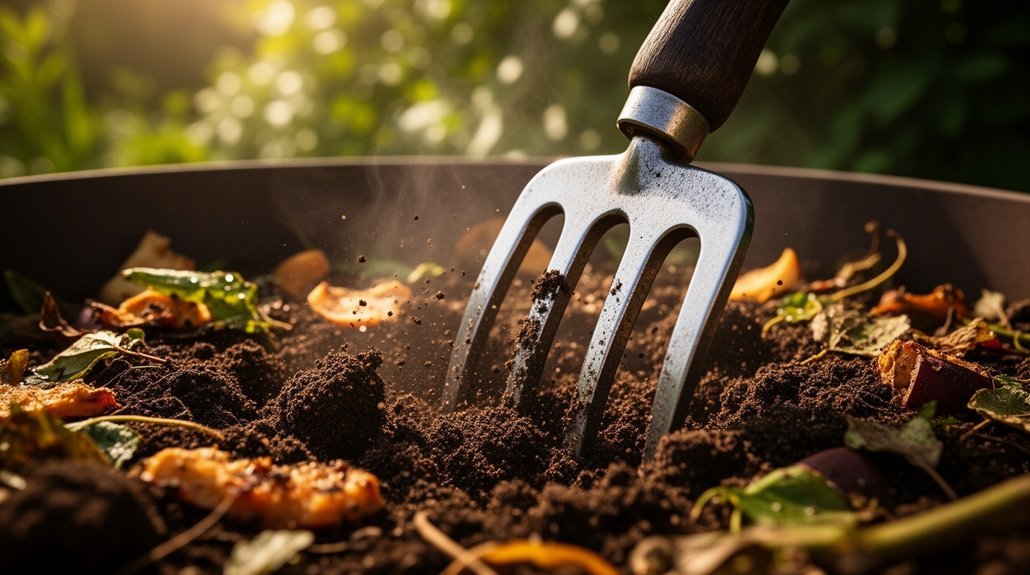
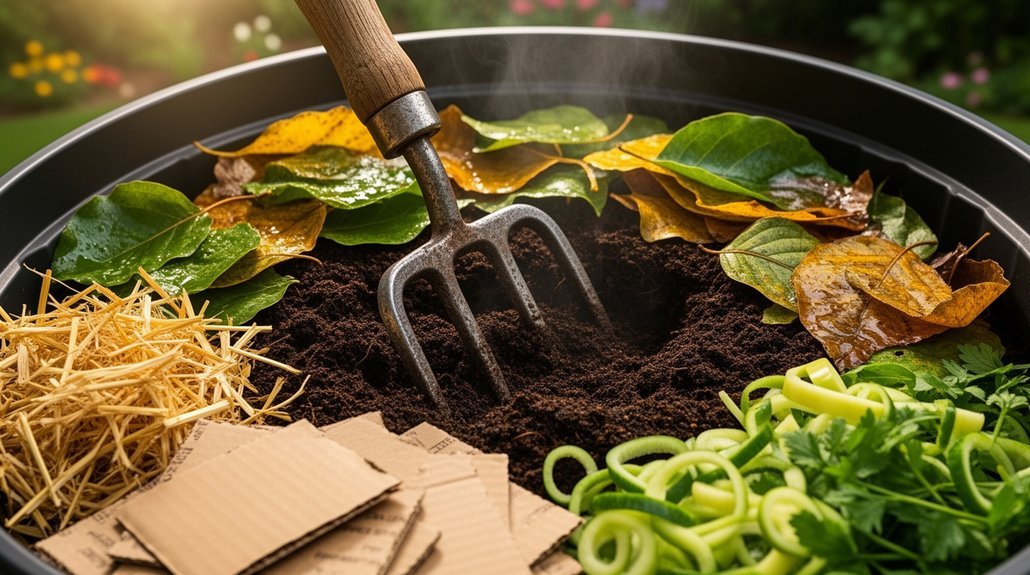
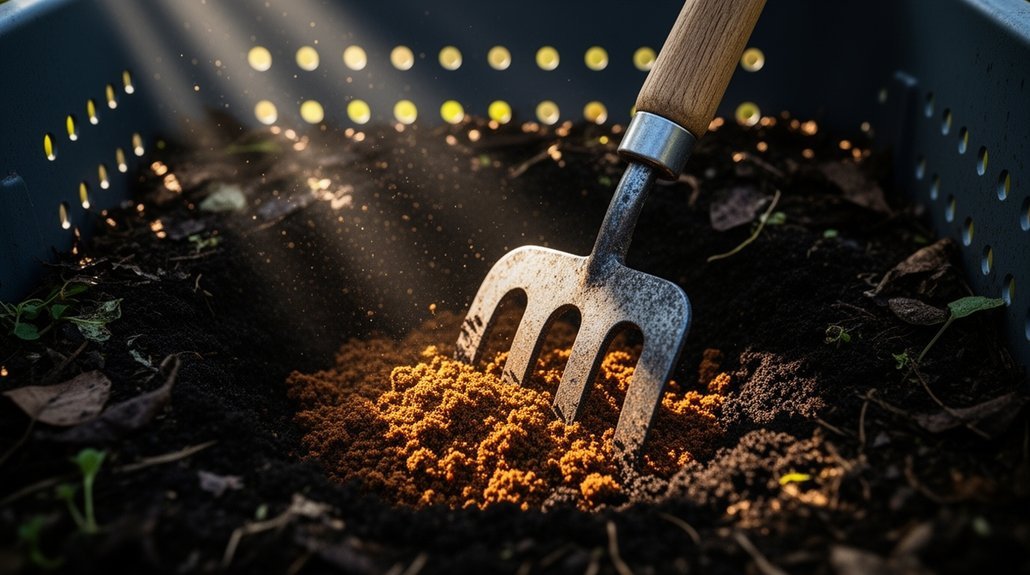
A garden fork is your fastest tool for breaking up compacted compost. Insert the fork deeply into dense zones and rock it back and forth to crack the tight mass. Work vertically first, then repeat the insertion a few inches away in a step-and-rock pattern across the entire compacted section.
Your goal is loosening, not full tilling. Focus on creating cracks and gaps that restore airflow and drainage rather than lifting and flipping large chunks. This technique works especially well for surface compaction and small to medium patches where a rototiller would be too aggressive. After loosening the compacted material, add organic amendments like compost or mulch to help bind soil particles and maintain improved structure.
Use light foot pressure plus leverage—avoid excessive force that bends tines. If material remains dense after forking, add dry amendments like leaves or cardboard to restore porosity over time. Additionally, consider using activated charcoal filters or other odor control solutions to manage moisture and decomposition odors that may arise during the aeration process.
Manual Turning: Flip Your Entire Pile Bin-to-Bin
How much faster can you boost decomposition? Manual bin-to-bin turning delivers a complete mix-and-flip that dramatically accelerates your compost’s breakdown. You’ll remove your bin frame or side panels, then transfer material into an adjacent empty bin, strategically placing the original outer edges toward the new center. This reversal exposes less-decomposed interior material to fresh oxygen.
Here’s what happens during the flip:
- Dense, compact center layers move outward where air reaches them
- Oxygen redistributes throughout the pile, jumpstarting microbial activity
- Moisture and texture become uniformly distributed when you rebuild carefully
Turn when pile temperature drops below 120°F or after several weeks of inactivity. Use a pitchfork or shovel, adjusting moisture with water or brown materials as needed. Monitor your pile with a compost thermometer to ensure temperatures remain in the ideal range for decomposition. This full relocation corrects uneven decomposition and markedly speeds your composting timeline. For those seeking alternatives to manual labor, chickens or pigs can continuously turn and aerate the pile while you focus on other garden tasks.
Poke Permanent Air Channels With a Metal Bar
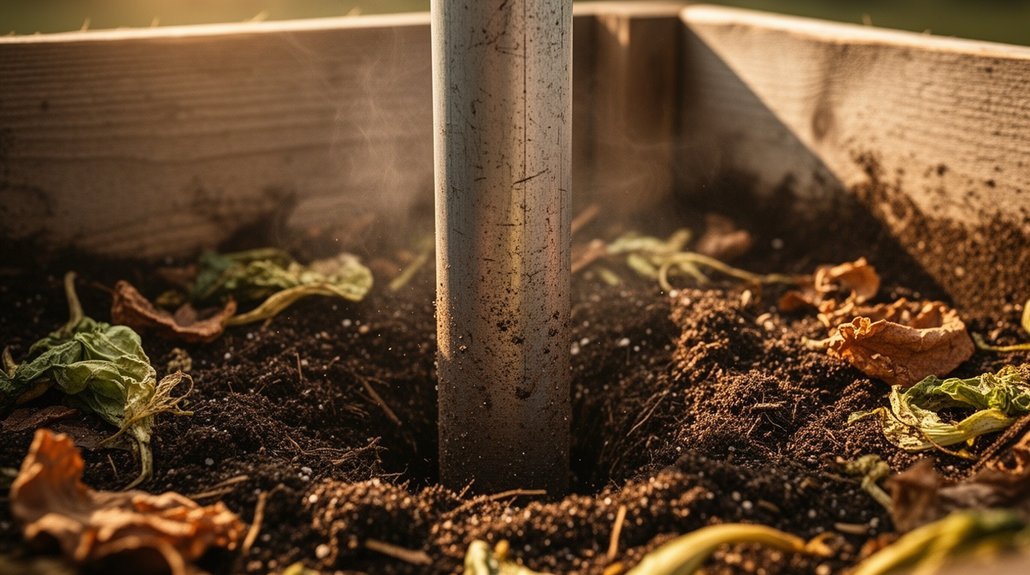
Piercing vertical and horizontal channels through your compost pile with a sturdy metal bar or rebar creates lasting oxygen pathways that you won’t get from surface aeration alone. You’ll break up compacted zones and support aerobic microbes that drive decomposition and heat generation.
Apply this technique during pile construction or early decomposition when materials accept holes more easily. Space channels across the entire heap rather than concentrating them in one area. Withdraw the bar slowly to prevent immediate collapse.
Combine poked holes with coarse bulking materials like woody browns for best results. Maintain damp-sponge moisture levels so channels don’t flood. Incorporating coconut coir as a bulking material enhances aeration by expanding into a porous structure with air pockets that maintain consistent oxygen flow. Reopen channels periodically if odors or settling occur. While this method reduces turning frequency, it works most effectively in medium to large heaps.
Build Airflow From the Ground Up: Pallet Bases and Perforated Pipes
While poked channels create oxygen pathways through your pile, you’ll get even better results by building airflow from the ground up. Start with a pallet base or raised support structure that elevates your compost off bare soil, allowing air to circulate beneath instead of compacting against wet ground.
Next, install perforated PVC pipes horizontally through your bin’s lower layers. Drilled holes along the pipe length distribute oxygen throughout your mass rather than relying solely on perimeter air entry. For optimal performance, coordinate aeration to begin when your bin is full rather than starting prematurely. Deep fins and strategically placed air vents can further enhance oxygen circulation throughout your composting system.
Consider these practical enhancements:
- Orient crossbeams perpendicular to airflow channels to avoid blocking circulation
- Seal bin edges so air moves through designed channels, not underneath
- Use gate valves to direct airflow between zones or bins as needed
This layered approach significantly accelerates decomposition while minimizing frequent turning.
Choose Ventilated Bin Sides for Passive Aeration
If you’ve built a solid foundation with perforated pipes and pallet bases, you’re already ahead—but you shouldn’t overlook what’s happening at your bin’s sides.
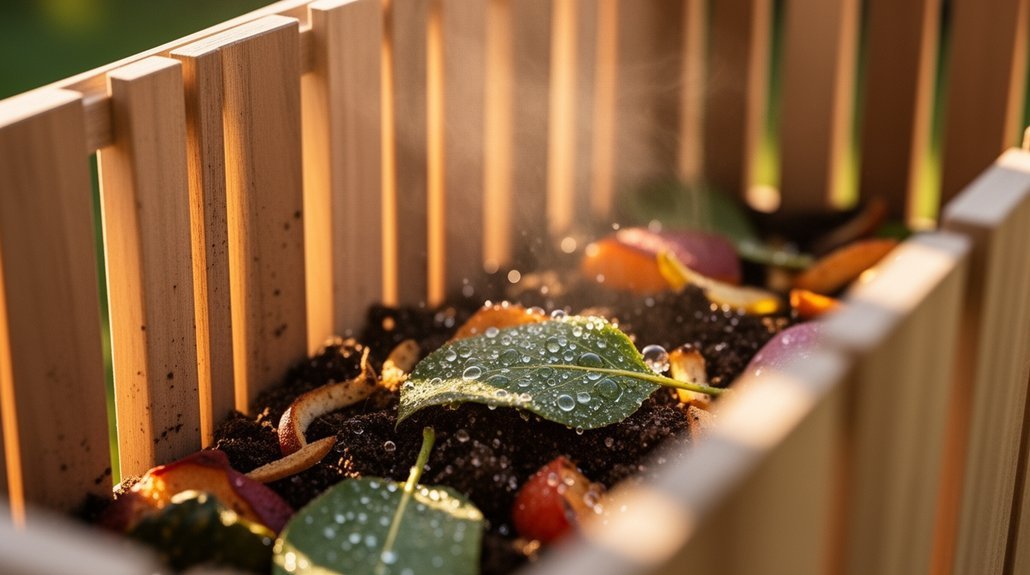
Your bin’s walls directly impact passive airflow and decomposition speed. Open-sided designs—pallet bins, slatted wood, or wire mesh—let fresh air enter naturally through convection, where warm air rises and draws cooler air in through gaps. This passive aeration reduces odor by limiting anaerobic zones and supports faster microbial activity. Installing perforated PVC pipes horizontally within your bin layers significantly enhances oxygen distribution throughout the compost pile, complementing the benefits of ventilated sides. Regular aeration every one to two weeks accelerates the breakdown process and maintains proper moisture balance for optimal decomposition.
| Material | Airflow | Moisture Retention |
|---|---|---|
| Wood Slats | Good | Moderate |
| Wire Mesh | Excellent | Low |
| Solid Plastic | Poor | High |
Match your side design to your feedstock. Wet food scraps need more ventilation than dry yard waste. Avoid fully sealed bins—they trap moisture and slow decomposition significantly.
Frequently Asked Questions
How Often Should I Aerate My Compost Bin for Best Results?
You’ll get best results aerating every one to two weeks. If you’re building actively, turn weekly for faster breakdown. Adjust based on odor, moisture, and temperature—daily turning helps if you’ve got anaerobic conditions.
Can I Use a Regular Garden Rake Instead of Specialized Compost Aerator Tools?
You can use a regular garden rake for light aeration, but it’s less effective than specialized tools. Rakes work best for occasional maintenance on lightly compacted compost, not deep pile renovation or major aerating needs.
What’s the Ideal Moisture Level When Aerating Compost to Avoid Compaction?
You’ll want your compost at 50% to 55% moisture when aerating—think of a wrung-out sponge. This keeps pore spaces open, prevents compaction, and maintains airflow while you’re turning or raking.
Do Perforated Pipes Need Cleaning or Maintenance During the Composting Process?
You’ll find perforated pipes are low-maintenance once installed, but you should periodically inspect the holes for blockages. You can usually restore airflow by loosening compacted material rather than removing the pipe entirely.
How Can I Aerate Compost in a Small Space Without Turning or Bins?
You can use a vertical pipe through your pile’s center as an air shaft, layer bulky starter materials like sticks to create natural voids, or punch holes with a strong stick to restore compacted areas and improve airflow.
In Summary
You’ve now got seven practical ways to keep your compost bin properly aerated. Whether you’re loosening compacted material with a garden fork, manually turning your pile, or installing permanent air channels, you’ll dramatically speed up decomposition. Pick the methods that work best for your setup—you don’t need them all. Consistent aeration is your ticket to rich, finished compost faster.