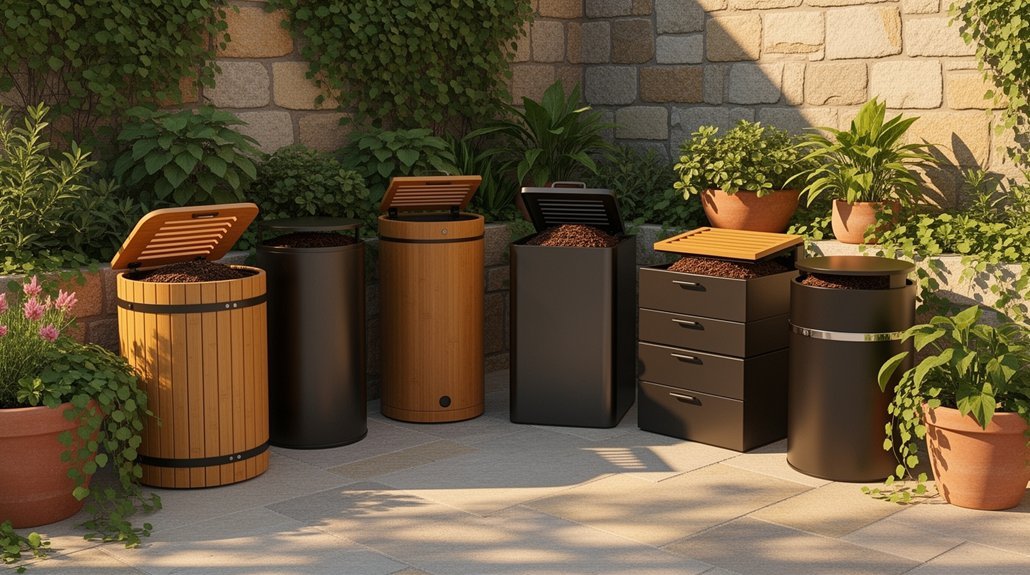

Balance greens and browns by keeping at least twice as much brown material as green, and always blanket fresh scraps with a thick carbon layer. Keep the pile moist but never soggy—let the top dry out before watering and add extra browns when you add greens. Raise the temperature to the thermophilic range (40‑60 °C) with a sizable pile and occasional hot spots, then seal the bin tightly with a lid and fine‑mesh vents. Use low‑toxic Bti drench, sticky traps, and regular turning; if you keep going, you’ll discover even more tricks.
Balance Greens & Browns to Stop Compost Gnats

Ever wondered why gnats swarm your compost? You’re probably feeding them too many greens. Greens dump nitrogen and moisture, turning the heap slimy, sour, and ammonia‑smelling—perfect for fungus gnats.
To keep them away, aim for at least twice as much brown as green by volume, preferably a 2:1 to 3:1 ratio. Start with a coarse brown base of shredded newspaper, dry leaves, or cardboard, then nest your green scraps in the center and blanket them completely with more browns.
Every time you add fresh greens, toss in an equal or larger amount of brown, then turn the pile to mix. This carbon‑rich cover absorbs excess moisture, improves airflow, and deprives gnats of a breeding ground. For indoor composting, consider using hanging compost bins to further contain your materials and reduce pest access. Bury waste underneath soil helps further deter gnats by limiting their access to exposed material.
Control Moisture to Deter Compost Gnats
How can you keep gnats at bay while still nurturing a thriving compost? Keep the pile moist but never soggy; a quick touch test tells you when the surface feels dry enough to skip watering. Let the top few inches dry out, because fungus gnats lay eggs on wet bedding. Improve drainage so excess liquid escapes instead of pooling, and aerate after any wet addition to restore airflow and speed evaporation. Adjust watering for weather and bin conditions—smaller, targeted pours work better than big soakings, especially on hot, humid days. Using pH-neutral bedding material like coconut coir can help maintain stable moisture levels while supporting proper drainage and aeration.
- Touch the surface; water only when it feels dry.
- Allow the top layer to dry while deeper layers stay ~50% moist.
- Ensure proper drainage to prevent standing water at the bottom.
- Turn or loosen the compost after adding wet materials.
- Aeration reduces stagnant zones that attract gnats.
Turn Up the Heat: Hot‑Composting Tricks for Gnats
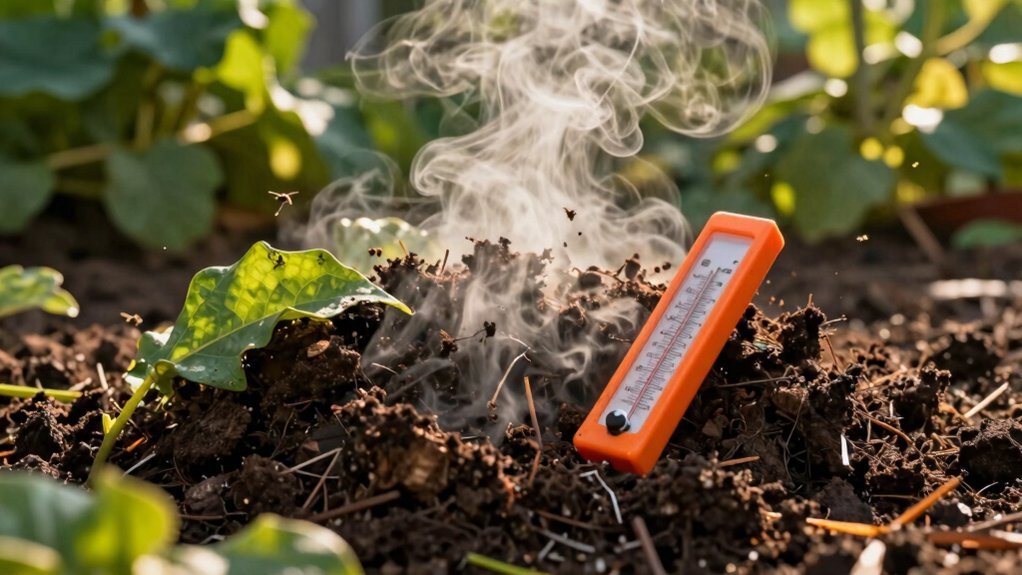
Raise the temperature of your compost to the thermophilic range (40–60 °C) and you’ll starve gnats of a viable breeding ground. Build a pile big enough to hold heat—small heaps cool fast, while a mass of at least a cubic meter retains warmth for days. Mix high‑nitrogen goodies like fresh grass clippings or chicken manure into the carbon layers; the nitrogen fuels thermophilic bacteria, boosting temperature quickly. Keep the pile compact yet porous, then cover it with a tight‑fitting lid or insulated bin to trap heat and block flies. If the pile stalls, pour boiling water over a hotspot or place the bin in direct sun to push internal temps above 100 °F, killing larvae and eggs. Repeat these hot‑bin tactics regularly to keep gnats at bay. Regular maintenance practices, including oiling moving parts every 30-60 minutes during active composting operations, help ensure your bin functions optimally and maintains consistent heat retention. The non‑infested bucket remained dry at the top, showing that lower surface moisture helps prevent gnats.
Cover & Seal to Block Compost Gnat Access
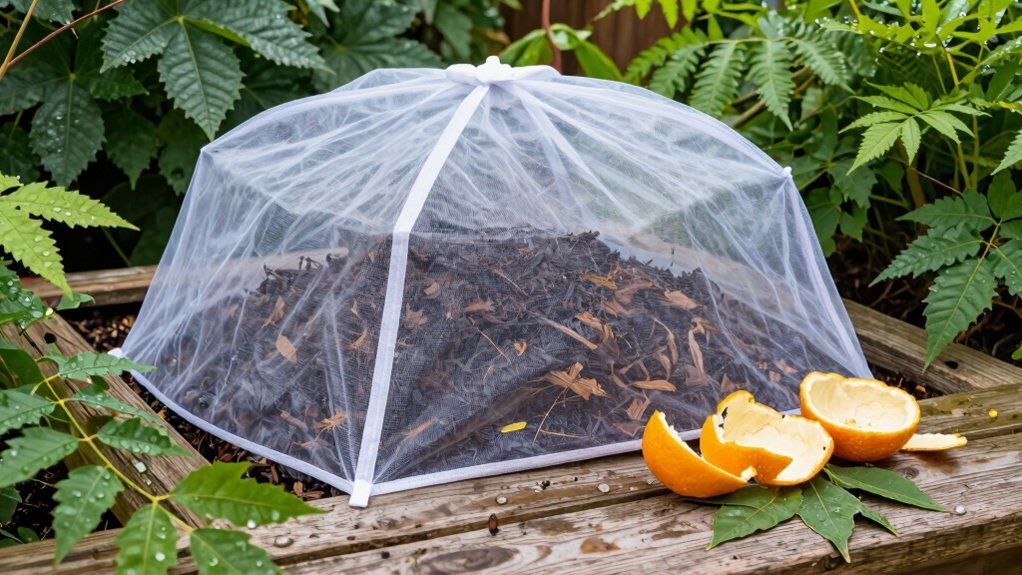
A tight‑fitting lid or sturdy cover is the simplest way to keep adult gnats and fruit flies out of your compost bin. When you seal the bin, you block entry points, cut odor, and deny them a place to lay eggs. Pair the lid with a dry top layer of brown material—straw, leaves, or newspaper—to create a physical barrier that discourages egg‑laying. Bury fresh scraps under a carbon‑rich cap and store kitchen waste in sealed containers to keep scent low. Finally, minimize openings and add mesh screens or fabric caps for extra protection.
- Use a tight lid or heavy cover, weighting edges to eliminate gaps.
- Spread a thick, dry layer of straw, leaves, or newspaper on the surface.
- Bury new food waste under a carbon‑rich layer before covering.
- Install fine mesh or fabric barriers over vents and access doors.
Moisture control is essential, as overly damp conditions promote fungal growth that attracts gnats.
DIY Low‑Toxic Controls & Routine Maintenance
By pairing non‑toxic treatments with simple upkeep, you can keep fungus gnats at bay without harsh chemicals. Use Bti or soaked mosquito bits as a drench when the surface layer is dry enough to let the spores reach larvae, then re‑soak weekly because potency fades. Let the top inch of compost dry between waterings, bottom‑water only when needed, and add carbon‑rich shredded paper or cardboard to absorb excess moisture. Set yellow sticky traps and DIY vinegar‑soap traps near problem spots to monitor adult numbers and catch flyers. Quarantine new plants, sprinkle beneficial microbes, and regularly skim off soggy debris to deny gnats food and breeding sites. Drying out soil is essential for disrupting the larval stage.
Frequently Asked Questions
Can I Use Coffee Grounds Without Attracting Gnats?
Yes, you can use coffee grounds without drawing gnats—just dry them first, mix them thoroughly into the compost, keep the pile aerated, and avoid any damp, surface‑only layers.
Do Indoor Compost Bins Need a Different Gnat Strategy?
Yes, indoor bins need a tighter strategy. Keep moisture “moist not not soggy,” use tight lids, add dry browns over scraps, set sticky traps, and occasionally apply neem oil or nematodes for larvae control.
How Often Should I Replace the Lid or Tarp?
Replace the lid or tarp whenever it tears, thins, or lets water in—usually every season or two. Inspect after storms, and if moisture builds up, swap it out promptly to keep gnats away.
Will Adding Sand to the Mix Deter Gnats?
Yes, adding a coarse sand layer will deter gnats by drying the surface and blocking egg‑laying, but you still need to keep moisture low, turn regularly, and cover fresh scraps with brown material.
Can I Compost Pet Waste Without Increasing Gnat Risk?
You can’t safely compost pet waste without raising gnat risk unless you use a dedicated, hot, well‑covered system, keep it dry, balance carbon, and never apply it to edible plants.
In Summary
By balancing greens and browns, keeping moisture in check, and turning up the heat, you’ll make your compost inhospitable to gnats. Seal the bin, use low‑toxic DIY controls, and stay on top of routine maintenance. Follow these steps, and your compost will stay healthy, odor‑free, and gnats‑free—forever.