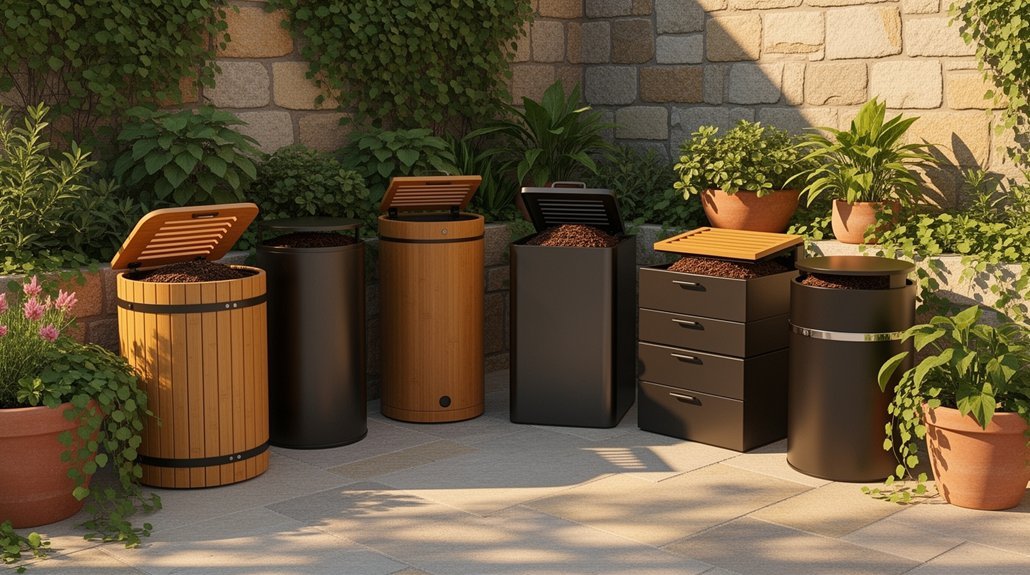

Pick a sealed tumbler with a reinforced hardware‑cloth floor and raise it off the ground. Bury kitchen scraps under a thick layer of dry browns, using only low‑risk yard waste. Turn the pile weekly to keep it moist and well‑aerated, which raises temperature and deters nesting. Inspect the bin daily for chew marks, droppings, or gaps, and seal any openings immediately. Follow these steps, and you’ll discover even more tricks to keep pests out.
Pick a Rodent‑Proof Compost Bin
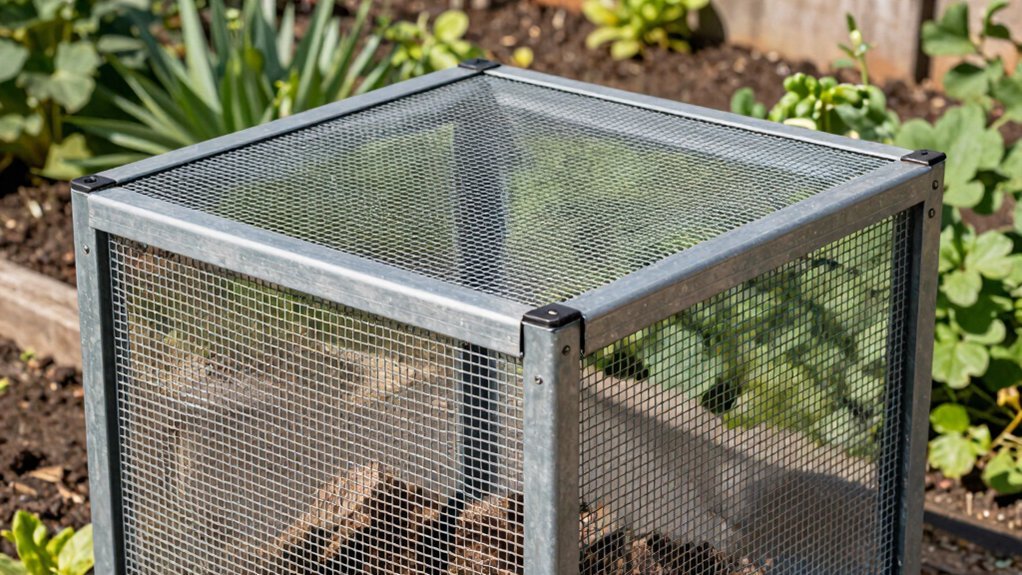
Looking for a compost bin that keeps rodents out? Choose a closed tumbler design; its sealed chamber blocks rats, mice, raccoons, and other scavengers while keeping the compost neat. Pick a model with a rodent‑proof bottom—either built‑in or reinforced with hardware cloth—so burrowing critters can’t climb up, yet worms and beneficial microbes still get in. Favor elevated or off‑the‑ground units; height makes ground‑level access tough, but ensure side gaps are sealed. Opt for durable materials: heavy‑gauge wire, reinforced walls, tight seams, and small, coverable vents deter chewing. For additional organization of compost ingredients before they decompose, consider using airtight storage containers to keep materials like food scraps separated and protected until ready for composting. Match the bin to your local pest pressure and compost habits, placing it away from feeders, pet food, and fruit trees. If you add meat or dairy, a fully enclosed, pest‑proof composter is essential. Avoid composting meat to reduce attractants.
Add a Wire‑Mesh Floor to Stop Digging
A closed‑tumbler bin already blocks rodents from the sides, but burrowing pests can still slip in from below. Adding a wire‑mesh floor creates a physical barrier that stops rats, mice, and other diggers while preserving airflow and drainage. Choose 1/2‑inch hardware cloth or 14‑gauge galvanized wire, cut it to the bin footprint, and fasten it tightly to the frame. Overlap seams, secure with clips or ties, and trim sharp edges. Keep the mesh taut and inspect it regularly for sagging or corrosion. This simple upgrade lets you maintain aerobic decomposition without letting pests burrow into the compost. You can further enhance your compost by incorporating trace mineral powder to re-mineralize the finished product and boost its nutritional value for your garden.
- Use corrosion‑resistant, 1/2‑inch hardware cloth.
- Overlap seams and fasten with clips or wire ties.
- Inspect and trim edges to prevent injuries and maintain tension.
Use Safe Scraps and Hide Them Under Browns
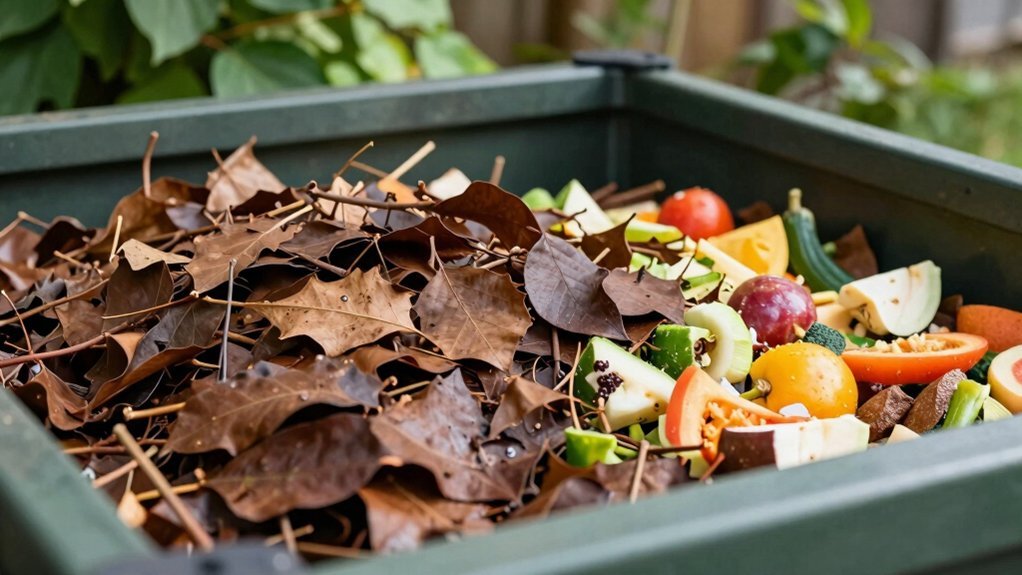
Why not keep your compost rodent‑free by burying kitchen scraps under a thick layer of browns? Choose low‑risk inputs—yard waste, leaves, grass clippings, and trimmed plant material—and add vegetable peelings or fruit scraps only when you chop them small. Immediately cover each addition with a generous handful of carbon‑rich browns like dry leaves, straw, shredded paper, or finished compost. This creates a physical barrier that hides odor and makes fresh food inaccessible to rats and mice. Add scraps in modest, frequent batches, placing them near the pile’s center or beneath the top layer. Keep the surface dry‑looking and free of residue, and avoid high‑risk foods such as meat, dairy, fats, or cooked scraps that emit strong scents. For optimal results, maintain proper storage conditions by keeping your compost pile in a cool, dry location away from direct moisture buildup. Consistently burying safe scraps under browns cuts the scent window and deters rodent interest. Free workshops offered by the Compost Collective teach how to identify and avoid rodent‑attracting foods.
Aerate and Balance Moisture to Deter Nesting
Ever wondered why a lively, well‑aerated compost deters rodents? You’ll find that a constantly moving, moist pile deprives rodents of the cool, undisturbed spots they love. Turning the heap weekly with a fork or auger injects oxygen, raises temperature, and breaks up compacted zones where pests could settle. At the same time, keep moisture balanced—damp but not soggy—by adding dry browns and spreading material evenly. This prevents anaerobic pockets that smell and attract pests, while speeding decomposition so the window for nesting shrinks. Using a compost starter accelerator with fast-acting microbes can further accelerate breakdown and reduce the time rodents have to establish nesting sites.
A lively, well‑aerated compost keeps rodents away by staying moist, warm, and constantly turned.
- Poke air holes with a stake or aerator each week.
- Mix in dry carbon to absorb excess water.
- Turn the pile regularly to distribute moisture and heat.
- Vermin mesh placed on the bin’s bottom provides a durable barrier that keeps rodents out while allowing composting.
Watch for Rodents and Fix Problems Quickly
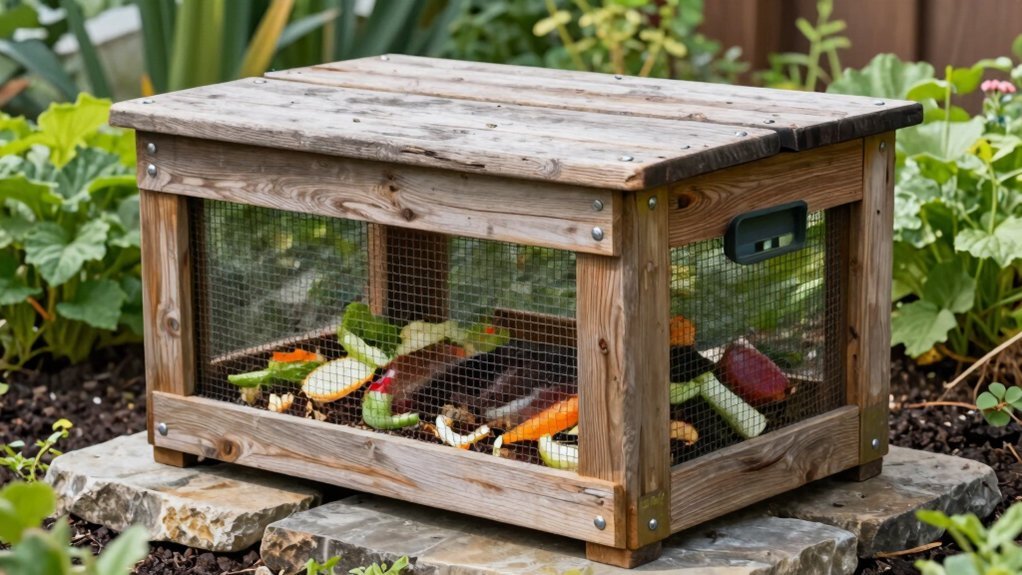
Spotting rodents early and acting fast is the key to keeping your compost bin pest‑free. You should inspect the bin every few days, looking for burrows, droppings, chew marks, and greasy rub marks. Check lids, vents, seams, and corners after rain or wind, and remove any exposed food scraps promptly. If you find gaps, repair them immediately with hardware cloth or vermin mesh, and relocate the bin away from shelters like sheds or brush piles. Keep the area tidy, store pet food and seed in sealed containers, and screen all openings with fine mesh. Place the bin on a cement slab or legs to prevent ground‑level access.
| Action | Why it matters |
|---|---|
| Inspect regularly | Catches entry points before infestations grow |
| Repair gaps fast | Stops rodents from squeezing in |
| Clean attractants | Removes food sources that draw pests |
| Verify mesh integrity | Ensures barriers stay effective |
Frequently Asked Questions
Can I Use a Compost Tumbler With a Solid Lid to Stop Rodents?
Yes, you can use a solid‑lid tumbler to deter rodents, but you must also seal the base, keep the lid latched, and avoid exposing meat or oily scraps that attract pests.
Do I Need to Replace the Wire Mesh After a Season?
You don’t have to replace it after one season unless it’s rusted, bent, or has holes big enough for rodents. Inspect regularly; only swap out mesh when it’s damaged or no longer keeps a tight, secure enclosure.
How Often Should I Add Carbon Material to Deter Pests?
You should add carbon every time you toss in food scraps—ideally a two‑inch layer right away. Keep topping the pile with browns after each addition to mask odors and block pests.
Will Adding a Layer of Sand Help Block Burrowing?
No, sand won’t reliably block burrowing. Use ¼‑½‑inch hardware cloth or solid concrete beneath the bin, secure it tightly, and keep the pile hot, moist, and well‑turned to deter rodents.
Can I Compost Pet Food Without Attracting Rodents?
You can’t safely compost pet food without drawing rodents; even sealed bins leak scent. Instead, store leftovers in airtight containers and trash them, or keep any composted scraps buried under thick, dry browns.
In Summary
Now you’ve got a rodent‑proof bin, a mesh floor, hidden scraps, and balanced moisture, you’ll keep critters out and your compost thriving. Keep an eye out, act fast if you spot a sign of rodents, and your garden will thank you with rich, healthy soil.