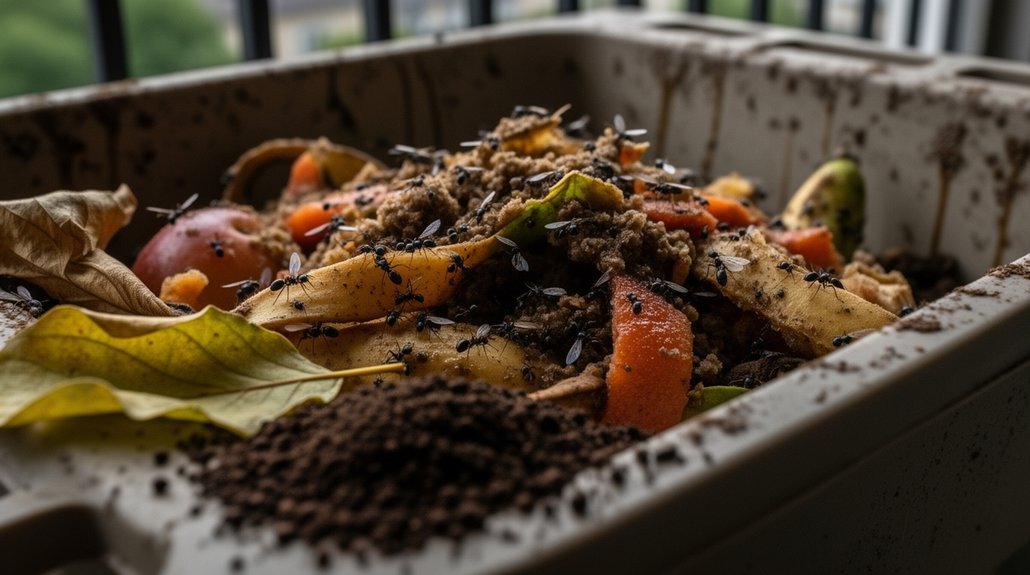
Pests invade your balcony compost because the bin lets moist, odorous scraps escape, creating scent trails that attract flies, ants, rodents and wildlife. Gaps in the lid, inadequate ventilation, and overly wet piles give them easy entry and breeding spots. Without a tight‑fitting lid, fine‑mesh filters, and proper carbon layers, odors and moisture linger, inviting pests. Balancing greens and browns, keeping the pile just damp, and sealing every opening stops the invasion—continue, and you’ll discover the exact steps to make your bin pest‑proof.
Set Up a Pest‑Proof Balcony Compost in 5 Minutes

Ever wondered how you can turn a simple bucket into a pest‑proof compost in just five minutes? Grab a sturdy plastic bucket with a tight‑fitting lid, drill a few 1/8‑inch holes around the sides for airflow, and add a drainage hole at the bottom if you expect extra moisture. Elevate the bin on bricks or blocks, then place a drip tray underneath to catch any leaks. Fill the bottom with a thin layer of soil or finished compost, followed by a generous handful of dry browns—cardboard, shredded paper, or egg cartons. For added nutrient benefits, consider incorporating organic alfalfa meal to accelerate decomposition and enrich your finished compost. Cover fresh kitchen scraps with more browns, close the lid securely, and you’ve created a sealed, aerated system that deters insects while maintaining the right moisture balance. Balanced moisture is essential for healthy composting.
Why Exposed Food Scraps Draw Flies, Rodents, and Wildlife?
Why do exposed food scraps on your balcony compost bin instantly attract flies, rodents, and wildlife? As soon as you leave waste in the open, it begins to rot, releasing strong odor signals that pests sniff out from a distance.
Exposed scraps rot, emitting strong odors that instantly lure flies, rodents, and wildlife.
Moist, decaying scraps give flies a ready food source and a perfect place to lay eggs, especially in warm summer weather.
Rodents, raccoons, and even pets are drawn to the high‑calorie proteins, fats, and dairy that linger on the bin’s sides and bottom.
Wildlife senses not just the smell but also the shelter and residue, turning the bin into a mini habitat. Proper airflow and avoiding overwatering can help minimize pest attraction to your composting area.
The longer the scraps sit uncovered, the stronger the scent trail, and the more likely insects, gnats, and larger scavengers will investigate and return.
Free compost pail pickup helps reduce the amount of food waste that ends up exposed on balconies.
Seal the Bin: Choose a Lid and Breathable Mesh That Block Entry
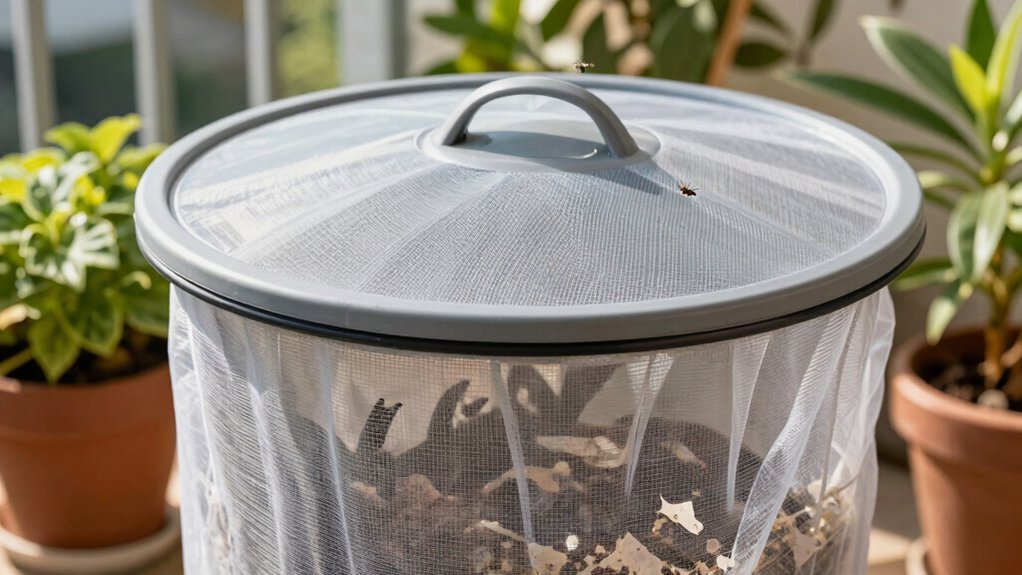
Pick a snug lid that fits the rim tightly, then add a fine‑mesh filter that lets air flow while keeping insects out. Make sure the mesh overlaps the edge and seal any gaps with elastic straps or clamps so nothing can slip through. Use a breathable lid made from old t‑shirt or screen material to maintain airflow while blocking gnats. For enhanced odor control and pest prevention, consider integrating activated charcoal filters into your mesh system, which will trap odors that attract pests while maintaining the airflow your compost needs.
Secure Fit Lid
What makes a compost bin truly pest‑proof? A tight‑fitting lid blocks flies, ants, raccoons and rodents while sealing odors that lure them. Choose a lid that closes flush, has smooth edges, and lacks crevices. Stainless‑steel or high‑quality plastic containers keep the seal intact through washes and temperature swings. Removable, leak‑proof lids let you clean the rim easily, preventing residue that attracts insects. Inspect the lid regularly for warping or cracked clips, and dry it after each wash to keep moisture away. Using pH-neutral bedding materials like coconut coir in your bin can help maintain stable conditions that discourage pest colonization. The odor‑control feature is essential because perforated lids with charcoal filters can reduce smells that attract pests.
| Feature | Why it matters |
|---|---|
| Flush closure | Eliminates entry gaps |
| Smooth surface | Reduces snagging of scraps |
| Durable material | Prevents warping and cracks |
| Removable design | Enables thorough cleaning |
Ventilation Mesh Filter
Ever wondered how to keep fresh air flowing while sealing out fruit flies and gnats? A fine‑mesh ventilation filter does exactly that—letting oxygen in, keeping mold down, and blocking tiny pests. Choose a breathable lid with a tightly woven screen, and you’ll balance odor control with airflow.
- Pick mosquito‑netting or similar fine mesh (≤1 mm apertures).
- Glue or screw the mesh over each vent hole to create a solid barrier.
- Inspect monthly for tears, clogs, or detachment; replace when needed.
- Pair with an optional activated‑carbon layer for extra odor capture. Most ceramic crocks use standardized charcoal filters that require replacement every 4–6 months to maintain peak performance.
The filters are 0.4″ thick and can be cut to fit any vent size.
Seal Gaps Completely
How can you keep pests out while still letting your balcony compost breathe? Choose a snug lid that matches the rim, then cover every vent with fine mesh. A lid that overlaps the edge and locks in place blocks flies, ants, and rodents. Secure the mesh with staples or silicone so it won’t pull away. Seal side doors, harvest panels, and seams with gaskets or weather‑stripping, and inspect regularly for cracks. Keep the base closed and drainage holes tiny. Maintaining proper carbon-to-nitrogen ratios also reduces odor that attracts pests to your bin. Any container can be used for compost if mixing/turning is possible, and versatile containers make it easier to adapt to your space.
| Feature | Why It Matters | How to Implement |
|---|---|---|
| Tight‑fitting lid | Stops odor leakage & entry | Use screw‑top or clamp‑style closure |
| Overlapping edge | Eliminates side gaps | Ensure lid extends past rim |
| Secure mesh | Provides airflow, blocks insects | Attach with staples, seal edges |
| Sealed seams & panels | Prevents hidden entry points | Apply silicone or weather‑strip |
Keep the Bin Just Moist Enough to Stop Flies and Ants
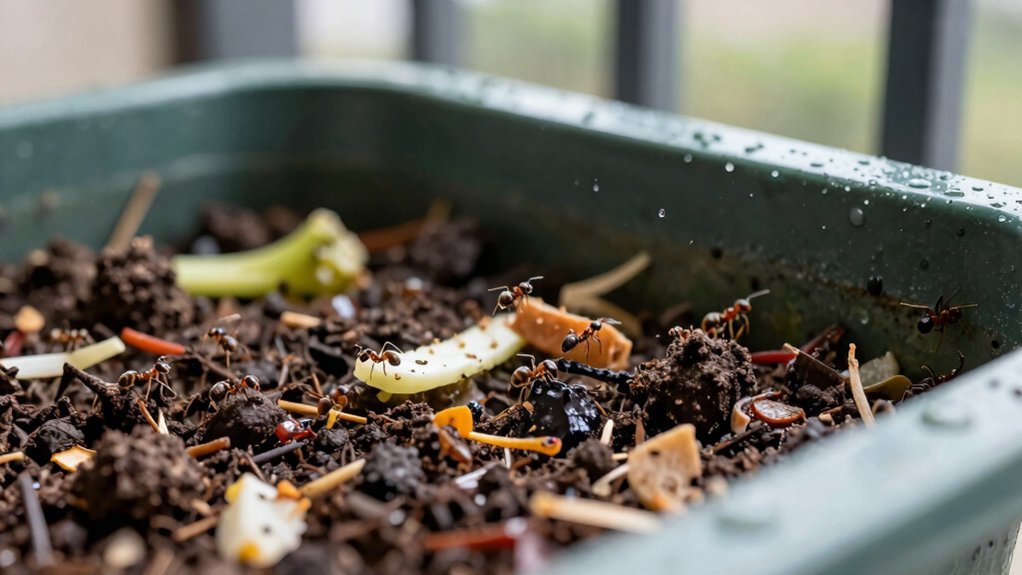
Ever notice how a soggy pile seems to summon flies while a bone‑dry one invites ants? You can keep the bin in the sweet spot by treating moisture like a sponge—just wrung out. Aim for a damp feel, not a dripping mess, and you’ll starve flies of foul odors and ants of dry shelter. Here’s how to stay balanced:
Treat moisture like a sponge: damp, not soggy, to keep flies away and ants at bay.
- Cover fresh scraps with brown material (leaves, shredded cardboard) to soak excess liquid.
- Use a lid with ventilation to block rain but let air circulate.
- Turn the pile every few days to release trapped moisture and oxygenate.
- Check the “squeeze test”: a handful should feel moist, not soggy.
- Regular cleaning and dry maintenance of your bin’s interior will further reduce the conditions that attract pests.
Maintain a proper carbon‑to‑nitrogen ratio to keep the pile aerobic and odor‑free. Additionally, avoid composting meat and dairy as they decompose slowly and attract rodents and insects to your balcony bin.
Test Compost Moisture With the Squeeze Method
Keeping the bin just moist enough is only half the battle; you also need a quick way to know when you’ve hit that sweet spot. Grab a handful of compost, wear gloves if you like, and squeeze it firmly. If it forms a compact ball that holds its shape and only a drop or two beads out, you’re in the 50‑60 % moisture range. A soggy ball that drips continuously signals excess water, which can block oxygen and cause odor. A crumbly pile that falls apart means it’s too dry, slowing microbial activity and heat. Adjust by sprinkling a little water to dry material, then retest after turning. Using this “wrung‑out sponge” check regularly keeps aerobic breakdown strong and pests at bay. The optimum moisture range of 50‑60 % ensures beneficial microbes thrive. For larger composting operations, introducing European nightcrawlers can accelerate decomposition and nutrient-rich castings production while maintaining proper moisture levels.
Bury Food Scraps at Least 3‑4 Inches Deep to Hide Scent
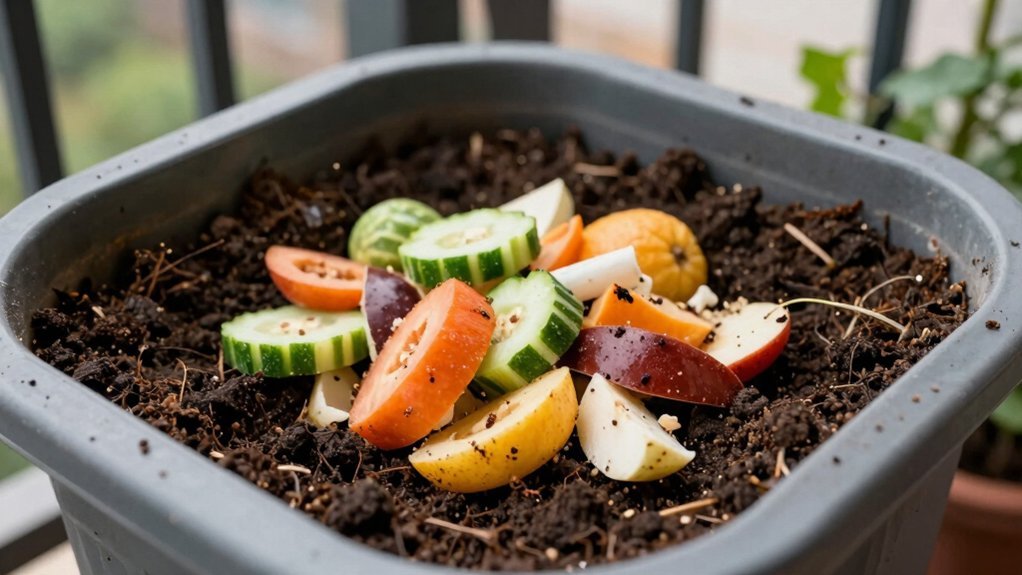
Why let pests sniff out your compost when a simple burial trick can keep the scent hidden? Burying scraps at least 3‑4 inches deep creates a scent barrier that blocks flies, rodents and pets. On a balcony the limited airflow makes shallow waste a magnet for odor, so a deeper pocket of soil or bedding is essential. Keep the layer thin enough for microbes to work, then cover it with at least 8 inches of dry material to seal the smell. For added protection, consider using airtight storage containers to pre-sort food scraps before adding them to your balcony bin, which further reduces odor emissions. Rotate spots so no single area becomes a hot spot.
- Dig a 3‑4 inch hole.
- Add chopped scraps.
- Fill with 8‑12 inches of soil or carbon-rich bedding.
- Pack gently and smooth the surface.
Enhances Soil Quality by adding organic matter that improves moisture retention.
Turn and Aerate Your Balcony Compost to Break Pest Nests
Burying scraps deep hides the scent, but without regular aeration the hidden pockets can become perfect pest nurseries.
Turn your balcony compost at least once a week, or whenever the material looks matted or shrinks. Use a garden fork, hand cultivator, or even a sturdy spoon to stab, lift, and twist the pile from the bottom up, exposing larvae and egg clusters to fresh air. This breaks up compacted clumps, releases trapped moisture, and prevents anaerobic zones that attract flies.
Keep the mix as damp as a wrung‑out sponge—no soggy pools—so turning helps evaporation. If you notice foul odors, swarms of tiny flies, or greasy sludge, increase the frequency and intensity of your aeration to starve pests and speed decomposition. Adding green materials boosts microbial activity and helps keep the pile healthy. For balcony composters, sealed bins and careful material selection reduce pest risks indoors by preventing attractants like meat and dairy from drawing rodents and insects.
Add Carbon Layers to Soak Up Excess Moisture and Mask Odors
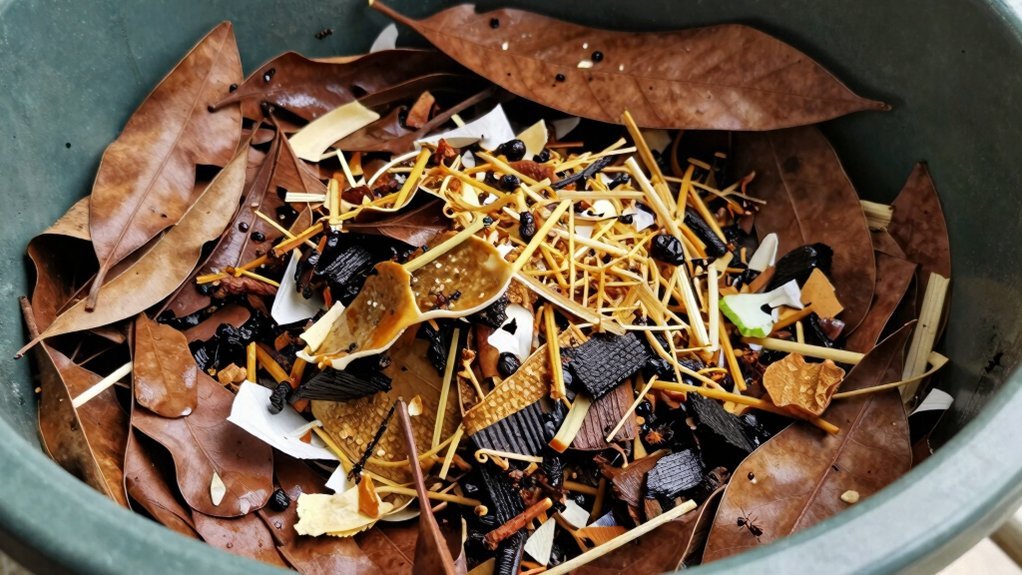
You’ll want to choose D carbon layers—shredded cardboard, dry leaves, straw—to soak up excess moisture and keep the bin from getting soggy.
By spreading a thin, even coat of these brown materials over each addition of scraps, you’ll absorb liquid and mask odors that attract flies and rodents.
The result is a drier, less fragrant compost that stays pest‑unfriendly. Adding a foundation layer of coarse twigs at the base creates air pockets that improve aeration and further reduce odor.
Choose D Carbon Layers
Ever noticed how a thin blanket of dry leaves or shredded cardboard can instantly quiet a smelly, soggy compost bin? You can keep pests at bay by picking the right carbon layers. Choose fluffy, dry browns that stay loose, like shredded cardboard, dry leaves, straw, or newspaper. They create air pockets, hide food, and soak up surface moisture without choking airflow. A well‑chosen layer also forms a physical barrier that blocks flies and rodents from sniffing out exposed scraps. Match the material to balcony weather: thicker layers for rainy days, lighter ones when it’s dry. Consistently add small amounts to maintain a balanced, pest‑unfriendly pile.
- Shredded cardboard – airy, easy to spread
- Dry leaves – natural, lightweight
- Straw – bulkier, good for rain protection
- Newspaper – thin, quick‑cover option
Adding a thin layer of carbon material helps maintain the necessary oxygen flow for microbes.
Absorb Moisture, Reduce Odor
Why does a soggy balcony bin instantly attract flies and gnats? Because excess moisture creates a breeding ground for them and drives anaerobic decay that smells.
To stop that, add dry carbon layers—shredded cardboard, paper, dried leaves, or straw—right after your wet kitchen scraps. These materials soak up free water, turning a slushy mess into a wrung‑out sponge. Use finer carbon for quick absorption, then sprinkle thinner layers throughout the pile instead of a single thick cap. The dry browns also dilute nitrogen, cutting ammonia‑like odors that lure pests. A carbon “cap” on top acts as a filter, masking smells and keeping airflow open. Pair this with drainage holes and a covered bin, and you’ll keep the pile dry, airy, and pest‑free. Enclosed bin helps retain moisture balance and further deter pests.
Blend Browns With Scraps
If you mix the dry “browns” into the kitchen scraps before they hit the bin, the carbon soaks up excess moisture and masks odors right away. Pre‑mixing creates even distribution, keeps the pile porous, and prevents “lazy compost” where scraps sit exposed. You’ll notice fewer flies and less smell when you bury scraps under a generous layer of shredded leaves, cardboard, or straw. Remember the 2:1–4:1 browns‑to‑greens rule, especially for watery foods like watermelon, and chop everything fine for better contact.
- Chop browns and scraps into small pieces.
- Toss them together in a bucket.
- Fill the bin, pressing lightly.
- Top with a final brown layer to seal.
Adding more browns helps maintain the proper carbon‑to‑nitrogen balance, preventing the pile from becoming overly wet.
Place Your Compost Away From Walls, Pet Food, and Fruit Drops
Where should you set your balcony compost bin to keep pests at bay? Choose a spot that’s clear of walls, pet feeding stations, and fruit‑dropping plants. By placing the bin on a stand or bricks a few feet from any vertical surface, you improve airflow and prevent moisture‑rich shadows where insects and rodents like to hide.
Keep it away from pet bowls and water dishes; leftover kibble and spills amplify odors that draw raccoons, mice, and flies. Also, avoid positioning the bin near potted fruit trees or berry shrubs, as fallen fruit creates a sugary trail that attracts pests.
A well‑ventilated, isolated location reduces the “food‑source cluster,” making it harder for pests to locate and exploit your compost. Hot composting can kill insect eggs that might otherwise hatch in the pile.
Troubleshoot Common Balcony Compost Pest Issues in 5 Steps
You’ll notice pests disappear once you seal scraps right and keep the bin’s moisture in check.
By burying food under a dry layer of browns and wiping away excess liquid, you cut off both food and breeding grounds.
These two tweaks form the backbone of a five‑step pest‑busting routine.
Seal Seal Scraps Properly
When you seal every addition of kitchen waste with a layer of carbon‑rich material, you cut off the scent that draws rats, raccoons, flies, and other pests to your balcony bin. The trick is to make each bite of food invisible and odor‑free. Use dry leaves, shredded paper, or wood chips right after you drop in fruit, veg, or dairy. This “lasagna” method forces odors down and blocks flies from laying eggs. Keep the bin lid tight and inspect seams for gaps; a quarter‑size opening is enough for a rat. If you freeze or microwave scraps first, you also kill any hidden eggs.
- Add waste to the centre of the pile.
- Cover with at least two inches of carbon material.
- Press the layer down to eliminate air pockets.
- Snap the lid shut and check for cracks.
Control Moisture Levels
Moisture control is the linchpin of a pest‑free balcony compost, because the right balance—about a “wrung‑out sponge” or 50 % moisture—keeps microbes active, odors low, and insects at bay. First, inspect the bin for soggy spots, standing liquid, or dry pockets; these signal imbalance. If it’s too wet, add dry browns—leaves, cardboard, straw—then turn the pile to redistribute moisture and improve airflow. Ensure drainage holes are clear and elevate the bin on bricks to let excess water escape, especially after rain. Cover the lid during down storms to prevent infiltration. When the compost feels dry, mist lightly or presoak dry materials before mixing. Re‑check moisture after each adjustment; the pile should stay damp, never soggy.
Frequently Asked Questions
Can I Use a Regular Kitchen Trash Can as a Compost Bin?
Yes, you can turn a regular kitchen trash can into a compost bin. Just drill airflow holes, add a secure lid, balance greens and browns, keep scraps small, and maintain moisture and aeration.
Do I Need to Add Worms or Insects to Speed up Composting?
You don’t need insects; just add composting worms like red wigglers. They’ll accelerate breakdown if you keep the bin moist, aerated, and feed thin layers, avoiding over‑wet, nitrogen‑heavy scraps.
How Often Should I Replace the Breathable Mesh Lid?
You should replace the breathable mesh lid whenever you see tears, stretching, or gaps—usually after each emptying, and sooner in warm, humid, or strong‑odor conditions, roughly every 2‑3 months.
Will Rainwater Entering the Balcony Affect the Compost?
Yes, rainwater will affect your compost; it can oversaturate the pile, slow decomposition, and invite pests. Keep the bin covered, add dry carbon material, and ensure proper drainage to maintain balance.
Can I Compost Citrus Peels Without Attracting Pests?
Yes, you can compost citrus peels without attracting pests if you chop them small, mix them thoroughly with brown material, and keep the bin covered and well‑ventilated to control odors and moisture.
In Summary
By sealing your bin, keeping it just moist, and adding carbon layers, you’ll deter flies, ants, and rodents while still getting rich compost. Aerate regularly to break up any pest nests, and position the bin away from walls or pet food. Follow these quick steps, and your balcony compost will stay pest‑free, odor‑controlled, and productive—no more unwanted visitors.