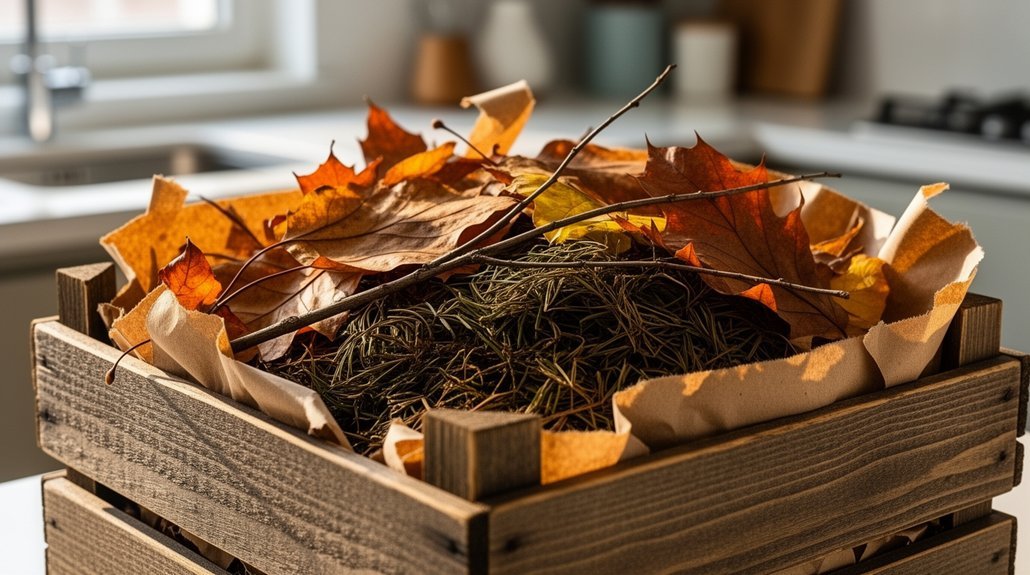
You’ll keep apartment compost dry, aerated, and odor‑free by using lightweight, carbon‑rich browns like shredded newspaper, cardboard strips, dry leaves, coffee filters, and small twigs. Store them shredded in a breathable tote or zip‑top bag under the sink, and add a towel at the bin bottom to soak excess moisture. Aim for a 2‑to‑3‑to‑1 brown‑to‑green ratio, covering scraps with a 2‑4‑inch layer of these browns. If you keep these tips in mind, you’ll discover even more tricks for success.
Explain Why Browns Matter for Apartment Compost
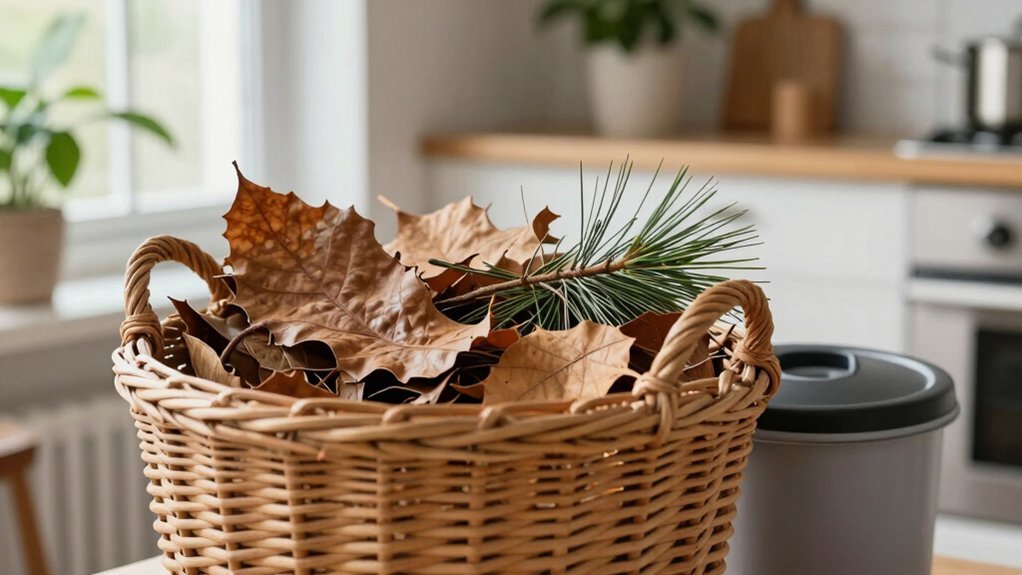
Why do browns matter in a tiny kitchen bin? You need carbon, the fuel that powers the microbes breaking down your food scraps. Browns supply that carbon, keeping microbes active and preventing the pile from stalling. They also soak up excess moisture, stopping the bin from turning slimy, anaerobic, and smelly. By adding dry, bulky material you create air pockets that let oxygen circulate, speeding decomposition and cutting odors. The EPA recommends a 2‑to‑3‑to‑brown‑to‑green volume ratio, so covering each batch of greens with a few inches of leaves, shredded newspaper, or cardboard keeps the balance right. In a small apartment, frequent brown additions cover scraps, deter pests, and keep the compost from becoming a dense, waterlogged mess, ensuring steady, usable output. Adding dry leaves helps absorb excess liquid and improves aeration. A 360° ventilation system further supports oxygen distribution and reduces odors in compact indoor composting setups.
Select the Best Browns for Apartment Compost
Since browns keep your kitchen bin from turning into a soggy mess, picking the right ones matters most in a cramped apartment. Choose dry, carbon‑rich materials that fit flat and stay lightweight. Shredded newspaper, office paper, paper towels, coffee filters, and napkins are perfect—just tear them into bite‑size pieces and they’ll soak up excess moisture. If you have a balcony or shared yard waste, collect dry fall leaves, shred them, and layer them thickly for airflow and bulk. Fine woody options like untreated sawdust, wood shavings, or small twigs keep the pile structured without taking up much room. Straw, hay, corn stalks, or cotton fabric can also work, but prioritize paper and leaves for quick balance and easy storage. For apartment composters concerned about moisture management, compostable trash bags can help contain your brown materials and food scraps while maintaining proper aeration. Aim for roughly two parts browns to one part greens, and avoid anything waxy, glossy, or chemically treated. This mix prevents slimy, smelly conditions and speeds decomposition in your apartment compost. Dry leaves are especially valuable because they are easy to obtain and provide a strong carbon source.
Store & Prep Browns for Apartment Compost
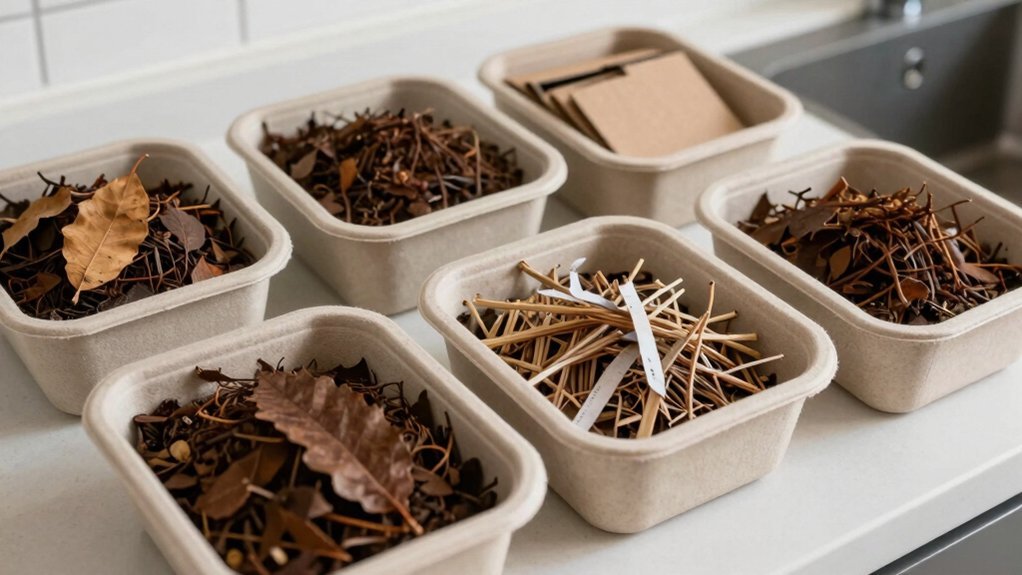
You’ll keep shredded browns in closed, breathable bins so they stay dry but breathable‑free, and label each container for quick identification. A towel or newspaper at the bottom of the bin absorbs any moisture, while a cool, dry closet or utility area prevents mold and clumping. When you prep, shred or tear the material into 1‑2‑inch pieces and store a ready‑to‑use batch nearby so you can add it to the compost bin without delay. Most ceramic bodies are dishwasher-safe, though hand washing preserves the finish and prevents damage to your storage containers. Collect dead leaves from paved, grassy, or mulched areas to minimize contaminants.
Shredded Storage Tips
Where do you keep your shredded browns so they stay dry and ready? Use a sturdy tote or a zip‑top bag that fits under your sink or on a pantry shelf. Keep the container closed when you’re not adding material; this blocks humidity and prevents the paper from clumping.
Separate the browns from greens until you have enough for a layer, then pull a handful out and mix it in. If you shred by hand, collect the strips in a shallow tray, then transfer them to the tote to avoid spills.
Rotate the stash by adding fresh newspaper, cardboard strips, or dried leaves each week, so you always have a dry, fluffy reserve for immediate composting. For apartment composting systems, maintaining your brown materials reserve helps ensure consistent aeration and carbon balance in smaller bins. Proper balancing greens and browns is essential to avoid odors and speed up decomposition.
Moisture‑Control Storage Solutions
Storing shredded browns where they stay dry is the first step to keeping them ready for compost. Keep them in a tarp‑covered bin or a loosely sealed plastic tote to block rain while allowing airflow. For short‑term use (1‑3 weeks), an open bag on a shelf or a burlap sack under an overhang works fine; just check for damp spots daily.
Medium‑term storage (1‑2 months) benefits from a container with a vented lid or a garbage bag left slightly ajar, preventing airtight conditions that trigger anaerobic smells. Jute fiber materials like burlap naturally absorb excess moisture and maintain the breathability needed for proper storage conditions.
For longer periods, rotate the material in a breathable bin, add a layer of newspaper or torn egg cartons to soak up excess moisture, and turn it weekly.
If you freeze food scraps before mixing with browns, you’ll further curb odor and slow decomposition. Keep dry materials away from homes and structures to reduce fire risk.
Balance Browns & Greens (2:1–3:1) in Apartment Compost
A solid rule of thumb is to keep roughly two to three parts brown material for every part green when you compost in a kitchen bin. You’ll notice faster breakdown and less odor when you follow the 2:1–3:1 ratio. Toss shredded paper, cardboard, or dried leaves over fruit peels, coffee grounds, and veggie scraps. If the mix feels soggy, add a handful of dry browns; if it’s sluggish, sprinkle a few more greens. Consistency is key—each time you drop a green, cover it with a few inches of brown. Maintaining the proper carbon‑to‑nitrogen balance helps prevent unpleasant odors. For apartment dwellers managing moisture and smell concerns, consider that strategic drainage and ventilation work alongside proper brown-to-green ratios to maintain healthy composting conditions.
Layer Browns for Airflow & Odor Control in Apartment Compost
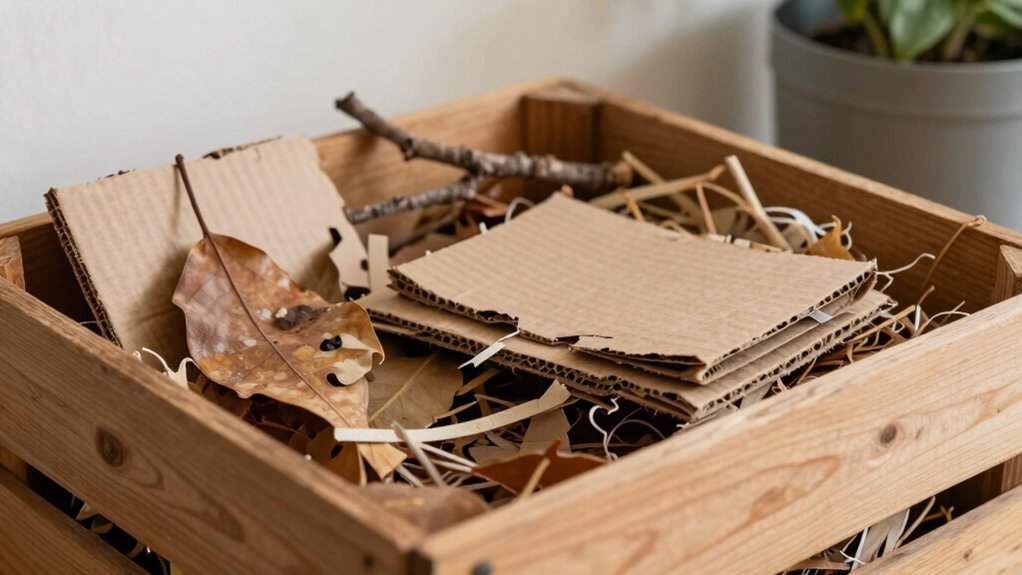
How can you keep your apartment compost smelling fresh while ensuring it breathes? Use a fluffy brown top layer that traps odors and creates air pockets. Shred dry leaves, tear cardboard, or sprinkle straw to keep the pile porous and dry. Each addition should be covered with 4–8 inches of these browns, which absorb excess moisture and prevent compaction. By alternating food scraps with light, fibrous browns, you maintain oxygen flow and keep smells at bay. For apartment dwellers using countertop bins, pair your brown layers with replaceable charcoal filters to maximize odor control alongside natural airflow management.
- Shredded dry leaves – bulk, carbon, moisture‑absorbing, easy to layer.
- Torn cardboard or paper – structural support, quick odor cover, improves aeration when broken up.
- Straw or hay – lightweight, porous, long‑lasting airflow, prevents compression in small bins.
Avoid Problematic Browns & Fix Issues in Apartment Compost
Ever wondered why your compost sometimes smells sour or turns mushy? You’re probably using too many fine browns or contaminated ones. Sawdust, shredded paper fluff, and powdered cardboard compact tightly, choking airflow. Stick to coarse, dry leaf pieces, straw, or plain cardboard in thin layers, and keep sawdust under a quarter‑inch. Skip pressure‑treated wood, glossy paper, and painted lumber—they leach chemicals. Balance greens with at least two‑to‑three times more browns, covering scraps with four‑to‑eight inches of dry material to curb slime and odor. If space is tight, choose compact, untreated plant sources like pine needles or shredded newspaper. Carbon‑rich browns help maintain proper aeration and moisture balance, similar to how designated work surfaces in compact gardening setups require strategic organization to function efficiently in limited spaces.
Frequently Asked Questions
Can I Compost Shredded Cardboard With a Worm Bin?
Yes, you can compost shredded cardboard in a worm bin; just mix it with nitrogen‑rich scraps, keep it moist but not soggy, and avoid waxed or greasy pieces for healthy worm activity.
Do Coffee Grounds Count as a Brown or Green Material?
You should treat coffee grounds as a green material. They’re nitrogen‑rich, boost microbial activity, and fit the 4:1 brown‑to‑green ratio when mixed with dry browns for balanced composting.
How Often Should I Add Browns to Prevent Odor?
You should add browns each time you toss in food scraps—daily if you add scraps daily. Keep a 2:1–3:1 browns‑to‑greens ratio, and add extra browns immediately when the bin smells or feels wet.
Can I Use Newspaper With Black Ink in My Compost?
Yes, you can use plain black‑ink newspaper in your compost; just shred it, keep it dry until mixing, and balance it with greens to avoid excess dryness or odor.
Is It Safe to Compost Paper Towel Rolls After Use?
Yes, you can compost paper towel rolls if they’re plain, uncoated, and free of food, grease, or chemicals. Tear them up, mix with greens, and avoid any liners, wax, or heavy dyes.
In Summary
By mastering the right browns, you’ll keep your apartment compost thriving. Choose compact, low‑odor options, prep them in bite‑size pieces, and store them airtight. Stick to a 2:1–3:1 brown‑to‑green ratio, layer for airflow, and ditch anything that smells or attracts pests. With these habits, you’ll get fast, odor‑free breakdown and a healthier, greener home.