
You’ll want a 3:1 brown‑to‑green mix so the carbon‑to‑nitrogen ratio stays around 25‑30:1, which heats the pile fast, keeps airflow steady, and prevents sour, ammonia smells. Browns are dry, carbon‑rich items like shredded cardboard, dry leaves, or paper, while greens are moist, nitrogen‑rich scraps such as fruit peels, veggie trimmings, coffee grounds, and tea leaves. Use a small bucket of greens and three buckets of browns, chop the browns small, and aim for a damp‑sponge feel; if it’s soggy, add more browns and turn the pile. Adjust the ratio seasonally—more browns in summer, a bit more greens in winter—to keep the process efficient and odor‑free, and you’ll discover deeper tips on turning, aeration, and troubleshooting.
Why a 3:1 Brown‑to‑Green Ratio Matters for Kitchen Compost
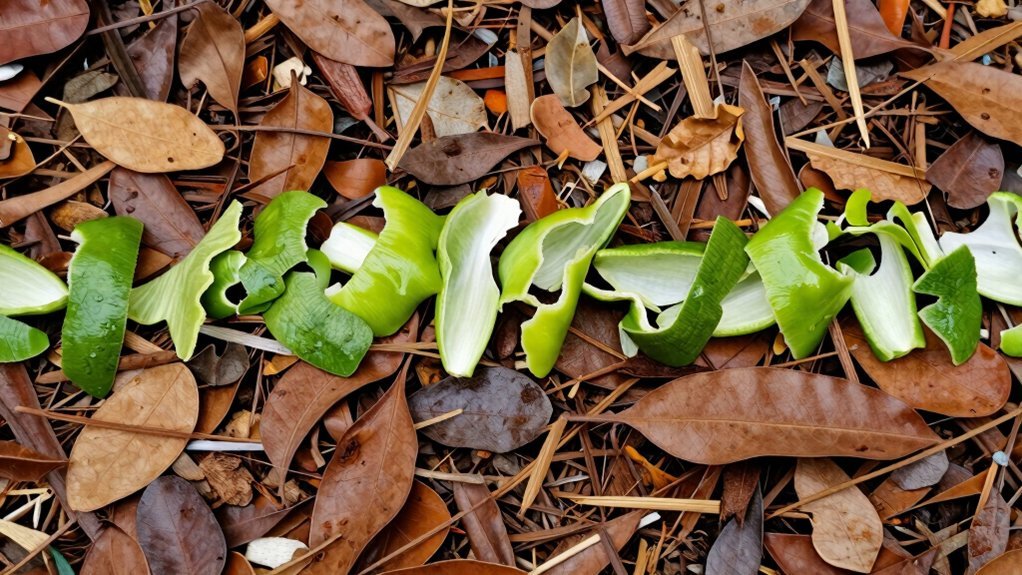
Why does a 3:1 brown‑to‑green ratio matter for kitchen compost? You’ll find that a mix of three parts dry, carbon‑rich browns to one part nitrogen‑rich greens creates the right carbon‑to‑nitrogen balance—about 25–30:1 by weight—to keep microbes thriving. This proportion lets the pile heat up quickly, stays airflow, and prevents the soggy, ammonia‑smelling conditions that appear when greens dominate.
Too many browns, on the other hand, cools and dries the bin, starving microbes of nitrogen and slowing breakdown. By aiming for the 3:1 rule, you avoid both extremes, keep odors at bay, and speed decomposition, even if you don’t measure each scoop precisely. Selecting a ceramic compost crock with adequate capacity helps you maintain consistent layering ratios as you collect kitchen scraps. Adding proper layering helps maintain aeration and moisture balance throughout the pile.
How to Identify True “Browns” and “Greens” for Your Apartment Kitchen
After establishing the 3:1 ratio, the next step is to recognize which kitchen items truly act as “browns” or “greens.” Greens are nitrogen‑rich, moist, and usually fresh—think fruit and veggie scraps, coffee grounds, tea leaves, and any garden trimmings you bring in.
| Green (Nitrogen‑rich) | Brown (Carbon‑rich) | Misclassifications |
|---|---|---|
| Fruit/veg peel | Dry leaves | Coffee grounds (dark but green) |
| Coffee grounds | Corrugated cardboard | Eggshells (mineral, not green/brown) |
| Fresh plant trimmings | Uncoated paper napkins | Paper towels with grease (avoid) |
You can trust texture and moisture: wet, soft, fresh pieces belong in the green bin, while dry, brittle, fibrous items go in the brown bin. Always check for coatings or chemicals before adding anything to your indoor compost. Proper nitrogen balance is essential for maintaining microbial activity. Using compostable liners with star-sealed bottoms will help contain moisture while your greens and browns decompose together.
Quick 3‑to‑1 Bucket Method: Measuring Ratios Without a Scale
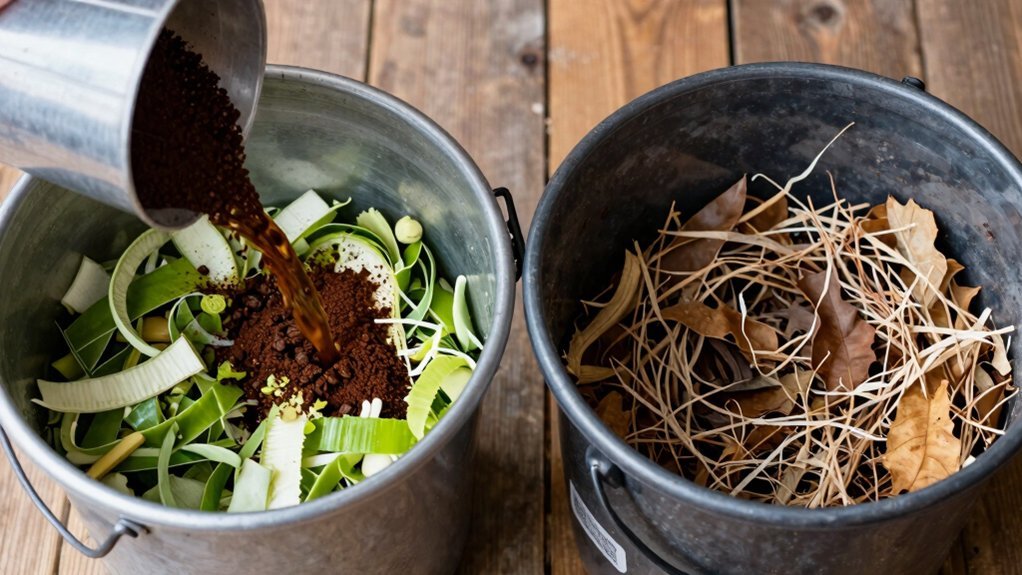
You can nail the 3‑to‑1 ratio in your kitchen with just a couple of buckets—no scale needed. Fill a small bucket with your kitchen scraps, then add roughly three buckets of dry browns such as shredded newspaper, cardboard, or leaves. This visual rule keeps carbon‑to‑nitrogen near the 25:1–30:1 target without weighing anything. If the scraps are especially wet, toss in a bit more brown material to curb odor and compaction. Conversely, if you already have dry packaging in the mix, you can trim the brown amount.
Chop browns into smaller pieces before mixing; it improves contact and speeds breakdown. Consider using recyclable kraft cardboard from packaging materials as a readily available source of brown material. Use this routine each time you feed the bin, and watch for a warm, odor‑free pile as your cue that the ratio works. Adding too many greens can make the pile wet and smelly, so adjust the brown amount accordingly.
Turning a Soggy Pile Into a Wrung‑Out Sponge: Moisture Adjustments
Ever notice how a soggy pile turns into a slimy mess instead of a “wrung‑out sponge”? You can fix it by adding dry browns and aerating the heap. Toss shredded cardboard, dry leaves, or straw until the mixture feels like a damp sponge—just a few drops should appear when you squeeze a handful. Turn the pile regularly to break up compaction, introduce oxygen, and let excess water evaporate. Layer greens and browns instead of dumping them all at once, and avoid rain exposure by covering the top. If the squeeze test shows water dripping, add more browns and turn again. Keep the texture loose and chunky; that structure drains well and maintains the aerobic environment you need for fast, odor‑free decomposition. Consider using compost aerator tools to enhance your turning efforts and ensure thorough mixing throughout dense layers. Adding balanced C:N material ensures microbes have the right nutrients to process both greens and browns efficiently.
Troubleshooting Common Ratio Mistakes and Simple Fixes
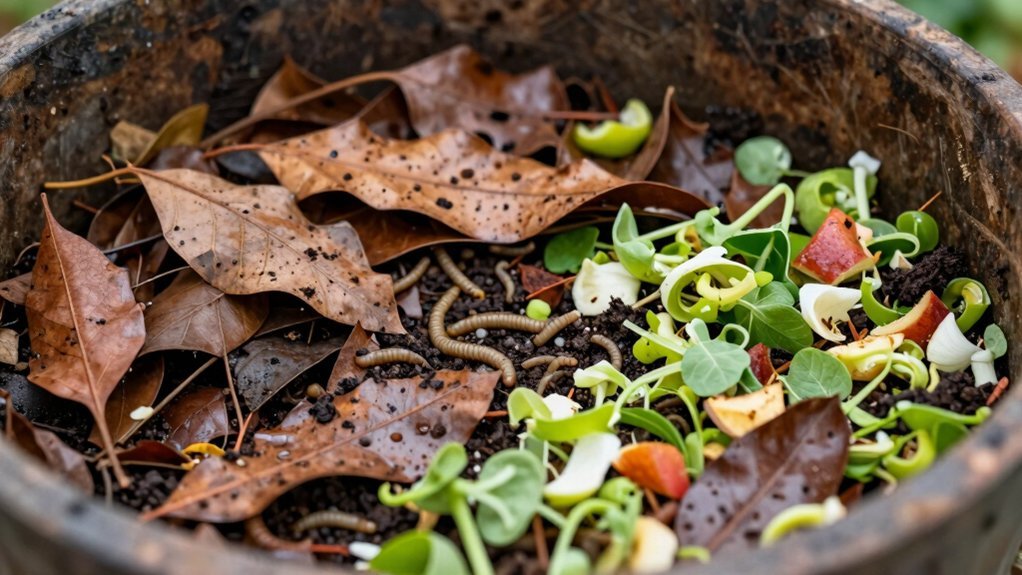
Moisture control only works when the underlying green‑to‑brown balance is right, so let’s look at the most common ratio slip‑ups and how to correct them quickly. You’ll notice a wet, smelly pile when greens dominate; add dry browns like shredded leaves or cardboard and mix them thoroughly, not just on top. A dry, cold heap means browns are excessive; toss in nitrogen‑rich scraps and chop everything smaller for better contact. Finally, stop trusting a single bucket ratio; watch the pile’s temperature, odor, and texture, then adjust by adding greens or browns as needed. Using dual activated charcoal filters similar to those found in electric composters can help manage odor issues while you’re correcting your ratios.
- Green overload – add dry browns, mix well.
- Brown overload – add fresh greens, shred materials.
- Ratio rigidity – tune by pile behavior, not fixed volumes. C:N balance is achieved when the pile starts around a 30:1 carbon‑to‑nitrogen ratio.
Seasonal Tweaks: Adapting Your Compost Ratio for Summer Heat and Winter Cold
How does the weather change the perfect green‑to‑brown balance? In summer you’ll want a drier, browner mix—about 2–3 parts browns to 1 part greens—to soak up extra moisture and keep the pile from overheating. In winter flip the ratio to roughly 1–2 parts browns to 1 part greens, adding a few extra nitrogen sources to sustain microbial heat. Keep a “wrung‑out sponge” moisture level year‑round, but water more in hot months and avoid saturation when it’s cold. Check odor, temperature, and texture often; adjust by adding browns and water in summer, greens and insulation in winter. For kitchen scraps specifically, compostable bags can help contain moisture and odors while your materials break down, making seasonal ratio adjustments easier to manage.
| Season | Green : Brown Ratio | Typical Additions |
|---|---|---|
| Summer | 1 : 2–3 | Shredded leaves, straw, water |
| Winter | 1 : 1–2 | Fresh grass, coffee grounds, cover |
| Spring | 1 : 2 | Mixed kitchen scraps, cardboard |
| Fall | 1 : 2 | Fruit waste, shredded newspaper |
Turning the Mix: Easy Techniques to Keep Airflow and Heat Balanced
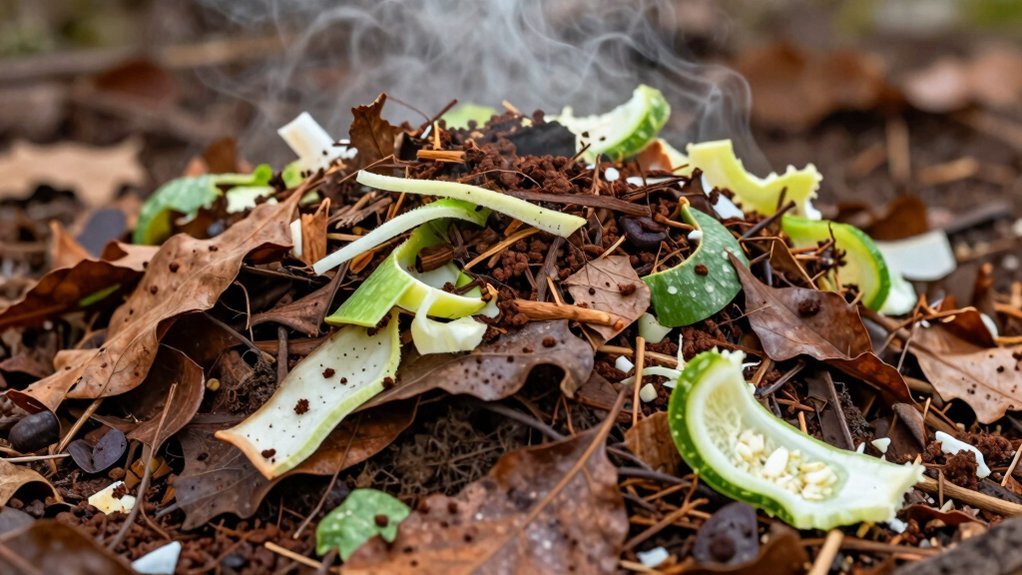
A well‑turned compost pile stays aerobic, keeps heat where you need it, and prevents the soggy, smelly mess that stalls decomposition. You’ll notice that turning creates fresh air channels, pushes oxygen to the core, and redistributes hot outer material with cooler inner layers, so temperature stays even. A quick rebound after a turn tells you the moisture, carbon, and nitrogen balance is on point. Aim for a turn every 3‑4 days or when the pile dips below 104 °F—whichever comes first. Use low‑effort tools like a corkscrew aerator or a pitchfork to fold outer scraps inward, and sprinkle bulky browns or egg‑carton tubes to keep the mix loose. You can also repurpose airtight storage containers from your kitchen organization system once they’re no longer needed, cutting them into strips to add structure and airflow to your compost pile.
- Turn on a 3‑day schedule or when temperature < 104 °F.
- Employ aerator tools or a pitchfork for quick, gentle mixing.
- Add structure (wood chips, cardboard, tubes) to maintain airflow and prevent compaction.
Frequently Asked Questions
What if I Only Have Wet Greens and No Dry Browns Available?
You should spread the greens thinly, turn them often, and add any carbon source you can find—like shredded newspaper, cardboard, or dry leaves—while storing the rest in a sealed container until browns arrive.
Can I Use Coffee Grounds as a Green or a Brown?
You can treat coffee grounds as a green. They’re nitrogen‑rich, so add them with browns, keeping them under twenty percent of the mix, and spread them thinly to avoid compaction.
How Does the C:N Ratio Differ for Shredded Paper vs. Cardboard?
Shredded paper sits around 150‑200:1 C:N, while corrugated cardboard ranges 400‑560:1. So paper offers a moderate carbon source, whereas cardboard provides a much heavier carbon load, slowing decomposition.
Do Citrus Peels Affect the Compost Odor or pH?
You’ll notice citrus peels add a fresh scent and briefly lower pH, but if you mix them with browns and keep the pile aerated, the acidity neutralizes and odors stay mild.
Is It Safe to Compost Pet Waste With Kitchen Scraps?
No, you shouldn’t mix pet waste with kitchen scraps. Pet feces harbor pathogens that home compost piles rarely kill, and the resulting material can’t be used on edible plants, risking health.
In Summary
By keeping the 3‑to‑1 brown‑to‑green balance, you’ll get a fast, odor‑free compost that thrives in any season. Stick to the simple bucket method, tweak moisture when it gets soggy, and turn the pile regularly to keep air flowing. With these quick fixes, your kitchen scraps will transform into rich, usable soil without the hassle—so keep the ratios right, and let nature do the rest.