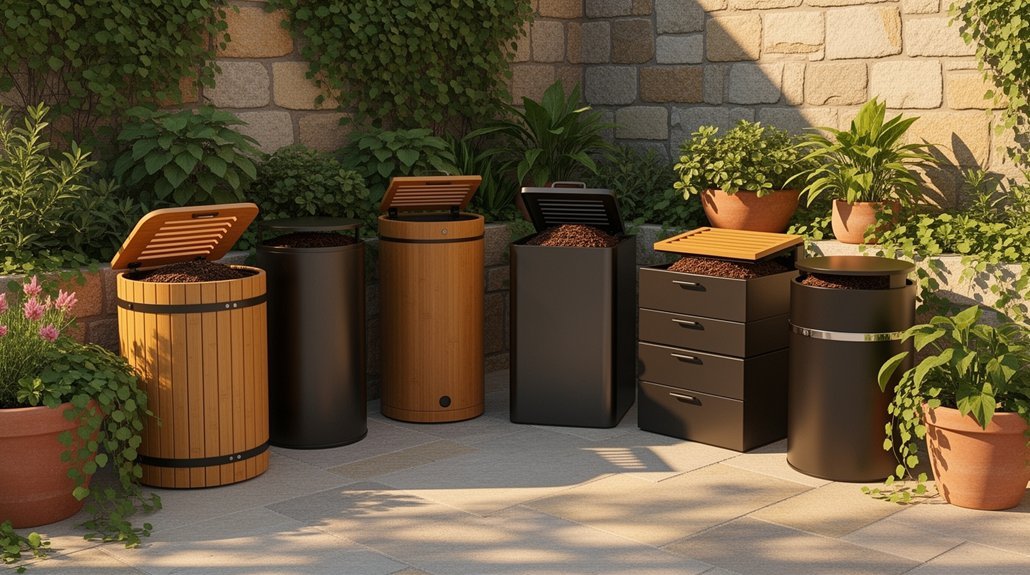

You’ll get the best results when your pile’s C:N stays between 25 : 1 and 30 : 1, so aim for a three‑to‑one brown‑to‑green mix. Use low‑C greens like autumn leaves (30‑80:1) and high‑C bulking agents such as straw or wood chips (40‑500:1) to balance nitrogen‑rich scraps and coffee grounds. Keep moisture at 50‑70 % and turn regularly for aeration and odor control. When the ratio drops to 10‑15:1, the compost is finished, and the next sections will show you how to fine‑tune each step.
C:N Ratio Basics: Why 25‑30:1 Is Ideal for Home Compost

Why does a 25‑30:1 carbon‑to‑nitrogen ratio work so well for home compost? You give microbes enough carbon for energy while supplying the nitrogen they need for protein synthesis and rapid growth. At roughly 30:1, bacterial activity spikes, pushing temperatures into the thermophilic range (130‑150 °F) and speeding decomposition. If nitrogen spikes above the ideal, excess turns into ammonia, creating foul odors and wasting plant‑available nitrogen. If carbon dominates, microbes starve, the pile stays cool, and breakdown drags on. The 25‑30:1 window hits the sweet spot: it fuels fast microbial multiplication, maintains a healthy temperature, and yields finished compost with a low C:N ratio (around 10:1). This balance also helps destroy pathogens and weed seeds, giving you a quick, odor‑free compost. Moisture content should remain between 50‑70 % for effective composting and vermicomposting. Pairing the right C:N ratio with proper air circulation tools ensures that oxygen reaches all layers of your pile, preventing anaerobic conditions that would slow decomposition.
3‑to‑1 Brown‑to‑Green Mixing Rule for a Balanced C:N Ratio
Ever wondered how to keep your compost pile hot and fast‑decomposing without a scale? The 3‑to‑1 brown‑to‑green rule gives you a quick, volume‑based shortcut to a balanced C:N ratio. Browns feed microbes with carbon, greens supply nitrogen for growth, and the right mix fuels heat and speed. If you notice a soggy, stinky pile, you’ve likely added too many greens; a cool, slow pile signals excess browns. Adjust by adding or removing material, then stir well for contact. Many countertop compost bins feature charcoal filter technology to manage odors while you’re building your pile indoors.
- Three buckets of dry leaves, straw, or shredded paper
- One bucket of kitchen scraps, fresh grass, or coffee grounds
- Mix thoroughly after each layer
- Watch moisture; add browns if it feels wet.
If the pile becomes overly wet, add more browns to restore balance.
Low‑C Materials for Compost C:N Ratio: Autumn Leaves (30‑80:1)

You’ll find autumn leaves fit nicely into the 30‑80:1 C:N window when you shred them and keep them moist, giving you a reliable low‑C source throughout fall and winter.
Aim for a balanced mix by pairing the leaves with nitrogen‑rich greens or a sprinkle of manure to avoid the slow breakdown that pure leaf piles cause.
Adjust moisture by sprinkling water or adding damp kitchen scraps, ensuring the pile stays airy and doesn’t dry out. Target a moisture content of 40-60% to accelerate decomposition and maintain optimal conditions. Mulching leaves into turfgrass also recycles nutrients back to the lawn while reducing waste.
Ideal C:N Range
Ever wondered how autumn leaves fit into a balanced compost mix? You’ll find that their C:N range of 30‑80:1 makes them perfect “brown” allies. When you aim for an overall 25‑30:1 start, leaves offset nitrogen‑rich greens, curb ammonia smells, and fuel microbial heat. Shredding them boosts surface area, speeding breakdown, while dry, tough leaves need extra nitrogen. For indoor composting setups, maintaining proper moisture and odor control through charcoal filter replacements every 2-3 months can complement your carbon-nitrogen balance by preventing ammonia buildup. Here’s how to hit the sweet spot:
- Mix 1 part leaf material (30‑50:1) with 3 parts green waste – creates a balanced 25:1 ratio.
- Add a handful of coffee grounds – injects nitrogen for high‑carbon leaves.
- Moisten to a wrung‑out sponge – ensures microbes thrive.
- Turn weekly – keeps oxygen flowing and speeds decomposition.
Follow these steps, and your leaf pile will transform into rich, crumbly compost without foul odors.
Seasonal Availability Tips
Your leaf‑rich compost pile can stay balanced year‑round if you time collection and preparation right. In autumn, gather the dry, brown leaves that have naturally browned; they fall a C:N ratio of 35‑85:1, perfect for carbon. Shred them with a mower or leaf shredder to prevent matting and to increase surface area, which lets microbes work faster. Store the shredded material in a dry bin and add it gradually to your compost, mixing with nitrogen‑rich greens like grass clippings, kitchen scraps, or coffee grounds each week. This steady, seasonal feedstock keeps the carbon load from overwhelming the pile and maintains the ideal C:N balance without overloading the bin. Adding a nitrogen source such as urea or a high‑N fertilizer is essential because leaves alone have a high C:N ratio, and the nitrogen boost speeds up decomposition. Ensure your storage area has anti-slip bases and weighted designs to prevent tipping and protect your accumulated materials from moisture and pest damage.
Moisture Management Guidance
How much water does a pile of dry autumn leaves really need? Because leaves are low‑C and naturally moisture‑sparse, they must be moistened to about 65‑70 % at the start of active composting; otherwise microbes can’t form the thin film of moisture they need, and the pile will heat slowly or stall. Lightly spray each layer as you add it, or pre‑soak the leaves before stacking, to avoid soggy spots. Use the “wrung‑out sponge” test—squeeze a handful; a few droplets mean you’re on target. Alternate dry leaves with green scraps, cover the pile, and turn it weekly to spread moisture evenly. For apartment dwellers managing smaller batches, countertop compost bins can serve as convenient collection points before transferring materials to your main outdoor pile.
- Spray every new layer
- Pre‑wet leaves before piling
- Mix in wet greens or manure
- Turn to redistribute moisture
Active phase requires higher moisture to support rapid microbial activity.
High‑C Materials for Compost C:N Ratio: Straw & Wood Chips (40‑500:1)

Why bother with straw and wood chips? Straw offers a high‑carbon bulking agent, typically 48:1‑150:1 (average ~80:1). Oat straw leans toward 48:1‑98:1, wheat straw 100:1‑150:1. Pair it with nitrogen‑rich greens—grass clippings, manure, kitchen scraps—to nudge your pile toward the ideal 25:1‑30:1 range.
Wood chips sit even higher, 100:1‑500:1, and break down slowly because of lignin and size. Use them sparingly as structural carbon, chopping them fine to improve contact with nitrogen sources. For faster decomposition, consider layering high‑carbon materials with bokashi bran accelerators to enhance microbial activity and reduce fermentation time.
Too much high‑C material will starve microbes, cool the pile, and stretch compost time. Keep moisture balanced, monitor nitrogen levels, and avoid thick, dry layers that hinder active decomposition. The guide emphasizes that a rough target C:N ratio is sufficient for great compost.
Green Materials for Compost C:N Ratio: Vegetable Scraps & Coffee Grounds
You’ll notice that vegetable scraps sit at the low end of the C:N spectrum, while coffee grounds land in the moderate range.
By tweaking the proportion of these greens, you can fine‑tune the overall ratio to keep the pile active and balanced.
Adjusting the mix lets you avoid excess moisture or nitrogen spikes and promotes steady decomposition.
A proper C:N balance is essential for preventing ammonia odors and ensuring rapid breakdown. Maintaining activated charcoal filters or proper aeration in your composting system can further support odor management alongside optimal material ratios.
Vegetable Scraps: Low C:N
Ever wonder why vegetable scraps turn a compost pile hot and fast? Their low C:N (≈11:1‑19:1) floods microbes with nitrogen, sparking rapid activity and heat. You’ll love the quick breakdown, but you must balance moisture and aeration to avoid slime or odor. Chop the scraps fine, then cover them with carbon‑rich browns to keep the pile airy and odor‑free. Remember, a 3:1 brown‑to‑green volume ratio usually hits the target 25:1‑30:1 C:N. For organizing your composting materials and keeping track of what you’re adding to your pile, consider using airtight food storage containers to store dried browns like shredded leaves or straw in a dry, accessible location.
- Slice into bite‑size pieces – boosts surface area.
- Add dry leaves or straw – absorbs excess moisture.
- Mix thoroughly – prevents compacted spots.
- Cover each addition – deters pests and smells.
Coffee Grounds: Moderate C:N
How do coffee grounds fit into a balanced compost mix? You’ll find they sit near the “green” side, averaging a 20:1–24:1 C:N ratio and supplying about 2 % nitrogen. That nitrogen fuels microbes, pushes the pile into the thermophilic range, and can keep temperatures at 130–150 °F for a couple of weeks when you pair grounds with enough browns.
Because they’re fine‑textured and moisture‑rich, they can make a heap dense and soggy if you overdo them. Aim for no more than 25 % of the total volume and blend them with shredded leaves, cardboard, or newspaper to improve aeration and structure. This modest carbon contribution boosts activity without the nitrogen surge that fresh veggie scraps can cause. You can verify your compost’s pH and nutrient balance using soil pH test kits to ensure optimal decomposition conditions. Mix ratio should be roughly two‑thirds grounds to one‑third high‑carbon material by weight to hit a 30:1 C:N target.
Balancing Greens: Ratio Tweaks
Balancing greens means tweaking the mix so vegetable scraps and coffee grounds together hit the sweet spot of a 25–30:1 overall C:N ratio. You’ll notice that vegetable scraps (12–20:1) dump nitrogen fast, while coffee grounds sit around 20:1 and stay moist but dense. To avoid soggy mats and keep airflow alive, intersperse them with browns like straw or leaves. Small, frequent additions beat big dumps, and burying scraps reduces pests. When you blend these greens correctly, heat builds quickly and microbes thrive.
- Add a handful of vegetable scraps per cup of coffee grounds.
- Mix each batch with a layer of dry leaves.
- Rotate the pile every few days to aerate.
- Keep moisture at a wrung‑out sponge level.
- Adjust the mix based on material age to maintain the target ratio.
Manure’s Impact on Compost C:N Ratio and How to Balance It
Why does manure often throw off a compost pile’s C:N balance? Because pure manure is nitrogen‑rich, pushing the ratio below the 20:1‑40:1 sweet spot and causing ammonia loss. To bring it back, mix in carbon‑heavy bulking agents—straw, sawdust, leaves, or cardboard—until you hit a target around 24:1‑30:1. Aim for about 25 % straw by volume (C:N ≈ 80:1) to achieve an initial 22:1 mix, which research shows maximizes pathogen kill while keeping nitrogen in. Too much carbon will stall heating; too little will waste nitrogen as gas. Balance carefully for a stable, odor‑controlled pile. Up to 40% of nitrogen can be lost during composting, so adjusting the C:N ratio with bulking agents is essential.
| Material | Approx. C:N |
|---|---|
| Dairy manure | 15:1 |
| Wheat straw | 80:1 |
| Sawdust | 150:1 |
| Leaves | 60:1 |
| Cardboard | 120:1 |
Moisture & Odor Control for a Stable Compost C:N Ratio

Ever notice how a compost pile can swing from fragrant to foul in a single day? Moisture is the hidden lever that keeps your C:N ratio steady and odors at bay. Aim for a 45‑60 % wetness, starting near 55‑60 % because microbes lose water as they heat up. When it feels like a wrung‑sponge—moist but not dripping—you’ve hit the sweet spot. Too dry stalls microbes, locks nitrogen, and yields a slow‑moving, odor‑free heap. Too wet smothers air, fuels anaerobic microbes, and releases stinky sulfur and ammonia. Keep the balance with these steps:
- Begin with higher‑moisture feedstock.
- Sprinkle dry bulking material if it gets soggy.
- Add water gradually, mix thoroughly.
- Preserve coarse structure for airflow. Two‑thirds of carbon is released as carbon dioxide during decomposition.
Turning & Aeration to Maintain Compost C:N Ratio
Moisture keeps the pile from turning sour, but without oxygen the microbes can’t break down the carbon fast enough to keep the C:N ratio in check. Turning introduces fresh air, reviving aerobic microbes that chew carbon quickly.
When you turn every three to four days, you keep temperature high, prevent dead zones, and spread partially decomposed material so nitrogen and carbon stay balanced.
If a full turn feels too labor‑intensive, poke or stab the heap with an aerator fork to create air channels; this still disrupts anaerobic pockets and lets heat build.
After a wet spell, a turn lets you dry compact layers and add water where needed, keeping the whole mass active and the C:N ratio stable. Bulking material helps maintain airflow by creating additional voids within the pile.
Vermicomposting’s Adjusted C:N Ratio (≈50:1) Explained
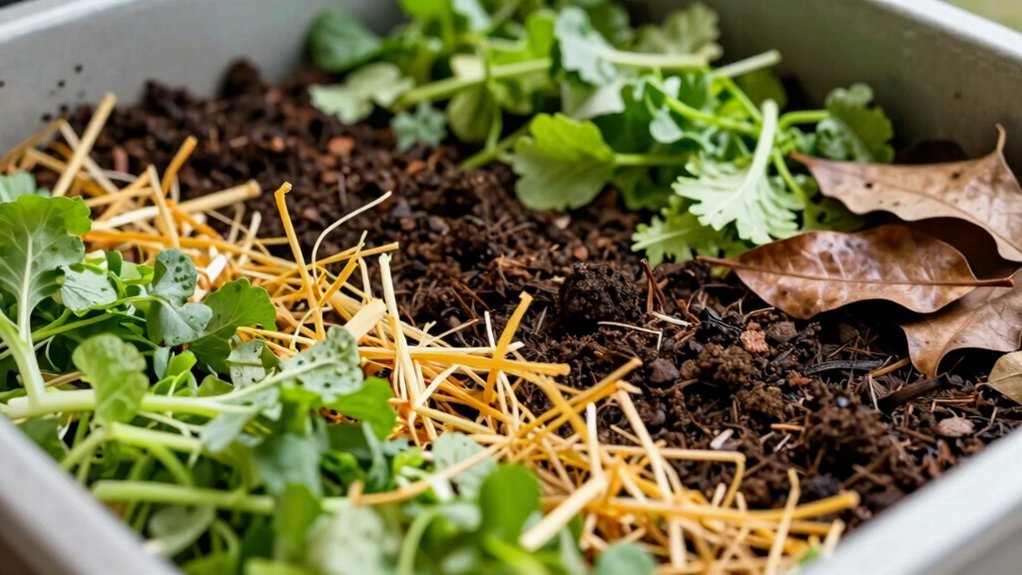
How does a worm bin stay healthy with a carbon‑rich diet? You’ll find that a 40‑50:1 C:N start gives worms comfort, cuts sour odors, and prevents anaerobic pockets. The extra carbon acts like a cushion, letting microbes and earthworms work steadily without overheating. To hit that sweet spot, blend high‑carbon bedding with your scraps.1. Shredded cardboard – 400‑560:1, bulky and airy.
2. Dry leaves – 50‑80:1, natural fluff.
3. Straw – 75‑85:1, adds structure.
4. Newspaper – 175:1, sparingly for texture.
Balance food and bedding, keep the mix moist but not soggy, and you’ll see vigorous worm activity and a pleasant, earthy smell. Too much nitrogen will sour the bin, while excess carbon simply slows feeding. Adding adequate moisture ensures microbes stay active throughout the process.
Measuring the Compost C:N Ratio Drop to 10‑15:1 in Finished Compost
A worm bin that stays healthy with a carbon‑rich diet eventually produces compost whose C:N ratio drops to the 10‑15:1 range, signaling maturity. To verify that drop, you’ll sample the pile regularly and calculate the ratio by dividing total carbon by total nitrogen. Use the ingredient percentages from Cornell’s guidelines as a quick estimate, but for precision send a small, moist sample to a lab.
Expect the ratio to fall from an initial 25–30:1 toward 10–15:1 as microbes respire carbon as CO₂ while retaining nitrogen.
When you notice reduced heat, an earthy scent, and a dark, crumbly texture, the ratio is likely in the finished‑compost window. Confirmation through testing guarantees the compost is stable and ready for garden beds. Adding sufficient moisture helps maintain microbial activity and ensures the C:N ratio shifts appropriately.
Frequently Asked Questions
Can I Use Kitchen Peels With High Moisture Without Adding Extra Browns?
Yes, you can use high‑moisture peels alone if the pile stays fluffy, aerated, and not soggy; monitor heat, odor, and texture, and add browns quickly if it mats or smells.
How Does Seasonal Temperature Affect the Optimal C:N Ratio?
You’ll need a slightly higher carbon mix in warm months to curb ammonia, while cooler seasons let you keep a richer nitrogen blend; aim around 30:1, adjusting up or down by a few points.
Do Pine Needles Significantly Alter the C:N Balance?
You’ll see a noticeable shift only if you add a lot of needles; a modest amount barely changes the ratio. Balance them with greens or manure, keep moisture up, and the pile stays active.
What C:N Ratio Is Needed for a Successful Bokashi Pre‑Compost?
You need roughly a 20:1‑40:1 C:N mix for bokashi. Aim for a balanced blend of wet scraps and dry bran, adjusting with paper or leaves if it gets too nitrogen‑rich or soggy.
Can Compost Tea Be Added Without Disrupting the Pile’s C:N Ratio?
Yes, you can add compost tea without throwing off the C:N ratio; just use it sparingly, keep the pile moist but not soggy, and turn regularly to maintain aeration and balance.
In Summary
Now you’ve nailed the right balance, your compost will break down faster, smell better, and produce richer soil. Keep the 25‑30:1 ratio in mind, mix browns and greens, watch moisture, turn regularly, and adjust for vermicomposting if needed. By staying on top of the C:N balance, you’ll turn kitchen scraps and yard waste into a thriving, nutrient‑dense amendment for your garden in no time.