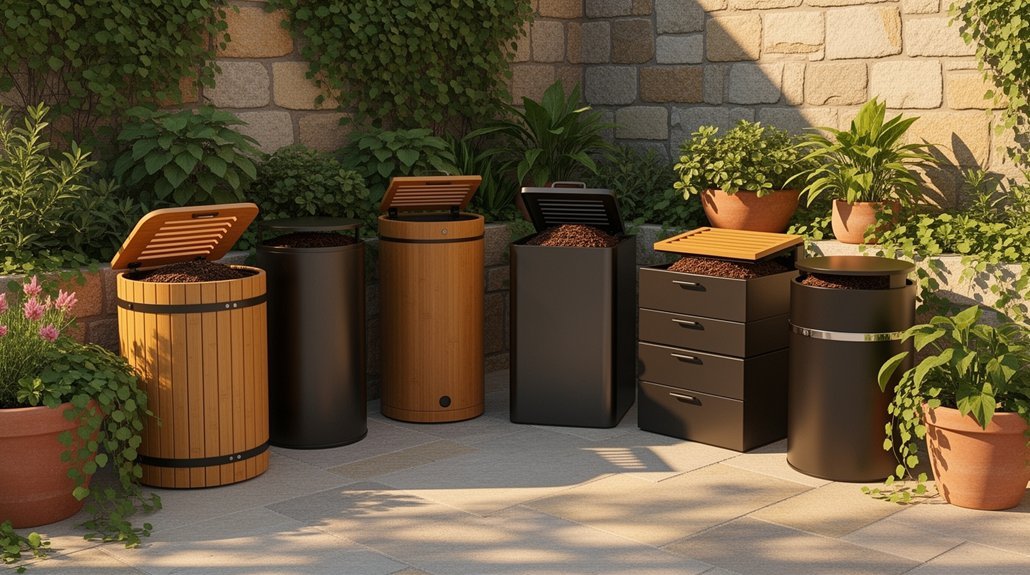
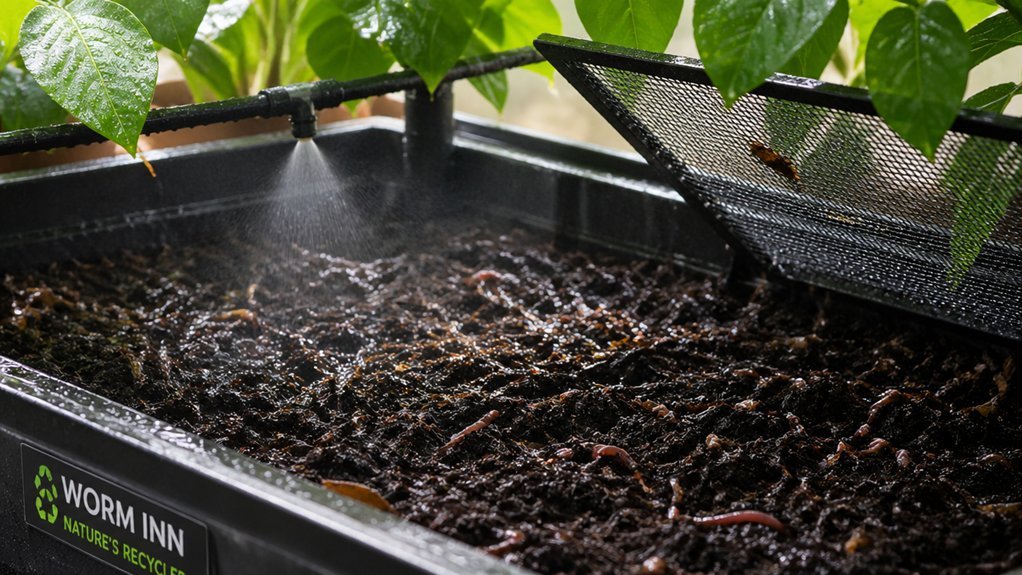
Put your bin in shade—under a tree, awning, or shade sail—so direct sun doesn’t heat it up, and drill plenty of ventilation holes for airflow. Line the bottom with fluffy coir or shredded newspaper, and add a layer of cardboard or paper when it’s hot. Slip a few frozen bottles around the perimeter and drape a damp towel over the lid for evaporative cooling, then keep the moisture at a wrung‑out sponge level. Monitor the temperature with a probe and adjust vents or feeding as needed, and you’ll discover even more tricks soon.
Why Shade Is Essential for Worm Bin Cooling
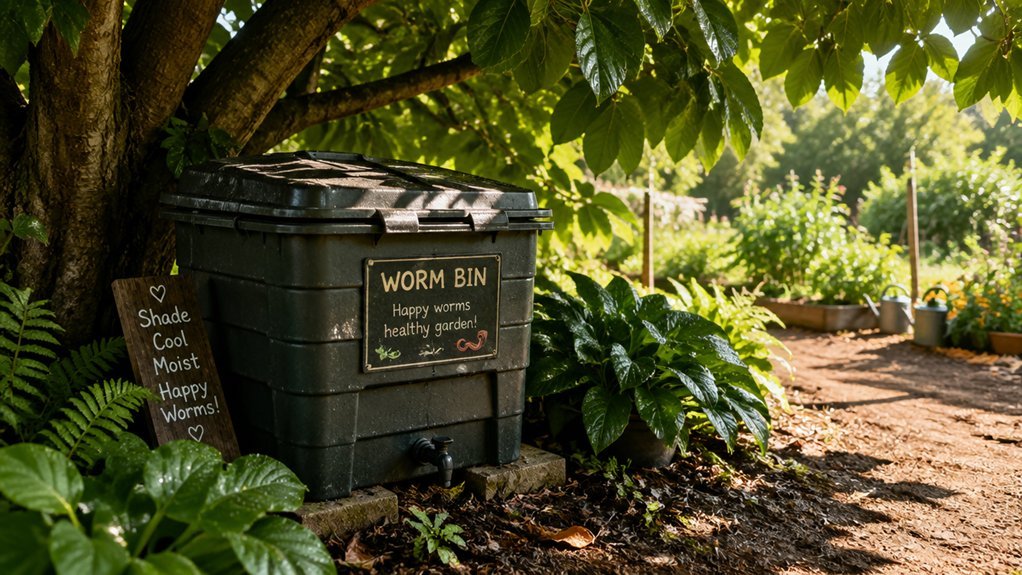
Shade cuts direct solar gain, keeping the interior temperature low enough for healthy worms. When you place the worm bin under a tree, awning, or shade sail, you create a natural cooling barrier that works with ventilation to pull hot air away. This cooler environment preserves ideal moisture levels, preventing the bedding from drying out or becoming soggy. Proper airflow combined with shade ensures the bedding stays moist yet breathable, allowing worms to thrive without overheating. Shade coverage supports consistent temperature management in hot climates.
Select a Bin and Bedding That Naturally Insulate Worms
Pick a bin that’s roomy enough for airflow but not so large that it overheats, and line it with fluffy, moisture‑retaining bedding like coconut coir or bamboo.
In addition, consider using liners or bags that are certified for home composting to line the bedding area and help manage moisture without overheating, and position the bin in a shaded, well‑ventilated spot to promote steady temperatures. home composting certification
Bedding Material Choice
Ever wondered how a simple bedding swap can keep your worm bin cool? Choose fluffy, breathable bedding materials—coconut coir, dry leaves, shredded newspaper—that soak up moisture and trap air for natural insulation. Keep the moisture level at a wrung‑out sponge consistency; it cushions temperature swings without becoming a heat conductor. Avoid dense, compact mixes or pure sawdust, which choke airflow and trap heat. Add brown cardboard or shredded paper as extra insulating layers to boost thermal buffering during hot spells. Monitor the bin for overheating signs and tweak the bedding: add more insulating material or adjust moisture as needed. This strategy enhances airflow, supports heat management, and promotes effective worm bin cooling. Filter replacements
Bin Shape and Size
Looking to keep your worm bin cool without a thermostat? Choose a bin shape that maximizes airflow and insulation while providing enough thermal mass to buffer heat spikes. A tall, narrow design lets air circulate vertically, while a wide, shallow tray spreads bedding evenly, preventing hot spots. Dark‑colored containers with Reflectix or foam add insulation, reflecting sunlight and keeping the interior stable.
Ventilation – drill multiple holes on the sides and top for constant airflow.
Thermal mass – use larger bins or add a layer of water‑filled bricks to absorb daytime heat.
Bedding – fill with fluffy bamboo or coconut coir to boost aeration and moisture retention.
In addition to these strategies, consider opting for a privacy-conscious outdoor setup that minimizes direct sun exposure on the bin area while still allowing for airflow and ventilation. Outdoor privacy screens can help shield your worm bin from harsh midday sun without sacrificing the necessary airflow.
Place Your Bin for Optimal Worm Bin Cooling
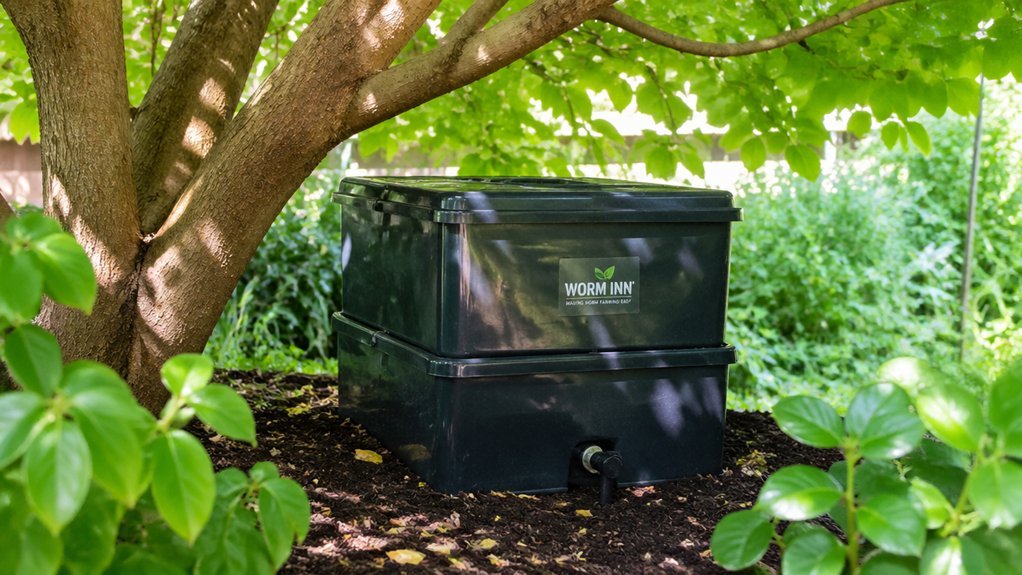
Where should you put your worm bin to keep it cool? Choose a shady spot that blocks direct sun and reduces heat buildup. A shaded porch, under a tree, or beside an awning offers natural ventilation and cooling. Position the bin where breezes can flow around it; good airflow carries away excess warmth and helps maintain steady moisture levels. In hot climates, rotate the bin placement every few days to stay in the coolest microclimate. Avoid concrete pads that radiate heat—use a wooden pallet or straw to keep the bottom insulated. Keep the surrounding area free of debris that could trap moisture or block airflow. By prioritizing shade, ventilation, and proper bin placement, you’ll create a stable, cooler environment for your worms. decomposition
Reduce Feeding and Adjust Moisture to Lower Microbial Heat
How can you keep your worm bin from overheating on scorching days? Cut back on feeding and tweak moisture to calm the microbes that heat your bin. In hot weather, less kitchen scraps mean fewer microbes and lower temperature. Keep the bedding dry enough—think of it as a wrung‑out sponge. If it feels soggy, add dry leaves or cardboard and water with dechlorinated tap water only when needed.
- Reduce feeding – fewer scraps, less heat.
- Add dry bedding – balances moisture, absorbs excess heat.
- Water sparingly – dechlorinate, then drizzle only until the bedding feels just damp.
To further minimize heat buildup, you can optionally use a breathable cover to promote airflow and consider placing the bin in a shaded area or a cooler indoor spot during peak heat days. This aligns with general apartment-friendly BSF kit considerations that emphasize compact design, secure lids, and efficient drainage to help maintain stable, lower odor and temperature levels in contained setups. airflow
Use Easy Cooling Hacks Like Frozen Bottles and Damp Towels
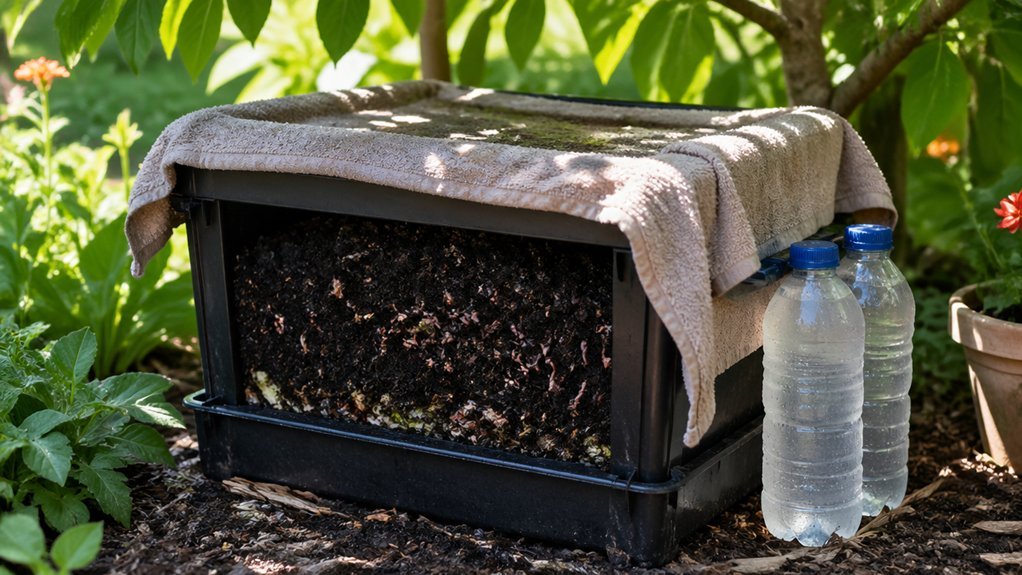
Ever noticed how a simple frozen bottle can turn a sweltering worm bin into a cool refuge? You can boost worm bin cooling by arranging frozen bottles around the bin’s perimeter, swapping them out as they melt to keep the temperature steady.
Pair that with damp towels draped over the lid or tucked beneath the bedding; as the water evaporates, it pulls heat away, creating a gentle, continuous chill.
Make sure the bin sits in shade and enjoys plenty of ventilation, so hot air can escape and fresh air can circulate.
Balance the added moisture by checking the bedding regularly and adjusting water levels—good moisture management prevents soggy conditions while the bottles and towels do their job.
This combo offers a low‑cost, low‑effort way to keep your worms comfortable during heat spikes.
Apply Reflective or Insulating Materials to Block Solar Gain
After the bottles and damp towels have taken the heat of the bin, add a reflective or insulating layer to stop solar energy from getting in.
Reflective insulation, like Reflectix or foil‑coated foam, creates a barrier that slashes solar gain and boosts your cooling strategy. Place it on the bin’s lid or drape it over the sides, securing corners so the material stays taut.
Reflective insulation blocks solar gain, cooling the bin and keeping moisture locked for thriving vermicomposting.
This simple shield also aids moisture retention, keeping the bedding ideal for vermicomposting while providing shade protection for the worms.
Why you’ll love it
- Immediate temperature drop, so worms stay active.
- Moisture stays locked in, preventing drying out.
- A tidy, low‑cost upgrade that works with any existing ventilation.
Monitor Temperature and React Quickly to Prevent Overheating
Notice the thermometer ticking past 80°F, and you’ll know it’s time to act before the worms start seeking cooler corners. Keep a digital probe on the worm bin and check the temperature every few hours, especially during a heatwave. When readings hit 86°F, reduce waste input, open vents for better ventilation, and add cooling aids like frozen water bottles wrapped in cloth. Spot‑check moisture; a damp substrate helps dissipate heat, but avoid sogginess that invites odor. If the bin sits in direct sun, relocate it to shade or elevate it on a pallet for airflow underneath. Quick reactions—ventilation tweaks, shade moves, and frozen‑bottle placement—pull the temperature back into the safe 59°F–77°F range, keeping your worms healthy and active. Regular monitoring helps prevent overheating and supports steady worm activity, especially during extended heat events temperature management.
Frequently Asked Questions
How to Keep Worm Bin Cool in Summer?
Place the bin in shade, add frozen water bottles or ice packs to the bedding, keep it moist, deepen the bedding, cut back feeding during heat waves, and consider moving it into a cool indoor space.
What Are the 5 Mistakes That People Commonly Make When Composting With Worms?
You ignore temperature limits, overfeed during heat, seal the lid, place the bin in direct sun, and neglect moisture control—each mistake stresses worms, kills microbes, and ruins compost.
How Hot Is Too Hot for a Worm Bin?
You’re too hot when the bin reaches above 90°F (32°C); worms start dying or escaping. Anything above 80°F (27°C) stresses them, and at 95°F (35°C) they’ll leave or desiccate.
How to Reduce Moisture in Worm Farm?
You lower moisture by removing excess water, adding dry bedding, and using a dechlorinated sponge‑like material. Adjust feeding rates, increase ventilation, and place frozen bottles in the bin to absorb excess humidity.
In Summary
By keeping shade on your bin, choosing insulating bedding, and positioning it wisely, you’ll naturally curb heat. Trim feed, balance moisture, and add simple coolers like frozen bottles or damp towels for extra relief. Wrap the bin in reflective or insulating material to block solar gain, then keep an eye on the thermometer. React fast if temps climb, and your worms will stay comfortable, productive, and sweat‑free.