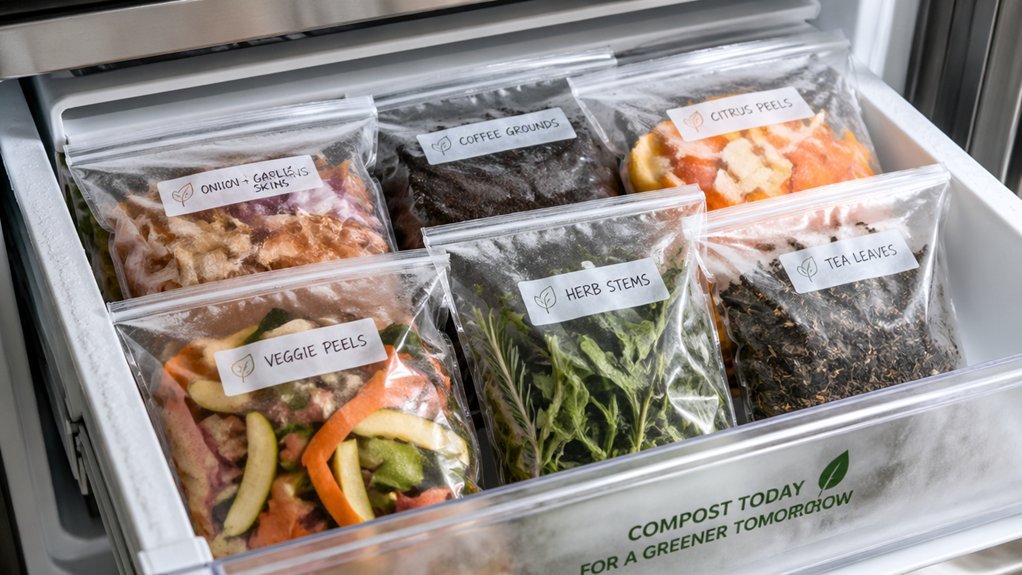
Pick a freezer‑friendly bin with a tight‑sealing lid—stainless steel or sturdy plastic works best—and line it with a reusable produce bag to trap smells. For coffee grounds, seal them in a small container, add a pinch of baking soda, then place that inside an airtight bag. Use wide‑mouth mixing bowls or OXO Easy‑Clean bins for quick transfers, and keep a larger one‑gallon summer bin ready for overflow. Clean spills promptly, check seals, and rotate containers; these steps keep odors down and make transport easy. Continue for more detailed tips.
Select a Freezer‑Friendly Compost Bin That Stops Odors
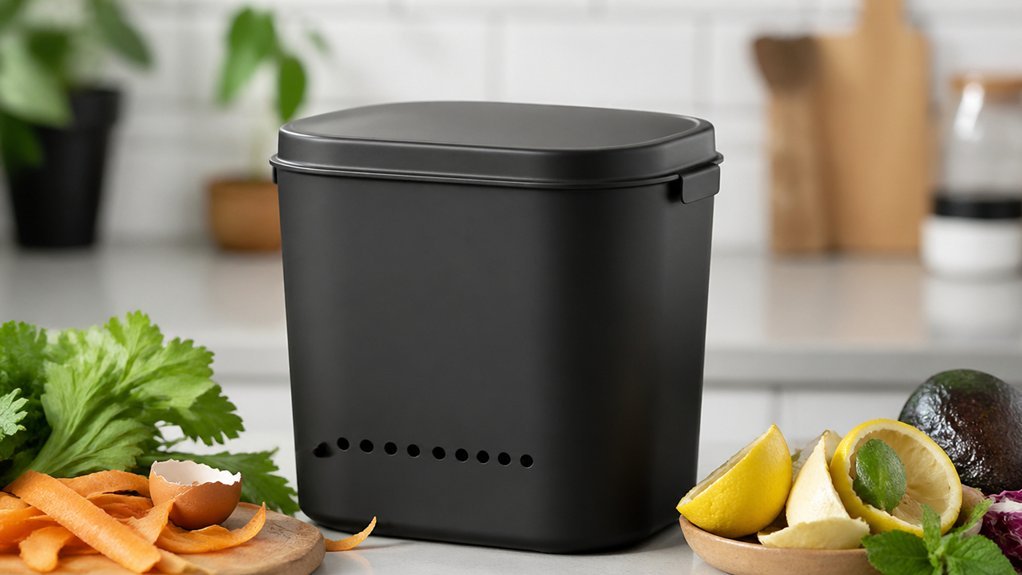
Ever wonder how to keep your freezer smelling fresh while storing compost? Choose a freezer‑safe bin with a tight‑sealing lid seal; that’s the core of odor control. Opt for Stainless Steel or sturdy plastic that holds at least one gallon, so you don’t have to empty it constantly. A removable lid lets you transfer scraps to curbside programs without a mess, and the easy‑to‑clean interior prevents lingering smells. Skip bins that need extra filters or accessories—those add hassle and cost. Pick a container that fits snugly on freezer shelves and nests with other bins, keeping your freezer organized and your compost sealed away. This simple setup guarantees fresh‑smelling freezer space. Durability and material help ensure the container withstands repeated use without warping or cracking.
Line Your Freezer Compost Bin With Reusable Produce Bags
Line Your Freezer Compost Bin With Reusable Produce Bags. These liners help contain scraps and odors, and they can be rinsed and reused for multiple cycles, reducing waste and saving money. By using a lined freezer bin, you can keep your kitchen cleaner and make bag removal quick and straightforward for curbside or drop‑off programs. When you’re ready to empty the bin, just lift the bag, seal it, and toss it into your curbside or drop‑off compost program—no messy scraping required. Because the bags are reusable, you avoid buying single‑use compostable liners that many farmers markets reject. Store extra liners in the fridge or freezer when not in use; they stay clean and ready for the next collection cycle, cutting waste and saving time. Odor control helps keep your kitchen fresh throughout the process.
Separate Coffee Grounds: Smell‑Control Tips for Freezer Storage
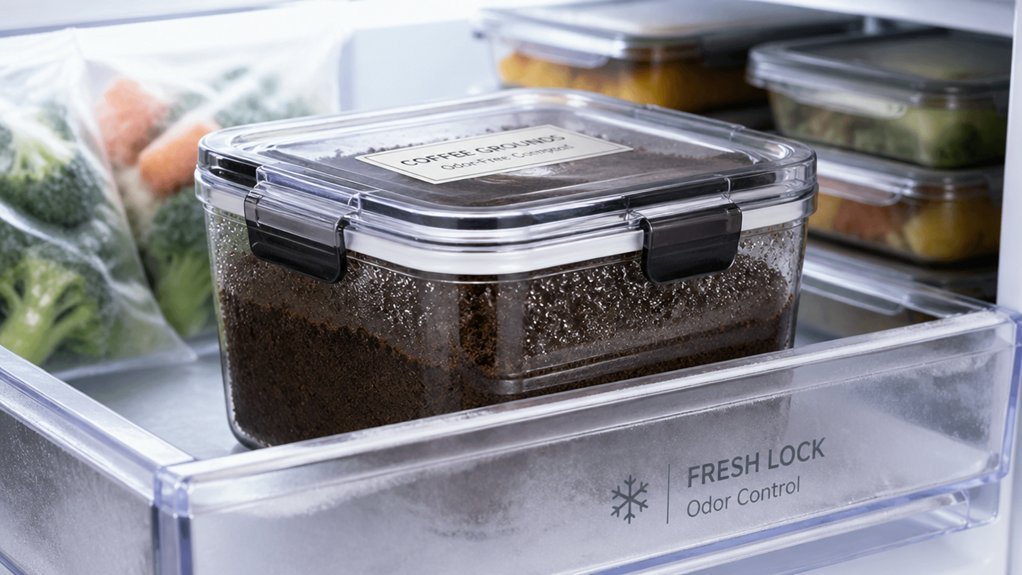
You’ll want to seal the coffee‑ground container tightly so no odor escapes.
Slip the sealed container into an airtight bag for an extra barrier, and sprinkle a little baking soda inside to neutralize any remaining scent.
This simple combo keeps your freezer compost tidy and ready for transport.
A tip from odor‑control principles in compost starters is to use a buffering, pH‑balanced approach to keep odors from forming during storage and handling temperature range performance.
Seal Container Properly
Why let odors escape when you can lock them away? In freezer storage, a tight seal container is your first line of odor control. Choose a lid that snaps or screws shut, and test it by pressing the lid—no air should leak. Store coffee grounds and other compost scraps in a dedicated tub, preferably at least one gallon, so you won’t have to empty it constantly during summer’s rapid buildup. Keep the container upright, and avoid overfilling; a small gap at the top lets you close the lid securely. When the contents thaw, transfer them promptly to curbside compost or a drop‑off site to prevent moisture buildup. This routine keeps smells locked in and your freezer tidy. Seal integrity is essential to prevent leaks during thawing and maintain a clean freezer environment.
Use Airtight Bags
Ever wondered how to keep freezer‑stored compost from stinking up your kitchen? Grab airtight bags or silicone freezer bags and toss your food scraps inside. The seal locks out air, so odors stay trapped and you get solid odor control. Label each bag with the date and portion size, then freeze. Small, solid blocks melt quickly into your compost bin without leaking, keeping your countertop fresh. For coffee grounds, use a dedicated container with a few ventilation holes, then transfer the grounds to an airtight bag before freezing; they’ll absorb smells instead of spreading them. This method slows decomposition, makes transfer painless, and keeps your kitchen smelling clean until you haul the scraps to the curbside compost site. Using sturdy kraft paper bags with reinforced bottoms can also offer a practical option for short-term storage where plastic-free handling is desired, especially if you choose a proven, durable design like a 90 GSM kraft material. airtight bags
Add Baking Soda
Wondering how to keep freezer‑stored coffee grounds from turning your kitchen into a stinky freezer? Add a small, sealed pouch of baking soda to the bin. The soda acts as a natural odor control agent, pulling smells away from the grounds without touching them. Place the pouch in a corner where it won’t shift, and keep the coffee grounds in a dedicated container with a few ventilation holes. This separation lets airflow move through the grounds while the baking soda absorbs any escaping scent. By keeping the soda isolated, you avoid contaminating the compost material. The result is a fresher freezer storage system that stays odor‑free until you’re ready to drop off your compost. odor control
Fast‑Cleaning Freezer Compost Bins: Mixing Bowls, OXO Easy‑Clean, Stainless Steel
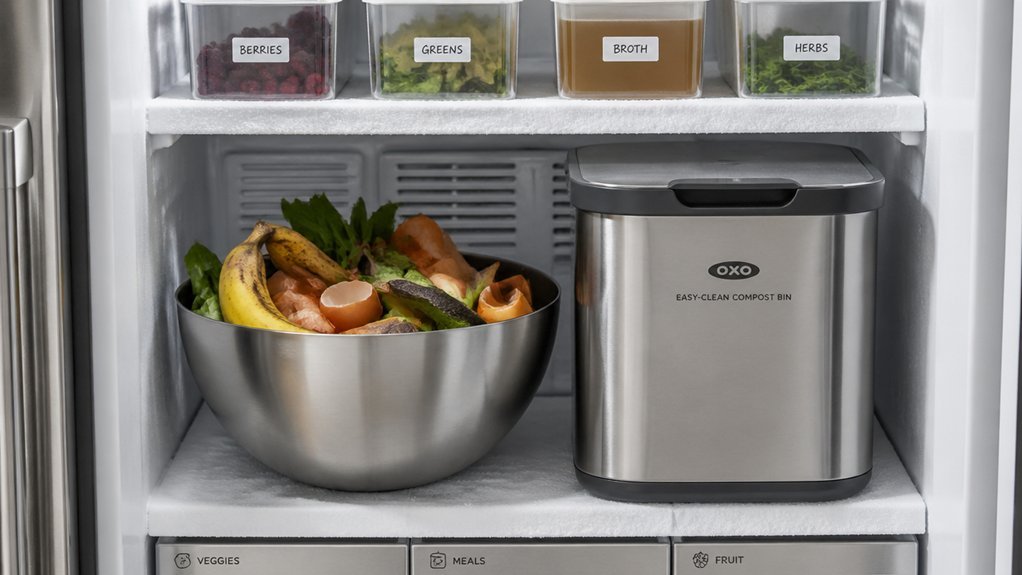
Looking for a quick‑clean, odor‑containing solution for your freezer compost? You can turn everyday kitchen gear into a fast‑cleaning compost bin that fits snugly in freezer storage while keeping smells at bay. Choose a wide‑mouth mixing bowl for easy scrap transfer, or grab the OXO Easy‑Clean bin if you prefer a lightweight plastic option with a flip‑up lid. Stainless steel models add durability and superior odor control, especially those with removable lids and charcoal filters. A well‑sealed setup helps maintain moisture balance and supports fermenting microbes by reducing stray moisture and odors odor control.
- Cuisinart Stainless Steel Mixing Bowl – airtight seal, freezer‑safe, quick rinse.
- OXO Easy‑Clean Compost Bin – 1.75 gal plastic, flip‑up lid, simple wash.
- 1‑gal Stainless Steel Bin – odor‑controlled design, removable lid for transport.
- Stainless Steel Bowl with Lid – wide mouth, easy scrap dump, dishwasher‑safe.
Pick a Larger Summer Bin Without Extra Extras
A larger summer compost bin should hold at least one gallon, fit snugly in your freezer, and keep odors sealed without extra accessories. Choose a freezer‑safe, durable container that offers biner small odor control built into the lid, so you never need charcoal filters or extra seals. Look for a tight‑fit lid, solid construction, and a size that slides easily from prep counter to freezer shelf. Avoid bins that require added trays or clamps; the goal is a single piece that does everything.
| Feature | Benefit | Example |
|---|---|---|
| 1‑gallon capacity | Handles rapid summer scraps | Plastic bucket |
| Freezer‑safe material | No cracking in cold | BPA‑free polycarbonate |
| Durable container | Resists dents, scratches | Heavy‑wall HDPE |
| Biner small odor control | Seals smells at source | Silicone gasket lid |
Maintain Your Freezer Compost System: Cleaning, Refreezing, and Transport
You’ll keep your freezer compost system humming by wiping down spills, checking seals, and rotating containers regularly.
When you need to move frozen scraps, pack them in compostable bags or silicone pouches and use a lightweight liner to prevent messes.
If you run out of space, simply refreeze the leftovers in a fresh container and repeat the cycle.
Freezer Maintenance Tips
How can you keep your freezer compost system fresh, odor‑free, and ready for transport? Start by using freezer storage containers with tight‑sealing lids and replace bag liners weekly to trap smells. Keep small countertop bins handy for short‑term odor control; their charcoal filters and sealed tops prevent leaks while you gather scraps. Transfer frozen material to a larger, one‑gallon‑plus freezer‑compatible bin before moving it to curbside compost, and clean any spills promptly with a mild solution.
- Empty and rinse the freezer compartment every two weeks.
- Swap out bag liners after each use to maintain odor control.
- Rotate countertop bins to avoid stale buildup.
- Defrost the freezer gently to prevent water damage before transport.
Transport and Refreezing Basics
Ever wondered how to move frozen kitchen scraps without creating a smelly mess? First, pack your frozen bits in compostable bags or silicone freezer bags; they seal in odor and prevent leaks during transport.
When it’s time for curbside pickup or a drop‑off, slide the sealed bags straight into the compost bin—no need for a countertop container.
If you can’t get them out right away, keep the bags in the freezer until you’re ready to thaw. Remember, thawed scraps turn mushy fast, so transfer them to your compost system as soon as they soften.
For repeated trips, reuse sturdy containers, but always replace the bag liner to keep the cycle clean and odor‑free.
Frequently Asked Questions
What Three Items Should Not Be Placed in a Compost Pile?
You shouldn’t put meat, dairy, or oily foods in your compost pile. Avoid adding large bones, greasy processed scraps, and diseased or chemically treated plants, because they attract pests, cause odors, and spread contaminants.
What Is the Lazy Compost Method?
You store kitchen scraps in a freezer, using paper bags, silicone containers, or bowls, then thaw and dump them into curbside compost when you’re ready, minimizing daily odor, pests, and maintenance.
Do Potato Peelings in Compost Attract Rats?
Yes, they can if you leave them exposed. Store the peels in a sealed freezer bag or airtight bin, keep the freezer clean, and empty it regularly to prevent rats from being attracted.
How Do the Amish Compost?
You follow simple, sturdy containers—often repurposed yogurt cups or paper bags—collect scraps weekly, freeze them to curb odor, then transfer everything to a communal pile or larger bin for decomposition.
In Summary
You’ve got the perfect freezer‑friendly compost setup now: a sealed bin that locks in odors, reusable bags for easy cleanup, a dedicated coffee‑ground container, and a sturdy, easy‑clean bowl for quick mixing. Choose a larger summer bin if you need extra capacity, and keep the system tidy by regularly cleaning, refreezing, and transporting your compost. With these steps, you’ll keep your kitchen fresh and your compost ready for the garden.