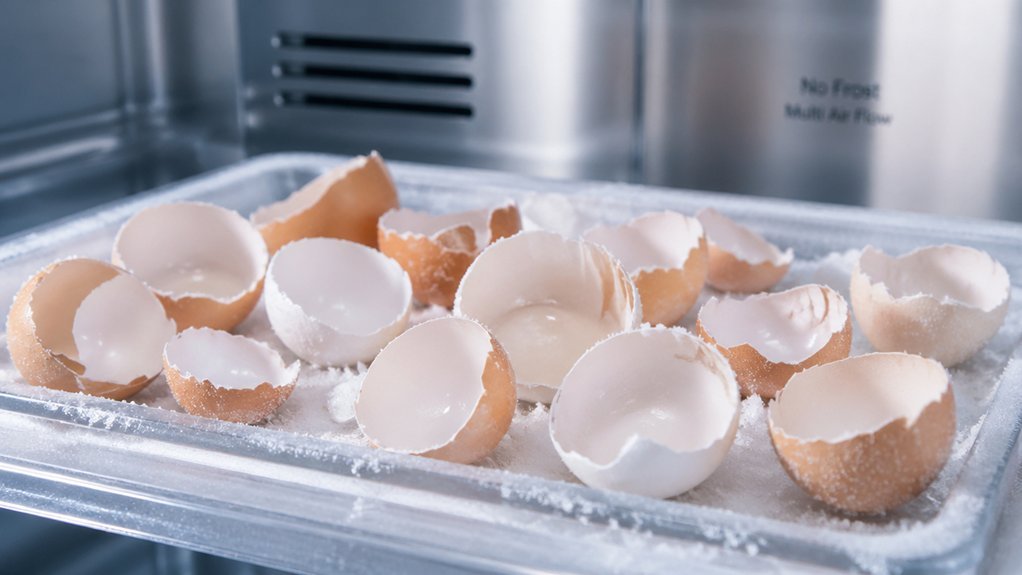
Rinse the shells under cool water, pat them dry, then spread them on a tray and bake at 400 °F for 7‑10 minutes to kill microbes and cut odor. Let them cool completely, then freeze them in small airtight freezer bags, squeezing out excess air and labeling each bag with the date. When you’re ready to use them, grind the frozen shells in a coffee grinder for a fine, clump‑free powder. This method keeps the calcium rich and ready for your garden, and the next steps will show you how to apply it.
How to Freeze Eggshells Safely: Rinse, Dry, and Pre‑Treat

If you want clean, odor-free eggshell powder for winter gardening, start by rinsing the shells under cool water to strip away any residue. Pat them dry on a towel, then spread them on a plate or baking sheet for thorough drying, which cuts spoilage before you freeze. For extra safety, bake the shells at 400°F for 7–10 minutes; this disinfects them and reduces odor when you later store them. Once dry, grind the eggshells into a fine powder using a grinder or blender—finer particles release nutrients faster in cold soil. Pack the powder into small freezer bags or airtight containers, squeeze out excess air, and place them in the freezer. This method lets you accumulate large batches, keeping the shells ready for planting holes, soil mixes, or potting soil throughout winter, while maintaining proper soil quality for apartment gardens.
Best Drying Techniques: Air‑Dry, Oven‑Dry, or Dehydrator
Which method works best for drying eggshells—air‑dry, oven‑dry, or dehydrator—depends on your time, equipment, and how quickly you need the powder. If you have patience, spread the egg shells on a towel, plate, or baking sheet and let them air‑dry; the natural moisture loss takes several hours but needs no heat.
For faster results, preheat your oven to 400°F (204°C) and bake the shells for 7–10 minutes; this not only dries them but also disinfects, reducing mold risk before grinding.
A dehydrator offers precise low‑heat control, preserving calcium while ensuring thorough drying. Whichever drying method you choose, make sure the shells are completely dry before grinding and place the powder in freezer bags for optimal freezing storage. Properly drying the shells also minimizes moisture that can lead to clumping in storage and helps maintain a consistent powder texture odor control features during future use.
Freezing the Shells: Portion, Bag, and Label for Winter

Now that your shells are completely dry, portion the powder into small freezer bags—about a teaspoon or tablespoon each—to save space and keep moisture out during winter. Use airtight zipper bags or freezer‑grade containers, squeezing out excess air to prevent freezer burn. Label each bag with the amount (teaspoons or tablespoons) and the grinding date; a quick sticker or marker works fine. Store the bags in a single layer inside your freezer so you can see each package at a glance. Group bags by batch if you grind often, reducing handling time and keeping the eggshell powder organized. When spring arrives, just pull the labeled bag you need and toss the powder straight into your garden or kitchen. Consistency for future cycles
Turning Frozen Shells Into Fine Powder: Grinder vs. Mortar & Pestle
Usually you’ll find that a coffee grinder turns frozen eggshells into a uniform, fine powder far faster than any manual method. The grinder’s blades shatter the cold shells instantly, preventing clumping and keeping the eggshell powder dry. If you lack a grinder, a mortar and pestle works, but you’ll need to crush each piece by hand, which is slower and more labor‑intensive. Both methods benefit from frozen storage, which stops mold and odors, extending shelf life. Choose the grinder for large batches and speed; pick the mortar and pestle for small, occasional jobs when precision isn’t critical. BPI (ASTM D6400) certification can be relevant for bags used to store eggshell powders and other compostable materials to ensure compatibility with home composting standards.
Using Eggshell Powder: Direct Compost Mixes and Soil Applications

After grinding the shells into a fine powder, you can sprinkle it straight into planting holes, garden beds, or potting mixes. The powder releases calcium and trace nutrients faster than whole egg shells, giving vegetables, flowers, and houseplants an immediate boost.
Fine‑ground egg shell powder instantly supplies calcium and trace nutrients to planting holes, beds, and mixes.
Mix a handful into compost piles to accelerate decomposition and improve structure, or blend it with garden soil as a natural amendment.
Store the powder in freezer bags; the cold keeps it dry, odor‑free, and nutrient‑rich until spring.
A small coffee grinder yields uniform particles, so you avoid clumps and achieve even distribution.
Frequently Asked Questions
Can I Freeze Egg Shells for the Garden?
Yes, you can freeze eggshells for the garden. Rinse, dry, grind them into powder, then seal in airtight bags and freeze. This locks in nutrients, prevents mold, and keeps them ready for planting.
Does Anyone Regret Freezing Their Eggs?
You probably won’t regret freezing eggs; you’ll keep them fresh longer, avoid waste, and preserve nutrients for cooking or baking, especially when you need them handy for recipes or pet treats.
How Long Do Eggshells Last in the Fridge?
You’ll keep eggshells fresh for one to two days in the fridge; after that, they’ll develop odor, mold, or pests. If you’ve rinsed and dried them, you can stretch that to a couple more days, but freezing remains the safest long‑term option.
Why Shouldn’t You Freeze Eggs in the Shell?
You shouldn’t freeze eggs in the shell because the liquid expands, cracking the shell, which lets bacteria in, creates leaks, and ruins texture, making the eggs unsafe and unusable after thawing.
In Summary
Now that you’ve rinsed, dried, and frozen your eggshells, turning them into powder is a breeze—just grind them up and sprinkle the calcium‑rich dust into compost or soil. You’ll boost nutrient levels, improve structure, and keep waste out of the trash. Keep the bags labeled, store them in the freezer, and you’ll have a handy, eco‑friendly fertilizer ready whenever you need it.