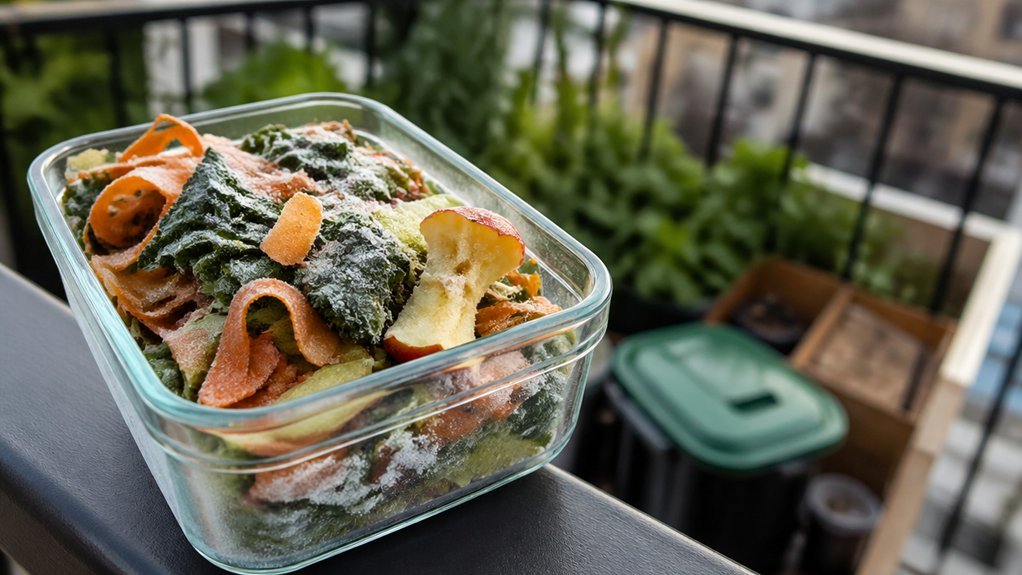
Freezing your food scraps before you toss them onto the balcony compost bin locks in moisture, kills odors, and cracks cell walls so microbes and worms can break them down faster. The ice also prevents soggy piles, keeping the bin drier and less attractive to flies and mites. When you thaw them briefly, the softened pieces expose more surface area, speeding up decomposition while you still balance them with browns. Keep reading to discover the exact timing, packaging tricks, and common pitfalls to avoid.
Why You’ll Want to Freeze Your Balcony Compost Scraps

Ever wondered why freezing your balcony scraps makes composting easier? You’ll love how freezing scraps eliminates odor, so your balcony stays fresh and neighbors stay happy. The ice locks in moisture, giving you moisture control that prevents soggy piles and the flies or mites that love damp waste. When you thaw the frozen bits, their cell walls have cracked, creating tiny fragments that worms and microbes devour faster. This means the pile heats up quicker and breaks down more efficiently. You can also stockpile large batches, so you never run out of feed for your compost bin. Overall, the process cuts smells, curbs pests, and speeds decomposition, making balcony composting a breeze. Moisture management helps maintain optimal conditions for active composting during thaw cycles.
How to Freeze Food Scraps Properly – Timing and Packaging Tips
Wondering how to freeze your kitchen waste so it’s ready for balcony composting? Start by gathering scraps when they’re fresh, then decide on a 24‑hour to 48‑hour window before freezing; this captures nutrients while preventing odor buildup. Use airtight bags or rigid containers to lock in moisture and avoid freezer burn, and press the scraps flat to save space. Label each package with the date and contents so you can rotate stock and keep the freezer organized. Pack almost full batches instead of tiny portions to maximize space and reduce the number of trips to the compost bin. Choose freezer‑safe bags or BPA‑free containers to protect quality, and remember that hand-harvested North Atlantic kelp meal is a separate example of a natural additive with soil benefits, not needed for freezing practice. freezer best practices
Thawing Frozen Scraps on Your Balcony and Balancing Browns

How long should you let frozen scraps sit before tossing them onto your balcony bin? Give them a brief thaw—about 30 to 60 minutes—so they soften but stay cool. This short thawing cuts moisture spikes, preventing the pile from turning soggy. As the scraps soften, they mimic pre‑cut material, exposing more surface area for microbes and worms. Proper handling also helps maintain odor control by reducing immediate moisture load that can overwhelm the browns. Moisture Management
Common Freezing Mistakes & Better Alternatives for Small‑Space Composting
Freeze-time handling matters: combine the thaw plan with a quick drain of excess liquid to prevent soggy scraps that stall the bokashi or traditional composting processes. moisture management
Frequently Asked Questions
Should You Freeze Food Scraps Before Composting?
Yes, you should freeze food scraps before composting; it cuts odors, slows pests, and breaks down cell walls so they decompose faster and feed worms more easily, though you must manage moisture when they thaw.
How Do I Compost on My Balcony?
You start by choosing a breathable container, layering carbon materials with kitchen scraps, turning it regularly, keeping it moist but not soggy, and adding small amounts weekly to maintain active decomposition on your balcony.
What Food Scraps Should Not Go in Compost?
You should avoid meat, dairy, oily foods, and pet waste; they attract pests, smell bad, and slow decomposition. Also skip diseased plants, large woody branches, and any non‑organic trash that won’t break down.
Why Should We Sprinkle Water on Compost?
You sprinkle water on compost because it keeps microbes active, speeds decomposition, and prevents the pile from drying out, while avoiding excess moisture that could cause soggy, anaerobic conditions.
In Summary
Freezing your kitchen waste lets you keep composting on a balcony even when you’re short on space or time. It slows down odor and pests, giving you a tidy, ready‑to‑use supply of scraps that you can thaw and add whenever the weather’s right. By packing correctly and avoiding common freezing errors, you’ll keep your balcony bin healthy, your garden thriving, and your waste footprint minimal.