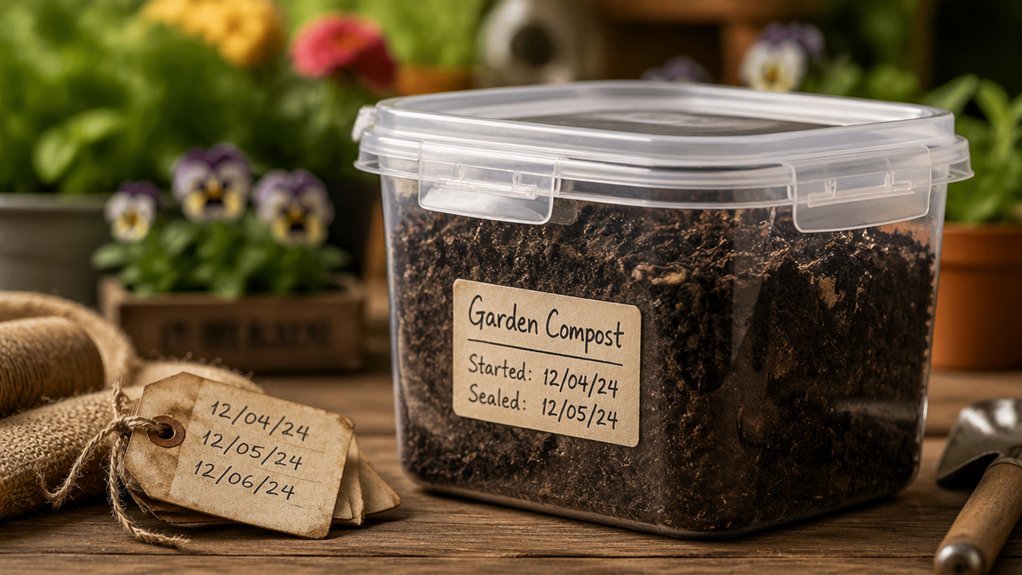
You can keep frozen compost viable for up to nine months if you store it in airtight, insulated containers, protect it from rain and UV light, and keep the spot cool and dry. Make sure the bags are sealed tightly, use a shaded or north‑side location, and avoid heated spaces that dry the material. Gradual thawing and gentle re‑hydration will preserve microbial activity, and you’ll notice any over‑storage signs like sour odor or clumping. Keep reading to discover the best containers, moisture checks, and seasonal tips.
Is Freezing Compost Needed for Winter Storage?
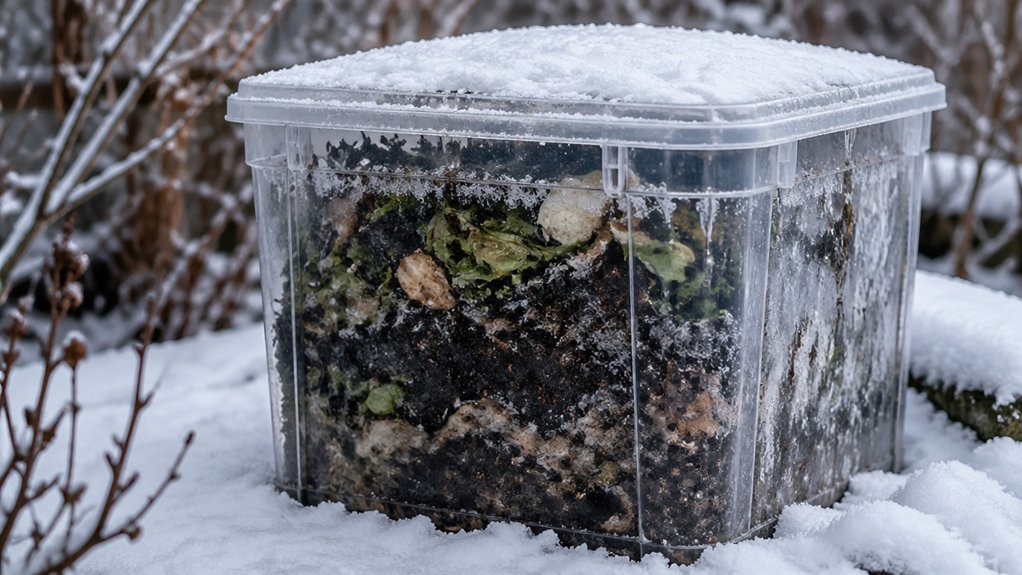
Do you really need to freeze compost for winter storage? You might think freezing protects the material, but the real goal is moisture management. Freezing keeps moisture locked in, preventing the dry air of heated buildings or greenhouses from desiccating the compost. In unheated sheds or outdoors, protect bags from rain and the frozen state will preserve the microbial community until spring. When temperatures rise, the compost thaws over a few days or more, reactivating the microbes without loss of fertility. So, freezing isn’t a mandatory step; it’s a practical way to maintain moisture when you lack climate‑controlled space. Choose a location that shields the bags from precipitation, and you’ll have a viable winter storage solution without extra effort. This approach aligns with keeping an optimal moisture balance (moisture management) to sustain microbial activity across seasons.
How Long Can Frozen Compost Remain Fresh?
You’ll notice that microbial activity slowly fades the longer the compost stays frozen, especially if temperature swings push it above the ideal chill range. Moisture retention also hits a ceiling; once the water starts to sublimate, the mix dries out and loses its freshness. Seasonal temperature impacts can accelerate both effects, so keeping the storage environment consistently cold is key to preserving quality. Odor control considerations from storage materials and containment methods can influence overall freshness by limiting moisture loss and microbial shifts during freezing and thawing.
Microbial Activity Decline
Even though freezing slashes microbial activity, the microbes don’t die; they simply go dormant and revive once the compost thaws and warms to moderate temperatures. When you eventually thaw the material, the dormant cells re‑activate, and aerobic respiration jumps back into gear, restoring nutrient cycling. The decline you notice during storage is merely a slowdown, not a permanent loss. As long as you keep the compost sealed and protect it from excess moisture loss, the microbial community remains viable for months. Plan for a gradual thawing period—days rather than hours—to let the microbes re‑hydrate and re‑aerate naturally. Once the temperature steadies, aerobic respiration resumes, and the compost regains its full biological vigor. Extended suction tube
Moisture Retention Limits
Freezing slows moisture loss, but it doesn’t halt it entirely, so the compost’s freshness hinges on how well you preserve its water content. When you store frozen compost, aim for cool storage rather than a heated environment; this curtails additional drying. A well-sealed bag helps limit moisture loss and keeps odors contained during freezer storage Odor Control to maintain quality. Expect that a fully frozen bag will need several days of defrosting to regain usable moisture and temperature for aeration.
If the moisture drops slightly, blend wet and dry layers before you use the material; this restores uniform moisture after thawing.
In winter, viable biota can survive, but their activity resumes only after the compost reaches moderate temperatures.
Seasonal Temperature Impacts
How does the season affect the lifespan of your frozen compost? You’ll notice that seasonal temperature swings dictate how long the organic matter stays viable. In winter, storing sling bags outdoors or in unheated spaces works if you keep rain off them, because the cold preserves microbial activity until you thaw. When spring warms, moderate temperatures reactivate soil biota, so the compost regains its life quickly after defrosting. Summer heat in heated buildings or greenhouses can dry the material, diminishing quality, so cool storage is preferable. Plan your storage around these shifts: colder months let you keep compost fresh for months, while warmer periods shorten the window before you need to thaw and reactivate the microbes. Adjust your schedule to match each seasonal temperature change. Certification standards
How Does Freezing Affect Compost Microbes?
What happens to your compost’s microbes when temperatures dip below zero? You’ll see microbial activity slow dramatically, but the organisms don’t die. They enter a dormant state, surviving the freeze until you warm the material. When you later thaw, the microbes re‑activate, resuming decomposition as soon as the temperature rises above freezing. The key is managing freezing‑thaw cycles: rapid freezes followed by quick thaws can shock cells, while gradual transitions let them adjust. Proper temperature storage—keeping the compost insulated from precipitation and avoiding extreme swings—helps retain moisture, which supports survival during the cold months. Expect defrosting to take a few days for fully frozen bags, after which the microbial community revives and continues its work. Factory-permanent calibration can help ensure stability of readings when monitoring the compost environment through seasonal changes.
What Temperature Range Safely Stores Frozen Compost?

When the cold slows your compost microbes, the next step is keeping the material at a temperature that preserves them without causing damage. Aim for a storage temperature just below freezing—roughly ‑5 °C to ‑15 °C (23 °F to 5 °F). This range keeps frozen compost solid while avoiding the extreme cold that can rupture cell walls when thawing begins. If you store outdoors, protect the bags from rain and wind; an unheated shed works fine as long as precipitation doesn’t soak the material.
Inside a heated greenhouse, the air will dry the compost, so keep it in a cool, dry space. Maintaining this temperature window lets the compost reach moisture equilibrium during the defrost period, ensuring microbes revive smoothly once you’re ready to use them.
Warning Signs of Over‑Stored Frozen Compost
Ever noticed a strange, sour odor wafting from your frozen compost bag after weeks of storage? That smell signals your frozen compost has been kept too long, and the microbial activity inside is shifting. You’ll also see clumping or icy crusts that don’t melt smoothly when you open the bag—these are signs the soil structure degraded during the extended storage duration. If the texture feels overly dry or powdery, the microbes likely died off, leaving the compost less fertile. Dark spots or mold growth indicate uneven thawing and potential contamination. Finally, a noticeable loss of moisture when you squeeze the bag means the compost has dried out, compromising the balance of beneficial microbes. Watch for these cues to avoid over‑storing. Temperature Regulation helps maintain microbial activity and prevent quality loss during storage.
How Do I Thaw Frozen Compost for Immediate Use?

How can you thaw frozen compost quickly without killing its microbes? Start by moving the bags from a cold storage to a room‑temperature area. Let the frozen compost sit for a gradual defrosting period—usually a few days—so the temperature rises slowly. This protects microbial activity and keeps nutrients intact. Avoid direct heat or microwaves, which can shock the microbes. Once the material feels soft, open the bag and stir to re‑establish uniform moisture and aeration before you use it.
Move frozen compost to room temperature, let it thaw slowly, then stir gently to revive microbes.
- Transfer bags to a heated indoor space if you need a faster thaw.
- Keep bags upright to prevent excess moisture loss.
- Check temperature; aim for ambient (20‑22 °C).
- Mix gently after thawing to redistribute microbes.
- Use within 24 hours for peak microbial activity.
When Should I Add Water After Thawing?
After the compost thaws, you should first check its moisture level; if it feels dry, start adding water slowly until it feels like a wrung‑out sponge. Gradual rehydration lets the material absorb evenly, preventing water pockets that could harm plant roots.
Wait to water until the compost’s moisture is stable before you mix it into your planting beds.
Moisture Level Check
When you pull a frozen sling bag from storage, check its moisture before you start using it. The bag may feel dry after weeks in a cold, low‑sun environment, so you need a quick assessment. Look for the feel of shredded paper inside; it should feel slightly damp, not bone‑dry. If the bag has been stored outdoors or in an unheated building, precipitation protection matters—excess water can cause clumping, while too little leaves the compost inert. A simple finger test reveals whether the moisture level is still adequate for aerobic activity.
- Squeeze a small piece of shredded paper; it should release a faint wetness.
- Observe any dry patches on the bag’s surface.
- Sniff for a fresh, earthy scent; a stale odor signals low moisture.
- Check the bag’s weight; a noticeable loss suggests drying.
- If you notice any of these signs, plan to add a little water before mixing.
Gradual Rehydration Method
If you let the thawed compost sit for a few minutes, you’ll notice it’s still stiff and dry, so start adding water in tiny doses—about a tablespoon per cup of material—every 3‑4 hours.
This gradual rehydration lets moisture seep evenly, preventing soggy patches that could choke microbes.
After each splash, stir the thawed compost thoroughly to promote uniform moisture distribution and keep aerobic activity alive.
Aim for a texture like a wrung‑out sponge and check the feel every 6‑8 hours; if it feels too dry, repeat the small‑dose routine.
Over 24 to 72 hours the material will loosen, regain pliability, and reach a stable, plant‑ready moisture level without creating anaerobic zones or leaching nutrients.
Timing Relative to Planting
Since the compost has fully thawed and reached a workable temperature, you should wait until it’s uniformly moist before planting; check the material after thawing, mix it well, and only then add water.
- Verify that compost piles aren’t soggy from winter storage before irrigating.
- If the thawed mix feels dry, blend wet and dry layers to achieve even moisture.
- Avoid watering while any part is still frozen; uneven hydration harms drainage.
- Let the compost sit a few hours after mixing so moisture distributes evenly.
- Begin watering gently once the compost feels consistently damp, not wet.
Following these steps ensures the compost’s nutrient balance stays intact, preventing water‑logging and promoting healthy root development when you plant.
Which Containers Keep Frozen Compost Fresh the Longest?
Which containers actually keep frozen compost fresh the longest? You’ll want airtight, insulated bins that lock out moisture and temperature swings. A double‑wall freezer bag or a rigid, vacuum‑sealed container works best because it limits moisture loss and protects against precipitation. If you store outdoors, place the container on the north side of a building to keep it cooler and out of direct sun. Tighten any sling bags when not in use, and avoid heated greenhouses that dry the soil.
| Container Type | Why It Helps |
|---|---|
| Vacuum‑sealed plastic box | Prevents air exchange, retains moisture |
| Double‑wall freezer bag | Adds insulation, reduces temperature drift |
| Rigid insulated cooler | Shields from precipitation, keeps cold stable |
| Heavy‑duty tarp‑wrapped bin | Blocks wind, maintains consistent storage temperature |
How to Protect Frozen Compost From Sunlight and UV Damage?
You should keep your frozen compost in a shaded spot, preferably on the north side of a building, and use UV‑resistant bags or tarps to block sunlight.
By avoiding direct sun exposure, you prevent UV degradation and unwanted warming that can compromise microbial activity.
Regularly check the storage area and rotate inventory so the most exposed items get used first.
Shade‑ UV‑Resistant Bags
Ever wonder how sunlight can sabotage your frozen compost? You can keep it safe by using shade‑protected, UV‑resistant bags and a smart storage plan. Choose a spot that stays cool, avoid direct rays, and seal the bags tightly to lock in moisture. Regularly check for fading or brittleness, and move any damaged bag to a better location. A simple checklist helps you stay on top of protection:
- Store bags in a shaded area or indoors.
- Use UV‑resistant material for the bag itself.
- Ensure a tight seal to prevent moisture loss.
- Keep the storage environment insulated and cool.
- Inspect bags weekly for signs of UV damage.
These steps preserve the compost’s frozen state and extend its usable life.
Shade‑Driven Storage Location
How can you keep frozen compost from sun‑induced damage? Choose a storage spot that stays in shade all day, preferably the north side of a building. If you must store outdoors, set the bags under a canopy, tarp, or evergreen trees to block direct light. Position them away from drip edges so moisture doesn’t seep in, and keep a slight gap between bags for ventilation. A well‑ventilated, shaded area prevents heat build‑up, which would otherwise dry out the compost and degrade microbes.
For winter, use an unheated but protected space like a shed or covered porch; this balances temperature stability with light protection while allowing air exchange. The goal is to maintain cool, dry conditions without exposing the compost to UV rays.
Avoid Direct Sun Exposure
Why risk UV‑induced damage when you can simply keep frozen compost out of the sun? You’ll preserve frozen moisture and bag integrity by blocking direct sun exposure. Choose a storage shade that’s naturally cool and keep precipitation away.
- Position bags on the north‑facing side of a building or under a sturdy canopy.
- Use opaque, UV‑blocking tarps or blankets to cover containers.
- Elevate bags on pallets to avoid ground heat and water pooling.
- Check that the shade structure is wind‑resistant and doesn’t trap moisture.
- Rotate storage locations seasonally to maintain consistent temperature and light protection.
Do Seasons Change How Long Frozen Compost Lasts?
Do seasonal temperature shifts affect how long frozen compost stays viable? You’ll notice that winter’s low storage temperature slows microbial decay, letting kitchen waste retain moisture longer. In spring, milder air speeds thawing, so you must plan a few extra days for the compost to reach usable moisture and temperature for aeration.
Summer heat, even in unheated sheds, can dry the material, reducing its shelf life; keep bags insulated from direct sunlight and precipitation.
Autumn’s fluctuating temps mean you should check moisture levels before use, as intermittent warming can reactivate biota unevenly. By timing storage around seasonal thawing duration and protecting the compost from excessive heat, you preserve its viability until you’re ready to unpack and enrich your garden soil.
How to Control Odor & Pests in Frozen Compost?
Ever wondered why frozen compost sometimes smells or attracts pests despite being stored cold? You can keep odor and pests at bay by handling moisture, packaging, and placement wisely. Store the compost in sturdy plastic bags that seal tightly, preventing external moisture from leaking in and odors from escaping. Keep the bags away from direct sunlight and precipitation, which can degrade the material and invite pests. If you stash them in an unheated building, make sure no water drips onto the bags. A cool, dry spot preserves moisture inside the bag while limiting microbial activity that produces smells.
Seal sturdy bags, keep them cool, dry, and shaded to prevent odors and pests.
- Use high‑quality plastic bags with airtight seals
- Keep bags in a shaded, precipitation‑free area
- Maintain moderate winter temperatures, not heated spaces
- Position bags off the floor to avoid drip contact
- Check for tears regularly and replace damaged bags promptly
When to Discard Compost That Has Exceeded Its Storage Window?
Even if you’ve mastered odor and pest control, the next question is whether the compost is still viable after its storage window closes.
When the compost storage duration exceeds nine months, you must run a quick test plan. Check germination rates, nutrient availability, smell, and texture. If any metric falls below your discard criteria, it’s time to toss the batch.
| Test | Acceptable Range |
|---|---|
| Germination | ≥ 70 % |
| Nutrient Availability | ≥ 80 % of label value |
| Smell | Earthy, no sour or foul odor |
| Texture | Loose, crumbly, no clumping |
If the compost passes, you can re‑batch or use it; if it fails, discard it to protect plant health and avoid spreading pathogens.
Quick Reference Table: Recommended Storage Times by Compost Type
Wondering how long each compost type stays viable? Use this quick reference table to match your storage time goals with the right compost type while keeping moisture control front‑and‑center.
- Vegetable scraps – up to 9 months; keep the bag sealed and store on a tarp to avoid rain.
- Garden waste – 9–12 months if you monitor moisture and temperature; a breathable sack helps.
- Manure‑based compost – 8 months max; store in a cool, dry bin and check for damp spots weekly.
- Wood chips & bark – 9 months; maintain low moisture by covering with a tarp and using a vented container.
- Mixed commercial blend – 9 months; store in a sealed, insulated container and ensure no water ingress.
Follow these guidelines, and you’ll preserve nutrient value and germination potential for every compost type.
Frequently Asked Questions
Can You Use 3 Year Old Compost?
Yes, you can use three‑year‑old compost if you thaw it fully, mix it thoroughly, and check that the smell and texture are still good; otherwise, it may have lost potency.
Can You Compost Comfrey?
Yes, you can compost comfrey. Mix its nitrogen‑rich greens with plenty of carbon‑rich browns, keep the pile moist but not soggy, and turn regularly to ensure aerobic breakdown and odor control.
Can I Put Toilet Paper Rolls in My Compost?
Yes, you can put toilet‑paper rolls in your compost. Shred them first, then mix them with greens and browns. They break down quickly, adding carbon and helping aeration without attracting pests.
What Are Three Things You Shouldn’t Compost?
You shouldn’t compost meat, dairy, or oily foods; you shouldn’t add diseased or pest‑infested plants; and you shouldn’t include treated wood, pet waste, or any chemically treated materials.
In Summary
Keep frozen compost in the freezer only as long as it stays cold enough to pause microbial activity—generally up to three months for most kitchen scraps and up to six months for well‑aged, low‑moisture mixes. If you notice thawed spots, foul smells, or pest activity, it’s time to discard it. By storing at a steady –18 °C (0 °F) and checking regularly, you’ll preserve nutrient value without compromising garden health.