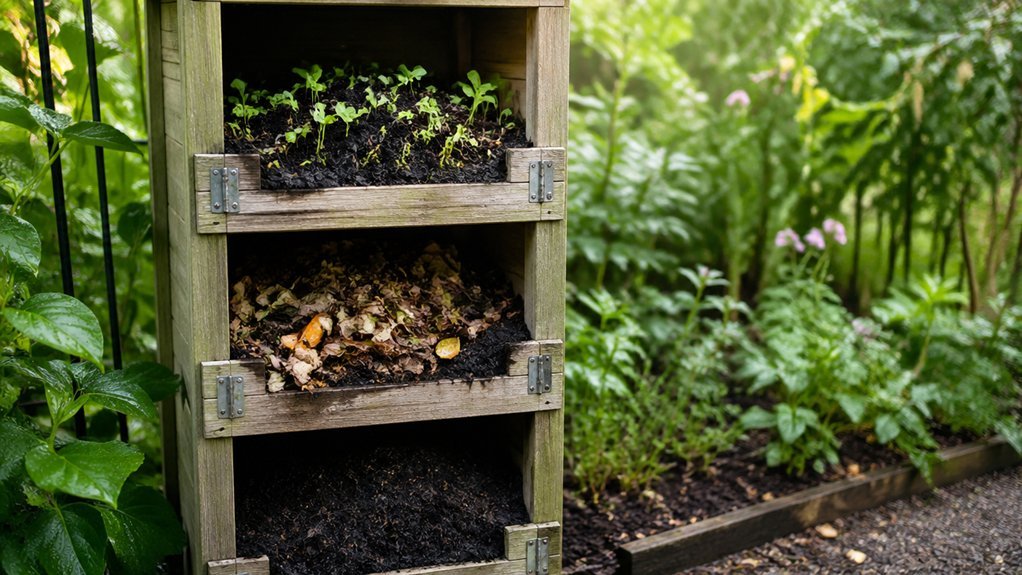
You keep each bin dedicated to one stage—fresh greens and browns in the left, active decomposition in the middle, and curing in the right—so material never jumps ahead. Keep the pile as moist as a wrung‑out sponge, adding dry browns when it’s wet and more greens when it’s dry. Turn the left bin once or twice a week and the middle bin whenever you shift material, which injects oxygen, balances moisture, and spreads heat. Size the bins about 3 × 3 × 4 ft, place them on well‑drained ground near water, and ensure good airflow with open panels. If you follow these steps, you’ll see fast, odor‑free compost and learn even more tricks.
How a Vertical 3‑Bin Compost System Keeps Materials in the Right Stage
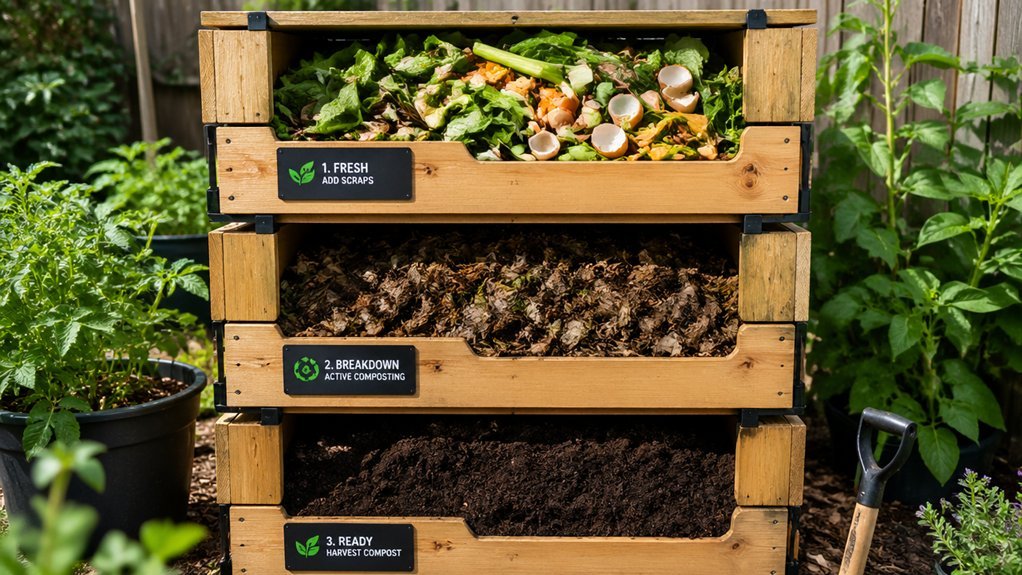
Where does the magic happen? In a vertical 3‑bin compost system, you stage each batch by moving it through three bins. The leftmost bin holds fresh greens and browns, the middle bin houses the active pile, and the rightmost bin stores finished compost. You label each bin and follow a start‑to‑done sequence, so you never dump new input into the cooking bin. During turnover you shift material from bin 1 to bin 2, then from bin 2 to bin 3 as it matures. This staging ensures the active pile receives a steady feed of balanced greens and browns while aeration and moisture management keep microbes thriving. When the material reaches the final bin, you remove the finished compost, sift it if needed, and reset bin 1 for the next cycle. Ventilation supports aerobic conditions and helps control odors as you move through each stage.
Balancing Moisture, Aeration, and Temperature in a Vertical 3‑Bin Compost System
When you keep the pile as moist as a wrung‑out sponge, you give microbes the water they need while preventing the mix from turning soggy or drying out—especially in hot summer months when you’ll need to check moisture more often. Balancing moisture means adding dry brown materials when it feels too wet and more green materials when it’s dry. In a vertical 3‑bin compost system, aeration channels stay open when you layer bulky brown materials and turn the pile regularly, letting oxygen flow and preventing compaction. This airflow supports steady microbial activity and distributes heat evenly, keeping temperature in the thermophilic range. Airflow design
How Often to Turn Your Vertical 3‑Bin Compost and Why?
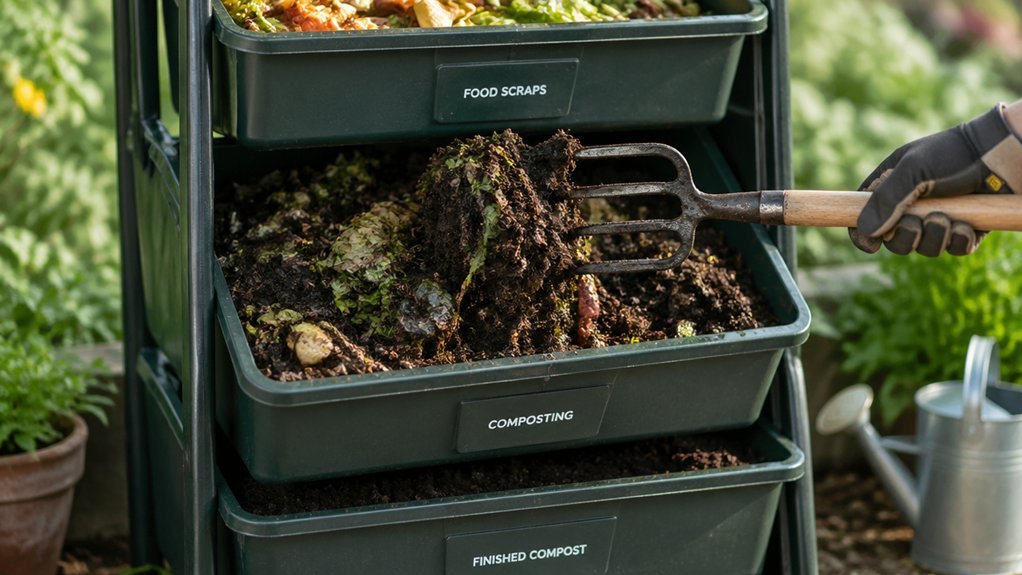
Balancing moisture and aeration sets the stage for the next step: turning the compost. In a vertical 3-bin system you should turn the first bin once or twice a week to inject oxygen and speed decomposition. Proper labeling and organization of bins can help you track progress and ensure consistent turning across cycles aeration strategy.
When you shift material from bin 1 to bin 2, turn it again to keep aeration high and preserve the brown‑to‑green balance. Use a pitchfork to mix dry browns and greens, which stabilizes moisture and sustains heat generation in the core.
Hot weather calls for more frequent turning to avoid overheating and to spread moisture evenly. Consistent turning is key to effective pile management, ensuring each bin in the sequence progresses smoothly and the composting process stays efficient.
Choosing Bin Size and Placement for a Vertical 3‑Bin Compost System
How big should your bins be, and where do you put them? For a vertical 3-bin compost system, aim for a bin size that holds roughly 3 × 3 × 4 ft of material, which translates to about 36–40 inches high when full. Position the compost bin on firm, well-drained ground close to a water source and your garden beds. This placement eases moisture management and lets you turn the active pile with a pitchfork. Arrange the three linked bins left to right: the leftmost holds the active pile, the middle serves as middle curing, and the rightmost stores finished compost. Keep the design open or lightly enclosed to promote airflow, and ensure removable panels for easy turning and removal of finished material. Compact design helps maximize space efficiency while maintaining airflow and ease of maintenance.
Frequently Asked Questions
What Three Things Should Not Be in the Compost Heap?
You shouldn’t put meat, dairy, or diseased plants in the heap; avoid flowering or seed‑bearing weeds, and keep large woody stalks out, because they slow breakdown and invite pests.
What Is a Natural Accelerator for Compost?
You’ll boost compost by regularly turning it, which injects oxygen, speeds microbial activity, and keeps the pile aerobic, preventing foul odors and accelerating decomposition.
How Do the Amish Compost?
You’ll layer greens and browns in three bins, turn the pile by hand every few weeks, keep it damp like a wrung‑out sponge, and protect it from rain and animals while letting it sit near your garden.
What Is the Lazy Compost Method?
You use two side‑by‑side bins, loading fresh material into the front, then moving the heated, decomposing mass to the back as it matures, while you pull finished compost from the front, minimizing turning.
In Summary
By keeping each bin at the right moisture, aeration, and temperature, you’ll speed up decomposition and cut odors. Turn the piles regularly—every few days for the active bin and less often for the finishing bin—to keep microbes happy. Choose a size that fits your space and stack the bins for easy access and airflow. With these tweaks, your vertical 3‑bin system will churn out rich, ready‑to‑use compost faster and more efficiently.


Leave a Reply