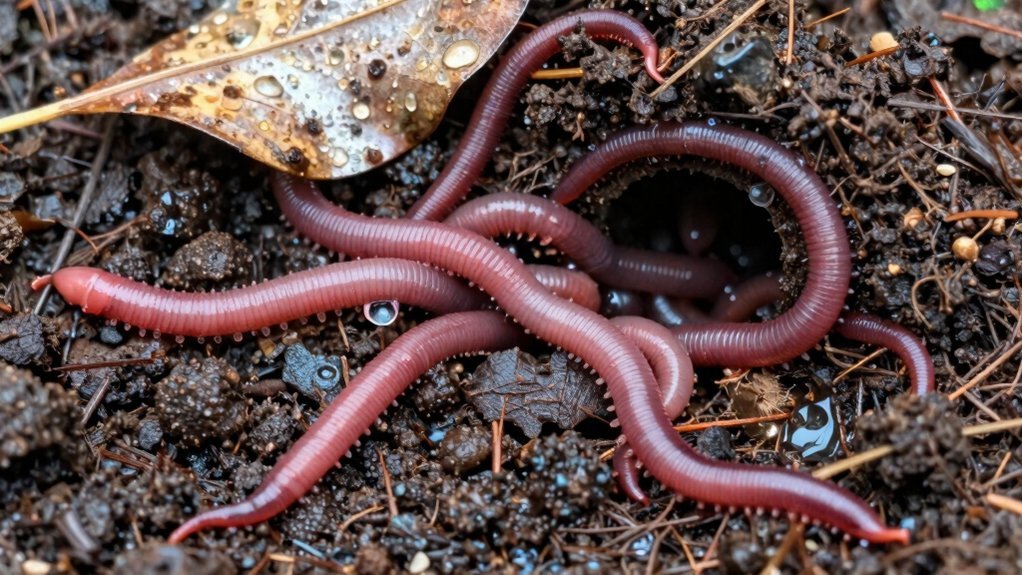
Below 40 °F slows red wigglers, can freeze them, and may kill adults, so you must keep the bin’s interior between 55 °F and 77 °F. Insulate the bin with shredded paper, straw, or a blanket, and monitor moisture so the bedding feels like a wrung‑out sponge (80–90% ). Feed only enough scraps for 2–3 weeks, avoiding oily or meat foods to prevent odor and anaerobic conditions. If you keep these steps, you’ll discover more tips for winter habitat choices and troubleshooting.
Check Red Wigglers’ Safe Temperature Limits
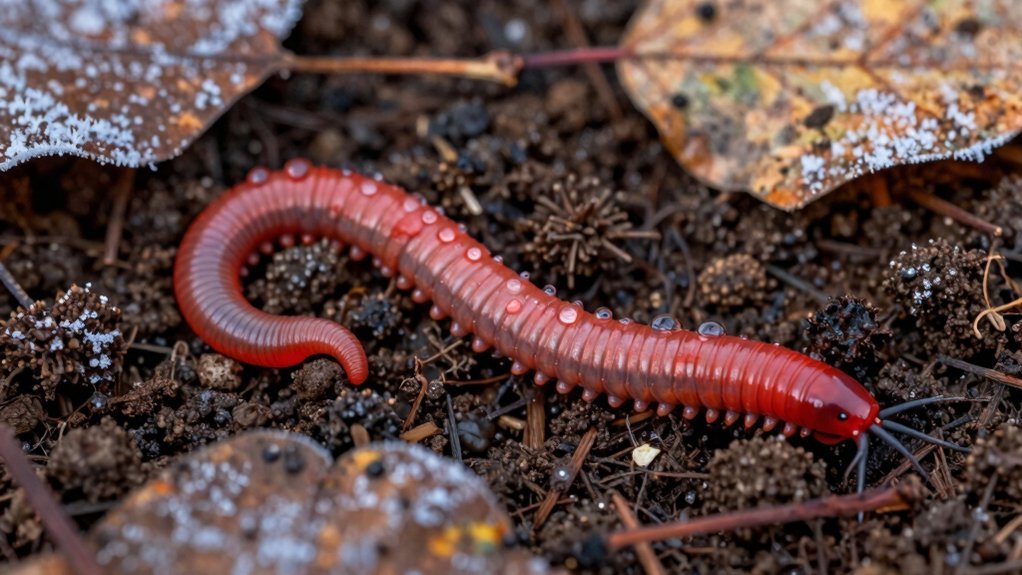
Wondering what temperature your red wigglers can survive? You need to keep the worm bin temperature between 55‑80°F for optimal activity. Below 40°F the worms crawl slower, and any reading under 32°F spikes a freezing risk that can kill adults, though cocoons may endure briefly. Use a worm composting thermometer to monitor the interior, not just the room. During winter care, aim for the safe temperature range, and if you notice a dip, add insulation or move the bin to a warmer spot. Indoor warming helps maintain stability, while cocoons can wait for spring to hatch. Consistent checks prevent stress and keep your Red Wigglers thriving through the cold season. Using activated charcoal filters in your worm bin setup can help reduce odors and maintain air quality during winter.
Insulate an Indoor Bin for Red Wigglers
You can pick insulation like shredded paper, coconut coir, or straw to keep the bin warm while letting moisture circulate.
Keep the bedding damp but not soggy, and use a compost thermometer to watch that the temperature stays between 55°F and 77°F.
A worm blanket or extra straw layer will block drafts and help you maintain a steady microclimate.
For enhanced worm health during winter, consider using a compost starter with proven temperature resilience to maintain active microbial breakdown.
Insulation Materials Choices
Which insulation material will keep your red wigglers cozy without overcomplicating your setup? For winter care, start with a simple thermal barrier: drape a thick blanket or burlap around the worm bin, then seal gaps with extra bedding. Insulation foam panels work well if you need a rigid indoor insulation layer; they reflect heat back into the bin and keep temperature stabilization steady. Straw or shredded paper added to the top bedding adds mass, buffering temperature swings while providing a natural moisture management buffer. If space allows, partially bury the bin in a corner of a heated basement; the earth acts as a passive thermal shield. Finally, place a compost thermometer inside and check temperature monitoring daily to stay within the safe range. Using a compost crock with a charcoal filter can also help manage moisture and odor during the winter months.
Moisture Management Techniques
How can you keep the bin’s humidity steady while insulating it for winter? You’ll want to maintain bedding moisture at about 80–90 % by dampening shredded paper, coir, or leaves before adding a plastic shield to curb evaporation. Use breathable insulation like straw, burlap, or a worm blanket to keep temperature stable without trapping condensation. Keep an eye on moisture control: if humidity spikes, sprinkle dry bedding to absorb moisture, and if it drops, lightly mist the damp bedding. Remember, proper moisture management prevents odors and mold while keeping your red wigglers active. Using food-grade materials in your composting setup helps maintain hygiene and efficiency throughout the winter months.
Temperature Monitoring Tools
A reliable worm composting thermometer is essential for keeping an indoor bin within the 55 °F–77 °F (13 °C–25 °C) range that red wigglers need to stay active during winter. Place the thermometer in the center of the bedding so it reads the interior bin temperature, not the room air. Regular temperature monitoring lets you spot drops toward 32–54 °F quickly, so you can make temperature adjustments—move the bin near a heater, add extra insulation, or thicken the bedding. Insulation stabilizes the active temperature range, preventing heat loss that slows worm activity. For winter care, check the thermometer at least once daily; this simple habit keeps your indoor worm bin healthy and your red wigglers thriving. Using containers with proper moisture control can also help maintain a stable environment beneficial for worm activity.
Adjust Moisture & Bedding for Cold Weather
Wondering how to keep your red wigglers cozy when temperatures drop? Adjust your bedding moisture and insulation to protect them from the cold. Aim for moisture 80‑90 percent—damp enough to feel like a wrung‑out sponge—so the worms stay hydrated and heat retention stays high. Add a thick layer of insulation bedding using shredded paper, shredded newspaper, coconut coir, and a touch of dried leaves or straw. Then cover the bin with a plastic sheet, leaving small gaps for ventilation with plastic cover to prevent mold while still trapping warmth.
Keep red wigglers warm with 80‑90 % moist bedding, thick insulated layers, and a ventilated plastic cover.
- A plush mix of shredded paper and coconut coir for insulation
- Damp bedding that mimics a wrung‑out sponge (80‑90 % moisture)
- Plastic cover with ventilation gaps for balanced heat retention and airflow
Using a 3-layer worm composter with built-in ventilation can also help maintain appropriate airflow and temperature in your worm bin during colder months.
Feed Red Wigglers Without Smell or Over‑Feeding

Ever notice the bin turning sour after a winter feeding? You can stop that by trimming the feeding rate for Red Wigglers. Offer only enough scraps to last 2–3 weeks, then pause and check for uneaten food. When temperature management forces cooler bins, cut portions even smaller. Top‑dress each addition with dry bedding; it absorbs excess moisture, blocks odor‑causing bacteria, and keeps aeration high. Avoid oily or meat‑based scraps, because they spark odor and anaerobic conditions. If you see a smell, stop feeding for two weeks, add more dry bedding, and let the bin dry out. Consistent moisture control and careful feeding prevent overfeeding, keep odors at bay, and support healthy winter care. Using a compost bin with an activated charcoal filter can also help manage odors effectively during winter months.
Monitor Red Wigglers for Stress and Keep 55‑77 °F
How can you tell if your red wigglers are stressed this winter? You’ll notice clustering, sour odors, or moldy bedding—clear stress signals that mean your temperature or moisture is off. Keep the worm bin’s temperature between 55‑77 °F using a vermicomposting thermometer, and adjust bedding to stay moist but not soggy. Regular checks prevent dormancy and maintain activity.
Monitor temperature and moisture; clustering, sour smells, or moldy bedding signal stressed red wigglers.
- Temperature check: Insert a dedicated thermometer into the bin’s core; aim for 55‑77 °F.
- Moisture balance: Squeeze a handful of bedding; it should feel like a wrung‑out sponge.
- Behavior watch: Spot clusters or sluggish movement; these indicate stress and need immediate adjustment.
Pick a Winter Habitat: Relocate, Insulate, or Indoor Bin
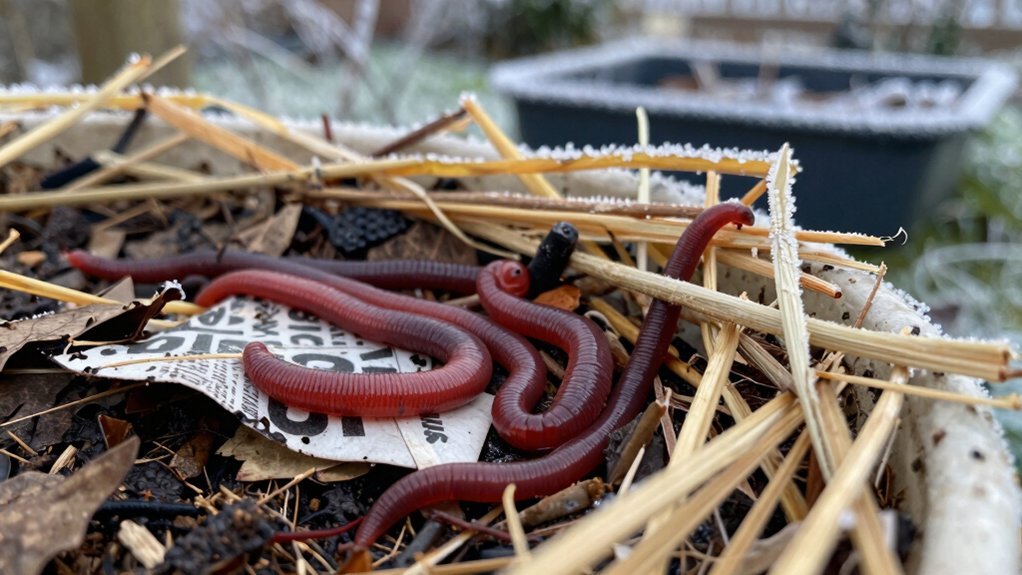
Which winter habitat suits your red wigglers best—relocating the bin to a warmer spot, insulating it where place, or moving it indoors? Relocation puts the bin in a garage or shed near a heating/heat source, keeping interior temperature stable. Insulation adds straw, blankets, or foam and may bury the bin to harness earth heat. An indoor bin lets you fine‑tune temperature control with a compost thermometer and manage moisture precisely. Choose the method that fits your space, then monitor feeding and moisture to avoid excess.
| Option | Key Action | Typical Spot |
|---|---|---|
| Relocation | Move to heated area | Garage, shed |
| Insulation | Wrap or bury bin | Garden, patio |
| Indoor Bin | Set up inside | Basement, utility room |
| Temperature Control | Use thermometer | Anywhere |
Troubleshoot Common Winter Issues and Harvest Castings
After you’ve set up the winter habitat, keep an eye on the bin’s health: reduced feeding, moisture control, and temperature are the three pillars that prevent problems and make harvesting easier. You’ll notice a foul odor when you overfeed your Red Wigglers or let moisture climb above 90 %. Stir the bedding, add dry newspaper, and improve aeration to restore balance. Use a compost thermometer to keep the interior between 55 °F and 77 °F; a stable temperature keeps the worms active enough to process scraps and produce high‑quality vermicompost. When castings accumulate, scoop them out to reduce crowding and store the nutrient‑rich material for spring planting.
- Reduce feed to ~1 lb per lb of worms every 2–3 weeks.
- Maintain bedding moisture like a wrung‑out sponge (80–90 %).
- Check temperature daily with a compost thermometer and adjust insulation as needed.
Frequently Asked Questions
Can Red Wiggler Worms Survive Winter?
Yes, you can keep red wigglers alive through winter if you maintain the bin’s interior between 40°F and 80°F, insulate it, monitor temperature with an internal thermometer, and avoid freezing.
What Are the 5 Mistakes That People Commonly Make When Composting With Worms?
You’ll overfeed, ignore moisture, use thin bedding, place bins in drafts, and skip temperature checks. These five mistakes stress your worms, cause odor, mold, and can kill the colony.
How Cold Is Too Cold for Red Wigglers?
It’s too cold for red wigglers when the bin drops below 32 °F (0 °C); they’ll become dormant or die. Aim to keep the interior between 55 °F and 77 °F for healthy activity.
Can Red Wigglers Survive Being Frozen?
No, they can’t survive being frozen. You’ll need to keep your bin above 32°F, insulate it, or move it indoors. Otherwise prolonged sub‑freezing kills adult red wigglers, even if cocoons survive.
In Summary
By keeping the temperature steady, insulating the bin, and adjusting moisture and food, you’ll protect your red wigglers through the cold months. Watch for stress signs, maintain 55‑77 °F, and choose the right winter habitat—whether you relocate, insulate, or use an indoor bin. With these steps, your worms stay healthy, keep processing waste, and produce rich castings all winter long.