You can maximize your kitchen’s style while composting by choosing compact bins that fit seamlessly into modern spaces or opting for decorative ceramic cookie jars with tight-fitting lids. Stainless-steel finishes provide sleek contemporary appeal, while vintage wooden-steel hybrids add warmth. Consider all-in-one waste towers that consolidate composting, recycling, and trash near sorting areas. Under-the-sink systems use your cabinet space efficiently without sacrificing accessibility. Built-in drawer options and door-mounted solutions keep everything organized and visually cohesive. Discover how to maintain freshness while selecting the perfect solution for your urban home.
Compact Bins: Space-Saving Compost Storage
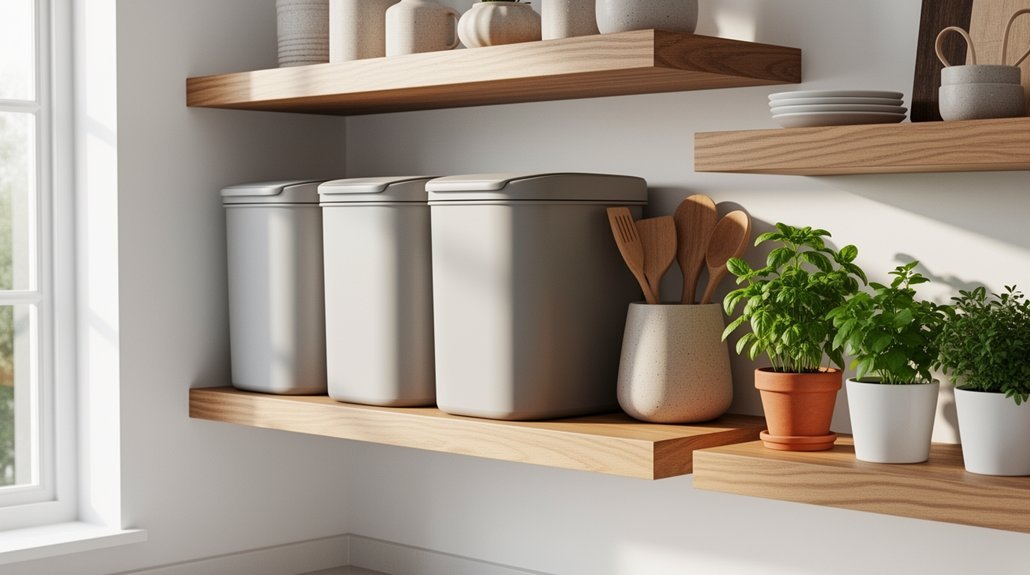
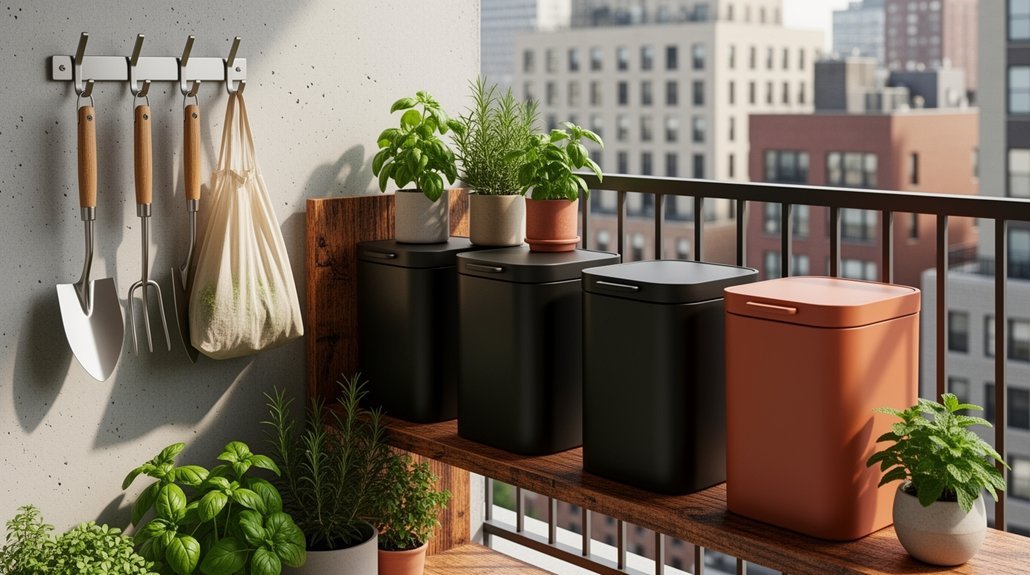
How can you start composting in a cramped apartment without sacrificing style or function? Compact countertop bins offer the perfect solution. These sleek containers fit seamlessly into modern kitchens, collecting daily food scraps before you transfer them to a larger system. Their lids contain odors and block pests during short-term storage, making them practical for frequent emptying.
If you’re budget-conscious, a simple 5-gallon bucket works equally well. Drill holes in the bottom and sides for drainage and airflow, then store it in a corner. The lidded design keeps smells contained and scraps protected. Models with charcoal filters provide enhanced odor control for kitchen environments. Many compact bokashi systems fit within a 12 x 12-inch footprint, making them ideal for apartment dwellers with minimal counter space.
For vertical efficiency, stackable tray systems maximize your space without expanding your footprint. You’ll add scraps to the top tray while harvesting finished material below, enabling continuous composting cycles in minimal square footage.
Making Under-the-Sink Composting Work
You’ll want to measure your under-sink cabinet space carefully before purchasing a system, accounting for existing plumbing, drain connections, and room to access the collection bin.
Selecting odor-blocking liners designed for food waste storage adds an extra layer of protection against smells while you’re collecting scraps.
Positioning your unit so you can easily reach the bucket for emptying and cleaning prevents the maintenance neglect that typically causes odor problems in manual systems. The built-in carbon filter in most composting systems provides additional odor control, making storage more pleasant in your kitchen environment. For kitchen scraps stored under the sink, you can expect 2-6 months before the material becomes usable compost when transferred to a larger outdoor system.
Measuring Cabinet Space Properly
Why do so many under-the-sink composting projects fail before they even start? Poor measurements. You’ll waste money on bins that don’t fit if you skip this essential step.
Start by emptying your cabinet completely. Then measure these three areas:
- Exterior cabinet dimensions – width, depth, and height from outer edge to outer edge
- Plumbing obstacles – measure spaces around pipes, disposal units, and supports separately
- Interior clearance – account for door-mounted organizers that consume usable depth
Check for internal braces that reduce actual width despite adequate exterior dimensions. Measure your compost container dimensions too—you need both to match properly. Most countertop compost bins are designed with compact footprints around 1.1 to 1.3 gallons, making them suitable for tight under-sink spaces when measurements are accurate. Remember that standard cabinet depth is typically 24 inches from back to front, which affects how deep your composting equipment can be. Don’t estimate. Accurate measurements prevent costly mistakes and ensure your composting system actually fits.
Choosing Odor-Blocking Liners
Once you’ve confirmed your cabinet space, selecting the right liner becomes your next critical decision—because even a perfectly sized bin won’t contain odors without proper containment. You’ll want compostable liners certified to ASTM D6400 or EN 13432 standards, which guarantee they’ll break down properly in commercial composting facilities. PLA and PBAT blends offer reliable plant-based options that prevent microplastic residue.
For under-the-sink storage specifically, prioritize leak-proof construction with reinforced bases and multi-ply film to handle moisture from food scraps. Breathable liners help reduce sogginess, but remember they’re not a complete odor solution. Products like Handy Bag Dévor Odeur Bin Liners feature a 3-layer film that delivers superior leak protection for damp composting environments. Pair your liner choice with activated charcoal filters and monthly bin cleaning with soap and bleach for maximum effectiveness. Replace filters regularly and empty your bin weekly to prevent smell buildup.
Maintaining Easy Access Points
The best composting bin won’t serve you well if it’s buried behind plumbing or wedged too far back to reach easily. You’ll skip composting entirely if accessing your bin requires contortionist moves.
Start by measuring your cabinet space and identifying clear zones around pipes. Next, arrange your storage strategically:
- Mount bins on cabinet doors for instant access without floor obstruction
- Install pull-out trays to reach items stored deep in the cabinet
- Add interior lighting so you can quickly locate your compost container
Label everything clearly and keep only essential items under the sink. Grouping waste and recycling zones reduces confusion during meal prep. Consider using stainless steel drawer options with removable inserts for washing to simplify maintenance and keep your under-sink composting system hygienic. For apartment dwellers, compact BSF systems with slide-out lids make accessing and feeding your compost particularly convenient in tight spaces. When your compost bin is genuinely accessible, you’ll maintain the habit consistently.
Built-In Compost Solutions for Seamless Kitchens
How can you keep composting functional without sacrificing your kitchen’s aesthetic? Built-in compost solutions seamlessly integrate waste management into your design scheme. Countertop flush-mount bins nestle directly into your surface near food-prep zones, featuring stainless steel removable pails and tight-fitting lids that contain odors. Under-counter pullout drawers hide collection systems within cabinet spaces, eliminating the need for floor bins. Door-mounted hardware automatically lifts when you open cabinets, offering hands-free convenience. Sink-adjacent placement keeps scraps accessible during cleanup without cluttering your workspace. The DCF-8014 model offers a 9 quart capacity designed specifically for built-in installation with soft-close hinges and mounting hardware. These integrated systems combine minimalist aesthetics with practical functionality. Activated carbon filters trap volatile compounds to manage smells in enclosed spaces, while liquid separation maintains cleanliness. Carbon filters and controlled airflow manage smells in enclosed spaces, while liquid separation maintains cleanliness. Modern kitchen design increasingly treats composting as a built-in utility, transforming composting from afterthought into seamless daily practice.
All-in-One Waste Towers: Compost, Recycling, and Trash
While built-in solutions elegantly hide composting within cabinetry, you’ll find all-in-one waste towers offer flexibility for kitchens where renovation isn’t possible. These vertical units consolidate trash, recycling, and organics in a compact footprint, eliminating the need for separate bins throughout your space.
All-in-one towers work best when you:
All-in-one towers optimize waste management when strategically placed near sorting areas with modular, easy-clean designs.
- Place them where you naturally sort waste, such as near your kitchen or dining area
- Choose modular formats supporting single, double, or triple-stream sorting based on your diversion goals
- Maintain easy-wash surfaces and removable inserts for straightforward cleaning and odor control
You’ll appreciate how these towers save floor space while maintaining visual uniformity. They’re especially practical for shared residential areas where convenience and compact placement matter more than standalone bin capacity. Consider pairing your tower with stainless steel compost pails for additional countertop storage of food scraps before transfer to outdoor bins. For those interested in expanding their composting capacity, multiple towers can be installed strategically throughout your home to handle increased organic waste volumes.
Decorative Compost Bins That Earn Counter Space
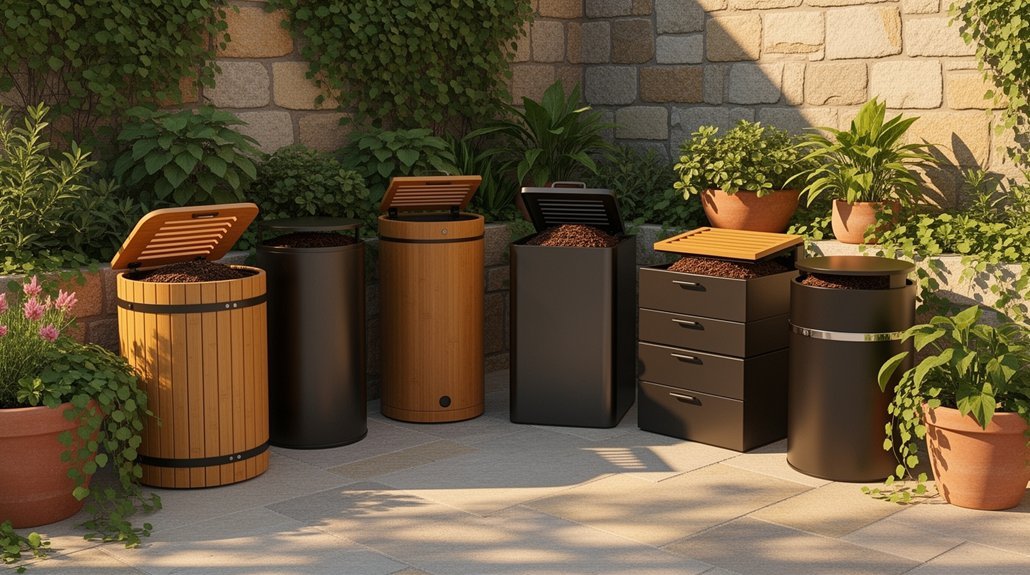
You’ll find that decorative compost bins bridge the gap between function and style, and the best options reflect your kitchen’s aesthetic through three standout design categories. Ceramic cookie jar designs bring warmth and vintage charm to your countertop, while modern stainless-steel finishes integrate seamlessly with contemporary appliances and hardware. Vintage wooden-steel hybrids offer a middle ground, combining natural materials with industrial accents for kitchens that value both nostalgia and sleek appeal. Stainless steel construction remains particularly popular because it is sleek, sturdy, and easy to clean, making it a practical choice for those seeking both visual appeal and low-maintenance operation. For those with limited space, electric countertop models offer a compact alternative that reduces waste volume while maintaining your kitchen’s design aesthetic.
Ceramic Cookie Jar Designs
Why hide your compost bin in a cabinet when it can become part of your kitchen’s décor?
Ceramic cookie jar designs transform composting from a hidden chore into visible kitchen style. You’ll find handmade ceramic compost bins marketed explicitly as dual-use pieces, blending seamlessly with farmhouse and vintage aesthetics. These containers solve the urban composting challenge by keeping scraps accessible while maintaining countertop appeal.
Look for these practical design features:
- Wide-mouth openings that accommodate irregular food scraps without forcing them through narrow lids
- Tight-fitting lids with sealed closures that contain odors effectively indoors
- Thick ceramic construction paired with easy-lift handles for convenient transport to compost sites
Ceramic surfaces sanitize easily compared to porous materials, and their plastic-free composition aligns with low-waste kitchen setups. Each handmade ceramic piece is unique due to the thrown ceramics production process, ensuring your compost bin becomes a one-of-a-kind kitchen statement. Most ceramic compost crocks feature stainless steel handles that resist rust and improve portability between your kitchen counter and outdoor composting sites. You’ll appreciate how a stylish jar reduces visual clutter while serving your composting routine.
Modern Stainless-Steel Finishes
If ceramic jars appeal to your farmhouse aesthetic, stainless steel offers a sleek alternative for contemporary kitchens. These countertop bins blend seamlessly with modern appliances, faucets, and hardware, transforming composting from utility chore to design element.
You’ll appreciate stainless steel’s nonporous surface, which resists odors and staining from pungent scraps better than alternatives. Charcoal filters manage any lingering smells in open kitchen spaces. Removable inner buckets and dishwasher-safe components streamline maintenance, keeping your visible bin pristine. When handling compost materials, consider using compostable gloves to protect your hands while maintaining eco-conscious practices.
Compact dimensions suit apartment counters and pantry shelves perfectly. Many bins feature hinged lids and handles for effortless emptying without disrupting workflow. Whether you’re collecting scraps before transport to outdoor systems or maintaining a permanent display, stainless-steel finishes elevate composting into functional décor. For those ready to scale up their composting efforts, outdoor systems like the Modern Metal Compost Bin with its dual-layer steel panels offer reliable performance for larger-scale waste management.
Vintage Wooden-Steel Hybrids
When does composting equipment transcend utility and become décor? When you choose a vintage wooden-steel hybrid that combines farmhouse charm with functional durability.
You’ll appreciate how these bins blend warm wood with sturdy metal hardware, creating pieces that justify permanent kitchen or counter placement. Rot-resistant cedar and reclaimed wood resist decay far better than standard lumber, while galvanized steel straps and reinforcing brackets ensure longevity and reliable containment.
Your hybrid compost bin earns its visible spot through:
- Antique cream, muted green, and weathered finishes that harmonize with traditional or industrial interiors
- Visible hinges, latches, and side handles that telegraph old-world functionality
- Enclosed designs that control moisture and odors while maintaining visual neatness
These hybrids transform composting from hidden chore to design statement, making daily food-scrap collection both convenient and intentional. The adequate airflow maintained by strategic ventilation holes ensures these decorative bins function effectively for decomposition without compromising their polished appearance.
Maintenance and Upkeep: Keeping Your Bin Fresh
How do you keep an urban composting bin fresh and functional? Regular maintenance prevents odors and pests from derailing your composting efforts.
Rinse your bin every time you empty it, then wash it weekly with soap or a vinegar-water solution. Sprinkle baking soda on the bottom to absorb liquids and reduce smells. Drain excess moisture from food scraps before adding them, and layer dry materials like shredded paper and leaves to maintain balance.
For stubborn odors, deep-clean the bin and let it dry completely in the sun. If maggots appear, pour boiling water over them, then rinse and air-dry thoroughly. Keep lids tightly sealed and empty containers frequently—ideally daily during warm months—to eliminate pest attractants and maintain a fresh, hygienic system. For professional assistance maintaining your bin’s cleanliness and sanitation, consider scheduling professional bin cleaning with trusted service partners.
Backup Compost Methods: When Your Bin Runs Full
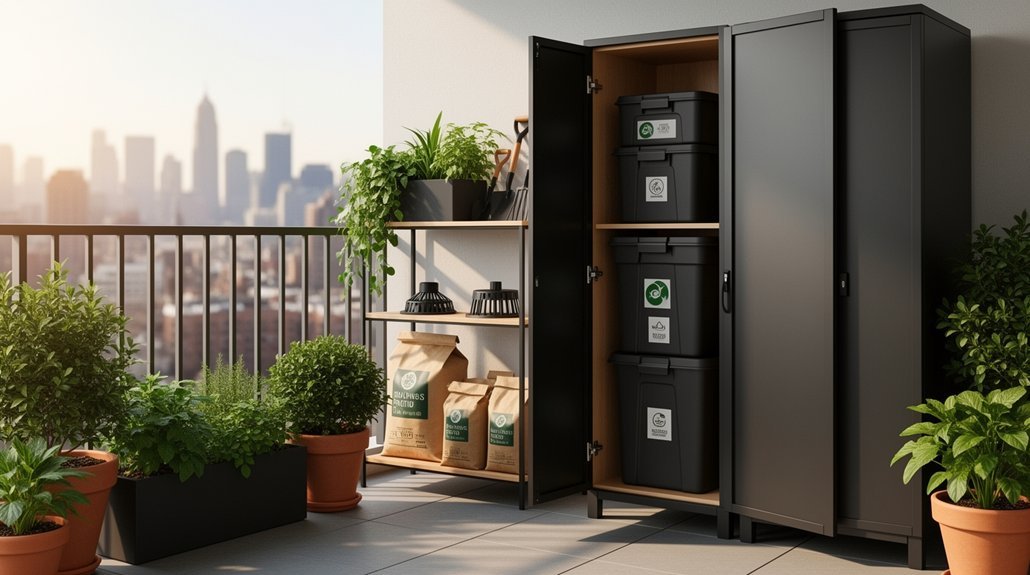
Your bin’s freshness depends on consistent upkeep, but even the best maintenance routine can’t prevent the inevitable: a full container.
When you’ve maxed out your primary bin, you’ve got practical solutions:
- Freeze scraps temporarily in resealable bags until your main bin finishes decomposing, typically three weeks before harvest
- Set up a backup bin using pallets or chicken wire to keep new organics moving without interrupting your current batch
- Start a worm bin indoors to process kitchen waste separately, yielding usable castings in roughly three months
Stop adding fresh material to your full bin and let it cure completely. Meanwhile, your secondary system keeps waste flowing. Turning finished material at the bottom allows continued use of upper layers, maximizing your bin’s capacity without sacrificing quality. During this three-week cook time, screen your compost periodically to assess whether the material has fully matured and is ready for harvest.
Frequently Asked Questions
How Do I Choose Between Indoor and Outdoor Composting for My Urban Apartment?
You’ll choose indoor composting if you lack outdoor space—vermicomposting bins, bokashi buckets, or electric composters work well in apartments. Pick outdoor systems only if you’ve got a patio or shared garden and can manage larger waste volumes.
What Are the Cost Differences Between Various Compost Bin Storage Solutions?
You’ll find entry-level bins starting around $40, mid-range options between $75–$150, premium tumblers at $200–$300, and high-end electric composters reaching $500–$1,000 depending on features and capacity.
Can I Use Compost Bins in Rental Apartments Without Permanent Modifications?
Yes, you can use compost bins in rental apartments without permanent modifications. You’ll place them on counters, in cabinets, under sinks, or closets. Countertop bins work especially well for apartments because they’re compact, require no installation, and offer convenient odor control.
How Often Should I Clean My Compost Bin to Prevent Pest Infestations?
You should empty your food waste bin daily to prevent fruit flies, or at least every two days. In warm weather, empty it more frequently since pests breed faster. Rinse thoroughly after emptying to disrupt breeding conditions.
What Types of Food Scraps Shouldn’t Go in Indoor Compost Containers?
You shouldn’t add meat, fish, dairy, oils, cooked foods, or heavily seasoned scraps to your indoor bin. Avoid citrus peels, onions, moldy food, and anything with chemical residue or non-compostable packaging.
In Summary
You’ve discovered that stylish composting storage doesn’t mean sacrificing your urban home’s aesthetic. By choosing compact bins, decorative containers, or built-in solutions, you’re creating a functional waste system that actually complements your kitchen design. You’ll maintain your composting commitment while keeping everything organized and visually appealing. Your space-conscious choices prove that you can live sustainably without compromising style or convenience.