
Use a tiered worm‑bin system: stack two 12‑20‑gallon containers with aerated lids, placing the lower bin under the sink to collect finished compost while the upper bin feeds red wigglers fresh scraps. Keep the bedding—shredded, soaked newspaper plus a pinch of soil—moist like a wrung‑out sponge, not soggy, and add extra carbon‑rich material to fluff it. Finally, pair your bin with a nearby community drop‑off or curbside organics program to handle excess waste and keep odors in check, and you’ll discover even more space‑saving tricks.
Stack Tiered Worm Bins for Apartment Composting

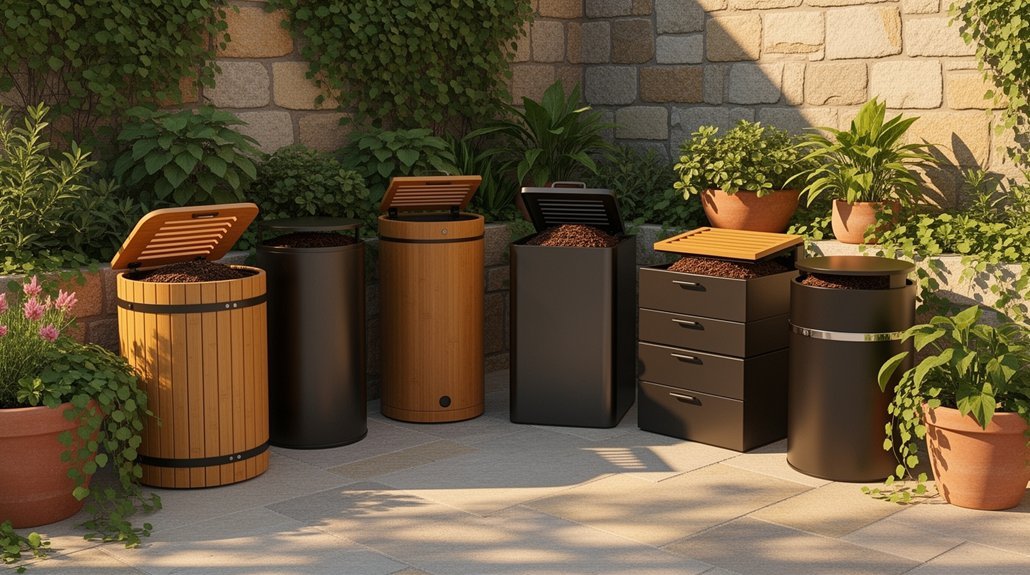
Ever wondered how to turn a tiny kitchen corner into a thriving compost hub? You can stack worm bins in a tiered worm bin system that fits any apartment composting space. Use 12‑ to 20‑gallon containers with lids and aeration holes; the lower bin collects vermicompost while the upper bin feeds red wigglers fresh scraps. Place shredded soaked newspaper and a pinch of soil as moist bedding, keeping the environment damp but not soggy. Position the stacked bins under the sink or in a dark, discreet spot for indoor composting, ensuring odor control and a space‑saving design. The multi‑tier approach helps maximize vertical space while maintaining easy access to finished compost as worms migrate upward between trays continuous harvest and it aligns with common indoor bin configurations like 4- or 5-tray systems designed for apartment use. The vertical arrangement lets you harvest vermicompost continuously without sacrificing floor space, and it protects worms when outdoor temperatures dip below 40 °F.
Maintain Your Tiered Worm Bin for Ongoing Apartment Composting
When you keep an eye on moisture, temperature, and food flow, your tiered worm bin stays healthy and productive. Check moisture daily; the bedding should feel like a wrung‑out sponge, not soggy or bone‑dry.
Add fresh shredded paper bedding or other carbon‑rich bedding to keep the mix fluffy and absorb excess liquid.
Feed red worms a steady stream of food scraps, avoiding meat, dairy, and oily foods, and never overload a single tier.
Maintain a controlled temperature between 55‑75 °F; move the bin under a sink or into a cooler spot if it drifts outside 40‑80 °F.
Ensure lids stay snug but have adequate aeration holes, and rotate the tiers every few weeks to distribute food and prevent compaction.
This routine keeps vermicomposting efficient and your apartment composting thriving. Microbial retention
Supplement Your Apartment Composting With Community Drop‑Off Points

If your apartment worm bin gets overwhelmed, tap into nearby community drop‑off points to keep the system running smoothly. You can offload excess material by dropping food scraps at a local recycling hub, a city program, or curbside programs that accept organic waste. These composting options give you a backup when odor control becomes a challenge, and they return finished compost you can use for balcony plants or share with neighbors. Check the schedule for the community drop‑off, pack scraps in a sealed bag, and bring them to the designated bin. By rotating between apartment composting and the drop‑off, you maintain a steady flow, reduce smells, and support the city’s broader waste‑reduction goals. Hermetically sealed storage and proper moisture management are essential when coordinating between systems to prevent odors and maintain steady activity in your bin.
Frequently Asked Questions
How Do I Prevent Odors in a Small Apartment Compost Bin?
You stop odors by adding a layer of newspaper or shredded cardboard after each addition, keeping the bin sealed, mixing in a pinch of baking soda, and emptying it before it gets too full.
Can I Compost Cooked Food Scraps Without Attracting Pests?
Yes, you can compost cooked scraps safely—just toss them into a sealed, carbon‑rich bin, add newspaper or shredded cardboard, keep the lid tight, and empty regularly to deter pests.
What’s the Best Way to Store the Bin During Winter Months?
Keep the bin in a sealed, insulated container—like a small cooler with a lid—away from drafts. Add a layer of newspaper or cardboard for extra insulation, and check it weekly for moisture buildup.
Do I Need a Separate Container for Liquid Runoff?
Yes, you should use a separate container for liquid runoff. It keeps your compost dry, prevents odor, and makes emptying easier. A small tray or bucket with a lid works perfectly in tight apartment spaces.
How Often Should I Rotate or Turn the Compost for Optimal Decomposition?
You should turn the compost every three to five days, mixing it gently to introduce oxygen. This keeps the material aerated, speeds up decomposition, and prevents unpleasant odors in your apartment.
In Summary
By stacking tiered worm bins, you keep composting compact and efficient, while regular maintenance ensures the worms stay healthy and the process stays odor‑free. Pairing your apartment setup with nearby community drop‑off points expands capacity and lets you handle larger loads. Together, these smart strategies let you turn kitchen scraps into nutrient‑rich soil, reducing waste and supporting greener city living—all from the comfort of your own home.