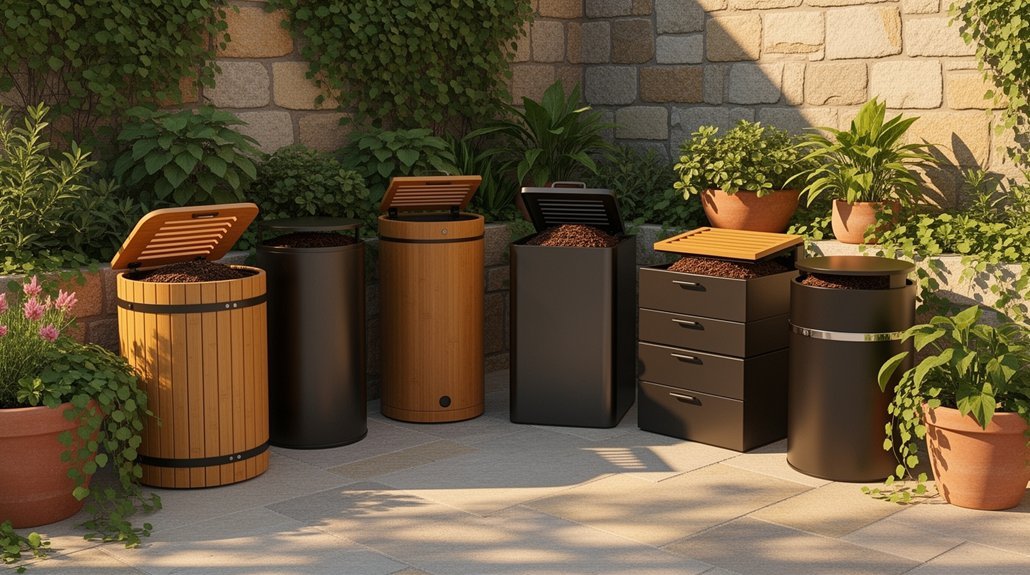

Pick a curbside compost bin 55 gallons or smaller with a secure lid, then print and affix the NYC Curbside Composting label. Store it in a visible pantry or balcony so you can keep scraps in a freezer between uses, line the bin with an approved compostable liner, and seal bags tightly before rolling them to the curb. This setup stops odors, pests, and leaks while meeting the new DSNY rules, and the next steps will show you how to stay fully compliant.
Choose & Label a Legal NYC Compost Bin
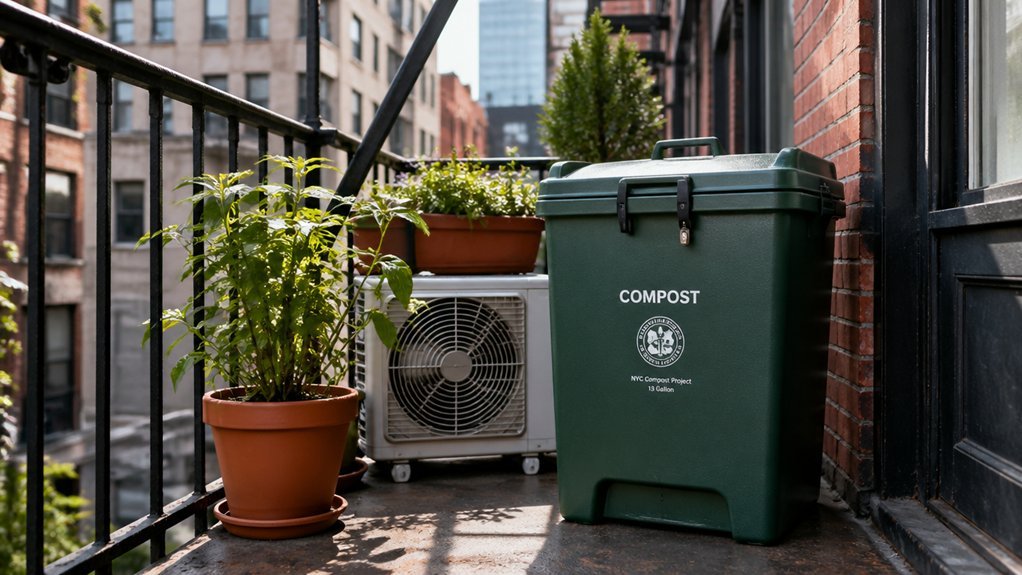
Looking for a legal compost solution that fits your NYC apartment? Choose a curbside composting bin that meets city rules: a labeled bin 55 gallons or smaller with a secure lid. You can download a Curbside Composting label, print it, and affix it to any suitable container. If you prefer the official NYC Compost option, head to a Home Depot store or order one via DoorDash, Instacart, or Uber Eats; sizes of 13 gal and 21 gal are popular, holding up to four or seven three-gallon bags of compostable material. Place the bin in a designated storage area—ideally on a balcony or in a pantry—so it stays out of sight but accessible. Property owners of nine-unit buildings often require bin labeling to keep the system organized and compliant. This simple setup ensures you stay within NYC Compost regulations while reducing waste. Labeling requirements help ensure consistent compliance across properties and waste streams.
Store Food Scraps in Your NYC Compost Bin Without Odor, Pests, or Leaks
How can you keep your NYC compost bin odor-free, pest-proof, and leak-tight? Start with a sturdy lid and a clear-plastic or paper liner that meets compostable standards. Store food scraps in the freezer between uses; this freezes odors and deters pests. Before you transfer scraps to the storage bin, drain excess liquid to prevent soggy waste and leaks. Line the bin with the approved liner, then bag the contents using a compost-labeled or plain clear bag—never a black plastic bag. When you roll the bag to the curb for pickup, seal it tightly to maintain odor control and compliance with NYC composting rules. This routine keeps your bin clean, avoids pests, and eliminates leaks during curbside pickup. Odor control helps ensure your space stays fresh even in small city kitchens.
Stay NYC Compost Compliant: Fines, Enforcement, and Quick Fixes
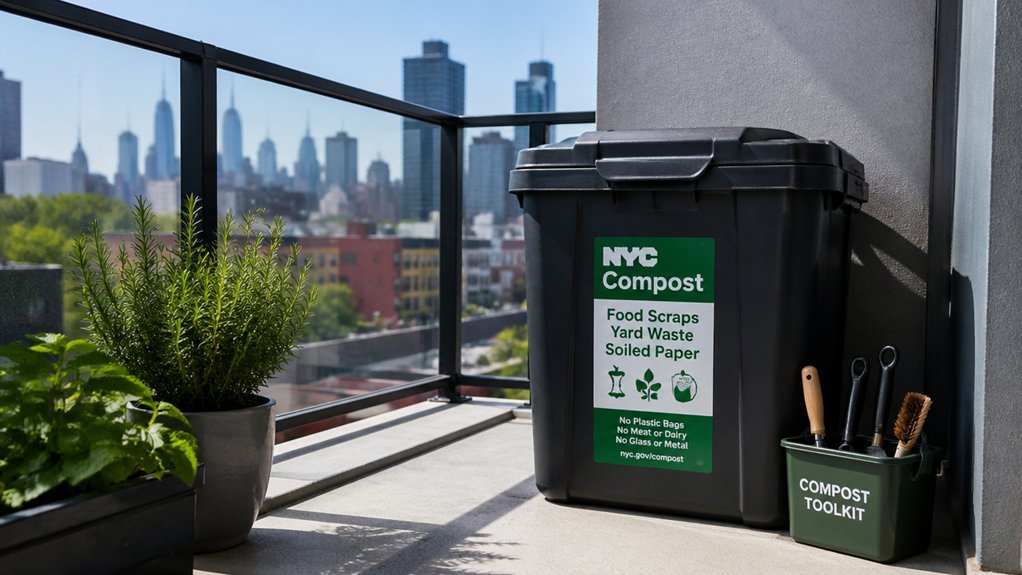
Ever wonder why your building could be hit with a $100 fine for a single missed compostable? Starting April 1 2025, DSNY enforcement targets non‑separation in 4+ unit buildings. Inspectors check trash for organics, note missing compost bins, and may open bags. If you’re a 9‑plus unit building, the first violation costs $100; repeat offenses climb to $300. To stay safe, label each compost bin, set up a designated storage area, and train residents on proper sorting. Use 311 for reporting violations and to request guidance. Tap compliance resources like DSNY outreach, GrowNYC posters, and FirstService Residential programs. Quick fixes—clear signage, sealed containers, and regular audits—keep fines at bay and keep your building compliant. Clear signage helps ensure consistent labeling and reduces handling confusion during pickups and audits.
Frequently Asked Questions
What Are the New Compost Rules in NYC?
You must separate food scraps, food‑soiled paper, and yard waste into a labeled, secure‑lid bin (55 gal or smaller); use clear or compostable liners, bag contents for curbside pickup, and keep designated storage areas in buildings with four or more units, or risk fines.
Can You Have a Composting Toilet in Town?
Yes, you can install a composting toilet in town, but you must check local building and health codes, obtain any required permits, guarantee proper venting and odor control, and follow maintenance regulations.
Can I Put Toilet Paper Rolls in My Compost?
Yes, you can compost toilet paper rolls if they’re pure paper, uncoated, and free of plastic liners. Use compostable bags if needed, keep them separate from non‑compostables, and follow NYC DSNY guidelines.
Do Potato Peelings in Compost Attract Rats?
You won’t attract rats if you keep potato peels sealed in a labeled, lidded bin, freeze them before transferring, and use a liner. Proper storage prevents odors and rodent interest.
In Summary
By picking a city‑approved bin, labeling it clearly, and sealing your scraps, you’ll keep odors, pests, and leaks at bay. Stay on top of NYC’s compost rules, pay any fines promptly, and fix violations fast to avoid further trouble. With these simple steps, you’ll compost legally, keep your building happy, and contribute to a greener city.