
You’ll love how a compact rotating bin fits a cramped balcony, spins to aerate automatically, and keeps odor and pests out with its sealed drum. The black plastic absorbs sunlight, while the tight lid traps heat for faster decomposition in 22‑65‑gallon units. Two‑chamber designs let you compost on one side while the other cures, giving a steady supply of finished material. Proper green‑to‑brown ratios and weekly turns control moisture and smell, and the modular shape maximizes corner space. Keep reading to discover sizing tips and harvesting tricks.
Why a Compact Rotating Compost Bin Works Great on a Balcony
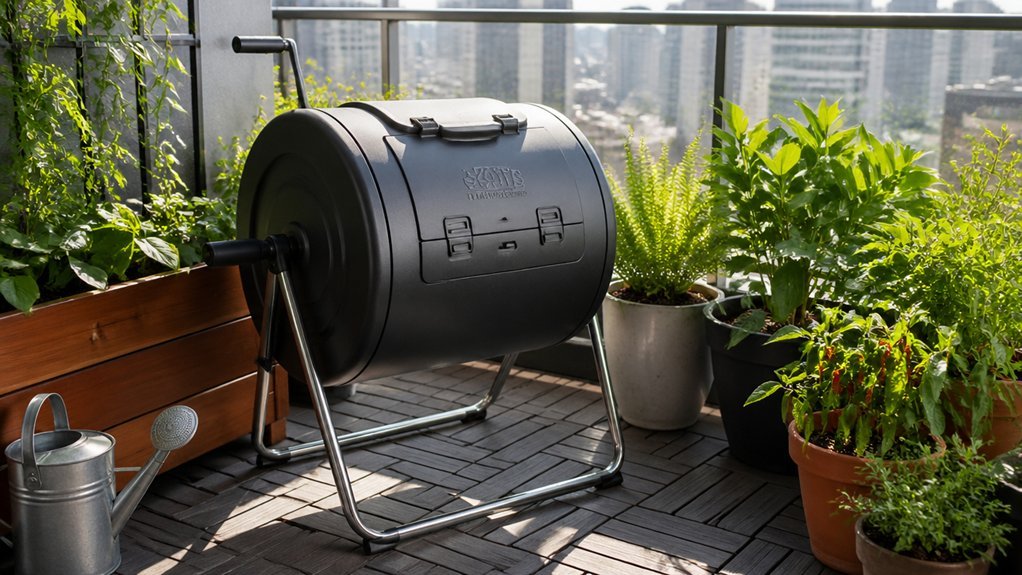
Why settle for a bulky compost system when a compact rotating bin fits a balcony perfectly? You’ll find that rotating bins give you instant aeration—just spin the drum and oxygen floods the material, speeding up decomposition in tight urban spaces. The sealed drum keeps odor and pests out, so your balcony stays fresh and tidy. Small‑capacity barrels, from 22 to 65 gallons, match typical balcony footprints while letting you run two‑chamber batch cycles without crowding the area. Spinning also mixes the mix and lets you load or unload without heavy lifting or constant manual turning. Black plastic absorbs sunlight, and a tight lid traps heat, raising temperature enough for efficient composting without a massive, space‑hungry setup. This makes balcony composting practical, clean, and hassle‑free. Odor-control
Rotating Compost Bin Setup for Continuous Flow
You’ll set up a dual‑chamber bin so one side composts while the other cures, giving you a steady stream of finished material. Rotate the bin each week to keep the mix aerated and prevent crusting, which maintains the right heat and microbial balance. This simple rhythm also cuts odor and deters pests, letting you keep the flow continuous. The system can be designed for responsibly sourced materials and easy access for monitoring moisture and temperature.
Dual‑Chamber Continuous Flow
Ever wondered how a dual‑chamber rotating bin keeps compost flowing nonstop? You load fresh waste into the active side while the other chamber cures, creating a seamless continuous flow. The two‑chamber design lets you add material to one compartment and pull finished compost from the other without stopping the process. As the barrel turns, aeration improves and heat spreads evenly, cutting odor and speeding decomposition compared to static piles. Urban growers favor 22‑to‑65‑gallon units because they fit balconies and rooftops while handling staggered batches. Proper sealing prevents rain leakage and keeps rodents out, making the system user‑friendly despite its modest capacity. This setup delivers steady, high‑quality compost for city gardens expandable five‑tray design.
Weekly Rotation for Balance
How does a weekly turn keep your rotating bin humming smoothly? By giving the compost a consistent shuffle, you balance heat and microbial activity, preventing the core from overheating while feeding oxygen to the microbes. A weekly rotation spreads warmth evenly across the two‑chamber setup, so decomposition stays steady and odor‑producing greens don’t linger. You’ll use a loose churn, a pitchfork or small shovel, to lift and tumble the material on schedule, which also evens out moisture and airflow. This cadence keeps the aerobic environment tight, letting worms and microbes work efficiently even in compact urban spaces. Regular turning aligns with the container’s design features that support efficient leachate management and odor control, aiding a steadier, cleaner operation.
With Rotating Bins, the weekly rotation rhythm turns a static pile into a controlled, continuous flow that stays fresh and fast‑acting. continuous flow
Selecting the Right Size and Shape for Balconies and Rooftops
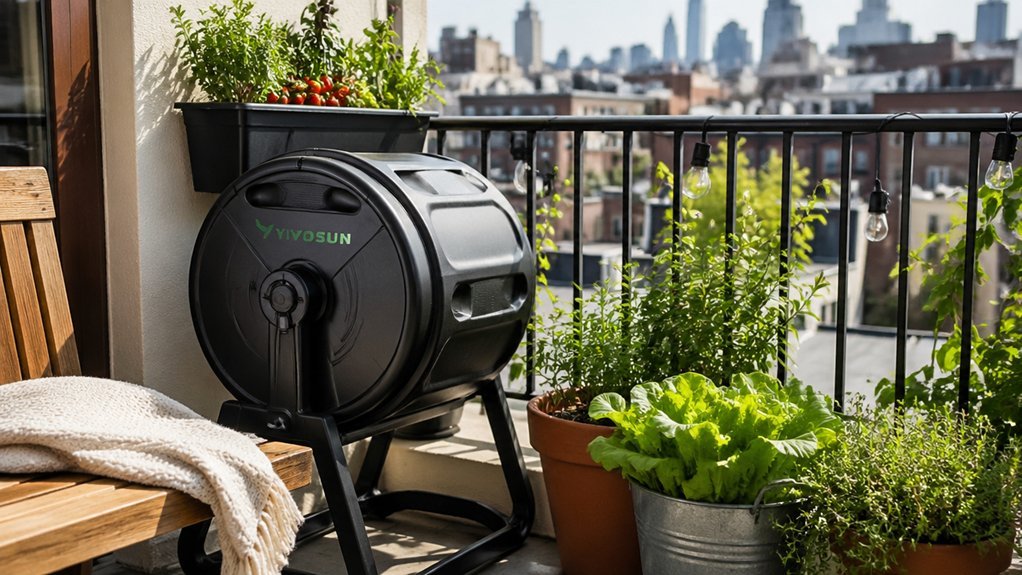
You’ll want a compact footprint that fits your balcony or rooftop without crowding the space, yet still offers maximum capacity to keep the compost cycle going.
A vertical or modular design can help maximize usable area while keeping airflow and moisture management intact in confined urban spaces. ventilation and airflow are crucial to maintaining odor control and worm health in compact bins.
Choose a bin with a secure lid to keep rain out and pests away, and make sure it’s weather‑resistant so it can handle sun, wind, and occasional storms.
Balancing these factors lets you compost efficiently even in the tightest urban spots.
Compact Footprint, Maximum Capacity
What size and shape will fit your balcony or rooftop without sacrificing compost volume? Rotating Bins give you a compact footprint that makes vertical loading and rolling access possible even on narrow railings. Choose a box‑style unit if you need 60‑120 gallons; its tall, rectangular shape slides into a corner while leaving floor space free. If your terrace is tiny, a barrel‑style rotator—22‑65 gallons—fits snugly against a wall and can sit on a simple base frame. Two‑chamber models let you keep one chamber active while the other cures, so you never run out of usable compost. Measuring aids help you plan exact bin dimensions to maximize capacity without crowding your living space. By matching the bin’s dimensions to your outdoor area, you maximize capacity without crowding your living space.
Secure Lid, Weather Resistance
After fitting a rotating bin into your limited balcony or rooftop space, the next priority is keeping it sealed and protected. A secure lid stops rodents, pests, and wind‑blown debris from infiltrating your compost, while weather resistance shields against sun‑induced fading, rain, and temperature swings. Choose a lockable latch or snug‑fit lid that won’t pop open during gusts, and opt for UV‑coated plastic or metal to prevent rust. Size matters: a compact barrel or box style in the 22‑80 gal range fits tight corners without overflowing, ensuring the lid stays engaged and the material stays dry. Additionally, consider selecting a bin with UV‑resistant material to extend its lifespan in sunny urban environments.
Green‑Brown Balance in a Small Rotating Bin
Balancing greens and browns in a small rotating bin is essential for steady microbial activity and odor control. You’ll aim for roughly equal Green materials and Brown materials. Kitchen scraps, coffee grounds, manure, and grass clippings supply the nitrogen‑rich greens, while dried leaves, shredded cardboard, straw, and untreated wood chips provide the carbon‑rich browns. When kitchen waste floods the bin, add more browns like mulched leaves to keep the mix balanced and the smell in check. If greens run low, toss in yard grass clippings to boost nitrogen. Turn the bin weekly; this distributes the mix, restores aeration, and stops hot spots from forming. Consistently monitoring the green‑to‑brown ratio keeps your compact compost thriving.
Heat Buildup for Faster Decomposition in a Rotating Bin
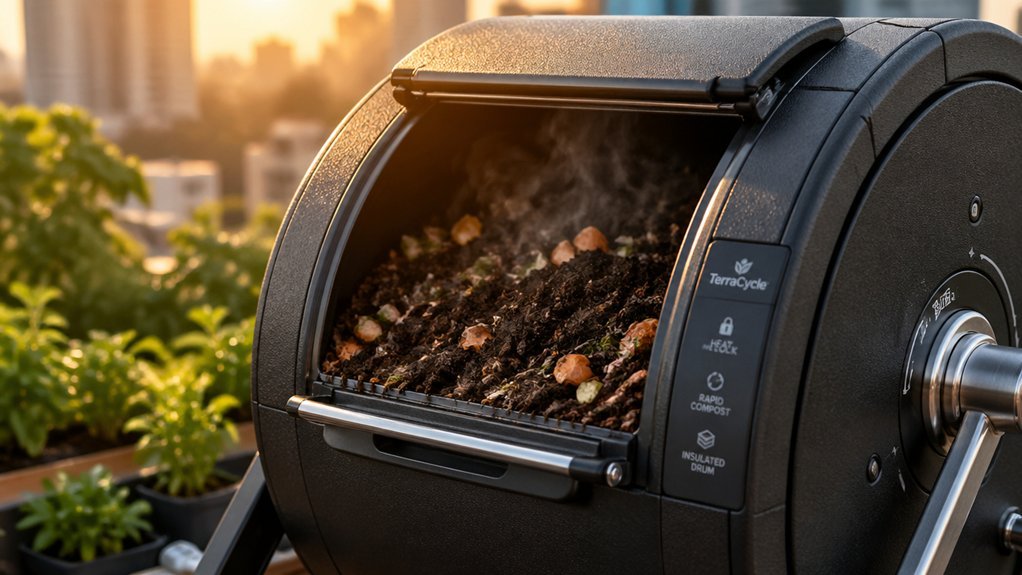
Keeping the green‑to‑brown ratio in check sets the stage for heat buildup, which is the real engine of faster decomposition. In rotating bins, microbial activity and sun‑warmed black plastic raise pile temperatures, speeding breakdown. Regular turning spreads warmth evenly, creating a true “hot compost” zone that would otherwise be uneven in a static pile. You still need enough mass and a balanced mix to sustain those elevated temps; otherwise the heat fizzles out.
- Microbes thrive when you keep the ratio right, generating internal heat.
- Black‑plastic barrels absorb sunlight, adding external heat.
- Frequent rotations distribute warmth, preventing cold spots.
- Adequate bulk maintains temperature, ensuring continuous breakdown.
Moisture and Aeration Management Without Extra Tools
How do you keep a rotating compost bin moist yet airy without extra gadgets? Aim for a wrung‑out sponge feel; add a splash of water when it looks dry and let excess drain naturally.
Because Rotating Bins spin, you get aeration automatically—just give the barrel a good turn each week. That motion pulls fresh oxygen into the core, stops compaction, and keeps microbes humming.
If a spot feels soggy, open the lid briefly and give it another spin to redistribute moisture.
Conversely, if it’s too dry, sprinkle a little water and tumble again so the wetness spreads evenly.
This simple routine balances moisture and aeration, preventing pooling and foul smells while speeding up decomposition.
Odor and Pest Control in Tight Indoor/Outdoor Setups
After you’ve nailed moisture and aeration, the next hurdle is odor and pest control, especially in cramped indoor or balcony setups. Use a two‑chamber bin to keep fresh material separate from curing material, which cuts down on smell spikes and vermin attraction. Stick to prohibited inputs and keep a 40/60 green‑to‑brown ratio to prevent foul odors. Rotate weekly to oxygenate and avoid anaerobic pockets that can leak scent. Choose a closed or semi‑closed tumbler and seal it well, keeping pests out while still allowing airflow.
- Two‑chamber design for odor control
- Proper food bans and 40/60 ratio
- Weekly rotation for aeration
- Closed tumbler for pest management
Harvesting Compost From Your Rotating Bin for Container Gardening
Ever wondered when to pull the finished compost out of your rotating tumbler? You’ll know it’s ready when it looks dark, crumbly, and smells earthy. Open the sliding door of the cured chamber, shake out any large pieces, and screen the rest to protect container roots. Because rotating bins have a two‑chamber system, you can harvest from one side while the other keeps breaking down fresh material, giving you a steady supply for your pots. Keep the moisture level like a wrung‑out sponge before you harvest; too wet and it clumps, too dry and it won’t flow. Once screened, mix the compost with potting soil, and you’ll boost plant growth while reducing waste.
Frequently Asked Questions
Are Rotating Compost Bins Better?
Yes, you’ll find rotating bins better for urban composting because they aerate quickly, keep odors low, fit compact spaces, and let you manage continuous batches with minimal effort.
What Is the Best Rotating Compost Bin?
You’ll find the EarthSense 45‑liter barrel the best rotating compost bin; it’s sturdy, easy to turn, offers two chambers for continuous batches, and fits tight city balconies without sacrificing airflow.
What Three Things Should Not Be in the Compost Heap?
You should keep meat, dairy, and oils out of the compost heap; avoid glossy magazines or painted cardboard; and never add plastics, metal, or glass, because they don’t decompose and attract pests.
Why Do Compost Bins Rotate?
You rotate compost bins to mix material, boost oxygen, spread heat and moisture evenly, speed microbial breakdown, and keep pests out, making the process faster and cleaner for urban settings.
In Summary
You’ll find that a compact rotating bin turns a tiny balcony or rooftop into a thriving compost hub. Its continuous‑flow design lets you add scraps, spin, and harvest nutrient‑rich soil without fuss. By balancing greens and browns, managing moisture, and keeping odors at bay, you get fast, odor‑free decomposition. The result? Fresh compost for your containers and a greener, more self‑sufficient urban garden.