You can transform your worm bin by mastering five essential ventilation strategies. Start by setting up drainage with layered materials to prevent moisture buildup. Drill strategic 1/16-inch holes around the bin’s sides and lid for passive airflow. Choose light, fluffy bedding like shredded cardboard to maintain air pockets. Position your bin in a breezy, shaded area with adequate clearance. Finally, add a USB fan if passive ventilation isn’t enough. Each technique builds on the others to create optimal conditions for your composting system.
Set Up Drainage to Prevent Moisture Buildup

Proper drainage is essential for maintaining healthy worm bin ventilation because excess moisture reduces oxygen availability and creates anaerobic zones that harm your worms. You’ll want to implement a layered drainage system starting with coarse materials like gravel or small stones at the bin’s bottom, which prevents clogging while allowing liquid to escape freely. Above this, add absorbent materials such as shredded cardboard or coconut coir to buffer moisture spikes.
Incorporate drainage holes or a spigot into your bin design, and elevate the entire system so liquid drains away naturally. Collect leachate in a catch tray below. Monitor bedding moisture carefully—it should feel like a wrung-out sponge. If water squeezes out, you’re too wet. Limit high-moisture foods like melons and avoid overfeeding to prevent overwhelming your drainage capacity. Turning the compost gently every 1-2 weeks prevents the bedding from compacting and blocking airflow.
Drill Strategic Holes for Passive Airflow
Beyond your drainage foundation, you’ll need strategically placed ventilation holes to keep oxygen flowing throughout your bin. These small openings create passive airflow that prevents stale, anaerobic conditions while maintaining moisture balance.
Strategically placed ventilation holes keep oxygen flowing throughout your bin, preventing stale, anaerobic conditions while maintaining proper moisture balance.
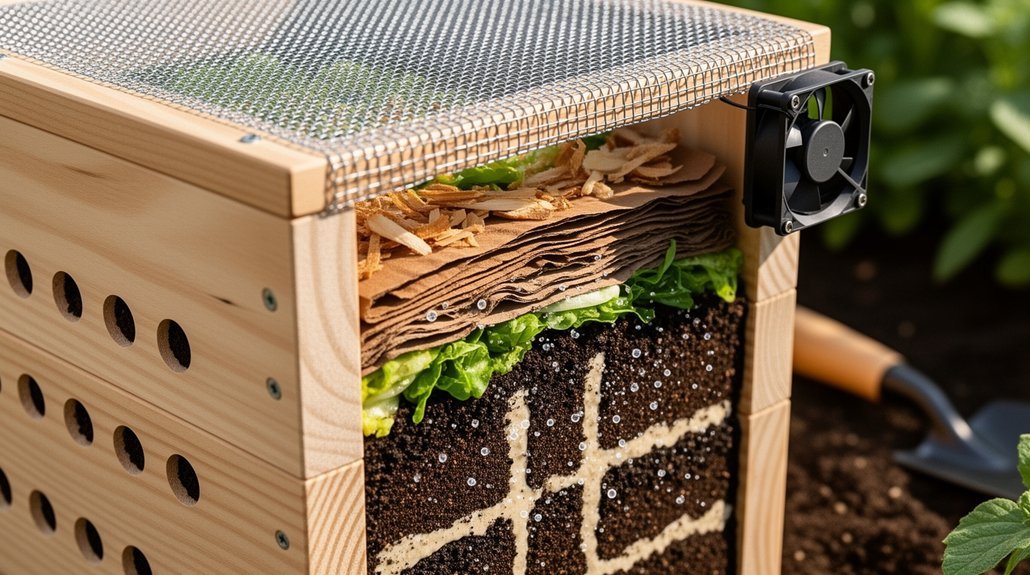
Drill 1/16-inch to 1/8-inch holes about 1 inch below the rim, spacing them every 1 to 2 inches around all sides. This approach limits worm escape while distributing ventilation evenly. Consider adding 15–20 small holes in your lid as well. For optimal results, drill approximately 20 holes in the lid to maximize surface-level gas exchange. Like wooden tampers used in fermentation, proper ventilation design requires attention to material composition and structural integrity to prevent degradation over time.
Here’s what makes this strategy effective:
- Upper placement keeps holes exposed when bedding settles or bins nest together
- Multiple small holes provide better distributed airflow than fewer large ones
- Cross-ventilation from all sides eliminates dead-air pockets inside the container
This balanced approach prevents both oxygen depletion and excessive drying.
Pick Bedding That Maintains Ventilation
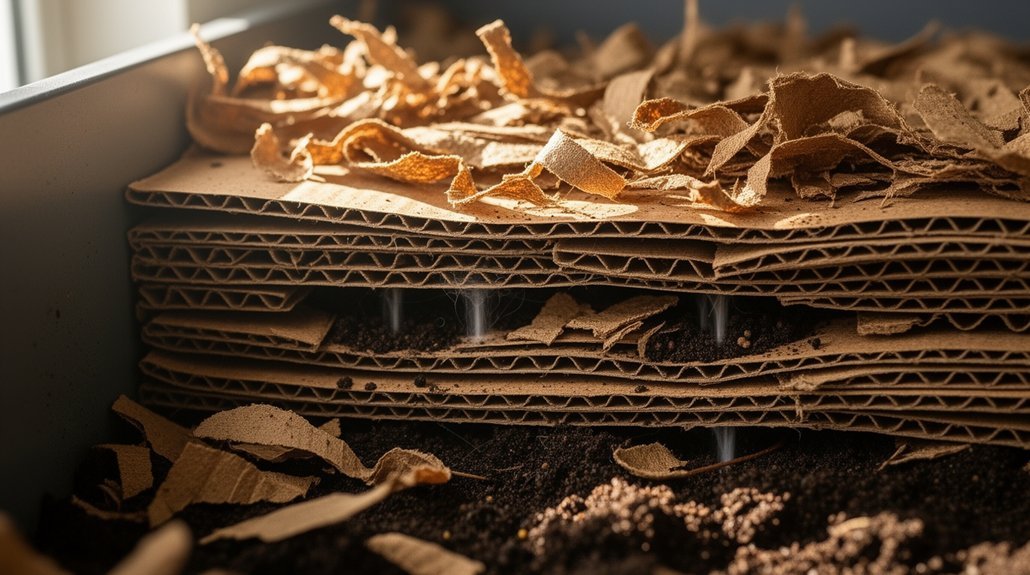
Why does bedding matter as much as hole placement? Your bedding choice directly affects oxygen flow through your bin. You’ll want light, fluffy materials like shredded cardboard, straw, or dry leaves that create air pockets and resist compaction. Dense, matted bedding blocks airflow and creates anaerobic zones where your worms can’t thrive.
Balance moisture retention with ventilation by choosing materials that stay porous when wet. Coconut coir and shredded cardboard work well because they hold moisture like a wrung-out sponge without becoming soggy. Excess water fills air spaces and suffocates your bin. Many successful worm bins combine coco coir bricks with perlite or other aeration materials to maintain the ideal 60–70% moisture range while preserving airflow.
Mix bedding types for optimal results. Combine airy materials with moisture-holding materials to improve both ventilation and stability. This blend supports oxygenation, moisture balance, worm movement, and gradual bedding breakdown. Right bedding types also promote air movement within the bedding structure itself, enhancing the overall efficiency of your composting process.
Position Your Bin Where Air Circulates Freely
Where you place your bin matters as much as how you ventilate it. You’ll want to find a spot that promotes steady airflow while protecting your worms from environmental stress.
Consider these placement strategies:
- Choose shaded, breezy areas like covered porches or under trees to maintain temperatures between 55°F–85°F without direct sun exposure
- Protect from weather extremes by positioning under eaves or decks, which block heavy rain while allowing air circulation through vents
- Ensure adequate clearance on all sides so air moves freely around the bin, avoiding cramped garages or basements with poor ventilation
Raised, off-ground placement improves circulation and reduces moisture intrusion from soil. You’ll also minimize pest access while keeping temperatures stable—conditions where your worms and decomposers truly thrive. Maintaining ideal moisture levels between 40-60% supports optimal worm activity and decomposition efficiency. If you need to relocate your bin during harsh winters, consider moving worms to an indoor setup to protect them from temperature extremes.
Add a Fan or Air Pump When Passive Ventilation Fails

When does your worm bin need more than passive ventilation? You’ll notice signs like foul odors, soggy bedding, or worms clustering away from saturated areas. These indicate insufficient aeration.
You can improve airflow with a small USB cabinet fan or an aquarium-style air pump. USB fans draw minimal power—roughly 1 watt—while air pumps run quietly and low-energy. Pair your fan with a filtered opening on the opposite side for passive intake. Since worms breathe through their skin and emit carbon dioxide through diffusion, ensuring adequate air exchange prevents the buildup of gases that stress your worm population. For under-sink or enclosed composting setups, consider freestanding installation options that maximize vertical space without requiring wall mounting.
You’ll find adjustable airflow especially useful since overly forceful ventilation can disturb bedding or dry it too quickly. Added ventilation becomes critical when your lid must remain closed, in humid environments, or with larger bins that hold more bedding volume.
You’ll notice improved worm health, faster composting, and better vermicast quality once you add forced airflow.
Frequently Asked Questions
How Do I Know if My Worm Bin Has Poor Ventilation Problems?
You’ll notice foul, sour odors, worms escaping or clinging to walls, saturated bedding, and reduced worm activity. You’ll also see flies, gnats, or maggots appearing frequently in your bin.
What Size Holes Should I Drill, and How Many Are Needed for Adequate Airflow?
You’ll want to drill 1/8-inch or 1/4-inch holes, aiming for at least 10 per side and 20 in the lid. You can always add more holes later if you’re noticing odors or moisture buildup.
Can I Use a Regular Household Fan to Cool My Worm Bin?
Yes, you can use a regular household fan to cool your worm bin. You’ll increase airflow over moist bedding, which speeds evaporation and lowers temperature. Pair it with frozen water bottles for better results.
How Often Should I Empty the Drainage Collector Tray or Use Spigots?
You should empty your drainage collector only when liquid visibly pools at the bottom. Check weekly in warm or wet conditions, but don’t use spigots daily. Regular draining removes moisture your worms need.
Why Does My Bedding Stay Too Wet Despite Having Ventilation Holes?
Your bedding stays wet because ventilation holes alone don’t remove pooled water. You’re likely facing clogged drainage, blocked air holes, or excess moisture input that exceeds your bin’s evaporation and drainage capacity.
In Summary
You’ve now got all the tools to create a thriving worm bin. By combining drainage systems, strategic ventilation holes, and breathable bedding, you’ll maintain the perfect environment for your worms. Don’t forget to position your bin where air flows naturally. If passive methods aren’t cutting it, you can always upgrade to a fan or air pump. Your worms will thank you with healthy composting results.