
You keep pests out by keeping the mix sponge‑like—damp but not soggy—so odors stay low and maggots can’t thrive. Regular turning pumps fresh air throughout, preventing anaerobic spots that attract insects. Sealed lids with fine‑mesh vents lock out flies, ants, and rodents while still letting oxygen flow. A 20:1 carbon‑to‑nitrogen balance, with dry browns covering every green, buries food and dries any wet zones. When you follow these steps, the compost stays odor‑free, aerated, and pest‑free, and the next section shows how to fine‑tune the process.
How Moisture & Aeration Create a Pest‑Free Tumbling Compost
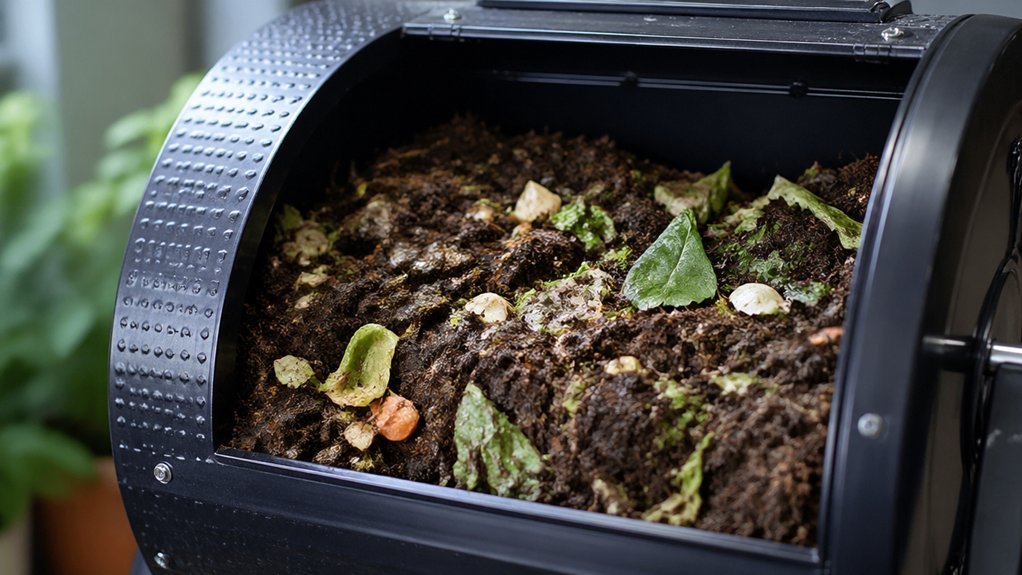
Ever wonder why a well‑kept tumbler stays pest‑free? You keep composting moisture at a sponge‑like level—damp but not soggy—so odors stay low and flies lose interest. Each turn boosts aeration, flushing oxygen through the mix and blocking anaerobic zones that maggots love. When you notice excess wetness, you add dry browns around the waste; those browns absorb surplus liquid, restore airflow, and act as a physical barrier for fruit flies. The right materials, like copper or stainless steel with charcoal filters, also help mitigate odors and deter pests over time pest-deterrent materials. The hot, aerated environment in the tumbler speeds decomposition, so the pile reaches a mature, less‑attractive stage before pests can settle. By balancing moisture and aeration, you create natural pest deterrence without chemicals, keeping your indoor compost clean and thriving.
How Sealed Lids & Fine‑Mesh Vents Stop Insects
Why do pests stay out of a properly sealed tumbler? You’ll notice that sealed lids lock in odor and block fruit flies, ants, and larger pests from reaching food scraps. Fine‑mesh vents give the compost the airflow it needs while keeping insects out, creating a microclimate that discourages infestations. The combination of sealed lids and fine‑mesh vents also prevents rodents and roaches from burrowing into the base, because there’s no opening to exploit. This dual barrier delivers effective pest prevention and odor control, letting your indoor tumbling composters work uninterrupted. odor control helps maintain a clean indoor environment while supporting steady decomposition.
Balanced Greens‑to‑Browns: Why It Stops Pests
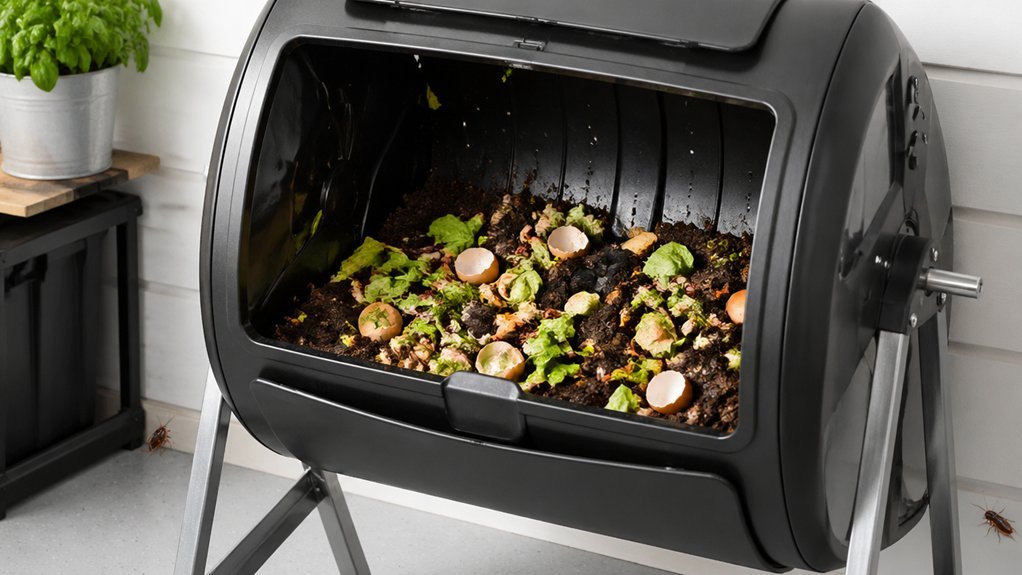
You’ll notice that a 20:1 carbon‑to‑nitrogen mix keeps the pile dry enough to stay odor‑free, which bugs hate. Using 90–110 GSM kraft paper‑strength bags for containment and careful bottom design further reduces leakage and pest access FSC certified sourcing. By layering moist greens under dry browns and turning regularly, you maintain aerobic conditions that block maggots and fruit flies. The lid‑sealed, mesh‑vented tumbler then acts as a physical barrier, so pests can’t get in even if a stray crumb slips out.
Balanced C:N Ratio
How does a balanced greens‑to‑browns mix keep pests at bay in an indoor tumbler? You keep the carbon‑to‑nitrogen ratio near 20:1, which drives odors control and pest deterrence. The right blend creates aeration, stops anaerobic hotspots, and buries food scraps, so flies and maggots find nothing to chew. OK compost HOME certification helps ensure that materials labeled as compostable will break down under household conditions and support a pest‑free process.
Moisture‑Controlled Layers
Maintaining the 20:1 C:N balance also means keeping the moisture level just right—think of a wrung‑out sponge. When you layer greens and browns, aim for a greens-to-browns ratio that holds enough dampness for microbes but never drips. Bury fresh scraps toward the center, then cap them with a dry browns blanket; this creates a top layer that feels like a wrung‑out sponge, preventing soggy spots that lure fruit flies and maggots. Regular aeration helps distribute moisture evenly and supports the anaerobic conditions that minimize odors. Turn the tumbler regularly; each aeration spreads moisture evenly, eliminates stagnant pockets, and boosts heat. As the compost heats, pest reduction follows because insects can’t survive the dry, well‑aerated environment. By controlling moisture and maintaining the proper greens‑to‑browns balance, you keep pests at bay while the pile decomposes efficiently. Airtight lids help maintain the anaerobic environment needed for effective bokashi-like fermentation in compact indoor setups.
When to Tumbling: Eliminating Food‑Scrap Hotspots
You should toss in fresh scraps right away and then cover them with a layer of browns. Doing this right after each addition keeps the surface free of food, so pests have nothing to latch onto. Additionally, using a ceramic compost crock with a charcoal filter helps control odors and reduces attractants by limiting scent diffusion. odor-control features help keep the interior environment unappealing to pests while maintaining convenient maintenance.
Scraps Immediately
When you add fresh scraps, bury them right away beneath a layer of browns and greens. This quick burial keeps the carbon-to-nitrogen ratio balanced, blocks odor, and stops pests from spotting food. A sealed tumbler adds a physical barrier, while regular aeration and turning keep the pile aerobic, preventing hot, moist spots that attract flies and maggots. By covering each addition with dry material, you maintain odor reduction and keep the compost healthy.
Bury scraps | Hides food, cuts odor
Add browns & greens | Balances C:N ratio
Seal tumbler | Blocks flies, rodents
Aerate regularly | Prevents anaerobic hotspots
In addition, selecting organic, well-balanced inputs such as OMRI listed amendments can help ensure microbial activity remains robust and odors stay minimized throughout the composting process.
Cover New Additions Promptly
Cover fresh additions with a layer of soil or a thick brown material right after you toss them in, because that instantly buries hotspots and keeps pests from spotting food. When you add new additions, spread a 1‑2 inch blanket of dry leaves, shredded newspaper, or cardboard, then give the compost tumbler a quick spin. This prompt tumble redistributes moisture, prevents soggy patches, and keeps the surface aerated. By sealing the lid and avoiding exposed scraps, you cut off the scent that attracts flies and ants. Consistent maintenance—checking that each cover is even and that the tumbler stays sealed—means the pile stays dry, odor‑free, and uninviting to pests. Your routine of covering and tumbling each time you feed the tumbler eliminates hotspots and protects the indoor system.
Pick a Tumbling Compost Size & Placement for Apartments
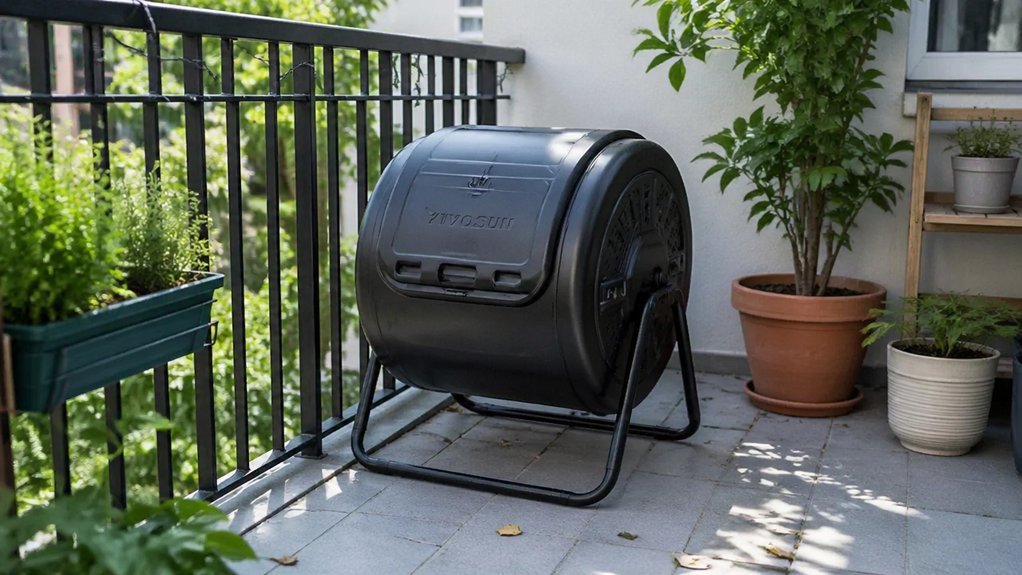
Choosing the right tumbling compost size for an apartment hinges on space, capacity, and pest control. An indoor tumbler that fits a balcony or kitchen nook can still give you a robust apartment compost system. Opt for a two‑chamber design—one chamber finishes while you load fresh scraps, which cuts down odor and pest attraction. Elevate the unit on a stable, sealed platform; this placement and elevation keep rodents and flies out and improve airflow. Keep the tumbler away from direct sunlight and moisture‑prone spots to maintain aerobic breakdown.
| Size (gal) | Ideal Placement |
|---|---|
| 20‑25 | Kitchen counter |
| 25‑30 | Balcony shelf |
| 30‑35 | Under‑sink cabinet |
| 35‑40 | Small room corner |
| 40‑45 | Raised floor stand |
Quick‑Fix: Stop Pests in Your Tumbling Compost
Why let pests hijack your indoor tumbler? First, cover fresh scraps with a layer of dry browns and greens; the dry barrier signals a compact surface that ants and rodents avoid. Keep moisture under control by using a wrung‑out sponge level—no soggy pockets, no fly breeding grounds. Seal the tumbler with its lid and add a fine mesh over the aeration holes; airflow stays strong, but pests stay out. Turn the compost regularly, balancing browns and greens, and never overfill the drum; this prevents wet zones that attract maggots. By burying waste, maintaining moisture control, and ensuring proper aeration, you’ll stop pests fast and keep your indoor tumblers healthy.
Frequently Asked Questions
What Is the Disadvantage of a Compost Tumbler?
You’ll find a compost tumbler limits worm activity, needs frequent turning to prevent overheating, and can cause moisture swings or odors if you don’t balance greens and browns carefully.
Do Compost Tumblers Attract Rats?
You won’t attract rats if you keep the tumbler sealed, avoid meat or dairy, turn it regularly, and use a two‑chamber system; these practices eliminate food cues and odors that rodents seek.
Do Indoor Compost Bins Attract Bugs?
You won’t usually attract bugs if you keep your indoor compost bin tidy, sealed, and balanced. Proper moisture, regular turning, and covering scraps keep pests out and the system odor‑free.
How to Compost Without Attracting Pests?
You’ll compost without pests by sealing the bin, balancing greens and browns, burying fresh scraps, keeping moisture sponge‑like, turning regularly, and using a fine‑mesh lid or secure enclosure.
In Summary
By keeping your tumbler moist but not soggy, aerating it regularly, sealing the lid, and using fine‑mesh vents, you cut off the food, shelter, and entry points pests need. Balancing greens and browns prevents odor spikes, and tumbling at the right times eliminates hot spots. Choose a size that fits your space, place it away from walls, and you’ll enjoy a clean, pest‑free compost that works fast and quietly.