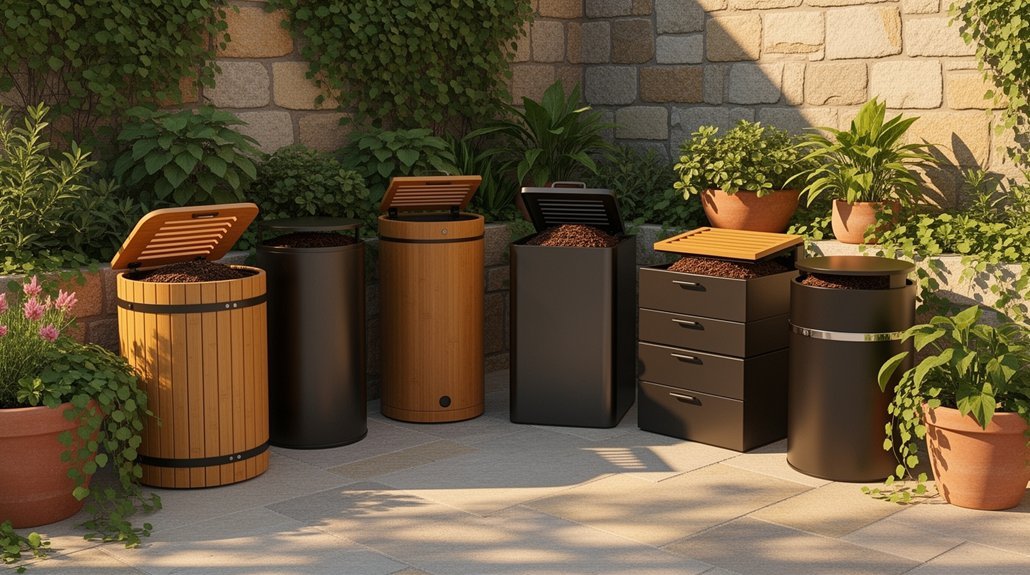

You’ll love the quick‑release designs that let you pull the liquid out in seconds, like the 35‑gallon tumbler with a drain plug and detachable tank, or the 2‑gallon bin with a spigot and removable collector. Built‑in trays catch drips and prevent spills, while perforated lids and charcoal filters trap odors and keep airflow steady. Smooth, non‑porous plastics and nylon screens make cleaning a breeze, and matching the drainage capacity to your kitchen waste ensures dry counters and no mess. Keep going to discover the top five models.
Which Compost Bins Let You Pull Out the Liquid Quickly?

Since you want liquid fertilizer fast, look for compost bins that feature pull‑out or detachable collection tanks. The EJWOX 35‑gallon tumbler, for example, uses a drain plug that empties directly into a removable tank, letting you dump compost tea in seconds.
BBC Gardeners’ World notes similar designs where a tank clips onto a garden hose, so you can dispense nutrient‑rich leachate without lifting the whole drum.
Detachable collectors beat fixed reservoirs because you slide them out and pour, not tip the bin. Many compost systems use biodegradable pulp fiber materials for their collection containers to reduce environmental impact.
Bokashi‑style units also include quick‑release taps for anaerobic leachate.
Rotating drum composters typically combine these drains with aeration, keeping solids dry while you harvest liquid plant food on demand.
The tumbler’s high‑capacity design allows it to process up to 36 gallons of material, ensuring plenty of liquid output for larger gardens.
How a Built‑In Drain Tray Keeps Your Counter Dry?
Quick‑release bins let you pull the liquid out in seconds, but without a drain tray the splashes can still soak your countertop. A built‑in tray sits right beneath the compost container, catching drips, condensation, and stray runoff before they reach wood, laminate, or stone surfaces. Its raised edges create a barrier, while a wide surface area holds accidental overflow, so you never worry about a soggy mess spreading across your prep space. The tray’s flat, stable design prevents rocking that could dislodge liquid, and the material wipes clean with a quick rinse. Stainless steel bodies and other durable materials resist water damage and maintain their integrity through repeated exposure to moisture. By isolating moisture at the tray level, you keep the surrounding area drier, reduce odors, and make daily clean‑up faster and more routine. Add holes in the container to promote airflow and prevent soggy buildup.
Why Perforated Lids + Charcoal Filters Improve Indoor Compost Bin Drainage?

A perforated lid paired with a charcoal filter lets air flow while trapping odors, so moisture doesn’t build up inside your indoor compost bin. The vent holes let humid air escape, breaking the sealed‑in greenhouse effect that causes condensation.
As the scraps decompose, they release water; the lid’s perforations create a continuous exchange that lowers humidity and curbs anaerobic conditions, which are the main source of strong smells.
The activated‑carbon filter sits snugly in the lid groove, absorbing odors as air passes through the vents. This breathable barrier lets you keep the kitchen fresher without sealing the bin completely. Most ceramic crocks use standardized filter diameters around 5.625 inches, making replacements widely available across different bin models.
Regularly replacing or rinsing the filter and emptying the bin maintains the airflow‑moisture balance, ensuring consistent drainage and odor control. Food waste accounts for 30‑40% of all food in the US, making effective composting essential for reducing methane emissions.
What Materials Make Cleaning an Indoor Compost Bin Easy?
The perforated lid and charcoal filter keep moisture and odors at bay, so you don’t end up scrubbing a soggy, smelly mess.
Smooth plastic bins are your best friend; you can rinse, wipe, and fully empty them with just soap and water. Their non‑porous surface resists staining, and a wide‑mouth design lets you dump and scrub quickly.
Choose a lid made of the same plastic, paired with a nylon screen that you can pull off and wash away fruit‑fly debris.
Charcoal or carbon filters trap odor‑related residue, keeping rims cleaner. For countertop composting, a vented lid design prevents moisture accumulation while maintaining odor control.
Add a dry, absorbent base—shredded newspaper or paper towels—to soak excess liquid, preventing sludge buildup.
Removable lids and simple bucket shapes eliminate corners where grime hides, making each cleaning cycle a breeze.
drainage holes help excess liquid escape, reducing the need for frequent cleaning.
How to Match Compost Bin Drainage Capacity to Your Kitchen’s Waste Volume?

Ever wondered how much liquid your kitchen scraps will actually produce? You’ll see roughly 10‑30% of their wet weight turn into leachate, and high‑moisture items can double that amount. To keep moisture in the 50‑60% sweet spot, match drainage to waste volume.
Roughly 10‑30% of wet weight becomes leachate; high‑moisture scraps can double that.
- 1‑gallon bin – 4‑6 tiny bottom holes (1/8‑1/4 in) or a small spigot, draining every few days.
- 2‑3 gallon bin – larger spigot or perforated base with a tray holding 4‑6 oz of liquid.
- 4‑5 gallon “comppost tea” tumbler” – multiple holes or spigot plus a 6‑12 oz reservoir for several days.
- 4‑gallon heavy‑use bin – external drain valve or spigot, handling 1‑2 cups per week.
Choose perforated bottoms, tiered trays, or continuous‑flow taps that fit your daily scrap load, and you’ll avoid odor and soggy messes. The Bokashi‑based fermentation process helps retain nutrients while minimizing leachate volume. Many worm composting systems feature integrated spigots and layered tray designs that naturally separate excess moisture from solid composting material.
Frequently Asked Questions
Can I Use a Compost Bin for Liquid Waste Like Coffee Grounds?
Yes, you can add coffee grounds to a compost bin, but treat them as solid scraps, not liquid. Mix them with dry browns, keep moisture balanced, and turn regularly to avoid soggy, odorous conditions.
Do Indoor Bins Work With Standard Kitchen Garbage Disposals?
No, indoor bins don’t plug into regular disposals; you’ll need a dedicated compost system or a specially designed under‑sink unit that separates solids and liquids, because disposals can’t process compost.
Will a Filter Need Replacement, and How Often?
You’ll need to replace the filter, typically every 3–6 months for heavy use or about 9–12 months for lighter use, unless you have a reusable one you clean monthly and swap out when odors return.
Can I Place the Bin Under a Sink Faucet for Easy Draining?
No, you shouldn’t put the bin directly under a faucet. It risks overfilling, splashing, clogging, and anaerobic odors. Instead, place it nearby and manually transfer liquid to a container.
Are There Eco‑Friendly Alternatives to Charcoal for Odor Control?
You can swap charcoal for baking soda, zeolite, bamboo charcoal, enzyme blends, or bacterial mixes. These options neutralize odors, absorb moisture, and support aerobic breakdown without relying on traditional charcoal.
In Summary
You’ve got the tools to keep your indoor compost tidy, efficient, and odor‑free. Choose a bin with quick‑pull liquid trays, a built‑in drain tray, and perforated lids with charcoal filters for optimal drainage. Opt for easy‑clean materials and match the bin’s capacity to your kitchen waste. With these steps, your compost will stay dry, clean, and ready to turn scraps into nutrient‑rich soil.