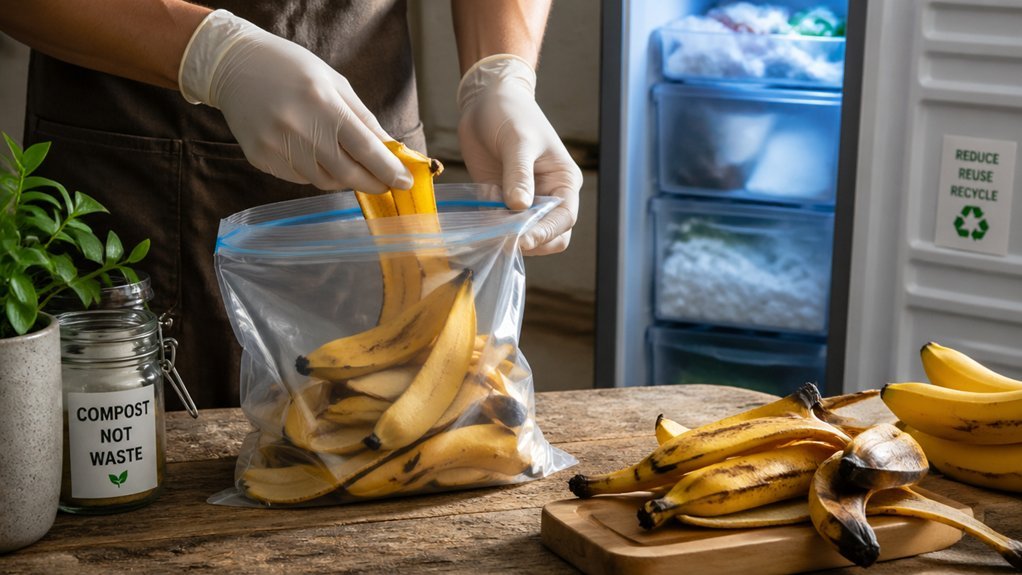
Freeze the banana peels in zip‑lock bags until solid, then thaw them and chop into bite‑size pieces. Blend the pieces into a fine slurry and spread it around plant bases or stir it into your compost pile. The slurry boosts microbial activity, improves drainage, and releases potassium, phosphorus, calcium, and magnesium quickly, while proper aeration prevents odors. Keep turning the pile for balanced moisture and air, and you’ll see faster, richer compost as you go on.
Freeze Banana Peels to Preserve Nutrients & Speed Up Composting
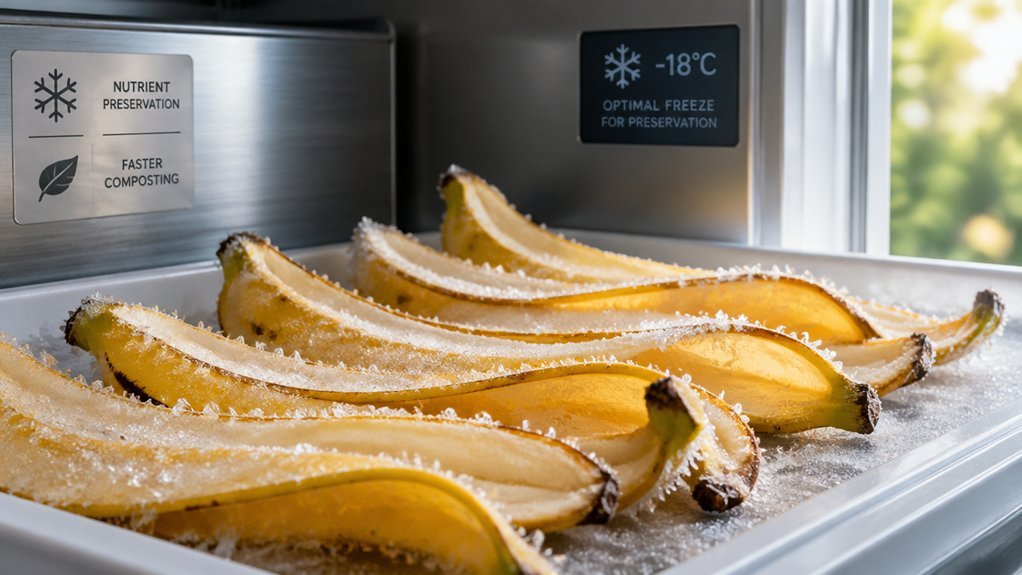
Freezing banana peels locks in their nutrients and halts the microbial and enzymatic activity that would otherwise cause them to rot. You can scoop the peels straight from the fruit, place them in a zip‑lock bag, and chill them until solid. This batch prep means you’ll never toss kitchen scraps because they’re ready when you need them. When you’re set to compost, take the frozen banana peels and let them thaw; the thawed peels release potassium and micronutrients that boost soil amendment. Because freezing pauses decay, the nutrient preservation stays intact, so the composting process speeds up and the final mix delivers richer plant food. Use this simple step to turn waste into a powerful garden boost. Nutrient preservation in frozen scraps can help maintain soil health during composting.
Thaw, Chop, and Blend Frozen Peels for Immediate Soil‑Microbe Access
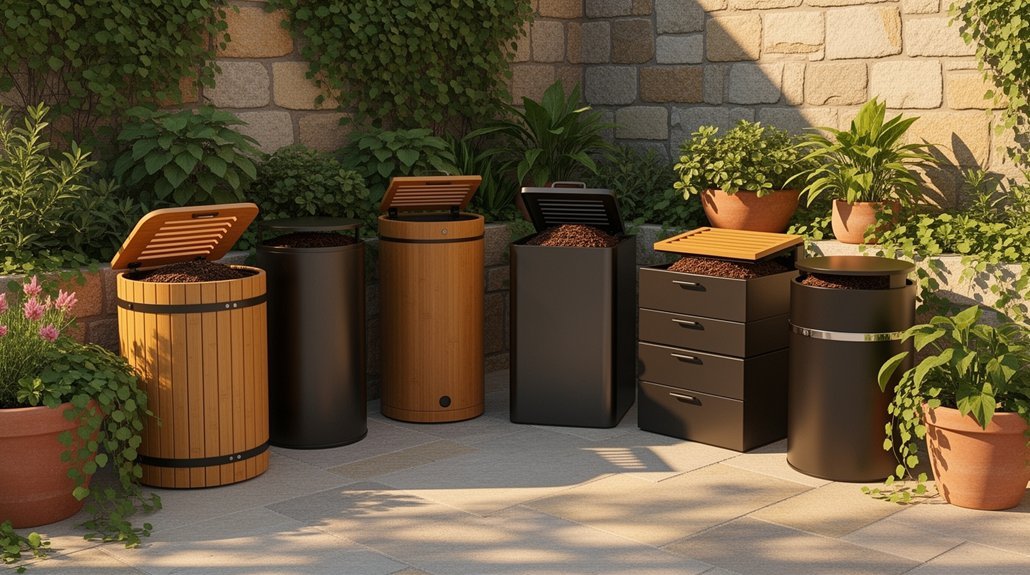
Once the banana peels are thawed, you can safely chop them into bite‑size pieces and give them a quick blend, turning the solid chunks into a fine slurry that instantly welcomes soil microbes. Thawing reduces brittleness, so chopping is even and safe. The slurry helps improve drainage and microbial access in a compact compost setup maximum ventilation design. Spread the slurry around plant bases or stir it into compost piles for immediate effect. By handling banana peels this way, you keep odors low and boost microbial action without waiting for whole frozen pieces to break down.
Keep Your Compost Happy With Banana Peels: Moisture, Air, and Nutrient Balance
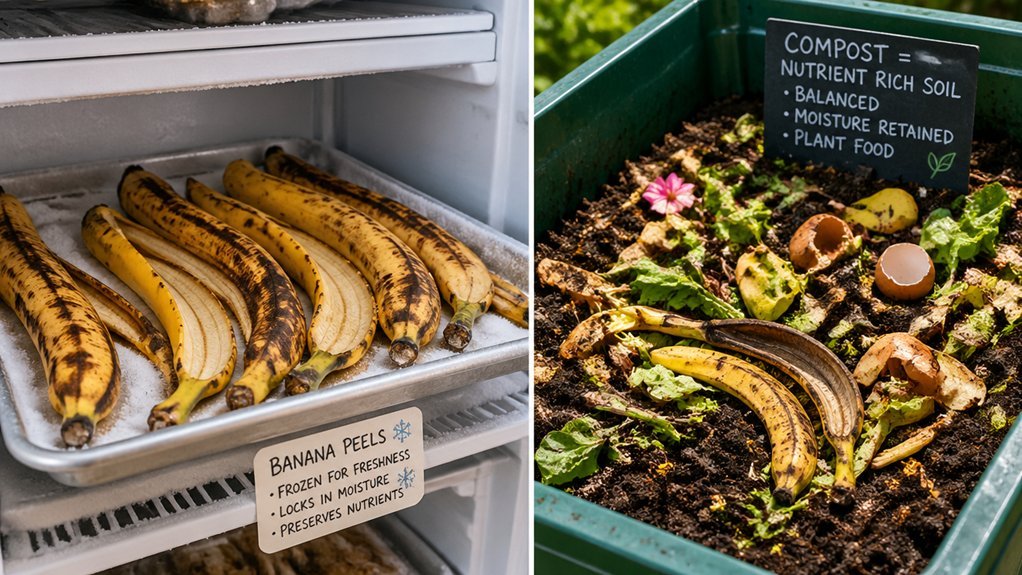
A well‑balanced compost pile needs just the right mix of moisture, air, and nutrients, and banana peels can help you hit that sweet spot. When you shred banana peels before adding them, you boost surface area, which speeds microbial activity and nutrient release.
Mix the peels with an equal blend of greens and browns to keep moisture balance steady and avoid soggy spots. Turn the pile regularly to improve aeration and prevent anaerobic odors.
The potassium, phosphorus, calcium, and magnesium in the peels become a powerful soil amendment as they break down over three to four weeks.
Bury the peels or incorporate them well to keep pests away and ensure your compost stays healthy and productive. EM-1
Frequently Asked Questions
What Plants Do Not Like Banana Peels?
You’ll find that tomatoes, potatoes, and blueberries dislike banana peels because they’re sensitive to high potassium and can develop nutrient imbalances, while citrus and rhododendrons may suffer from excess nitrogen and potential mold.
Why Not Put Banana Peels in Compost?
You shouldn’t put banana peels straight into compost because they decompose slowly, attract pests, can create foul smells, and may introduce fungal problems, delaying nutrient release for your garden.
Why Put a Banana Peel in the Freezer?
You freeze banana peels to lock in nutrients, halt decay, and keep them fresh for later compost—so you avoid waste, batch‑store them, and make chopping easier when you’re ready to enrich soil.
What Fruit Should Not Be Composted?
You shouldn’t compost citrus peels, pineapple skins, or avocado pits because they’re slow‑decomposing, can create odors, and may attract pests. Also avoid meat, dairy, fats, oily foods, and diseased plants.
In Summary
By freezing banana peels, you lock in nutrients and speed up their breakdown. When you thaw, chop, and blend them, you give soil microbes an instant feast, boosting compost activity. Keep the pile balanced—add enough moisture, turn it regularly, and avoid overloading with peels. With this simple three‑step routine, you’ll end up with richer, faster‑producing compost that fuels healthier plants and a greener garden.



Leave a Reply