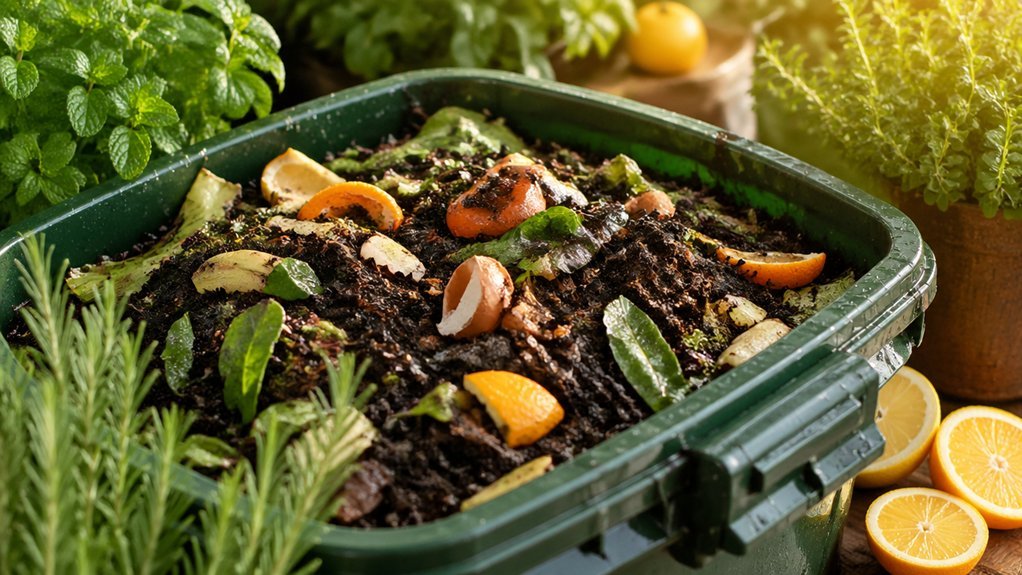
You can stop indoor compost smells for good by adding a concentrated, non‑toxic enzyme blend that breaks down proteins, fats, and carbs, then keeping the bin aerated, loosely packed, and moist but not soggy. Turn the pile every 2‑3 days to maintain aerobic conditions and prevent anaerobic pockets that release ammonia and sulfur. Use a bulking material like coarse twigs or wood chips to improve airflow and drainage. Follow this routine and you’ll discover even more tricks to keep odors at bay.
Why Indoor Compost Smells

Stepping into a kitchen bin, you’ll notice the sour, rotten‑egg scent that signals an anaerobic pocket—moisture high, oxygen low, and microbes turning to ammonia and sulfur compounds. You recognize that organic waste releases nitrogen‑rich proteins, which, without enough air, become food for anaerobic bacteria that emit that pungent odor. When you skip regular turning, the pile’s interior stays damp and oxygen‑starved, so putrefaction dominates and the smell lingers. Temperature swings indoors slow the bacteria’s digestive pace, letting odor‑producing compounds accumulate. Managing moisture is key; too wet fuels the anaerobic zone, while too dry stalls decomposition but still releases occasional whiffs. Layering wisely, mixing often, and adding bio‑enzymatic boosters keep aerobic bacteria active, curbing the odor before it spreads oxygen flow.
How Enzymes Eliminate Indoor Compost Odor
When you stop the sour, rotten‑egg smell by keeping the compost aerobic, the next step is to let enzymes do the heavy lifting. Enzymes break down organic waste into tiny, less‑volatile compounds, so the odor disappears instead of being masked. Apply a bio‑enzymatic liquid to bins, liners, and damp spots; the natural enzymes liquify grease, fats, and proteins, cutting slime and the compounds that fuel smells. Air circulation supports aerobic conditions, helping maintain odor control and enzyme efficiency. Because they work best in aerobic conditions, keep the pile aerated and avoid soggy pockets that invite anaerobic activity.
Regular treatment targets the source every time, delivering continuous odor control without chemicals. The formula is non‑toxic, safe for people, pets, and indoor plants, and it keeps your kitchen compost fresh and pleasant.
Choose the Ideal Enzyme Formula for Small Bins
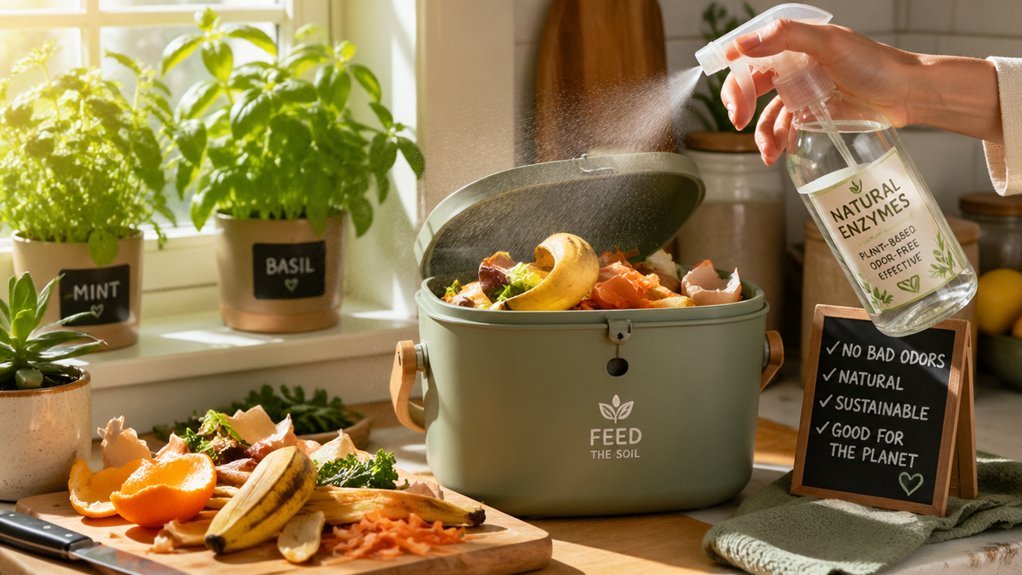
You’ll want a highly concentrated, non‑toxic enzyme blend that mixes proteases, lipases, and amylases to tackle proteins, fats, and starches in your small bin.
A moisture-control base of densely packed fermented brans helps sustain enzyme activity and reduces damp, sour odors in the bin. indoor bokashi
Enzyme Selection
Which enzyme blend will keep your small compost bin odor‑free? You need a highly concentrated formula derived from soil‑associated bacteria that works fast in limited space. Choose a mix that includes proteases, amylases, and lipases—these enzymes tackle proteins, carbs, and fats, driving rapid breakdown and continuous odor elimination. The blend must be non‑toxic, free of acids or caustics, and safe for pets, plants, and people. Simple dosing—one sachet or a tablespoon per load—ensures you’ll apply it correctly every time, keeping composting smooth and scent‑free. In compact bins, selecting an enzyme blend with proven performance in small volumes helps maintain steady microbial activity and odor control compact compost system design benefits from such targeted formulations.
Application Frequency
Wondering how often to treat a 3‑5‑gallon bin for odor‑free results? You’ll want a steady rhythm that keeps enzyme activity humming without drowning the compost bin. Regular use supports aerobic conditions and can help maintain steady microbial activity for better odor control North Atlantic kelp source. Use a medium‑strength formula: mix 1 Tbsp enzyme product with 1 gal warm water, then drench each layer. Turn the pile every 2–3 days and reapply the solution whenever you add fresh material. This application frequency sustains aerobic conditions, boosts odor control, and prevents over‑wetting that dilutes the enzymes. – Mix 1 Tbsp enzyme per gallon water – Drench all material before each turn – Turn the pile every 2–3 days – Reapply with each new layer – Watch for earthy scent and dark brown humus
Prepare Your Pile to Prevent Odor
Start by building a 3‑by‑3‑by‑3‑foot pile and layer the coarsest material, greens, leaves, and kitchen waste in 6‑inch increments to keep airflow steady.
Mix a tablespoon of composting formula with warm water and drench the pile, aiming for a damp‑but‑not‑soggy texture that lets microbes thrive.
Turn the heap every two to three days so oxygen reaches every spot and odor‑producing anaerobes stay at bay. Odor Control Champion
Moisture Balance Management
Ever wonder why some compost piles stink while others stay fresh? You control odor by keeping the moisture just right—damp but not soggy—and ensuring constant aeration. A 3’ × 3’ × 3’ compost pile retains heat and moisture, while turning it every 2–3 days spreads dampness and injects oxygen, preventing anaerobic smells. Saturate the pile with one tablespoon of Composter Formula per gallon of warm water during activation, then monitor the feel; it should feel like a wrung‑out sponge. Balance green and brown inputs, but avoid over‑watering any layer. Regularly maintain a mention of odor-control filters as part of routine maintenance to sustain freshness odor-control filters.
Layer Materials Properly
How can you keep your compost smelling fresh? Start with a 6‑inch coarse base of twigs, corn stalks, or small wood chips. Then add a green layer of kitchen scraps, followed by leaves, more clippings, and finally a top layer of kitchen waste, creating 5–7 composting layers total. Keep each layer loose; avoid packing the pile so oxygen can flow and porosity stays high. Skip animal matter—grease, meat, eggs, and cheese—because they fuel anaerobic microbes that smell. After each addition, spray with Composter Formula to hit the right moisture level without drowning the pile. By layering correctly you support aerobic microbial activity, maintain oxygen, and prevent the foul odors that arise from a compacted, oxygen‑starved heap.
Turn Pile Regularly
Why let a stagnant pile turn your garden into a stinky mess? Turning your compost regularly injects fresh air, fuels aerobic microbes, and keeps odor control on point. Aim for a 2–3‑day schedule while the pile is hot. Add material in 6‑inch layers, never crush it into a dense block, and keep moisture balanced—damp, not soggy. Each time you toss in new scraps, sprinkle a bit of Composter Formula to sustain the microbial feast and prevent foul smells.
- Rotate the pile every 2–3 days for prime compost aeration.
- Use a pitchfork or turner to lift and flip, exposing inner zones.
- Maintain 6‑inch layers and avoid overpacking to preserve airflow.
- Check moisture; add water or dry leaves to keep it just damp.
- Mix in Composter Formula with each addition for stronger odor control.
Apply Enzyme Treatments: Dosage & Timing
If you start with a pile at least 3 × 3 × 3 feet, you can activate the enzymes by mixing 1 tablespoon of Composter Formula into 1 gallon of warm water (60-90 °F) and spraying it evenly over the material. Apply the solution to each new 6-inch layer and again after every turn to keep enzyme action humming.
Aim for a light spray that moistens but doesn’t soak; the pile should feel like a wrung-out sponge. Re‑apply Composter Formula every 2–3 days, especially when the pile looks dry or after heavy rain.
Maintaining an aerobic pile—by turning regularly and avoiding animal waste—ensures the microbes stay active and the odor control stays effective throughout the composting cycle.
Fix Persistent Indoor Compost Odor Issues

Ever notice that indoor compost bins develop a sour, lingering stench despite regular turning? You can stop that by using a bio‑enzymatic approach that drives organic matter digestion at the source. Apply the enzyme blend, then keep the bin aerated: turn it every few days, ensure good airflow, and avoid compacting the material. By maintaining aerobic conditions you prevent anaerobic pockets that generate ammonia and slime, leading to effective odor elimination.
Use bio‑enzymatic blends and regular aeration to keep indoor compost fresh and odor‑free.
- Sprinkle bio‑enzymatic solution evenly over the pile.
- Turn the compost weekly to preserve aerobic conditions.
- Keep the bin loosely packed for airflow.
- Use a small fan or open window to boost ventilation.
- Monitor moisture; add water sparingly if it feels dry.
Add Bulking Materials to Keep Odor Low
Wonder how a few simple additions can keep your indoor compost smelling fresh? You can boost odor reduction by mixing bulking materials—coarse twigs, wood chips, dry leaves—into every layer.
Start with a bottom bed of coarser items to improve drainage and stop compaction, then alternate 6‑inch strips of greens and browns. This pattern holds the carbon‑to‑nitrogen balance while preserving airflow for aerobic composting.
Turn the pile every 2–3 days to keep oxygen flowing, which fuels microbes that neutralize smells.
Keep moisture damp but not soggy; excess water creates anaerobic pockets that trigger sour odors.
Maintain an Odor‑Free Compost Year‑Round
How can you keep your compost smelling fresh all year? Balance moisture and porosity, layer 6‑inch sections of twigs, green waste, leaves, and kitchen scraps, and never overpack. Turn the pile every 2–3 days to boost microbial activity, and sprinkle Composter Formula—rich in natural enzymes—on each new layer. Keep the heap moist, not soggy, and stay above 40°F so aerobic composting thrives. Use only plant‑based material; skip grease, meat, eggs, and cheese to prevent odor elimination problems.
- Add bulking material for airflow
- Turn regularly to oxygenate microbes
- Apply enzyme‑rich formula each layer
- Monitor moisture, aim for a damp sponge feel
- Maintain a minimum 3′ × 3′ × 3′ pile for heat retention
Result: dark, earthy humus with no foul smells.
Frequently Asked Questions
How to Make Compost Stop Smelling?
You stop compost odors by keeping the pile moist, turning it every few days, adding the Composter Formula with each layer, avoiding animal waste, and ensuring enough brown material for proper aeration.
What Is a Natural Accelerator for Compost?
You use a microbial blend packed with billions of engineered bacteria and enzymes; it accelerates breakdown, raises pile temperature, boosts aerobic activity, and eliminates odors by rapidly turning waste into stable humus.
What to Put in a Compost Bin to Keep From Smelling and Prevent Meal Worms?
You should add plenty of dry browns—shredded newspaper, cardboard, straw—mix them with green scraps, keep moisture sponge‑like, turn the pile often, and cover it to block worms and odors.
What Breaks Down Compost Quickly?
You speed up compost by adding a high‑enzyme starter, mixing 1 Tbsp of concentrated formula with warm water, keeping the pile at least 3 ft³, turning it every few days, and maintaining good aeration and moisture.
In Summary
By now you know why indoor compost can stink and how the right enzyme blend stops it in its tracks. Pick a formula that fits your bin, prep the pile, and apply the enzymes on schedule. Add bulking material, keep moisture balanced, and you’ll banish odor for good. Stick to these steps and enjoy a fresh‑smelling, thriving compost system year‑round.