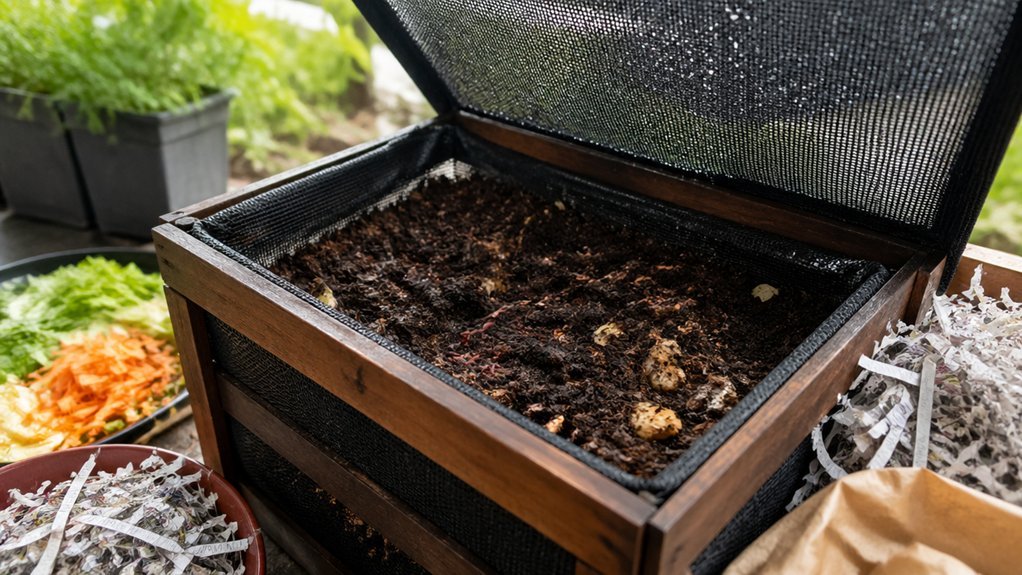
Feed small, frequent scraps and stick to worm‑friendly foods like veggie peels, coffee grounds, and crushed eggshells. Keep the bedding’s moisture like a wrung‑out sponge and add carbon‑rich layers such as shredded cardboard or coco coir. Aerate the bin weekly, fluffing the mix and rotating corners to boost airflow. When a whiff appears, top it with fresh dry bedding and turn the pile. Watch worm activity daily—slow or pale worms signal a problem. Follow these steps, and you’ll discover even more tips.
Feed Small, Frequently to Prevent Worm Bin Odor

Ever wondered why a worm bin can smell like a trash heap? You can stop that by feeding small amounts frequently. When you add just enough scraps for the worms to consume quickly, you avoid uneaten food that rots and fuels worm bin odor. Bury each feed under bedding and rotate corners to boost aeration, letting oxygen reach the composting material. Chop or pre‑treat waste so decomposition speeds up, keeping moisture balanced and preventing anaerobic pockets. Keep an eye on the carbon‑to‑nitrogen ratio; a proper mix supports healthy microbes and reduces foul smells. Adjust feeding pace as moisture changes, and you’ll maintain a fresh, odor-free bin. EM-1 cultures help accelerate fermentation and odor control, making inoculated bins more odor-resistant.
Use Only Worm‑Friendly Foods for Low Odor
Feeding small amounts frequently keeps the bin tidy, but the next step is choosing what to feed. Stick to worm‑friendly foods like fruit scraps, vegetable peels, coffee grounds, and crushed eggshells. These items provide the right nitrogen‑carbon balance and stay low‑odor. Cut larger pieces into bite‑size bits and bury scraps under a layer of shredded newspaper or cardboard; this masks scent and deters pests. Keep a steady mix of greens and browns, and avoid meat, dairy, oils, or fats, which spike worm bin odor. Regular aeration helps maintain moisture balance and odor control, especially when you adjust moisture and fluff the bedding as needed. By feeding only these safe, balanced inputs, you’ll maintain a quiet, healthy compost system.
Keep Bedding Moisture at Wrung‑Out Sponge Level
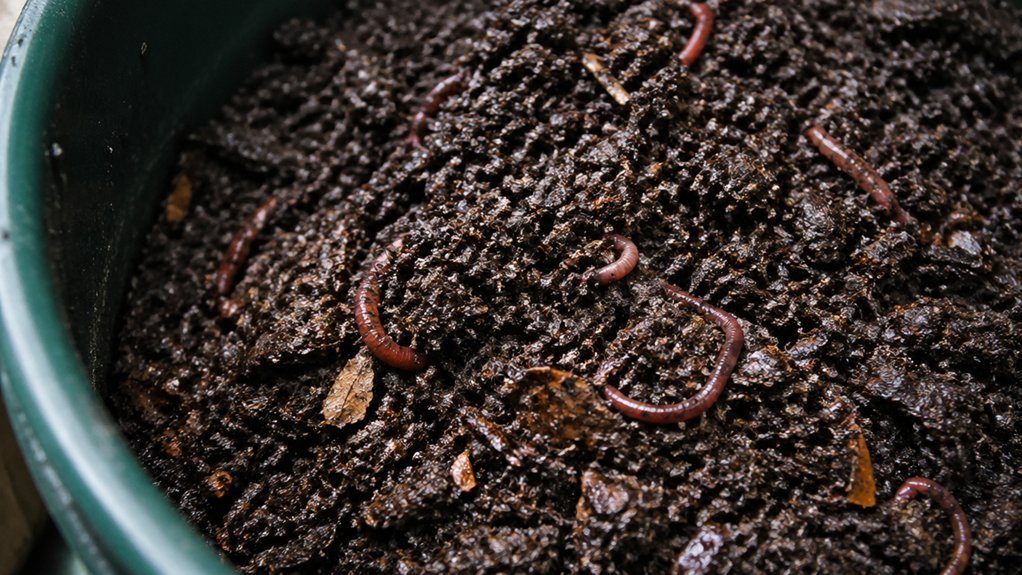
How can you tell if your worm bin’s bedding is just right? You’ll feel a wrung-out sponge texture—damp but not dripping—when you press a handful. That level of bedding moisture, roughly 75–85% moisture, keeps aeration strong and prevents anaerobic pockets that trigger odor. Regularly monitor the interior for consistent moisture levels and consider adding vented drainage to maintain airflow as described in minimal-bin setups airflow balance. If it feels soggy, sprinkle bulky dry bedding like shredded cardboard or newsprint; it soaks excess water and restores airflow. Regularly turn the bedding, at least weekly, to mix moist spots and keep composting worms happy. A drainage‑aware setup with vented outlets avoids sealing the bin too tightly, preserving the sponge‑like balance.
Maintaining this moisture range delivers solid odor control while supporting healthy worm activity.
Add Carbon‑Rich Bedding to Reduce Bin Odor
Can you cut the smell at its source? Add carbon‑rich bedding to your worm bin and watch odors fade. Shredded cardboard, paper, coco coir, or leaves act as bulky carbon that absorb moisture and boost aeration. Mix a higher proportion of browns with your greens to keep vermicomposting thriving while slowing rapid microbial activity that creates sour smells. Layer wet scraps between dry bedding, then fluff the pile weekly to maintain airflow and moisture control. When a whiff rises, sprinkle more carbon‑rich material; it dilutes odors, improves drainage, and restores worm bin balance without harming the worms. This simple step keeps the bin fresh, promotes healthy decomposition, and eliminates unpleasant odors. Regular rotation and a proper dual‑compartment setup can further support airflow and faster cycling, helping you maintain odorless bins even during peak kitchen waste periods continuous throughput.
Aerate Your Bin Regularly to Eliminate Odor

Aeration also benefits the loading process by enabling easier drainage and reducing the risk of soggy zones that harbor odor-causing bacteria airflow optimization.
Refresh the Bin When Worm Bin Odor Pops
When you notice an odor, pull out the soggy, partially broken down material and replace it with fresh, dry bedding. Toss a handful of dry shreds on top and fluff the mix to restore aeration and soak up excess moisture. Regularly monitor moisture and airflow to maintain a balanced environment and prevent odor buildup, especially in compact indoor systems. Spigot maintenance helps ensure proper liquid drainage and reduces damp spots that can amplify smells. Then keep an eye on the scent and adjust feeding or ventilation as needed.
Bin With Fresh Bedding
Ever notice a sour whiff drifting from your worm bin? Fresh bedding is your quickest odor control fix. When the smell pops, dump a handful of bulky dry bedding—shredded cardboard or newsprint—into the bin. Fluff it into the existing material, then spread a thick, sponge‑like layer of new bedding on top. This bedding refresh improves aeration, restores moisture balance, and gives vermicomposting worms a comfortable habitat. Keep turning the mix every few days to prevent anaerobic pockets, and watch the odor vanish. Air ventilation helps maintain a healthy environment as you refresh the bedding.
Add Dry Bedding Quickly
If the smell spikes, grab some dry bedding and toss it in right away. You’ll want shredded cardboard, newspaper, or coconut coir to soak up excess liquid and dilute the odor.
First, check that the worm bin’s moisture balance feels like a wrung‑out sponge; then spread a thick layer of dry bedding on top. Fluff it evenly to improve aeration and let microbes work on the kitchen scraps without choking. The added bulk boosts absorption, keeping the vermicomposting process smooth and the odor control effective.
If the scent lingers, give the bin a gentle turn and verify drainage is clear. Regularly replenishing dry bedding maintains a protective top layer that prevents moisture pockets and keeps composting odor‑free.
Monitor Worm Activity and Adjust Before Odor
You’ll notice a worm’s movement slow or cluster when the bin’s getting crowded or low on air, which often precedes a sour smell. Keep an eye on moisture and any faint vinegar‑like odor as early warnings, then quickly add dry bedding or fluff the material to boost aeration.
Adjust feeding rates or pause inputs as soon as uneaten food lingers, preventing the buildup that triggers unpleasant odors.
Worm Activity Levels
Monitor your worms daily and adjust conditions before odor takes hold. You’ll spot healthy worm activity when they move steadily, burrow consistently, and produce fresh casts. A sudden slowdown or pale, stagnant crowd signals poor aeration, excess moisture, or overcrowding—each can tip the bin toward anaerobic conditions and foul odors. Keep an eye on moisture balance and ensure airflow; if the bin feels soggy, add dry bedding, and if it feels dry, mist lightly. Regular monitoring lets you fine‑tune feeding and ventilation, preserving an odorless environment and thriving composting worms.
| Indicator | Action |
|---|---|
| Low activity | Increase aeration, reduce moisture |
| Pale worms | Check crowding, add space |
| Stagnant casts | Adjust feeding frequency |
| Strong earthy scent | Maintain current regime |
Early Odor Indicators
Where do you notice the first signs of trouble? You’ll spot early indicators when worm activity slows, feeding pace drops, or worms turn pale. A sudden sour or sewage‑like odor, even faint, signals excess moisture and anaerobic pockets forming in the worm bin. Look for mold on the surface—its presence often accompanies the same shift. Monitoring these cues daily lets you intervene before the smell intensifies. Keep the bin’s moisture balanced, avoid over‑watering, and stir gently to re‑oxygenate pockets. By watching worm activity, feeding pace, and color, plus any mold growth, you catch problems early and maintain an odor‑free environment.
Prompt Bin Adjustments
When the early signs—slowed worm movement, pale bodies, or a faint sour smell—appear, act fast by tweaking the bin before odors take hold. You’ll keep worm activity high by turning the bedding, improving bin aeration, drainage, and ventilation. Add dry bedding to boost bedding depth, balance moisture, and maintain aerobic conditions. Rotate food scraps to spread nutrients and avoid localized hotspots. If the mix feels soggy, sprinkle more shredded cardboard; if it’s too dry, mist lightly. These quick adjustments preserve odor prevention and keep the ecosystem thriving.
| Action | Effect |
|---|---|
| Turn bedding & improve ventilation | Increases bin aeration, prevents anaerobic pockets |
| Add dry bedding, adjust moisture | Achieves moisture balance, enhances odor prevention |
| Rotate food scraps | Stimulates worm activity, spreads decomposition evenly |
Frequently Asked Questions
How to Stop Worm Farm From Smelling?
You stop the smell by keeping the bin airy, adding dry bedding, avoiding excess food, burying scraps, and turning the mix regularly so it stays moist but not soggy.
How Can I Stop My Bin From Smelling?
You stop the smell by cutting feeding, burying scraps under dry bedding, adding shredded newspaper, and keeping the bin moist but not wet; turn it regularly and vent the lid for airflow.
What Are the 5 Mistakes That People Commonly Make When Composting With Worms?
You overfeed, add meat or dairy, neglect aeration, ignore carbon‑to‑nitrogen balance, and fail to bury or chop scraps. These mistakes overload worms, create anaerobic pockets, and spark foul odors.
How to Get Rid of Worm Smell?
You eliminate worm smell by aerating the bin, keeping bedding damp‑but‑not‑wet, burying food under dry material, feeding small frequent portions, and promptly removing any soggy or spoiled scraps.
In Summary
By feeding your worms small, frequent meals and sticking to worm‑friendly scraps, you’ll keep smells at bay. Keep the bedding just damp enough—like a wrung‑out sponge—and add carbon‑rich material to soak up excess moisture. Aerate regularly, and when odor does appear, refresh the bin promptly. Keep an eye on worm activity and tweak feeding or bedding as needed, and your worm bin will stay virtually odorless.