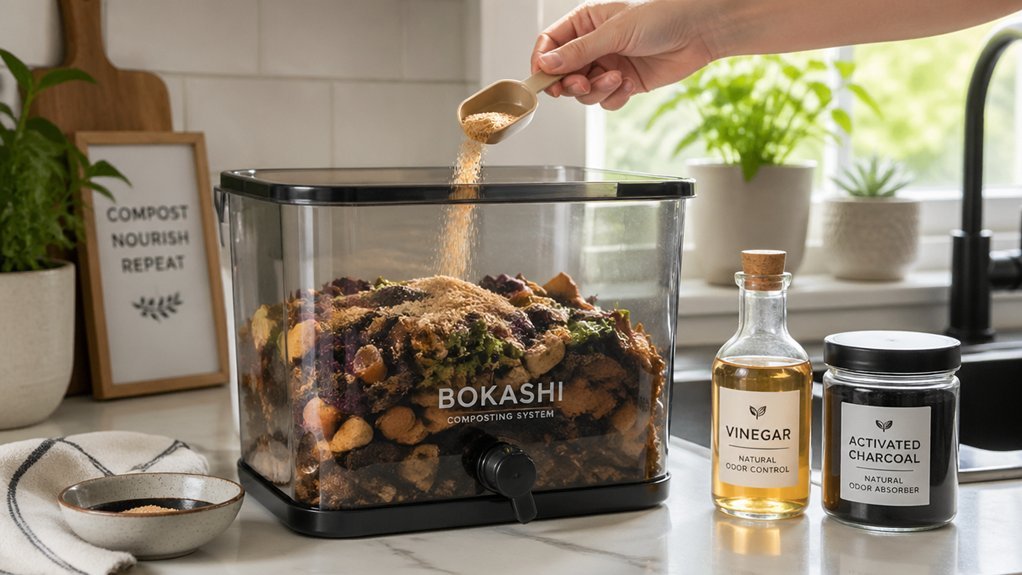
Seal your bokashi bin tightly to block any air leaks and keep the environment anaerobic, then make sure each load is covered with a generous layer of bokashi bran and pressed down to squeeze out excess air. Keep the bin dry by drying wet scraps beforehand and using cardboard or stale bread as moisture buffers. Finally, drain the bokashi tea daily or every couple of days, collecting it promptly for garden use, and you’ll maintain that pleasant pickle‑like scent while preventing foul odors. Keep going and you’ll discover even more tricks.
Eliminate Bokashi Odor: Keep the Smell Pickle‑Like

Ever wondered why a healthy bokashi bin smells like tangy pickles instead of rot? You get that sour pickle‑like bokashi smell when you keep the environment anaerobic and dry. Start each load with a generous sprinkle of bokashi bran, then add compost scraps and cover them with paper absorbents. Press down with regular compression to squeeze out excess air, then seal the lid tight for airtight sealing. Keep moisture control tight by drying wet scraps and using cardboard or stale bread as buffers. Drain the bokashi tea daily or every 1–2 days; collect it promptly to stop stagnation. By maintaining drainage, moisture control, and a solid layer of bran, you preserve the pleasant sour pickle‑like aroma and banish foul odors. Draining bokashi tea and maintaining a steady, anaerobic environment are essential to sustained odor control.
Seal the Bin: Block Air Leaks for Airtight Fermentation
Seal the bin tightly to keep air out and maintain the anaerobic environment bokashi needs. A proper bokashi bin seal prevents air leaks that spark spoilage and foul smells. Check the spigot seal and lid tightness each week; any crack or misalignment defeats airtight fermentation. If the lid lacks a built‑in gasket, affix a rubber gasket or a self‑adhesive sealant barrier around the edge. After every addition, practice pressure compacting by pressing the top plate down, expelling trapped air. This routine reinforces the seal, boosts odor control, and sustains the anaerobic environment. Remember, even a small gap lets oxygen in, so prioritize a snug lid and a reliable seal to keep your bokashi batch fresh and odor‑free. airtight fermentation
Drain Bokashi Tea Regularly to Stop Putrid Odors

Why let a stagnant pool of bokashi tea turn your compost into a stinky mess? You should drain the bokashi tea every day or two to keep moisture levels in check and prevent putrid odors. A tight spigot seal after each bin drainage maintains anaerobic conditions, which are essential for odor prevention. Collect the liquid promptly and use fertilizer dilution for your garden, avoiding nutrient buildup that attracts pathogens. If you notice a sour‑pickle scent turning foul, inspect the bin for air leaks around the lid or drilled holes and seal them to restore effective odors control. Consistent moisture management and proper bin drainage keep your compost healthy, fragrant, and ready to enrich soil beyond just a kitchen waste.
Frequently Asked Questions
Why Does My Bokashi Smell?
You smell it because air entered the bin, excess moisture or insufficient bokashi bran caused anaerobic fermentation to fail, producing putrid, rotten‑egg odors instead of sweet, pickle‑like aromas.
How to Neutralize Compost Odor?
You neutralize compost odor by adding fresh bokashi bran, sprinkling dry newspaper or sawdust, draining excess liquid daily, sealing the bin tightly, and occasionally mixing in a pinch of baking soda to absorb smells.
What Is the Main Problem With Bokashi Composting?
You’re dealing with excess moisture and air infiltration; they break anaerobic conditions, causing foul smells, mold, and stalled fermentation. Proper sealing, moisture control, and regular draining prevent those issues.
Can Coffee Grounds Go in Bokashi?
Yes, you can add coffee grounds to your Bokashi, but use dry grounds sparingly, layer them after draining the tea, and balance with other dry scraps to keep moisture and smells under control.
In Summary
By sealing the bin, draining the tea, and keeping the mix moist, you’ll keep bokashi’s scent pickle‑like instead of sour. Those simple steps block airflow, prevent putrid odors, and let the microbes do their work efficiently. Stick to this routine, and your kitchen’ll stay fresh while your compost ferments perfectly.