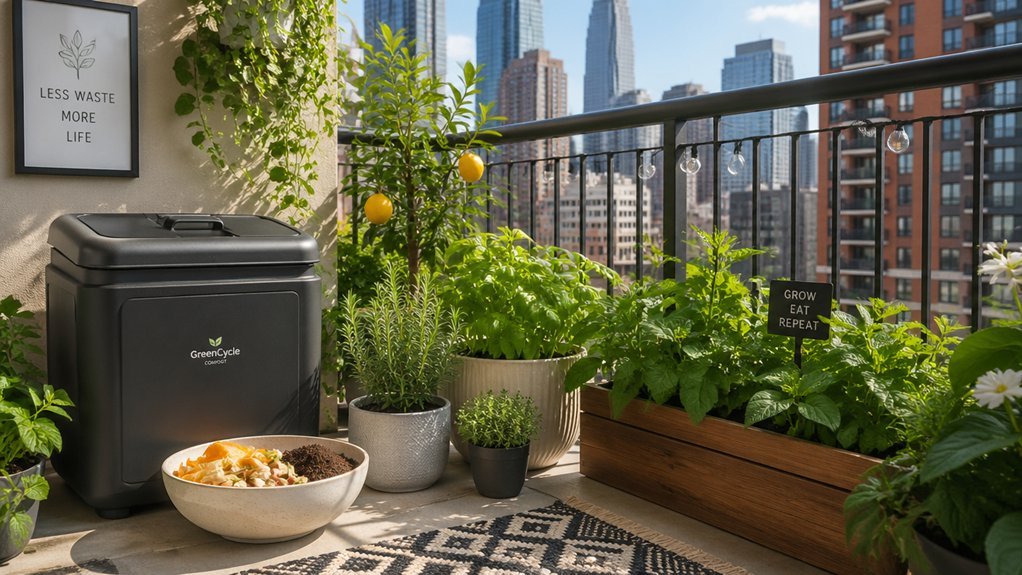
Keep your balcony compost smelling earthy and neutral by balancing greens and browns in a 2:1 ratio, turning the pile regularly to inject air, and using dry materials like shredded cardboard to soak up excess moisture. Exclude meat, dairy, and oily foods, freeze strong‑odor scraps before adding them, and cover the bin with a breathable tarp for ventilation. Add a compost starter or red wiggler worms to boost aerobic microbes. Follow these steps, and you’ll discover even more tricks for a fresh‑smelling compost.
What Should a Healthy Balcony Compost Smell Like?

Usually, a healthy balcony compost smells earthy and neutral—just like fresh soil after a rainstorm. You’ll notice a mild, pleasant earthy smell that tells you the microbes are doing their job. When you stir the pile, proper aeration keeps the scent from turning sour. Using an odor-controlled bin with an airtight lid or charcoal filters helps maintain that fresh aroma even in warmer months dual-filter technology.
Balance Greens and Browns (2‑to‑1 Ratio) to Prevent Odor
You’ll keep your balcony compost odor‑free by aiming for a 2‑to‑1 carbon‑to‑nitrogen balance, so add more browns whenever you pile in greens. When you dilute this balance with bokashi juice or similar amendments, you can further suppress odors and accelerate decomposition by ensuring the mix stays aerated and drains well. bottle design
Carbon for To 2 : 1 Ratio
Ever wondered why a compost bin smells like a trash can? The secret lies in the carbon ratio: two parts browns to one part greens. Browns such as shredded cardboard, dry leaves, or sawdust soak up excess moisture from nitrogen‑rich food scraps, creating airy pockets that let oxygen flow. When you keep that 2:1 balance, the pile stays dry enough to avoid anaerobic fermentation, the main source of foul smells. If the mixture gets soggy, add more browns and stir to improve aeration. This simple moisture control trick restores a fresh, earthy scent and speeds up decomposition. Stick to the 2:1 carbon ratio, and your balcony compost will stay odor‑free. BPI certification
Add Browns, Reduce Greens
Keeping the 2:1 carbon‑to‑nitrogen balance means you’ll add more browns whenever the pile feels soggy or smells sour. Use dry leaves, shredded paper, cardboard, or wood chips as brown materials and mix them in after each batch of greens. The extra browns soak up excess moisture, improve structure, and boost aeration, keeping the compost from turning slimy. When you notice a sour smell, sprinkle a handful of dry browns, stir, and feel the texture; it should be damp but crumbly, not dripping. Regularly adding browns as you layer fruit and vegetable scraps maintains moisture balance and prevents anaerobic pockets. This simple adjustment keeps odors at bay and speeds up decomposition on your balcony. air circulation tools can further enhance aeration in compact bins, especially when paired with proper turning and browning strategies.
Add Air by Turning and Loosening the Pile

Wondering why your balcony compost smells like rotten eggs? You can fix it by turning the pile regularly. Each turn injects oxygen, shifting the process from anaerobic to aerobic, so the sour scent fades into an earthy aroma. Regular turning also helps distribute moisture more evenly across the pile for better decomposition aerobic benefits.
Control Moisture With Dry Materials and Proper Drainage
A balanced moisture level is key to odor‑free balcony compost, and you can achieve it by adding dry brown materials and ensuring proper drainage. Sprinkle shredded newspaper, cardboard, or dry leaves into the pile to soak up excess moisture and keep the texture sponge‑like, not dripping. If the bin becomes soggy, spread the contents on a tarp to dry before mixing them back in. In wet climates, place your compost on wood pallets or cover it with a breathable fabric to boost drainage and airflow. Regularly turn the heap to improve aeration and prevent water from pooling. By maintaining this damp, wrung‑out sponge consistency, you’ll curb foul smells and keep your balcony compost thriving odor control.
Remove Meat, Dairy, and Oily Foods From the Compost

Even with perfect moisture control, the next biggest odor source is animal‑based waste. Meat, dairy, and oily foods feed pests and dump sulfurous odors into your compost bin. They also dump moisture, creating anaerobic pockets that smell sour. Stick to plant scraps, coffee grounds, and yard waste to keep a healthy greens‑to‑browns balance. Rinse the bin regularly and discard any greasy residues; this stops stubborn odors from taking hold. For best results, aerating every one to two weeks helps maintain airflow and keep odors at bay airflow balance.
| What to Skip | Why It Hurts |
|---|---|
| Meat | Attracts pests, adds moisture |
| Dairy | Slows decomposition, fuels sour smells |
| Oily foods | Disrupts microbes, creates persistent odor |
| Greasy sauces | Leaves residue, blocks airflow |
| Animal bones | Takes forever to break down, smells bad |
Quick‑Fix Checklist for Sudden Balcony Compost Odor
You can spot the culprit in seconds by checking for excess greens or wet spots, then rebalance the mix with a handful of dry browns right away.
Give the pile a quick turn or shake to inject air and break up compacted bits, and make sure the lid is slightly ajar for steady airflow.
Finally, pull out any meat, dairy, or oily scraps and cover fresh additions with more browns to keep the odor at bay.
Identify Source Quickly
Why does your balcony compost suddenly smell? You can pinpoint the odor source by checking moisture, aeration, and material balance. First, feel the pile: it should be damp, not soggy. Excess moisture invites anaerobic microbes that produce foul smells. Second, assess aeration; a compacted heap blocks airflow, so turn it to loosen the mass. Third, examine the mix: too many greens without enough brown materials (shredded newspaper, cardboard) creates excess liquid and acidity. Fourth, spot any prohibited inputs—meat, dairy, oils, heavily seasoned leftovers—because they decay quickly and generate strong odors.
Quick‑Fix Checklist
- Test moisture level and add dry browns if needed.
- Turn the pile to improve aeration.
- Balance greens with brown materials.
- Remove offending food scraps.
Adjust Balance Immediately
Now that you’ve located the odor source, act fast to rebalance the mix. First, check the greens‑to‑browns ratio; aim for roughly 2 : 1 or 3 : 1 browns to greens. Toss in leaf litter, shredded paper, or cardboard to bulk up the browns and soak up excess nitrogen. If the pile feels soggy, sprinkle dry newspaper or cardboard and mix thoroughly—this restores proper moisture and texture. Remove any meat, dairy, or oily scraps that could be feeding foul microbes, then replace them with additional browns. After each adjustment, loosen the heap with a garden fork to improve airflow. Keep turning and monitoring; you should notice a noticeable odor drop within 24‑48 hours.
Boost Aeration Efficiently
Ever notice a sudden whiff of sourness wafting from your balcony bin? You can curb it fast by boosting aeration efficiently. First, loosen compacted spots with a garden fork or sturdy stick, breaking up the mass to let oxygen flow. Then, add dry browns—shredded cardboard, newspaper, or straw—to soak up excess moisture and balance the greens. Keep the lid slightly ajar for extra ventilation, and repeat the process every 24–48 hours. Within a day you’ll smell the change.
- Turn the pile gently but thoroughly.
- Add a handful of dry browns.
- Check moisture; if soggy, sprinkle more browns.
- Vent by opening the lid a crack.
Follow this checklist and the sour odor fades quickly.
Line Your Compost Bin With Browns for Immediate Odor Capture
Ever notice how a compost bin can turn your balcony into a stinky mess? Line the bottom with brown materials—shredded newspaper, cardboard, or dry leaves—to boost odor capture and moisture absorption. The dry layer creates a barrier that soaks up excess liquid, keeping the compost bin from becoming soggy and smelly. After each handful of greens, add another brown layer; this maintains a 2:1 to 3:1 browns‑to‑greens ratio and improves aeration, preventing anaerobic conditions that generate sour smells. The structure of the browns also lets air flow, slowing bacterial activity that releases odor. By regularly topping greens with browns, you build a dry shield that traps smells before they escape, keeping your balcony fresh.
Freeze Smelly Scraps Before Adding Them to the Bin
How can you keep balcony compost from turning into a stinky mess? Freezing scraps before you toss them in the bin is a quick, low‑effort trick for odor control. The cold kills bacteria and slows decay, especially for high‑odor foods like onions, garlic, and citrus peels. After you freeze, move the pieces straight to the compost pouch so moisture doesn’t build up. Pair the frozen bits with a layer of brown material for extra moisture absorption and a cleaner smell.
- Sort high‑odor foods and place them in a zip‑top bag.
- Freeze the bag for at least a few hours.
- Transfer frozen scraps promptly to the bin.
- Add a thin layer of brown material to absorb excess moisture.
Cover the Bin With a Breathable Tarp
Wondering how to keep your balcony compost fresh without sealing it off? Grab a breathable tarp and drape it loosely over the bin. The fabric lets air flow, giving the pile the aeration it needs while keeping rain out. Because the tarp isn’t fully sealed, gaps stay open for moisture control, stopping the soggy, anaerobic conditions that cause sour smells. Lift the cover now and then to check the mix and stir in a handful of dry leaves or shredded newspaper. This simple layer also blocks pests and splash, preserving temperature and odor management. Pair it with regular turning and a light brown material addition, and you’ll keep the compost lively, dry, and pleasantly scent‑free.
Add a Compost Starter or Worms to Boost Aerobic Activity
You can jump‑start aerobic microbes by sprinkling a compost starter into your balcony bin, and the added beneficial microbes will outcompete odor‑causing anaerobes within a day or two.
Adding red worms speeds up decomposition even more, turning kitchen scraps into rich castings that smell earthy rather than sour.
Just keep the pile moist but not soggy and avoid compacting it, so the microbes and worms stay active and the odor stays under control.
Boosts Aerobic Microbes
Ever notice how a balcony bin can turn sour overnight? Adding a compost starter or worms supercharges aerobic microbes, keeping your pile fresh and odor‑free. The starter floods the mix with active microbes, while worms churn the material, improving aeration and moisture balance. Watch the texture; too wet or too compact kills the benefit.
- Sprinkle compost starter evenly over the top layer.
- Add a handful of red wiggler worms for extra aeration.
- Mix green and brown scraps to maintain a 1:2 ratio.
- Check moisture daily—squeeze a handful; it should feel like a wrung‑out sponge.
Worms Accelerate Decomposition
Kickstart your balcony bin by adding a compost starter or a handful of red wiggler worms, which flood the mix with aerobic microbes and churn the material for faster, odor‑free breakdown. The worms turn your bin into a thriving worm bin, constantly aerating the pile as they move through it. Their gut microbes accelerate aerobic decomposition, breaking down greens and browns evenly while releasing fewer foul gases. Pair the worms with a high‑quality compost starter to seed the pile with beneficial bacteria and fungi; the starter jump‑starts colonization, so you see results in one to two weeks. Keep the temperature between 55‑77 °F, maintain moisture, and avoid meat, dairy, or oily scraps for reliable odor control and steady, efficient breakdown.
Starter Mix Improves Balance
Why not give your balcony bin a head start with a compost starter or a handful of red wiggler worms? Adding a compost starter or worms jump‑starts aerobic microbes, letting greens and browns break down faster while keeping odors at bay. A balanced initial mix—equal parts greens and browns—paired with a starter stabilizes moisture and prevents sour pockets. Here’s how to set it up:
- Sprinkle the compost starter evenly over the pile.
- Introduce a modest handful of red wiggler worms.
- Mix greens and browns in a 1:1 ratio for optimal balance.
- Monitor moisture; keep it damp, not soggy, and turn weekly.
Follow these steps, and your balcony compost will stay fresh, fast, and odor‑free.
Frequently Asked Questions
How to Neutralize Compost Odor?
You neutralize compost odor by balancing greens and browns, adding extra dry brown material, turning the pile regularly for aeration, and keeping it slightly uncovered to let moisture escape.
What to Put in a Compost Bin to Keep From Smelling and Prevent Meal Worms?
You should fill the bin with mostly plant‑based greens, then layer dry browns—shredded leaves, paper, cardboard—on top. Keep it moist, turn it often, and cover fresh scraps with brown material to block odors and mealworms.
How to Make Odorless Compost?
You’ll keep odorless compost by balancing greens and browns 2:1, turning the pile daily, keeping it damp‑but‑not‑wet, covering fresh scraps with dry material, and avoiding meat, dairy, and oily foods.
What Is the Best Deodorizer for Compost Bins?
You’ll find the best deodorizer isn’t a spray but balancing greens and browns, adding dry brown layers, turning the pile often, and keeping moisture low; this tackles odors at the source.
In Summary
By keeping the right green‑to‑brown balance, turning the pile, and controlling moisture, you’ll stop nasty smells before they start. Add a breathable tarp, line the bin with browns, and freeze or avoid smelly scraps. A compost starter or worms will keep the process aerobic and odor‑free. Follow these steps, and your balcony compost will stay fresh, clean, and ready for healthy soil.