
You’ll transform your studio or dorm into a functioning compost system without sacrificing precious square footage. Collapsible composters fold flat for storage in cabinets, closets, or under sinks, then position conveniently near prep areas during use. Enclosed designs prevent odors and pests while you manage kitchen scraps right in your kitchen—no heavy hauling required. Dual-chamber systems keep composting continuous without waiting between batches. But maximizing decomposition speed and navigating real-world limitations requires specific strategies.
Why Collapsible Composters Work in Tight Spaces
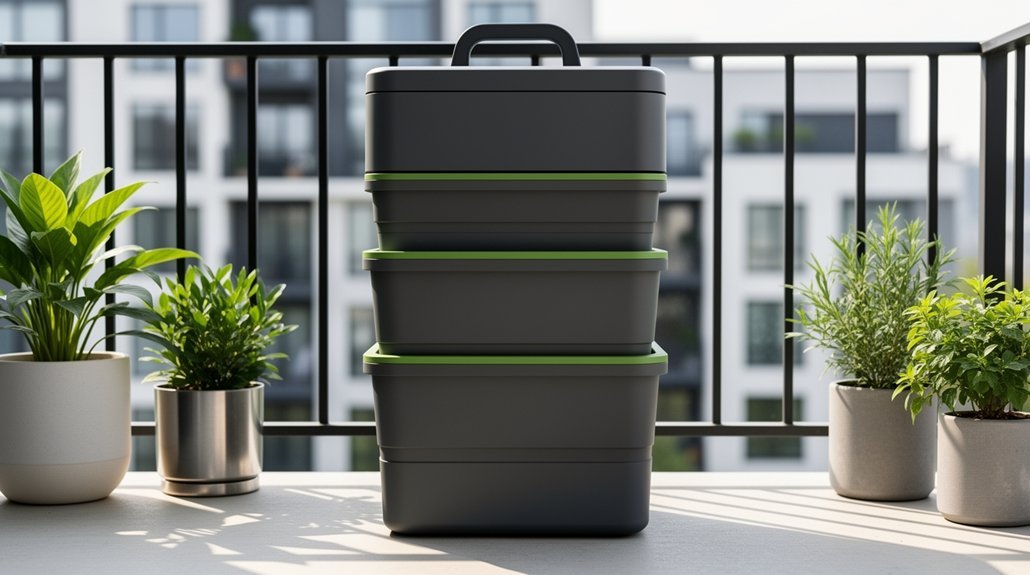
How do you compost in a studio apartment or small kitchen without sacrificing precious counter and floor space? Collapsible composters solve this challenge by folding flat for storage in cabinets, closets, or under sinks. Their compact design reduces the footprint compared to rigid bins, making them ideal for studios, dorms, and shared living areas where space is limited.
You can keep your composter on the counter during active use without blocking prep areas, then tuck it away when you’re done collecting scraps. This flexibility lets you maintain a composting routine without dedicating permanent floor or counter real estate. The collapsible form factor also supports seasonal composting, allowing you to store the bin away when your needs change, making it practical for any living situation where space is at a premium. For those who prefer alternative storage solutions, enzyme odor eliminators can help manage odors from food scraps during the collection phase. Wire bins are foldable options that offer similar storage advantages while providing heavy-gauge metal durability for long-term use.
Maximize Apartment Square Footage With Compact Design
When you’re managing a studio or micro-apartment, every square inch counts—and that’s where collapsible composters truly shine. You’ll reclaim valuable floor and counter space by folding your composter flat when it’s not in use. Unlike bulky outdoor bins, collapsible models slip under sinks, into cabinets, or narrow pantry gaps without demanding permanent real estate. This design lets you position your composter near prep areas during cooking, then stow it away immediately after, maintaining the open kitchen environment you need. You’re not sacrificing functionality for space—you’re gaining flexibility.
Whether you’re in a galley kitchen or a multi-use room where every surface serves double duty, a compact, foldable composter adapts to your layout and lifestyle without consuming precious square footage. These collapsible options work alongside other small-space solutions like countertop bins with odor control to help you manage food waste without overwhelming your living area. For additional organization, consider pairing your composter with adjustable spray bottles to create a multipurpose cleaning and composting station that maximizes your limited storage capacity.
Control Odors and Pests With Enclosed Composters
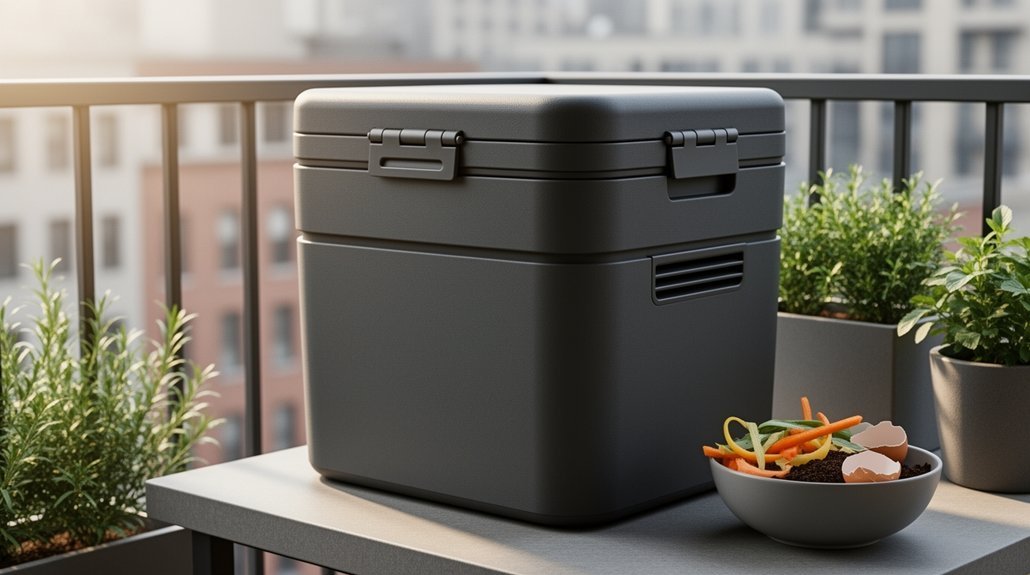
Why worry about kitchen odors or uninvited pests when you’re composting in tight quarters? Enclosed composters solve both problems simultaneously. Their fully sealed lids prevent smells from escaping into your apartment, hallways, or shared spaces. This design also denies rats, flies, and other critters access to your food scraps.
To maximize odor control, add brown materials like shredded paper or dry leaves on top of your scraps—they absorb moisture and block odors while discouraging flies. You can also freeze scraps before composting; chilling suppresses bacterial activity and slows decomposition, keeping odors minimal until pickup day. Activated charcoal filters provide additional odor neutralization for bins with built-in filtration systems. For rental properties specifically, choosing bins with rodent guards provides an additional layer of protection against unwanted entry.
Maintain proper moisture levels and airflow within your composter to support aerobic decomposition. These combined strategies ensure your apartment stays fresh while pests stay out.
Process Kitchen Scraps With Compact Composters: No Heavy Lifting
Where does your composting work best? Right where you’re cooking. Compact kitchen composters eliminate the strain of hauling heavy bins across your home to outdoor disposal points. You’ll manage smaller loads more frequently, keeping the container lightweight and easy to handle.
This approach transforms your daily routine:
- Reduced physical burden – No awkward carrying through stairwells or narrow hallways that strain your back and joints
- Nearby collection – Position your composter near your prep area, cutting repeated trips with scraps throughout the day
- Manageable portions – Frequent emptying prevents oversized, unwieldy containers from becoming obstacles in cramped spaces
Lightweight construction keeps composting practical for households with limited mobility or tight living quarters. You’ll separate compostable material from trash at the source without wrestling with bulky equipment. With a 2.25 gallon capacity, these compact units fit seamlessly into your kitchen without consuming valuable counter or storage space. The airtight construction prevents odors, enabling you to keep your composter indoors near your prep area for maximum convenience. Your kitchen workflow becomes simpler, more sustainable, and genuinely achievable.
Manage Moisture on Balconies With Collapsible Systems
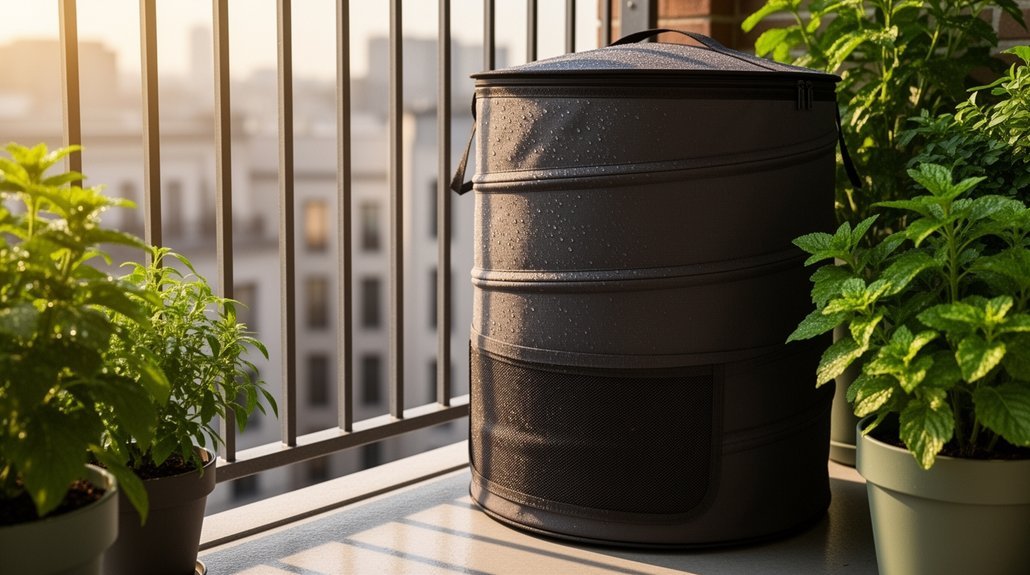
How you’ll know your balcony compost is thriving comes down to one critical factor: moisture control. You need your compost to feel like a wrung-out sponge—damp but not dripping. Too much water creates slimy, anaerobic conditions that smell like rotten eggs.
Collapsible bins help you manage this balance by letting you resize containers to match your waste volume, eliminating excess empty space that traps moisture. Drill drainage holes in the bottom and sides to release liquid buildup while improving airflow. Layer carbon-rich browns like shredded paper and cardboard with your kitchen scraps to absorb excess water. Systems like the Modbed Grow can process approximately 17 pounds of household scraps weekly, helping you gauge how much waste volume you’re managing and adjust your moisture strategy accordingly. Consider adding activated carbon filters above your drainage holes to further control odors while moisture passes through.
Add a drip tray underneath to protect your balcony surfaces. When you notice clumping without dripping, you’ve found your ideal moisture sweet spot.
How Collapsible Dual-Chamber Systems Let You Compost Nonstop
Ever wish you could keep composting without interruption? Dual-chamber systems make nonstop composting possible. While one side actively cures, you’re filling the other with fresh kitchen scraps. This “fill one side, cook the other” cycle eliminates downtime.
Here’s what makes this approach transformative:
- Finished compost in 8 weeks—mature material ready while new batches process
- Uninterrupted feeding—add scraps anytime without disturbing nearly-finished compost
- Continuous output—empty one chamber while the second keeps working
You’ll rotate chambers every few days, keeping the process active. Fresh materials stay isolated from aging compost, preventing overmixing. Once one side fills, you empty it and immediately switch roles. This rotating design means you’re never waiting between batches. The tumbling action mixes ingredients and adds air contact to speed organic material breakdown. Proper aeration and feeding protocols ensure optimal decomposition rates in each chamber throughout the cycling process.
Make Collapsible Composters Decompose Faster
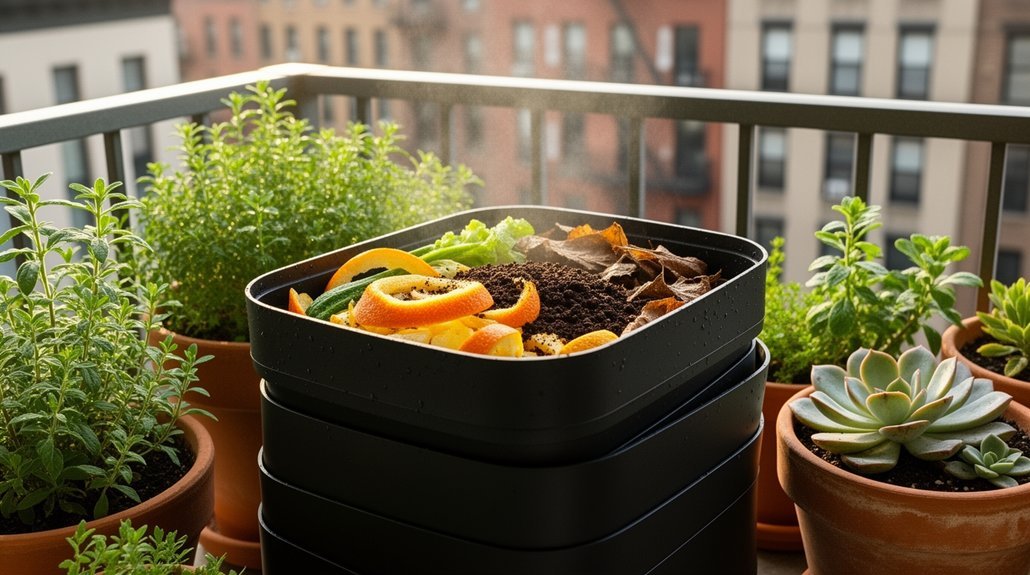
While dual-chamber systems keep your composting workflow continuous, you’ll want to accelerate what’s happening inside each chamber. You’ll boost decomposition speed by optimizing four critical factors:
| Factor | Action |
|---|---|
| Oxygen | Turn contents frequently to increase airflow and prevent anaerobic conditions |
| Particle Size | Chop scraps and woody materials into smaller pieces for greater surface area |
| Moisture | Maintain a damp, wrung-out-sponge consistency with regular checks |
| Carbon-Nitrogen Ratio | Balance greens and browns near 30:1, emphasizing nitrogen-rich materials |
You’ll notice faster microbial activity when you pre-cut inputs before adding them to your collapsible composter. Smaller particles combined with consistent turning and proper moisture create ideal conditions for heat generation. This accelerated warmth drives decomposition significantly faster than neglected piles. Your dual-chamber system’s accessible design makes these adjustments manageable in compact spaces, similar to how wall-mounted mounting options in small apartments maximize usable area. Adding a small amount of finished compost to your new pile introduces beneficial microorganisms that jumpstart microbial activity and accelerate the entire decomposition process.
When Collapsible Composters Hit Their Limits
Despite their space-saving appeal, collapsible composters aren’t a universal solution. You’ll quickly discover real constraints when you commit to regular composting.
Your compact unit produces surprisingly little finished compost—a 37-gallon tumbler might yield just 12 gallons after decomposition. You’ll need precise carbon-nitrogen balance to avoid creating a smelly, soggy mess or a compacted lump that resists turning. Cold weather essentially halts decomposition in uninsulated models, leaving you stuck during winter months. Soldier fly infestations can introduce putrid odors that make the entire system unusable during warm months. Electric wood chippers demonstrate how motor power and capacity significantly impact processing efficiency, similar to how collapsible composters struggle with motor power and performance limitations in breaking down organic matter.
Consider these frustrations:
- Small hatches make loading bulky yard waste nearly impossible
- Clumped contents become difficult or impossible to rotate and empty
- Steady scrap generation forces you to find overflow locations
You’re trading space constraints for capacity and performance limitations. For households with significant organic waste, a single collapsible composter simply can’t keep pace with your needs.
Frequently Asked Questions
How Long Does It Typically Take for Collapsible Composters to Produce Finished Compost?
You’ll typically need 4 to 6 months for actively managed hot composting, or 6 to 12 months for passive composting. Your results depend more on management and materials than the collapsible design itself.
What’s the Best Browns-To-Greens Ratio for Small-Space Composting Success?
You’ll want to aim for a 3:1 or 4:1 browns-to-greens ratio by volume. This balance prevents your compact bin from becoming wet, smelly, and slimy while ensuring faster decomposition and better odor control in tight spaces.
Can Collapsible Composters Handle Pet Waste or Diseased Plant Material?
You shouldn’t use collapsible composters for pet waste or diseased plants. They lack the sustained heat and retention time needed to kill pathogens. You’re better off excluding these materials and using dedicated systems instead.
How Often Should I Empty or Harvest Compost From Compact Units?
You’ll typically empty your compact composter every 1–3 months, depending on usage volume and moisture levels. Countertop bins need emptying every 2–4 days, while you should harvest when you’ve reached the fill line or notice odors.
Are Collapsible Composters Suitable for Freeze-Thaw Cycles in Cold Climates?
You shouldn’t use collapsible composters for freeze-thaw cycles. They’re designed for temporary indoor collection, not cold-weather processing. You’ll need a protected system or indoor electric composter for reliable winter composting in cold climates.
In Summary
You’ll find that collapsible composters transform your tight living situation into an eco-friendly waste management system. They’re adapting to your space constraints while you’re reducing your environmental footprint. You’re getting odor control, pest prevention, and faster decomposition all in one compact package. When you’re ready to upgrade or move, you’ll simply collapse and store it. You’ve got everything you need for sustainable living in any apartment or small space.



Leave a Reply