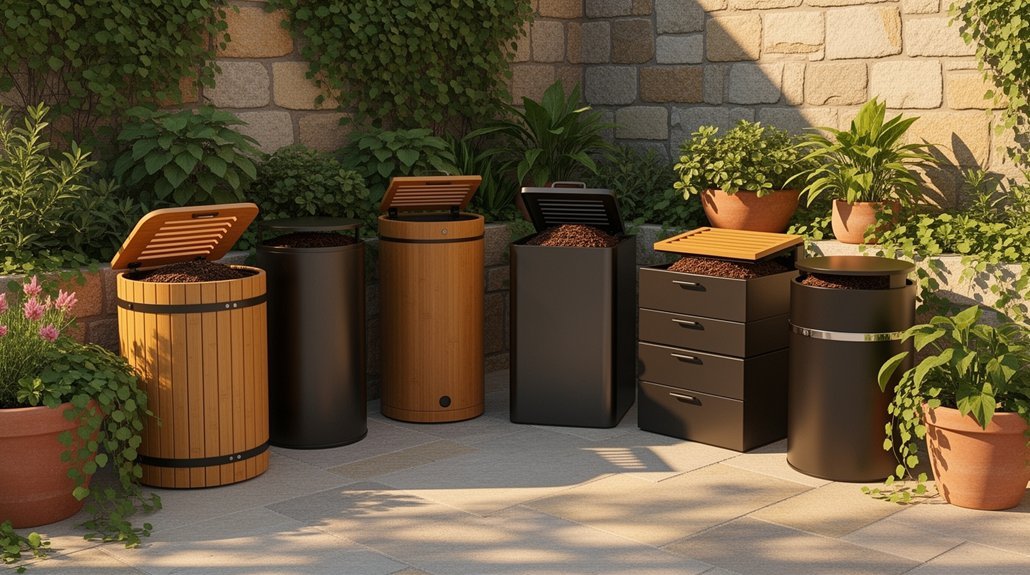
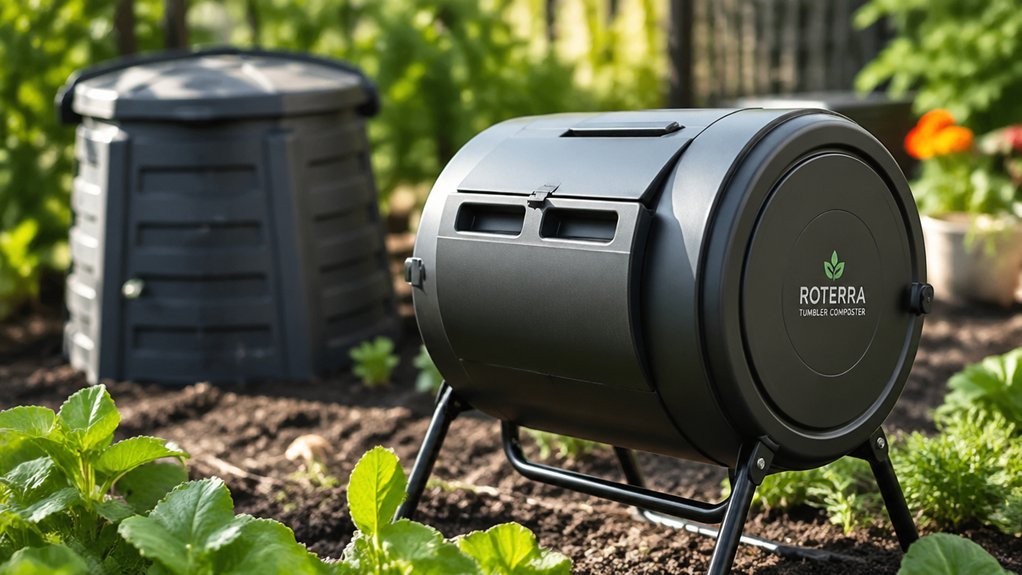
You’ll see compost break down in half the time because the tumblers spin, mixing material constantly and cutting labor. Their steel frame and sealed lid keep pests out and odors in, while the compact footprint fits patios or corners just like a bin. Even though a tumbler holds less raw volume, the faster turnover means you actually use more space per square foot. Want deeper details on sizing, durability, and when a bin might still be better? Keep going.
Are Compact Tumblers the Right Choice for Your Garden?
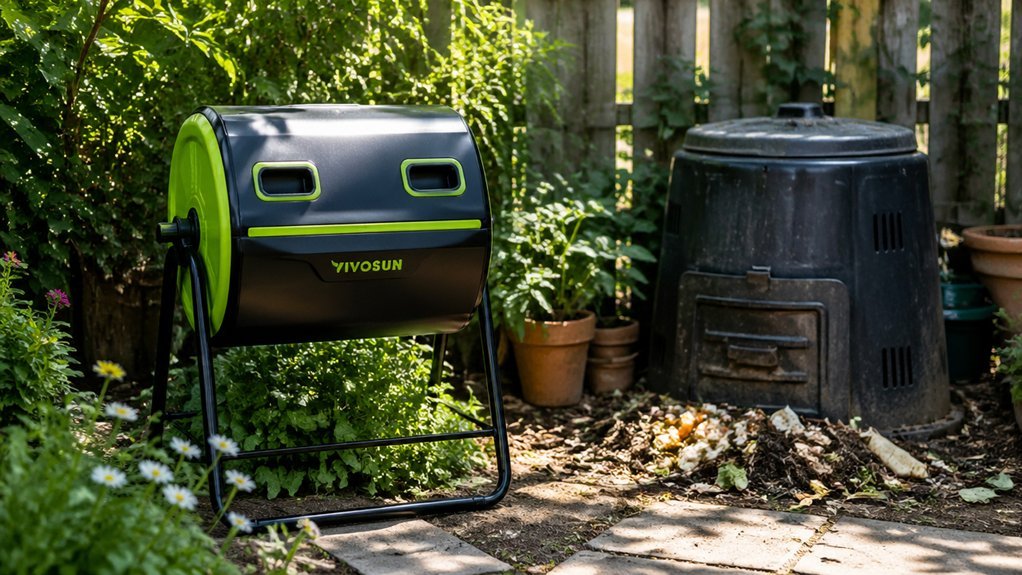
Wondering if a compact tumbler fits your garden? You’ll find it works when space is tight and you want quick, clean compost. Tumblers finish batches in about half the time of bins because the easy turning and regular mixing boost aeration. Their above‑ground design stays contained and pest‑resistant, keeping rodents and flies away from kitchen scraps. Though capacity is smaller, the faster turnover lets you process waste more often, so you never run out of space. The rotating mechanism reduces labor—no need to stir a massive bin manually. For durability and long‑term value, consider models with sturdy handles and easy filter maintenance as part of practical design considerations capacity and storage needs. If you value speed, cleanliness, and a tidy, pest‑free setup, a tumbler is a smart fit for your garden.
How Much Ground Space Do Compact Tumblers Need?
You’ll find that a compact tumbler typically needs only 4–6 sq ft of footprint, which is comparable to a standard bin but takes up less visual space. Because it sits on a raised platform, you can place it on a patio, deck, or even a concrete slab without worrying about soil contact. The raised setup can also help with odor control and accessibility, aligning with practical urban composting needs you’ll find discussed in compact gardening resources. raised platform
Footprint Comparison
A typical compact tumbler needs only about 4–6 sq ft of ground space, often less than a traditional open‑bottom bin because it sits elevated and rotates in place. Its footprint stays tight, letting you fit it into a corner, patio, or garden bed without sacrificing access. Because the tumbler’s body is off the ground, you don’t need extra clearance for a bottom opening, so the surrounding area can stay clear for stepping or tools. The modular designs cited in the worm bin stand overview also emphasize stability, ease of setup, and expandability, which align with the compact tumbler approach to maximize capacity without expanding ground footprint stable footprint.
Placement Flexibility Options
Compact tumblers usually sit on a modest 4–6 sq ft patch of ground, so you can tuck them into a corner, patio, or garden bed without sacrificing access. Their design lifts the unit on legs or a base, keeping the footprint small while reducing pest intrusion and keeping the surrounding area cleaner. Because the tumbler is self‑contained and sealed, you don’t need extra space for leachate or runoff, and you can place it near a shed or fence for easy loading. If you need to move finished compost, many models pair with a wheelbarrow, letting you unload without a dedicated storage zone. The vertical profile and integrated turning mechanism let a compact tumbler fit tight spaces that traditional,‑spread bins can’t accommodate. Expansion ratio can influence how much ground you need to dedicate for future batches, making compact tumblers an efficient choice for variable harvest schedules.
Capacity per Square Foot: Compact Tumblers vs. Bins
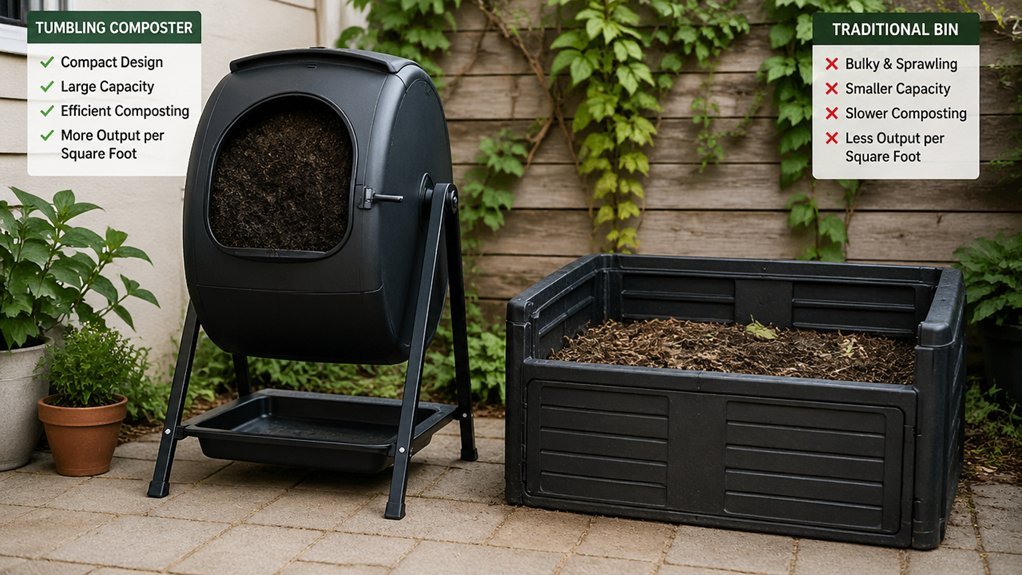
Ever wonder how much compost you can squeeze into a tight spot? You’ll find that compact tumblers use roughly 4–6 sq ft of ground, similar to traditional bins, but their horizontal‑axis design lets you spin a 4.5‑to‑14.2 cu ft drum while the bin stays stationary. In terms of capacity per footprint, large bins (7–20 cu ft) can hold more raw volume in the same area, yet tumblers process that volume faster. The faster turnover means you need fewer trips to turn or add material, effectively boosting usable capacity per foot. So even if a bin’s raw capacity per footprint looks higher, a tumbler’s rapid decomposition gives you more functional compost space when space is limited. peat-free compost systems in small spaces can further contribute to sustainable indoor soil development.
What Construction Features Make Compact Tumblers More Durable Outdoors?
You’ll notice the steel frame gives your tumbler a rigid backbone that resists warping under sun and rain. The reinforced axle joint locks the drum securely, so the central axis stays aligned even when you turn it aggressively. Together these features keep the unit sturdy while weeds, pests, and temperature swings. durability benefits
Steel Frame
Why does a steel frame matter for outdoor composting? You’ll notice a steel frame gives your tumbler a rigid skeleton that resists bending, wobble, and rust. The heavy‑duty construction keeps the drum sealed, the connections stiff, and the whole unit stable even when you load it to capacity. A galvanized or rust‑resistant coating further protects the frame from rain, snow, and UV‑driven corrosion, letting you compost year‑round without worrying about fatigue. The frame’s design also supports easier maintenance and drainage management to prevent moisture buildup during continuous fermentation. 1. Sturdy central axis – anchors the drum and prevents wobble. 2. Reinforced legs – bear the weight and keep the unit level. 3. Corrosion‑resistant coating – extends lifespan in damp climates. 4. Fewer moving parts – reduces wear from frequent turning. These steel frame features combine to make compact tumblers far more durable than flimsy plastic bins.
Reinforced Axle Joint
How does a reinforced axle joint keep your tumbler turning smoothly season after season? You’ll notice the heavy central axle paired with a sturdy axle joint that absorbs torque and prevents flex. When the drum fills with wet material, the joint stays aligned, so the drum rotates without wobble or binding. Galvanized, rust‑resistant steel protects the joint from damp weather, while welded frame connections and solid legs shield it from ground impact. Some models replace traditional handles with drum grips or indentations, spreading stress evenly across the axle joint and extending its life. This construction eliminates the wear points that plague thin‑plastic bins, ensuring your tumbler stays reliable and efficient outdoors for years.
How Does the Spinning Drum Simplify Turning?
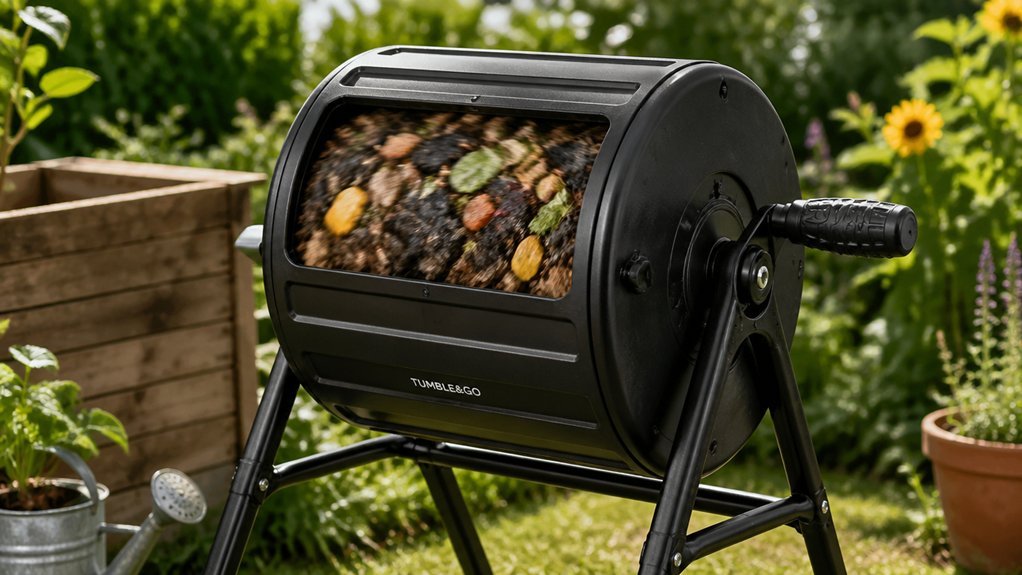
Ever wondered why a compost tumbler feels effortless compared to a static bin? The spinning drum does the heavy lifting for you. Each rotation automatically mixes greens and browns, so you never need a fork or shovel. Aeration and heat rise naturally, speeding decay while you watch the drum turn. Dual‑compartment designs let one side finish its cycle while you load the other, keeping compost flow constant. The gear‑or‑handle mechanism reduces physical strain to a simple push or turn.
- Auto‑mixes with each spin
- Boosts oxygen and temperature
- Enables continuous batch cycling
- Minimizes manual labor and clumping
What Are Typical Composting Times for Compact Tumblers vs. Bins?
Typically, a compact tumbler finishes a batch in roughly 4–6 weeks, while a traditional bin needs about 8–12 weeks under similar conditions. You’ll notice the speed boost in summer: tumblers decompose kitchen and yard waste a month faster because regular spinning injects oxygen and raises temperature. In cooler months, bins slow dramatically, yet an insulated tumbler can stay active unless frost is severe. Remember, balanced greens‑to‑browns and proper moisture keep the advantage alive—excess wetness or a poor mix can erase the time gain.
| Season | Compost Tumblers | Traditional Bins |
|---|---|---|
| Summer | 4 weeks | 8 weeks |
| Spring | 5 weeks | 9 weeks |
| Winter | 6 weeks (if insulated) | 12 weeks (often stalled) |
How Do Compact Tumblers Keep Raccoons and Rodents Out?
A compact tumbler stays 100 % pest‑proof because its sealed drum and elevated legs keep raccoons, dogs, and most rodents from reaching the compost. You’ll notice that the metal‑tough lid locks tight, so no curious paws can pry it open. The drum hovers several inches above the ground, denying burrowing critters a foothold, and the smooth legs leave no footholds for climbing. By keeping the surrounding soil clear, you also eliminate food‑scent trails that attract vermin. This design makes pest‑proofing effortless, letting you focus on turning the compost instead of chasing pests.
- Sealed drum eliminates entry points.
- Elevated legs prevent ground contact.
- Smooth metal surface deters climbing.
- Clean perimeter reduces attractants.
Odor Management and Cleaning Tips for Compact Tumblers
You’ll keep odors at bay by always sealing the lid tightly after each spin, which traps smells inside the drum.
Stick to a regular cleaning schedule—wipe down the interior and empty the drainage tray every few weeks to prevent buildup.
This simple routine lets the tumbler stay fresh and ready for the next batch.
Sealed Lid Techniques
Ever wondered how a sealed lid keeps your tumbler odor‑free? The sealed lid creates a pest‑proof barrier that traps smells and blocks rodents and flies. When you turn the drum, the closed environment still contains any rising gases, so the kitchen stays fresh. Keep the gasket clean, check the bottom joint for leaks, and you’ll enjoy a drier, mess‑free area around the composter.
- Inspect the gasket weekly for cracks or debris.
- Tighten the lid snugly after each turn to maintain pressure.
- Wipe the sealing rim with a mild vinegar solution to prevent buildup.
- Verify the bottom joint’s seal before adding new material.
These simple sealed lid techniques give you reliable odor control without extra effort.
Regular Cleaning Schedule
Wondering how a simple cleaning routine can keep your tumbler odor‑free? A regular cleaning schedule lets you stay ahead of smells, jammed rotations, and excess moisture. Schedule a quick wash every two‑to‑three weeks and rinse immediately after adding strong‑smelling scraps. Drain the holes, scrub the drum, and wipe seals to prevent buildup that fuels odor. Use the drained liquid as a nitrogen boost for your garden.
| When | What to Do | Why |
|---|---|---|
| Weekly | Spot‑clean lid & seals | Stops leaks |
| Every 2‑3 weeks | Full drum wash, drain holes | Removes residue, cuts moisture |
| After odorous scraps | Immediate rinse | Keeps odor profile fresh |
Stick to this routine, and your compact tumbler will stay fresh, efficient, and far less smelly than a traditional bin.
How Does Up‑Front Cost Compare to Long‑Term Value?
How much more will you spend upfront for a tumbler versus a traditional bin? You’ll face roughly a 30 % higher upfront cost, but that price tag reflects sturdier construction that lasts longer. The extra expense can pay off through faster decomposition, less labor, and fewer replacement parts. Still, a tumbler’s smaller footprint means you’ll store less waste, which can affect long‑term value if you generate a lot of scraps. Weigh the trade‑offs by considering both initial outlay and ongoing benefits.
- Higher upfront cost → durable, long‑lasting unit.
- Faster breakdown → saves time and effort.
- Smaller capacity → limits waste volume you can handle.
- Lower replacement frequency → improves total‑cost‑of‑ownership.
Which Compact Tumbler Size Fits Small Gardens and Patios?
After weighing upfront cost against long‑term value, the next step is to match a tumbler’s size to your garden or patio space. For a modest balcony or a 6‑by‑6‑foot garden, a Compact tumbler in the 4–5 cu ft range fits perfectly; it tucks into a corner, stays stable on concrete, and still spins quickly enough to break down kitchen scraps in weeks.
If you have a slightly larger patio—say 8 by 10 feet—you can step up to a 7–9 cu ft unit, which offers more batch capacity without crowding walkways. Horizontal‑axis models excel in tight spots because their turning motion stays smooth even when the drum fills.
Choose the size that balances your waste volume with the space you can spare, and you’ll enjoy fast, efficient compost without sacrificing outdoor room.
How Can You Extend Your Compact Tumbler’s Life?
When you keep the drum clean, balanced, and well‑aerated, it stays smooth and lasts longer. Pick a simple, robust tumbler with few moving parts and a sturdy central axis; that design boosts durability and reduces wear. Keep moisture at a wrung‑out sponge level and mix greens and browns evenly to avoid clumping that can strain the spin. Unload finished compost with a wheelbarrow or separate container so you don’t overload the drum or legs. Finally, place the tumbler on a solid, well‑drained surface and manage drainage to stop bottom‑joint leaks.
Keep the drum clean, balanced, and well‑aerated; choose a simple, sturdy tumbler and manage moisture for lasting, efficient composting.
- Choose a minimalist design
- Maintain proper moisture and balance
- Use a separate tool for unloading
- Ensure stable, drained placement
When a Traditional Bin Beats a Compact Tumbler (and Why)
Ever wondered why a traditional compost bin sometimes outshines a compact tumbler? You’ll find the bin’s larger capacity—often 7–20 cu ft—lets you stash bulkier loads without constantly emptying the drum, a clear advantage when you’re handling garden waste, kitchen scraps, or yard debris. The ground‑contact design also encourages natural aeration and microbial activity, which can outpace a tumbler’s rotating action in winter when the drum stays insulated and continues turning.
Furthermore, a compost bin’s open‑bottom or bottom‑port setup can be cheaper to build and easier to expand, so you can accommodate growing volumes without buying another tumbler. While you may need a pitchfork to stir, the extra storage and lower upfront cost often make the bin the smarter choice for large‑scale or seasonal composting.
Quick Decision Guide: Choose a Tumbler or a Bin in 5 Steps
If space is tight, a compact tumbler usually wins because its small, above‑ground footprint fits snugly into corners or patios. You can still enjoy fast composting without sacrificing yard real estate. Follow this five‑step guide to decide between a tumbler and traditional compost bins.
- Space – Choose a tumbler if you have limited outdoor area; bins need more floor space.
- Capacity – Pick a bin for large waste volumes; tumblers hold less but turn quicker.
- Pests – Opt for a tumbler when rodents or flies are a concern; sealed containers keep them out.
- Speed – Select a tumbler if you want rapid decomposition; bins require manual turning.
Weigh each factor against your needs, then pick the system that fits your garden, lifestyle, and composting goals.
Frequently Asked Questions
Are Compost Tumblers Better Than Bins?
Yes, you’ll find tumblers outperform bins: they speed up decomposition, stay pest‑proof, fit tight spaces, and keep working in cold weather—just spin them every few days for best results.
What Is the Disadvantage of a Compost Tumbler?
You’ll find that a compost tumbler’s main drawback is its limited capacity, forcing frequent emptying, plus it can jam when overfilled or wet, and winter freezing may halt its rotation entirely.
Is Tumbler Compost Bin Better Than Stationary?
You’ll find a tumbler compost bin outperforms a stationary one for most home gardens because it speeds decomposition, cuts labor, and limits pests, though large‑scale batches may still favor bulky bins.
Are Rotating Composters Any Good?
Yes, rotating composters work well for you if you want faster, odor‑controlled decomposition. Their tumbling action mixes material, boosts aeration and heat, and cuts manual turning time, though they cost more and hold less waste.
In Summary
You’ll find that compact tumblers give you faster, odor‑free compost in a smaller footprint, and their sturdy drums handle the elements better than static bins. If you’ve got limited space or want to speed up the process, a tumbler’s spinning action is a game‑changer. Yet, for huge volumes or ultra‑low budgets, a traditional bin can still win. We weighing space, speed, and durability, you’ll know which fits your garden best.