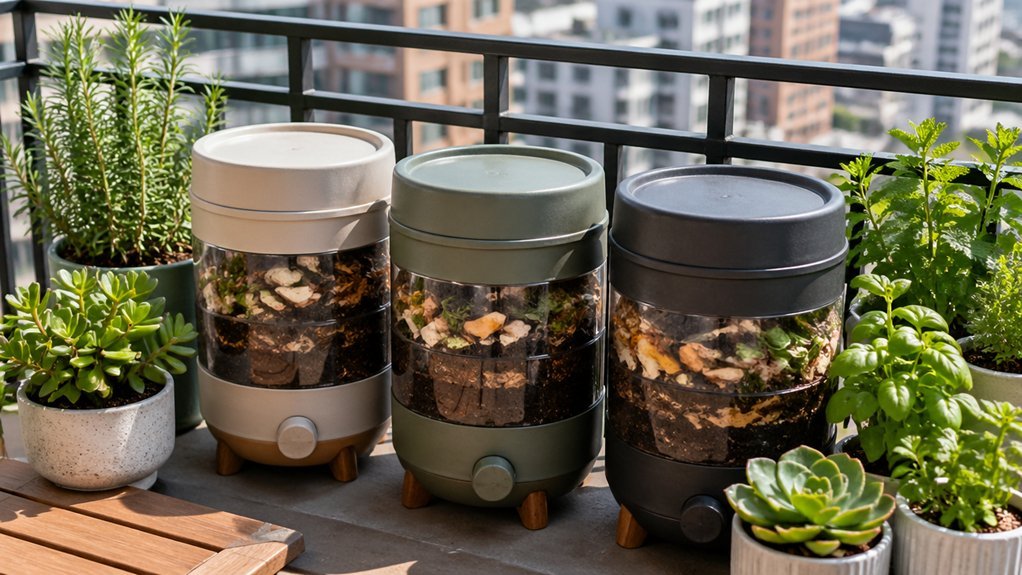
You’ll love the FCMP Yimby, a compact double‑chamber tumbler that fits snugly on a small balcony yet holds 37 gallons, letting you batch‑process waste while the other chamber rests. Its raised, rodent‑proof design keeps pests out and makes turning easy, and the insulated version stays active in winter. For a budget pick, try the Good Ideas Compost Wizard Jr, and for premium performance, the Joraform JK270 delivers hot composting up to 160 °F. Keep reading to discover how each option matches your space and needs.
Quick‑Pick: The Overall Best Double‑Chamber Compost Tumbler for Small Balconies
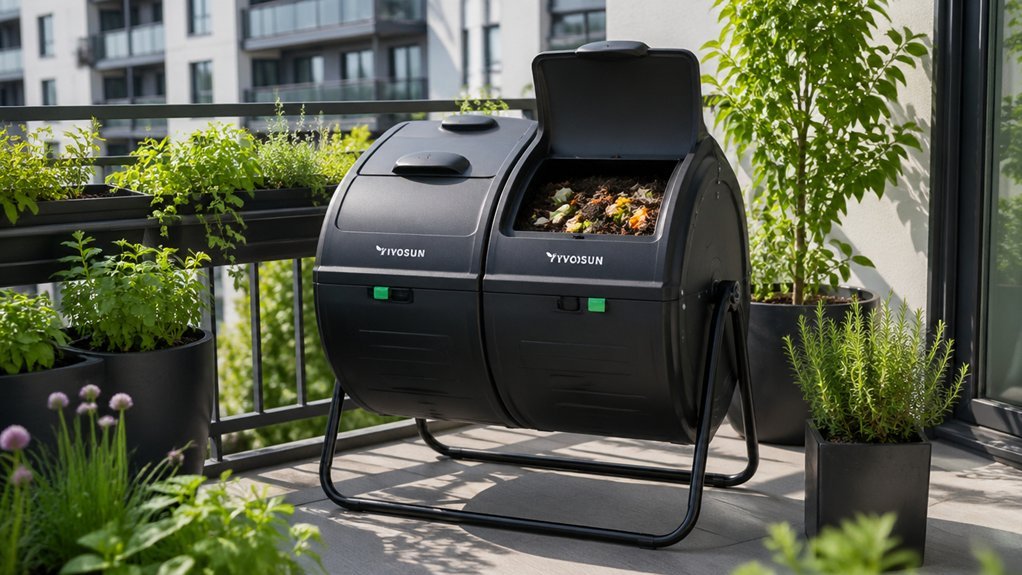
Looking for a compact, high‑capacity tumbler that fits a tiny balcony? The FCMP Yimby outdoor tumbler nails balcony composting in small spaces. The design also features a durable, rust‑resistant build and a standard 37‑gallon capacity that aligns with common balcony composting needs. Double‑chamber system provides continuous operation by letting one batch rest while the other turns. The raised design lifts the unit to waist height, making turning effortless and keeping rodents at bay. With 37 gallons of capacity, it balances size and output, perfect for urban gardening on a limited footprint. Endorsed by experts like Corsillo and Saffitz, this outdoor tumbler proves reliable and user‑friendly. You’ll enjoy smoother cycles, less downtime, and a tidy, functional compost hub that blends seamlessly with your balcony aesthetic.
How to Choose the Right Compost Tumbler Size and Features for Limited Urban Spaces
Where do you start when space is tight but your compost pile keeps growing? First, measure your balcony footprint and estimate weekly waste volume. Choose a tumbler size that fits the footprint without crowding walkways; a compact, vertical unit often works best in limited urban space. If you need a two-chamber model, prioritize insulation or double‑walled construction to keep microbes active in winter. Look for a raised design that lifts the drum off the floor, deterring rodents while still allowing easy access. Verify durability by checking leg stability and rolling mechanisms, especially if you’ll move the tumbler for cleaning. Finally, select a rodent‑proof, insect‑sealed lid to protect your balcony composting setup from pests. For long-term consistency, consider models with accessible maintenance features and a robust warranty to support frequent, small-batch composting compact design and easy cleaning routines.
Tiered Recommendations: Budget‑Friendly Drum Tumbler, Premium‑Grade Double‑Chamber Tumbler, and Non‑Tumbler Alternatives (Worm Bin & Bokashi Kit)
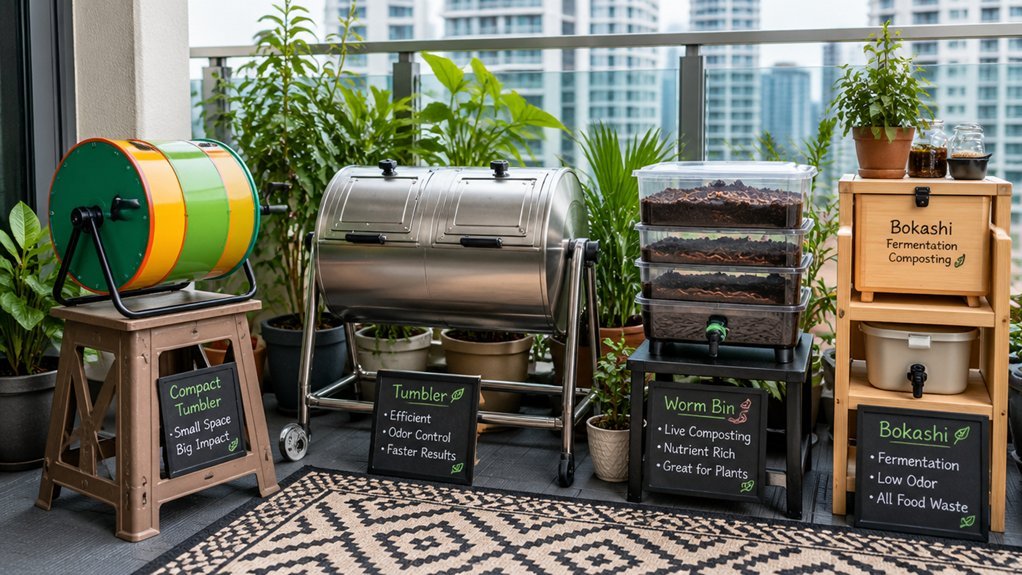
After measuring your balcony footprint and estimating weekly waste, you can match your space to one of three tiered solutions. A budget‑friendly drum tumbler like the Good Ideas Compost Wizard Jr gives you 50–90 gal capacity, single or dual chamber, and rodent‑proof construction that fits tight balconies. The premium Joraform JK270 adds an insulated, dual‑chamber, elevated design for hot composting up to 160 °F, though it’s heavier. If you prefer non‑tumbler routes, a worm bin or Bokashi kit offers space‑saving, low‑odor composting without turning required. All options benefit from a rodent‑proof, elevated design and proper shelter for winter performance. Rodent‑proof design helps ensure year‑round use on balconies.
Frequently Asked Questions
How to Compost in an Apartment Balcony?
You start by picking a compact bin—worm, Bokashi, or aerobic—then keep it shaded, moist but not soggy, feed scraps regularly, turn or aerate as needed, and harvest castings or liquid weekly.
Should a Compost Tumbler Be in Sun or Shade?
You should keep the compost tumbler in shade or at most partial sun; direct sunlight overheats it, dries out moisture, and stresses microbes, while shaded spots maintain steady temperature and moisture for efficient composting.
What Three Items Should Not Be Placed in a Compost Pile?
You shouldn’t add meat, dairy, or oily foods; avoid citrus and onions; and keep large amounts of cooked scraps out. These items cause odors, pests, and microbial imbalance in your compost pile.
What Is the Disadvantage of a Compost Tumbler?
You’ll find a compost tumbler’s main drawback is its limited capacity—small units can’t handle high waste volumes, so you end up turning more often, waiting longer for finished compost, and risking slower winter activity.
In Summary
You’ve got the perfect options to turn your balcony into a thriving compost hub. The double‑chamber tumbler delivers fast, odor‑free results in tight spaces, while the budget drum offers solid performance without breaking the bank. If you prefer a low‑tech route, a worm bin or Bokashi kit gives you flexibility and quiet operation. Pick the setup that matches your space, budget, and lifestyle, and start feeding your plants with nutrient‑rich compost today.