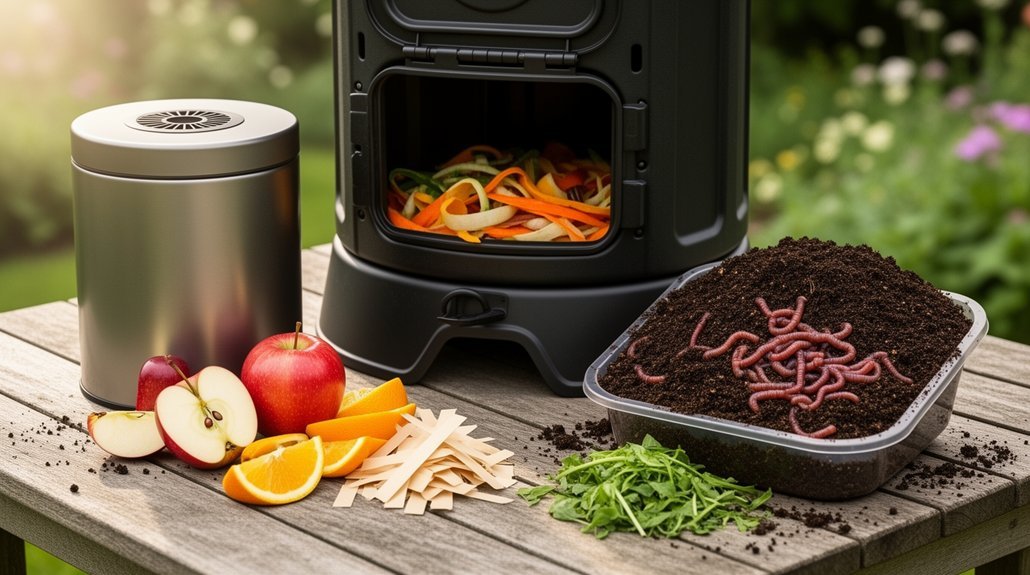
You can safely compost your kitchen scraps using three proven methods. Start with backyard bins, which contain waste in organized systems ranging from 80 to 246 gallons while protecting materials from pests and extreme weather. For indoor spaces, try vermicomposting with worm bins that produce odor-neutral castings when you maintain proper moisture and bedding. Alternatively, you’ll bury scraps directly in garden soil using a simple 12-inch hole method that enriches your surrounding landscape. Each approach offers distinct advantages worth exploring further.
Backyard Bins: High-Volume Composting for Outdoor Space
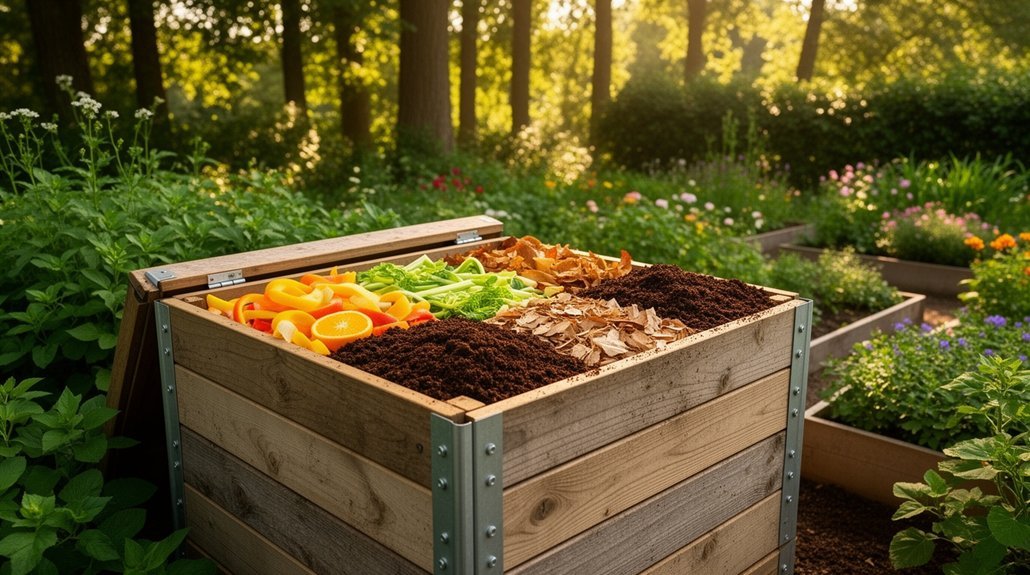
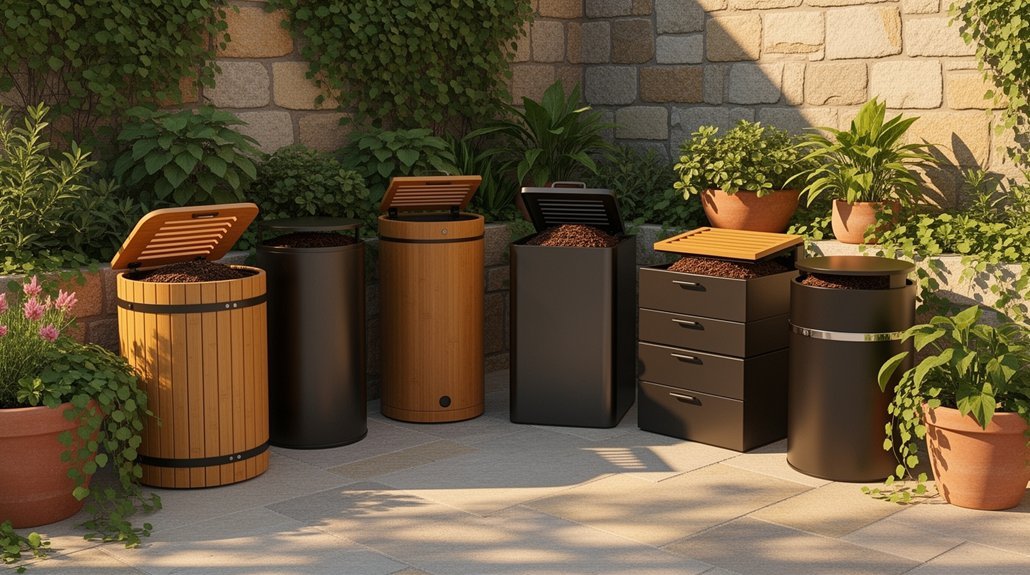
Why struggle with scattered compost piles when you can contain your kitchen scraps and yard waste in an organized bin system? Backyard bins keep materials in a smaller footprint, reducing visual clutter while protecting compost from extreme heat, moisture, and pests like fruit flies.
You’ll find options ranging from 80 to 246 gallons, depending on your needs. Wire enclosures, tumblers, and wooden systems all work well for high-volume composting. Multi-bin setups are particularly useful—they let you separate fresh materials, active decomposition, and curing stages simultaneously, improving your workflow. Popular choices include outdoor worm bins and continuous composting systems that maximize efficiency in smaller spaces.
Select bins with aeration holes and drainage features to maintain proper airflow and moisture balance. Lids or sliding doors make turning and harvesting easier. Choose sturdy materials that withstand heavy, wet scraps without degrading. Smooth interior walls reduce residue buildup and odor retention, keeping your outdoor composting system more manageable long-term.
Vermicomposting: Indoor Composting Without Odor
How can you compost indoors without offensive smells? You’ll need to understand that odors stem from anaerobic decomposition, not from finished worm castings. By maintaining proper balance, you can keep your indoor bin nearly odor-free.
Start by adding food scraps gradually and covering them with carbon-rich bedding like shredded newspaper or cardboard. Cut larger scraps into smaller pieces so worms process them efficiently. Keep your bedding fluffy to support airflow and maintain moisture at damp—not soggy—levels. Products like bokashi bran with EM-1 cultures can also accelerate decomposition and further reduce odors in your composting system.
Use an indoor bin with drainage and ventilation, ideally a tray-style system. Check regularly for wet clumps or compacted zones, adding dry bedding immediately if needed. Reduce feeding if scraps aren’t disappearing quickly. A properly maintained bin will emit an earthy, garden-like odor rather than unpleasant smells. This balanced approach ensures aerobic decomposition dominates, keeping odors minimal.
In-Ground Composting: Burying Scraps in Your Garden
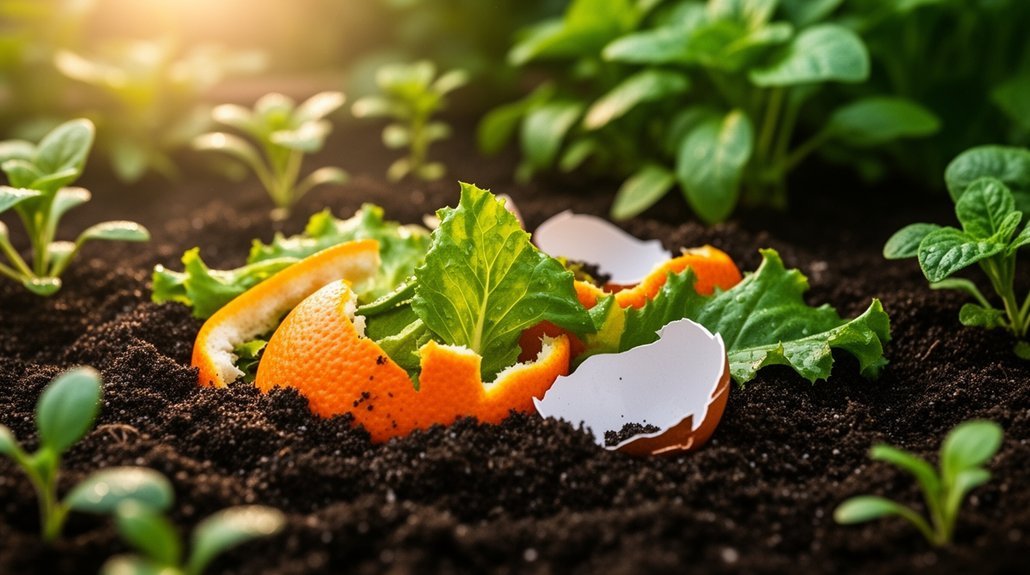
Ready to turn your garden beds into composting zones? In-ground composting lets you bury kitchen scraps directly into soil, where microbes and worms break them down naturally. Simply dig a 12-inch hole, add your scraps, mix them lightly with surrounding soil, and cover completely.
| Material | Accepted | Notes |
|---|---|---|
| Fruit & vegetable scraps | Yes | Raw or cooked |
| Coffee grounds | Yes | Small quantities |
| Eggshells | Yes | Finely crushed |
| Bread | Yes | Dry preferred |
You’ll see nutrient-rich moisture released into surrounding soil, improving structure and drainage. Decomposition typically takes two to six months. Unlike traditional composting methods, in-ground burial allows you to incorporate meat and dairy directly into garden soil without concern. Rotate burial spots to avoid attracting pests like rats or gophers. This method works best for small, regular additions of plant-based waste. Worms deposit their castings throughout your garden, further enriching the soil with organic matter and beneficial microorganisms.
Frequently Asked Questions
What Kitchen Scraps Are Safe to Compost, and Which Ones Should I Avoid?
You can safely compost fruit and vegetable scraps, coffee grounds, and crushed eggshells. You’ll want to avoid meat, dairy, greasy foods, and diseased plants, which attract pests and create odor problems.
How Long Does Finished Compost Take to Be Ready for Use in Gardens?
You’ll need between 6 months to 2 years for finished compost, depending on your method. Hot composting finishes faster—about 3 to 6 months—while cold composting typically takes 6 to 12 months.
Can I Compost Citrus Peels, Onion Skins, and Nut Shells Safely?
Yes, you can safely compost citrus peels, onion skins, and most nut shells. Chop them into small pieces, add them moderately with brown materials, and maintain proper airflow for faster decomposition without odor issues.
What Should I Do if Home Composting Isn’t Feasible for My Situation?
You should explore municipal curbside organics pickup or community drop-off depots in your area. If home composting isn’t viable, contact your local waste services about transfer stations accepting food scraps.
How Small Should I Chop Kitchen Scraps to Speed up Decomposition?
You should chop your kitchen scraps to about 1 inch cubed or smaller. Cut dense items like broccoli stalks and tough materials such as citrus peels into even smaller pieces for faster decomposition.
In Summary
You’ve now got three solid options for composting your kitchen scraps. Whether you’re composting in bulk with a backyard bin, keeping things tidy indoors with vermicomposting, or quietly enriching your garden beds through in-ground composting, you’ll reduce waste while creating nutrient-rich soil. Pick the method that fits your space and lifestyle best, then start transforming your scraps into gardening gold today.



Leave a Reply