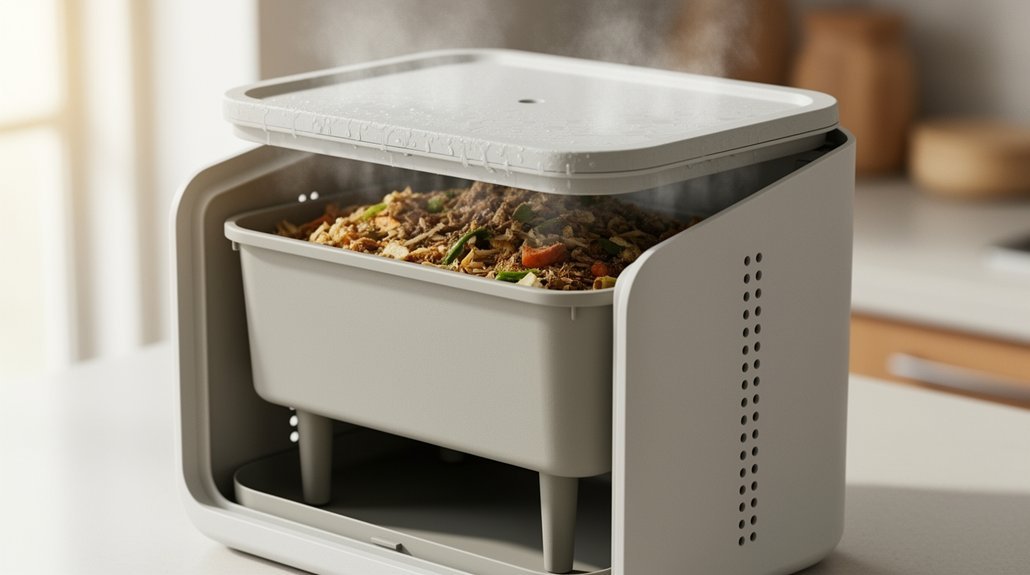
You’ll prevent odor and maintain your bokashi bin’s anaerobic environment by mastering three essential venting techniques. First, drain leachate regularly through a spigot every one to two days, using washers and nut fittings to prevent leaks. Second, compact scraps in small layers and sprinkle bokashi bran to eliminate air pockets that cause odor. Third, keep your lid sealed between feedings—only accessing it when adding scraps or draining liquid. There’s more to discover about optimizing each technique.
Use a Spigot to Drain Your Bokashi Bin
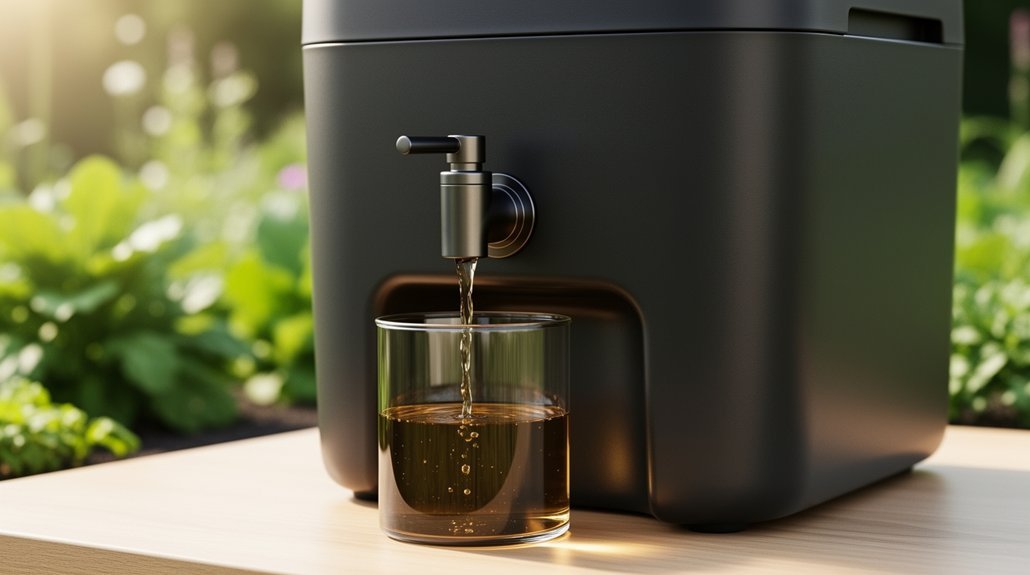
A spigot (or stopcock) is your primary tool for removing bokashi juice, the liquid that accumulates during fermentation. You’ll typically drain it every 1 to 2 days to prevent buildup and odor problems.
Install your spigot near the bucket’s bottom, ideally with a two-chamber design that keeps scraps above the drainage area. Use washers and nut fittings to mount it securely and prevent leaks. For best results, consider pairing your bokashi bin with collapsible compost containers for finished material storage and transfer.
Maintain an airtight seal around the spigot—poor fitting introduces oxygen and compromises the anaerobic process. If clogging occurs, flush water through after emptying the bucket. A drainage plate inside prevents food scraps from blocking the opening.
You can dilute the leachate 1:100 for plants or dispose of it down the drain if it’s too pungent. The microbes in bokashi tea gradually clean sludge and organic debris in pipes while remaining harmless to the environment.
Compact Scraps and Layer Bran to Eliminate Air Pockets
Why does compacting matter so much in bokashi fermentation? You’re creating an anaerobic environment where microbes thrive, and air pockets sabotage that process. Loose material creates oxygen channels that slow fermentation and cause off-odors.
Here’s your approach: add scraps in small layers, then compress firmly with a tamper or potato masher before sprinkling bokashi bran over top. Chop larger pieces into smaller chunks—they pack denser and contact bran more evenly. Repeat this layering and compacting cycle each time you feed your bin. An airtight seal is essential for either method, so ensure your bin’s lid closes completely after each addition to lock in the anaerobic conditions you’ve worked to establish.
Dense packing prevents new air gaps from forming as you add waste. Like organic fertilizers, proper bokashi fermentation requires layered materials to create the right environment for decomposition. If you notice musty smells, you’re likely dealing with insufficient compaction. Proper compression supports consistent, predictable fermentation with minimal odor problems.
Keep Your Bokashi Bin Sealed Between Feedings
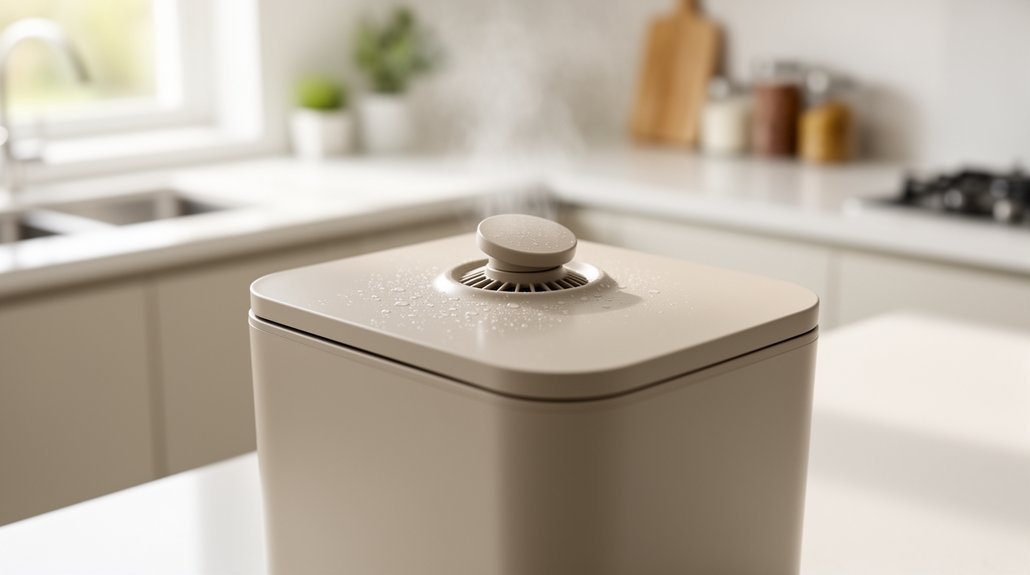
Once you’ve layered and compacted your scraps, keeping the lid sealed between feedings is what separates successful fermentation from failure. Bokashi fermentation requires an anaerobic environment, and every time you open the bin, you’re introducing oxygen that disrupts the process. Frequent opening is the most common reason bokashi systems fail.
You should only access your bin twice daily when adding scraps, and briefly every 2–3 days when draining liquid. Close the lid immediately after each action. Don’t open it unnecessarily during the fermentation period. Proper resealable container sealing helps maintain the anaerobic conditions your bokashi bin needs to function effectively.
Once your bin is full, seal it completely for 10–14 days without disturbing it. This resting period allows microbes to work effectively. Store your sealed bin indoors at room temperature, away from direct sunlight, to maintain optimal conditions for fermentation. Remember to drain Bokashi tea regularly during this period to prevent excessive moisture buildup and support the fermentation process.
Frequently Asked Questions
How Often Should I Drain Leachate From My Bokashi Bin During Fermentation?
You should drain your bokashi bin’s leachate every day or two during active fermentation. If you’ve got wetter scraps, you’ll need to drain more frequently. Regular drainage prevents liquid buildup and maintains stable fermentation.
Can I Use a Clear Container for My Bokashi Bin, or Is Opaque Better?
You can use a clear container if you keep it in a dark location and maintain a tight seal—that’s what matters most. Opaque buckets are simply more convenient since they naturally block light exposure.
What Should I Do if My Bokashi Bin Smells Bad Despite Sealing?
You should drain excess liquid regularly, add more bokashi bran, and check your seal’s integrity. If you’re still getting bad odors, balance wet scraps with dry materials and open the bin less frequently.
How Long Does the Final Fermentation Period Take After the Bin Is Full?
You’ll typically wait 14 days after your bin’s full and sealed. If you’re filling slowly, earlier layers ferment longer, so you might need less time. Warmer conditions and harder materials like bones may require the full 2–3 week window.
Should I Add Liquids Directly to My Bokashi Bin, or Avoid Them?
You should avoid adding liquids directly to your bokashi bin. Food scraps provide sufficient moisture naturally. If you’ve got excess liquid, drain it every one to two days instead.
In Summary
You’ve now got three essential techniques to keep your bokashi bin functioning perfectly. By using the spigot regularly, you’ll drain excess liquid and prevent odors. You’re compacting your scraps and layering bran to eliminate air pockets, which is vital for proper fermentation. Finally, you’re keeping your bin sealed between feedings, which maintains anaerobic conditions. Master these methods, and you’ll have nutrient-rich compost ready in weeks.



Leave a Reply