
You can transform your balcony into a composting space with a hanging compact bin that keeps pests out and controls odors effectively. Wall-mounted or suspended designs fit seamlessly into tight spaces while allowing easy aeration and drainage. By emptying your bin regularly and balancing greens with browns, you’ll prevent smell buildup and maintain ideal decomposition. Carbon filters add extra odor protection when needed. Discover how to maximize your setup and recognize when you’re ready to scale up.
Why Hanging Compost Bins Work on Balconies
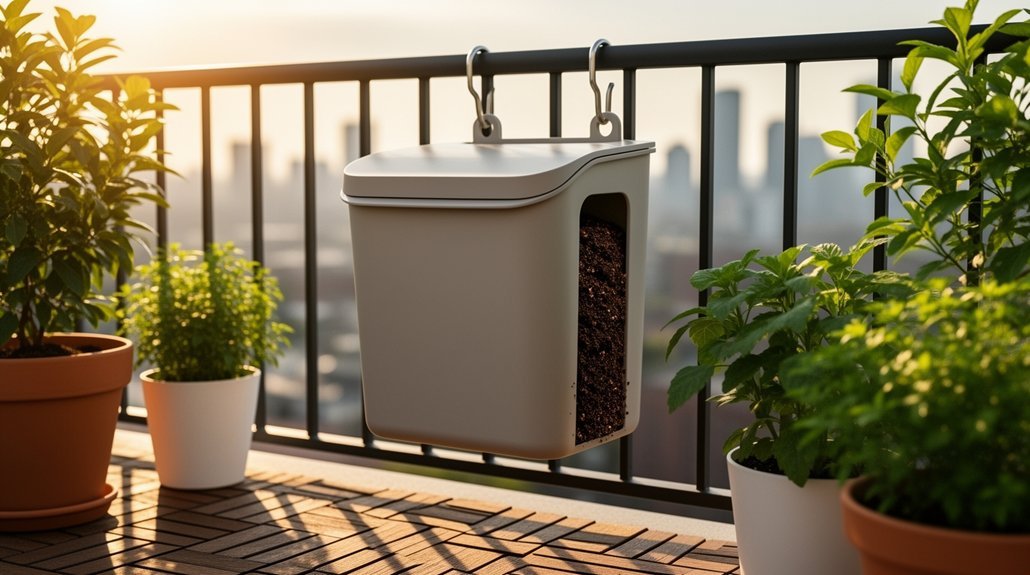
Why do hanging compost bins work so well on balconies? You’ll find they’re ideal for urban composting because they maximize limited space while minimizing common problems. Elevated placement keeps your compost off the ground, reducing pest access from rodents and scavengers that typically plague traditional piles. The suspended design allows you to rotate the bin easily, improving aeration and mixing without heavy lifting. Drainage holes prevent moisture buildup and anaerobic conditions, protecting your balcony from stains and odors. Enclosed systems contain the composting process neatly, addressing neighbor concerns in dense housing. Frequent rotation also helps spread water, oxygen, and bacteria evenly throughout the material for more uniform decomposition. For added odor control in compact spaces, consider pairing your hanging bin with charcoal filtration systems to manage any smells before they disturb neighbors. You can effectively process kitchen scraps in a compact footprint, diverting waste from landfills while maintaining nutrient cycles—all without requiring yard space.
Fit Your Bin to Your Balcony Layout
Successful balcony composting starts with honest measurement. You’ll need to record your narrowest walkway width, door swing area, and railing setback before selecting a bin. Reserve a clear path for movement—compact setups work best when you keep traffic space unobstructed.
Corners and railing-adjacent spots offer the most efficient placement, reducing interference with your daily routes. Match your bin size to daily scrap volume, not maximum waste capacity. A 60 L tote works well for most balconies, while mini 3 lb bins suit snack-size setups. Tall, narrow designs maximize vertical space while preserving floor area. Consider supplementing your bin with worm farms or bokashi systems to ensure you produce finished compost rather than just fermenting or storing raw materials. Ensure your bin’s weight capacity accommodates the combined load of full materials and contents to prevent cart or structural failure.
Check vertical clearance under overhangs and ensure lids open fully without hitting walls or plants. Account for full-bin depth after loading—empty bins can deceive you about final protrusion.
Choose Your Bin: Wall-Mount or Hanging Style
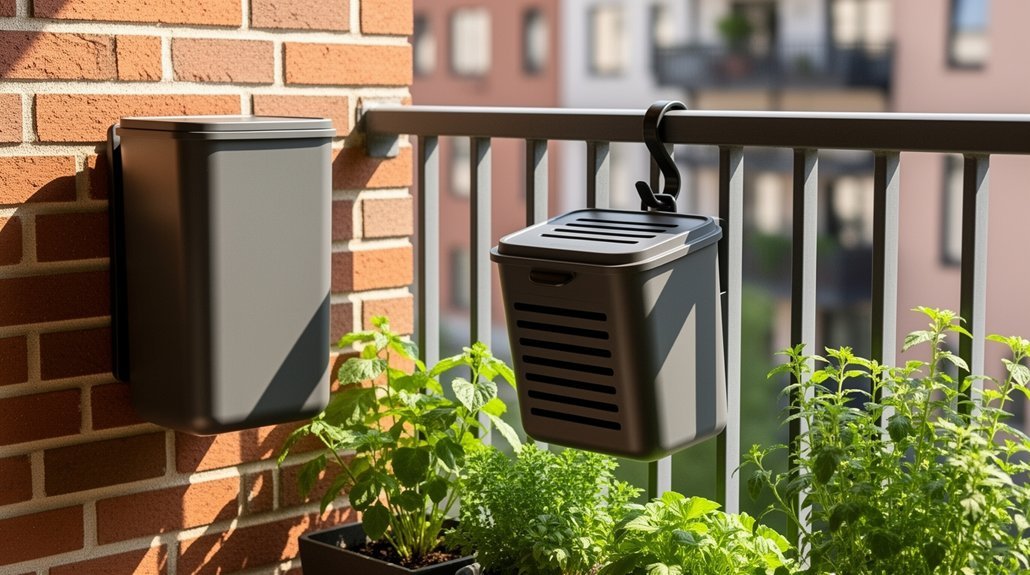
Once you’ve measured your balcony layout, you’ll need to choose between wall-mount and hanging styles—each offers distinct advantages for compact spaces. Wall-mounted bins like Simplehuman’s Compost Caddy keep your balcony clear of floor clutter while their magnetic attachment lets you easily remove and carry scraps to collection points.
Hanging styles work best for frequent daily use since you can quickly drop scraps without relocating a bin. Both options position your container at hand height during food prep, and cabinet or door mounting expands your placement flexibility. The 4-liter capacity provides ample storage for several days of typical kitchen scraps before requiring emptying. For electric composting options, consider models with activated carbon filters that reduce odors while processing food waste more quickly than traditional methods.
Consider your dumping frequency: wall mounts suit occasional use, while hanging bins work better when you’ll empty them daily. Choose based on your balcony’s traffic patterns and available surfaces.
Control Odors in Your Compact Compost Bin
Your compact hanging bin’s enclosed design naturally contains odors, but you’ll still need to balance greens and browns to prevent the wet, anaerobic conditions that create foul smells.
Empty your bin weekly and rinse it thoroughly to stop decomposing scraps from building up and intensifying odors over time. Activated charcoal filters can provide additional odor absorption if your bin includes this feature, offering an extra layer of protection between emptying cycles. Many countertop models feature replaceable charcoal filters that can be swapped out periodically to maintain consistent odor control.
These three practices—a sealed structure, proper material ratios, and regular maintenance—form the foundation of effective odor control in small-space composting.
Enclosed Design Reduces Smells
Because kitchen scraps decompose quickly in confined spaces, an enclosed design with a tight-fitting lid is essential for controlling odors in your compact compost bin. You’ll find that soft-seal lids create an airtight barrier, preventing food-waste smells from escaping into your balcony area. Many hanging bins feature built-in activated charcoal filters that absorb odors effectively, with double-layer systems offering stronger suppression.
To maximize odor control, empty your bin weekly and rinse it thoroughly. Stainless steel construction prevents odors from seeping into the bin material itself. You should perform monthly cleanings with soap and disinfectant to eliminate residual smells. Detachable lids make this maintenance simpler and more effective at reducing trapped residue that causes lingering odors. Like solid wood construction, stainless steel options offer durability benefits for long-term composting efforts. Storing your bin in a cool spot will slow decomposition and help keep odors in check.
Airflow and Balanced Materials
How do you keep a compact bin from becoming a smelly, soggy mess? You’ll need proper airflow and balanced materials working together.
Start by ensuring your bin has multiple ventilation openings—side vents for air circulation and top openings to release heat and moisture. Without adequate oxygen flow, anaerobic bacteria take over, producing foul odors. Regular turning or fluffing helps keep the remaining bacteria oxygenated and prevents matting that blocks air passage.
Next, balance your carbon and nitrogen inputs. Green kitchen scraps supply nitrogen, but they’ll compact and smell without dry brown materials like shredded leaves and cardboard to offset them. Add bulking agents such as twigs, corn stalks, or pine cones to create pore spaces that prevent compaction. You can also use bokashi bran to absorb excess liquid and minimize odors while maintaining balanced moisture levels.
Finally, maintain moisture around 50–60%, like damp coffee grounds. Excess water blocks oxygen movement and encourages anaerobic breakdown. Layer materials loosely to distribute moisture evenly and maximize airflow.
Frequent Emptying Best Practice
What’s the single most effective way to keep odors at bay in a compact hanging bin? Frequent emptying. You’ll want to empty food scraps daily or every other day to prevent odors and fruit flies from establishing themselves in your small space.
Match your emptying schedule to your scrap volume and food type. Higher-volume kitchens need daily removal, while lower-volume bins can stretch to every few days if materials stay dry. Strong-smelling scraps like meat and shellfish demand faster removal than fruit peels.
Before each emptying, drain excess liquids and add dry browns like shredded paper to absorb moisture. Wrap messy scraps in paper to contain odors. Storing your bin in a cooler kitchen area away from heat sources will slow decomposition and minimize odor development between emptying cycles. For additional odor protection, consider using activated charcoal filters designed for compact indoor bins. After emptying, rinse your bin thoroughly and wash it weekly with soap and water. A clean, dry container significantly reduces smell and pest problems.
Empty Your Bin Regularly to Prevent Smell
Why do smells creep into your hanging compost bin faster than you’d expect? Food scraps decompose quickly in compact spaces, releasing odor-causing gases within days. You’ll want to empty your bin every 2–3 days during warm months or when you’re generating significant waste. Weekly emptying works as a maximum safe interval before odors intensify.
Don’t stop at just dumping the contents. Residue clinging to the sides, bottom, and lid continues producing smells even after you’ve emptied it. Rinse the bin with warm soapy water after each dump, then dry it thoroughly. This removes trapped food particles and reduces moisture that accelerates smell development. Modern composters use carbon filters to reduce odors by up to 90%, and applying the same principle to your hanging bin maintenance can significantly extend the time between cleanings. To further combat odors, sprinkle baking soda inside the bin after cleaning to neutralize any remaining smells and keep your balcony fresh.
How Hanging Design Improves Airflow and Moisture
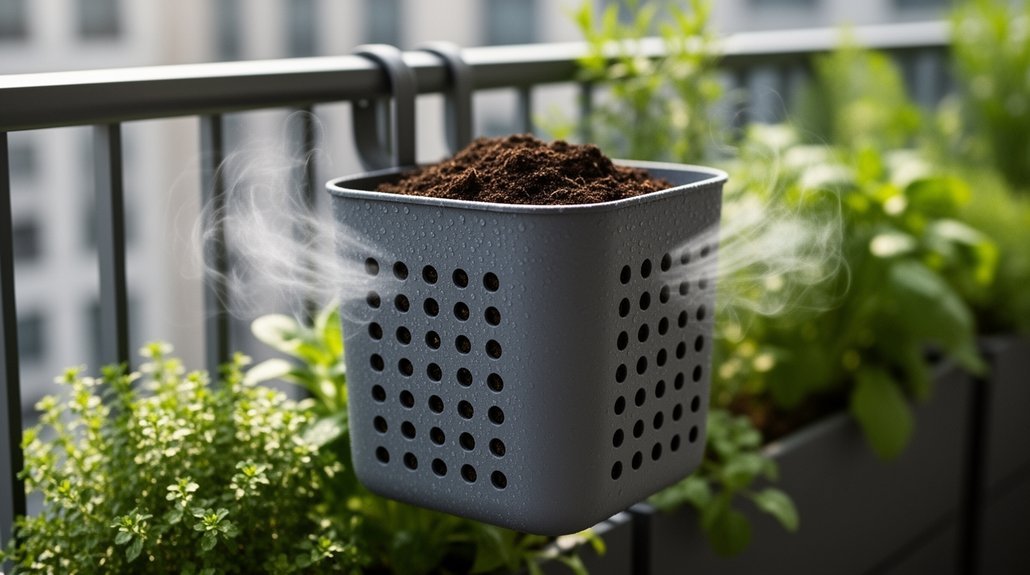
When you hang your compost bin, you’re creating space for air to flow freely from multiple directions—something that’s nearly impossible when a bin sits flat on your balcony floor.
This elevated position lets gravity work with you, draining excess moisture downward while fresh air circulates around the sides and bottom of your pile. Microorganisms need moisture, air, and warmth to break down organic material effectively, which is why this hanging design proves so advantageous for balcony composting.
You’ll discover that this balance between aeration and moisture retention is precisely what transforms your kitchen scraps into finished compost without the smell. To maintain consistent performance, remember that carbon filters should be replaced every 3-4 months with regular use, or sooner if odors begin to appear.
Suspended Design Enhances Circulation
How does a hanging bin pull oxygen deeper into your compost pile than a ground-level container? When you suspend your bin off the ground, you expose the underside to ambient air, creating bottom-side aeration that ground-contact piles can’t achieve. This elevation prevents the base from sealing against wet soil or pavement, which would starve lower layers of oxygen.
The suspended placement allows air to circulate through the entire mass, not just around it. Your compost’s lower portions stay oxygenated instead of becoming compacted and oxygen-starved. Many elevated systems incorporate perforations or air channels that deliver oxygen directly into the core, ensuring aerobic conditions throughout. To maintain peak airflow, occasionally clean the aeration mesh to prevent silt or biofilm accumulation that could restrict circulation. Quality activated carbon filters also support optimal air exchange by preventing odor-trapping stagnation that compromises ventilation.
This consistent airflow supports faster, more even decomposition while keeping your pile from becoming dense and stagnant—a common problem with stationary ground-level containers.
Moisture Distribution And Balance
While aeration drives decomposition speed, moisture management determines whether your hanging bin becomes a productive ecosystem or a waterlogged mess. Your suspended design gives you distinct advantages for maintaining that critical balance.
Gravity pulls excess liquid downward and away from your compost mass, preventing anaerobic pockets that breed odor. You’ll achieve the ideal “wrung-out sponge” texture by leveraging these strategies:
- Layer wet kitchen scraps with dry carbon materials like shredded cardboard or leaves
- Add absorbent bulking agents that create pores holding both air and water films
- Mix periodically to redistribute moisture away from saturated zones
- Install a catch tray below to manage leachate on your balcony
This compact system retains enough humidity for active decomposition while shedding excess moisture efficiently. Engaging with community feedback helps you adjust moisture levels based on real-world results from other balcony composters.
Aeration’s Role In Decomposition
Why does your hanging bin outperform ground-level composters when it comes to oxygen flow? Elevation eliminates ground contact that blocks lower ventilation points, allowing air to circulate around all sides of the container. Your vent holes and perforations create multiple oxygen entry points that ground bins simply can’t match.
This superior airflow directly accelerates decomposition. Aerobic bacteria thrive with consistent oxygen access, breaking down materials faster while generating the heat that signals active composting. You’ll notice the characteristic earthy smell—a sign that aerobic conditions dominate. Maintaining aerobic conditions throughout the pile is the primary strategy for managing odors and preventing the anaerobic gases that create truly offensive smells.
Your hanging design also prevents the compacted, matted material that suffocates decomposition in traditional bins. The suspended structure keeps your base material loose and fluffy, ensuring oxygen reaches deeper layers. This means you’re not just composting faster; you’re composting smarter on your balcony.
Recognize When a Compact Bin Falls Short
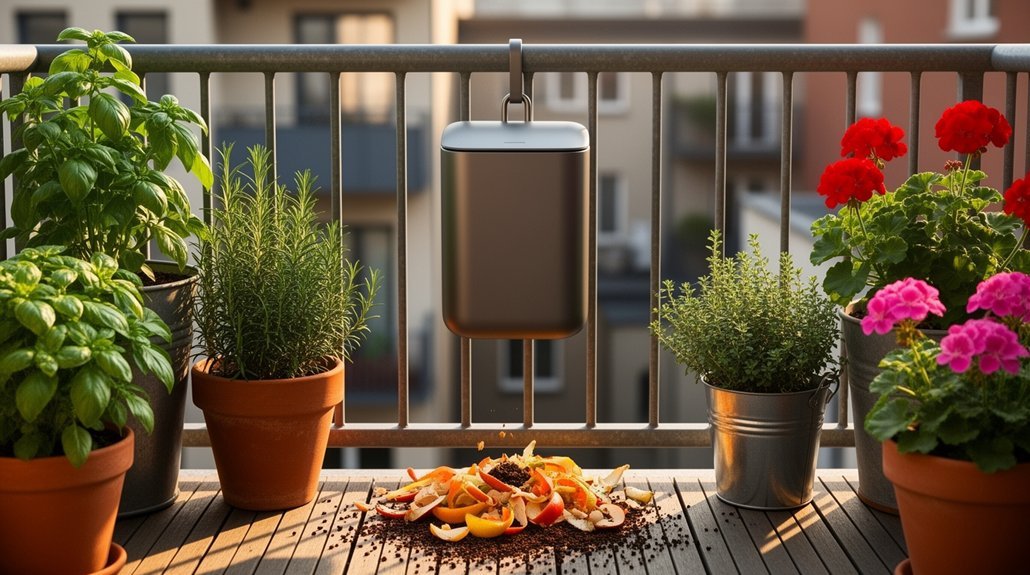
Even the most diligent composters eventually discover that compact hanging bins have real limitations. You’ll notice warning signs when your bin can’t keep pace with your household’s organic waste.
Even the most diligent composters eventually discover that compact hanging bins have real limitations.
Watch for these indicators that you’ve outgrown your compact system:
- You’re emptying the bin daily or every other day, making maintenance exhausting
- Persistent odors linger despite a sealed lid and regular maintenance
- Liquid accumulates at the bottom, encouraging anaerobic conditions
- The rim consistently overflows, making liner removal messy and difficult
These challenges signal that your bin functions beyond its intended short-term holding role. A compact hanging bin works best for light, steady scraps. When you’re producing substantial kitchen waste or yard materials, you’ll need a larger outdoor system or secondary container to handle your composting demands effectively. The 2.4 gallon capacity of smaller hanging bins makes them ideal for temporary storage rather than primary waste management solutions.
Frequently Asked Questions
What’s the Ideal Ratio of Kitchen Scraps to Dry Materials in a Hanging Bin?
You’ll want to aim for 1 part kitchen scraps to 2 parts dry materials by volume. This ratio keeps your hanging bin from getting slimy and controls odor while supporting faster decomposition of your scraps.
How Often Should I Rotate or Turn My Hanging Compost Bin for Faster Decomposition?
You’ll achieve faster decomposition by rotating your hanging bin every 2 to 4 days. For a simpler routine, turn it weekly. Adjust based on moisture levels and smell—ammonia odors mean you need more frequent turning.
Can I Use a Hanging Bin Year-Round, or Does Cold Weather Stop Composting?
You can use your hanging bin year-round. Cold weather slows decomposition but doesn’t stop it completely. You’ll need to maintain moisture, keep adding brown materials, and expect slower results through winter months.
What Size Finished Compost Output Can I Expect From a Compact Hanging System?
You’ll get modest amounts—roughly one-third to one-half of your original scraps’ volume. A 1-2 gallon hanging bin produces enough finished compost monthly for containers and herbs, not large beds.
Should I Transfer My Hanging Bin Compost to a Larger Outdoor System Eventually?
Yes, you’ll benefit from transferring your hanging bin compost to a larger outdoor system. You’ll achieve faster decomposition, better moisture and heat retention, and you’ll handle higher volumes more effectively than your compact container allows.
In Summary
You’ve discovered that hanging compost bins can transform your balcony into a productive composting space. By choosing the right style, managing odors, and emptying your bin regularly, you’ll successfully reduce waste while maximizing your limited outdoor area. However, you’ll eventually recognize when you’ve outgrown your compact system. At that point, you’re ready to upgrade to a larger solution or expand your setup further.