
You’ll transform your tiny kitchen into a composting powerhouse with a bokashi bin that fits under your sink or in a pull-out cabinet. These compact 5- or 7-gallon buckets handle virtually all your food scraps—including meat, dairy, and cooked leftovers—without odor or pests. The airtight seal creates fermentation magic in two weeks, producing nutrient-rich amendments for your garden. You’re about to discover exactly how this space-saving system maximizes your composting potential.
What Bokashi Is and Why It Works for Tiny Homes
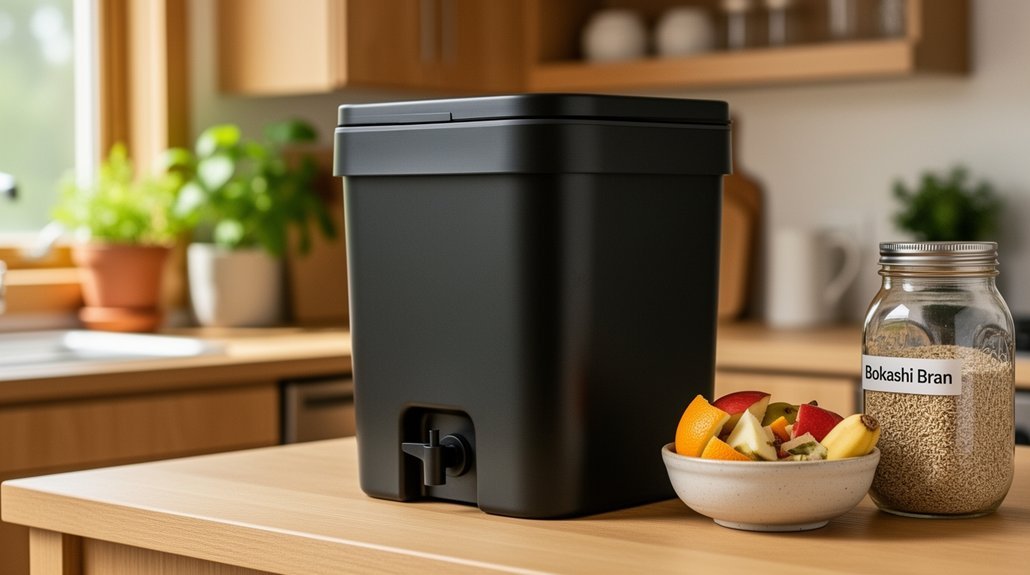
Ever wondered how you could compost in an apartment without the smell or the mess? Bokashi offers the answer. This Japanese fermentation method breaks down food scraps in a sealed indoor bucket using effective microorganisms, not traditional aerobic composting. You’ll layer your scraps with bokashi inoculant—typically bran, sawdust, or wheat germ mixed with molasses—then seal the lid tight. The anaerobic process works quickly, completing in about two weeks. You’ll drain liquid fertilizer through the bucket’s tap while the fermented material decomposes inside. Unlike bulky outdoor compost piles, bokashi fits perfectly in tiny homes. Its sealed design eliminates odors and pests, making it ideal for apartments and small spaces where traditional composting simply won’t work. Bokashi’s sealed operation minimizes interaction with surrounding air, preventing the odor problems common in conventional composting methods. The resulting AgrowTea and AgrowPulp products fortify garden health and provide nutrient-rich amendments even in limited spaces.
How to Fit a Bokashi Bin in Your Kitchen or Studio
Where should you actually put a bokashi bin when you’re working with minimal square footage? Your best bet is under the kitchen sink, next to recycling or trash bins. This keeps scraps and your bucket in one convenient zone.
Alternatively, a pull-out cabinet offers concealed storage for both the bucket and supplies.
Choose a spot away from direct sunlight and maintain room temperature for stable operation. A compact 5- or 7-gallon bucket fits snugly in tight spaces, especially with a tight-fitting lid. The airtight fit is essential for creating the anaerobic fermentation environment that bokashi requires. For year-round use in climates with freezing winters, you may need to relocate indoors during winter when temperatures drop below 6°C.
Keep your bran, bucket, and drainage tools together in one drawer or cabinet to streamline your routine. When everything’s centralized and accessible, you’ll actually use the system consistently—critical for tiny homes where every habit counts.
What You Can Actually Compost (Spoiler: Almost Everything)
Now that you’ve got your bokashi bin positioned and stocked with bran, you’ll want to know what actually goes inside it—and the answer might surprise you.
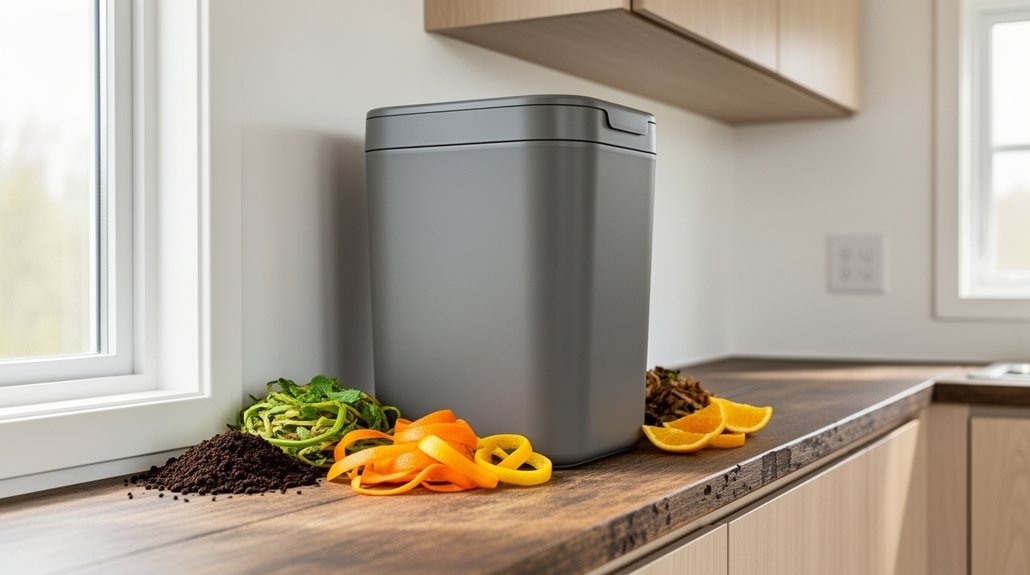
You can ferment virtually all your kitchen scraps: fruit and vegetable waste, cooked leftovers, raw meat and fish, dairy products, eggs, bread, pasta, and grains. Even small amounts of moldy food work fine when mixed with adequate bran. When adding moldy items, chop them up and mix thoroughly with bran to ensure proper fermentation throughout your batch.
However, avoid excess liquids like oils, grease, and large amounts of juice or milk. The fermentation process requires a proper balance of moisture to function effectively, so liquids can interfere with anaerobic conditions needed for optimal bokashi fermentation.
Skip heavily rotten food in bulk quantities, as it disrupts fermentation.
Garden waste doesn’t belong in kitchen bokashi bins either.
The real advantage? Items that’d attract pests in traditional composting—raw meat, bones, dairy—ferment safely in your sealed bokashi system, making it ideal for compact living spaces.
Why Bokashi Eliminates Indoor Odor and Pest Problems
What makes bokashi bins so dramatically different from traditional composting? The airtight seal. By limiting oxygen, you shift decomposition from rotting to fermentation—a process that produces a mild, vinegar-like smell instead of putrid odor. Beneficial microorganisms dominate the sealed environment, outcompeting odor-causing microbes while creating acidic conditions that repel pests like flies and rodents.
Your kitchen scraps stay contained between additions, and many bins feature drainage spigots to manage excess liquid. You’ll notice fewer insects compared to open composting, which matters tremendously in apartments and tiny homes where pest control is critical. The bokashi tea collected from the drainage spigot can be diluted and used as a nutrient-rich soil drench for houseplants, turning waste byproducts into useful fertilizer. Similar to how clear bin windows help monitor fullness in document shredders, transparent bokashi bins allow you to track fermentation progress without disrupting the airtight seal.
The speed matters too. Bokashi processes scraps in two to four weeks, so you’re not storing decomposing waste for months. Less lingering organic matter means minimal smell escalation and disturbance in your compact living space.
What to Do With Your Finished Bokashi Pre-Compost
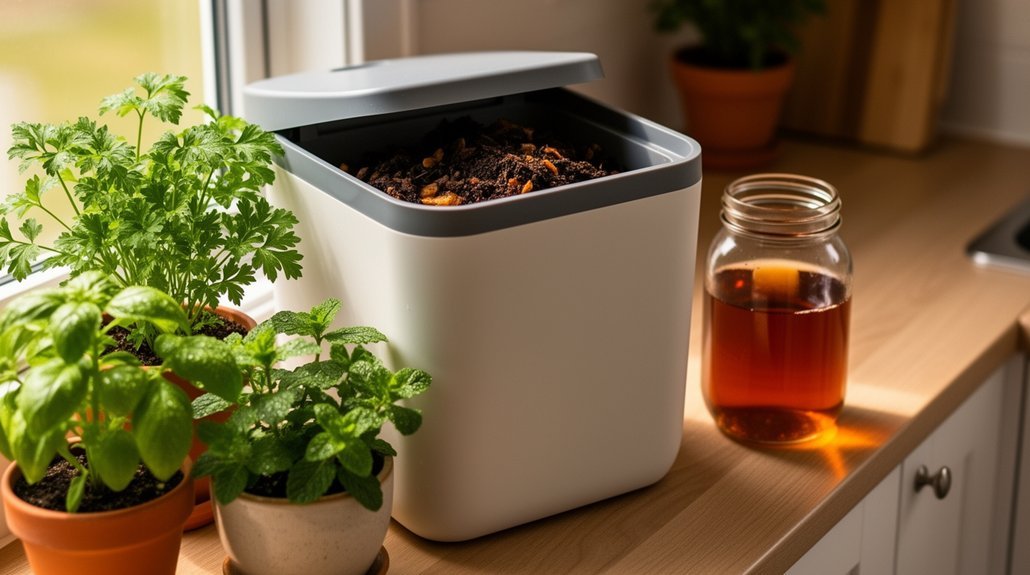
Once your bokashi bucket is full, you’ll seal it for about two weeks to complete fermentation—a pivotal step that transforms your kitchen scraps into fermented pre-compost rather than finished compost. White fungal growth during this stage is normal and beneficial.
After fermentation completes, you’ve got several disposal options:
- Bury in garden soil: Dig a hole, mix the pre-compost with soil, cover with at least 6 inches, then wait 1–2 weeks before planting
- Add to an active compost pile: Spread and mix the material to speed aerobic decomposition and reinvigorate slow piles
- Use in a wormery: Introduce the diluted material to support further breakdown without attracting rodents. Note that bokashi pre-compost is acidic, so review guidelines before adding to ensure your worm population remains healthy.
- Store temporarily: Leave the sealed bucket until garden space becomes available—microbes stay dormant until you’re ready. The fermented material also produces bokashi tea for plants, which can be drained and used as a liquid fertilizer while waiting.
This flexibility makes bokashi ideal for tiny homes with limited outdoor space.
Frequently Asked Questions
How Often Do I Need to Replace the Bokashi Bran, and Where Do I Buy It?
You’ll replenish your bokashi bran as you add food waste—roughly 1 tablespoon per inch of scraps. You’ll buy it from bokashi manufacturers like Bokashi Organko or specialty online composting retailers.
Can I Use Bokashi Bins in Apartments With Strict Composting or Waste Restrictions?
Yes, you can use bokashi bins in restricted apartments, but you’ll need to check your building’s rules first. Verify whether food scraps, liquid drainage, and fermented material storage are permitted before setting up your system.
How Long Does Fermentation Take Before the Bin Is Ready to Empty?
You’ll typically wait about two weeks after your bin’s full before you’re ready to empty it. Warmer conditions speed things up, while cooler temperatures slow fermentation down. Drain liquid every few days during this period.
What’s the Difference Between Bokashi Tea and Finished Pre-Compost, and How Do I Use Each?
You drain bokashi tea regularly and dilute it 1:100 before using it as a soil drench. You bury the finished pre-compost in soil for additional decomposition before garden use.
Do Bokashi Bins Work if I Don’t Have Access to a Garden or Outdoor Space?
Yes, you can use Bokashi bins without a garden. You’ll ferment scraps indoors, then finish the pre-compost in indoor planters, worm bins, or community compost destinations instead of burying it outdoors.
In Summary
You’ve discovered why bokashi bins revolutionize tiny home composting. They’re compact, odor-free, and accept almost everything you’d normally throw away. You’ll transform your kitchen scraps into nutrient-rich pre-compost without the mess or smell of traditional composting. Whether you’re composting in a studio apartment or small house, you’re making a real environmental impact. You’ve got everything you need to start composting today.