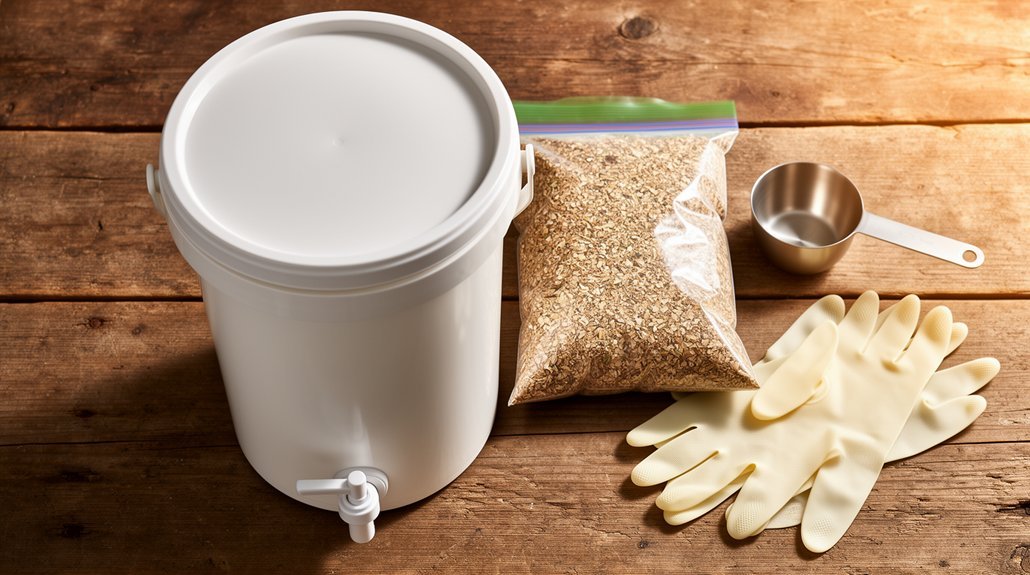
Your starter kit includes a 20-litre food-grade bucket with an airtight lid that creates the oxygen-free environment fermentation needs. You’ll find a bottom spigot for draining bokashi tea, a strainer plate separating solids from liquids, and a presser for compacting scraps. The kit comes with premium bokashi bran containing effective microorganisms that inoculate your food waste. Together, these components let you ferment meat, dairy, and cooked foods without odor. Each component plays a critical role in your composting success.
Understand Your Bokashi Bucket Components
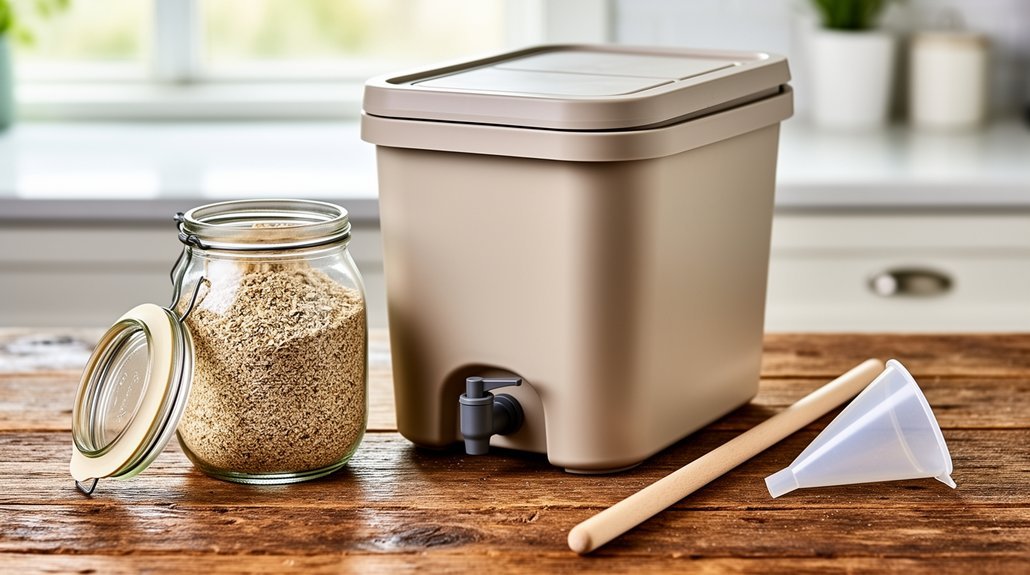
What’s actually inside your bokashi starter kit? You’ll find a 20-litre bucket measuring 9.5″ wide by 9.5″ deep by 16″ high—the main vessel for your food scraps. A spigot at the bottom lets you drain bokashi tea, while a drain cup catches the nutrient-rich liquid. A strainer plate separates solids from liquids during fermentation. Many kits include a presser to compact your scraps effectively and handles for easy transport between fermentation cycles. You’ll also get a dosage container for measuring bokashi bran accurately. The kit comes with 1 kg of premium bokashi bran, which inoculates your food waste and enables the fermentation process. These components work together to create an efficient, odor-free indoor composting system that can handle meat and dairy waste without producing unpleasant smells. The included instruction guide walks you through assembly and operation step-by-step.
Seal in Freshness: How the Airtight Lid Works
When you close your bokashi bucket’s lid tightly, you’re creating the oxygen-free environment that anaerobic microbes need to ferment your food scraps rather than rot them. That airtight seal also traps the gases and odors produced during fermentation, keeping your kitchen from smelling like a compost pile. By pressing down your contents before sealing, you’ll remove excess air pockets and ensure your lid makes a firm, effective seal every time. This odor-free operation is essential for indoor composting on small balconies and kitchens. A gamma lid or airtight alternative from retailers like Leaktite provides the reliable sealing performance needed to maintain this anaerobic fermentation process consistently.
Anaerobic Fermentation Process
Success in bokashi composting hinges on maintaining an anaerobic environment, and your lid is the primary barrier keeping oxygen out. When you open your bucket to add scraps, you temporarily disrupt the low-oxygen conditions that fermentation requires. Here’s what happens:
- Each opening introduces oxygen that can interrupt fermentation and force the process to restart
- You compress added food waste downward before immediately resealing to minimize air exposure
- The sealed lid maintains the “pickling” environment essential for bokashi processing
- Keeping the lid shut between additions preserves continuous fermentation
Your airtight seal works alongside the bran and drainage system to keep contents in their intended fermenting state. A firmly snapping lid remains closed during storage and resting periods, protecting your batch from unwanted oxygen intrusion. Unlike tumbler systems that require regular turning of the pile, bokashi’s sealed design eliminates the need for manual aeration. If your lid becomes loose or damaged, air entry disrupts the fermentation process and contents may rot instead of fermenting properly.
Odor Control Mechanism
Beyond maintaining anaerobic conditions, your airtight lid performs a second critical function: it seals in freshness by preventing odor from escaping your bokashi bucket. When you close the lid correctly, no smell should escape because sealed conditions prevent exposed waste from airing out. Many bokashi lids use a gasket or two-piece snap-on design to create a tighter seal against the bucket rim. To preserve this seal’s effectiveness, limit openings to once or twice daily and close quickly after each addition. Check your lid regularly—a degraded or warped seal reduces odor control and should be repaired or replaced promptly.
Managing moisture levels also matters; excess dampness creates smell problems even with a sealed lid, so use absorbent materials like egg carton pieces to maintain balance. For optimal odor containment, consider pairing your bokashi bucket with compostable bags designed to fit your bin’s capacity. The pickle-like smell that develops when bins are full is a normal indicator of active fermentation and can be minimized by keeping waste sealed between additions.
Manage Fermentation Liquid With the Drain System
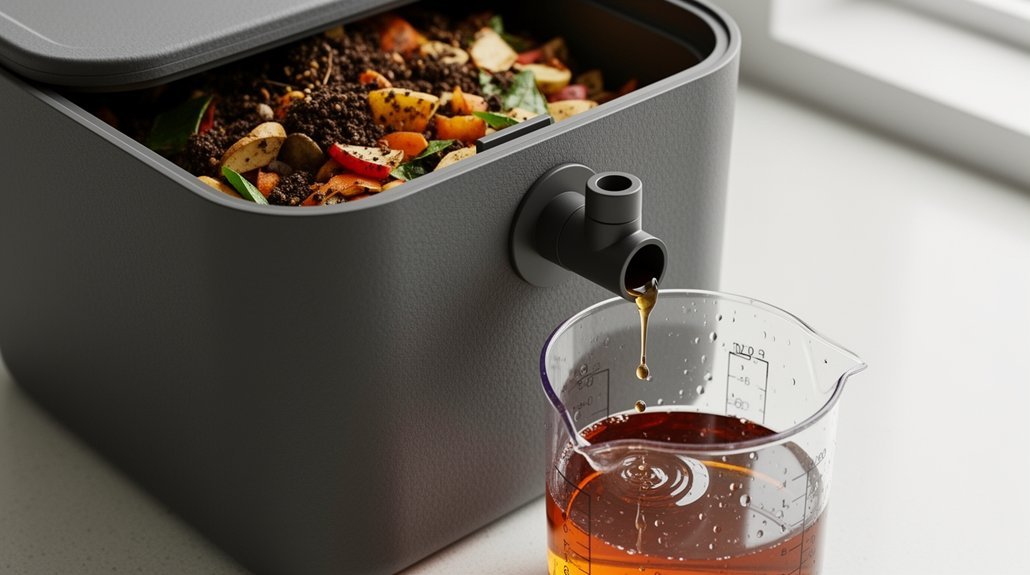
How does liquid accumulate during bokashi fermentation, and why should you manage it? Your food scraps release moisture as they ferment anaerobically, creating bokashi tea that pools at the bucket’s bottom. Without proper drainage, excess liquid promotes putrefaction and odor, compromising fermentation quality.
Your starter kit’s drain system prevents these problems:
- The strainer plate elevates food waste above the liquid collection zone
- The spigot positioned below allows liquid to exit without releasing solids
- Frequent draining reduces odor risk and maintains the oxygen-free environment
- Collected liquid becomes drain cleaner or diluted fertilizer for separate use
Drain your bucket every few days. If blockages occur, rinse the spigot with water or disassemble it for thorough cleaning. Each bag of premium bokashi bran is sufficient for multiple uses, supporting continuous fermentation cycles across your two-bin system. Proper drainage keeps your fermentation process running smoothly, similar to how charcoal filters manage odor in countertop compost crocks by maintaining optimal conditions for decomposition.
Tap Your Bokashi Tea When You’re Ready
Once you’ve established your drain system, you’re ready to collect the bokashi tea that accumulates in your bucket. You’ll want to tap your spigot every couple of days to drain the liquid.
Expect varying output depending on your food scraps—juicy fruit peelings and rinds produce more tea, while dry scraps yield less.
Some buckets generate only a cup after two weeks, while others produce 1–2 cups every day or two.
To collect efficiently, balance your bucket atop another container and open the tap.
You can press down the sealed lid with the spigot open to force more liquid through.
Use freshly collected tea within eight hours, and refrigerate it if you can’t use it immediately.
Airtight storage prevents odor development, similar to how zeolite-based odor control products maintain freshness in sealed containers.
The acidic bokashi tea is considered environmentally harmless and beneficial when disposed of properly.
Why Effective Microbes Make Bokashi Different
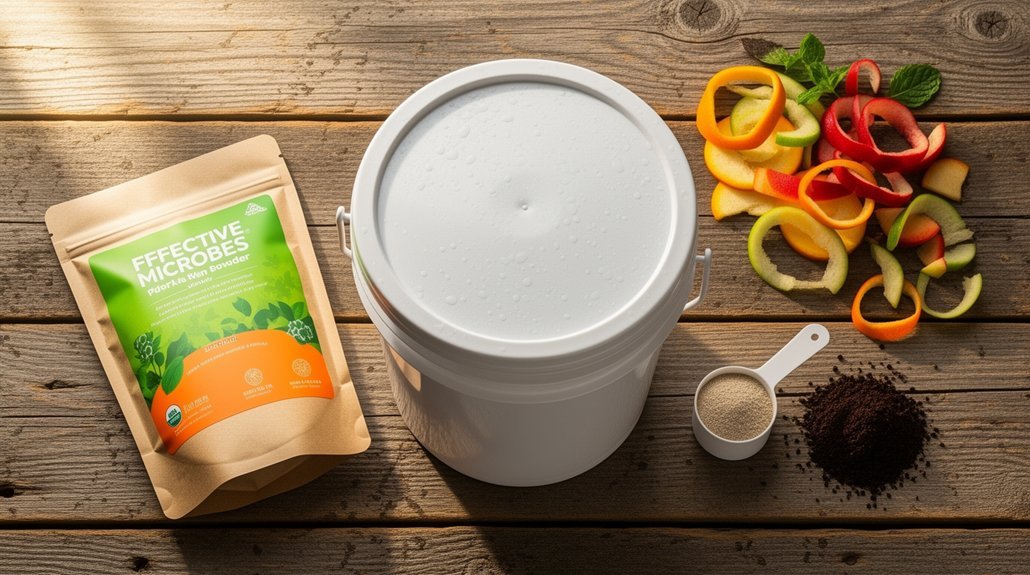
What truly sets bokashi apart from traditional composting? The answer lies in Effective Microorganisms (EM)—a carefully balanced culture that transforms your kitchen scraps through fermentation rather than decay.
Here’s why EM makes the difference:
- Fermentation over putrefaction – EM directs waste toward beneficial fermentation instead of allowing anaerobic spoilage and foul odors.
- Odor control – Lactic acid bacteria produce lactic acid, lowering pH and suppressing odor-causing pathogens while maintaining a stable environment at room temperature.
- Faster decomposition – EM-1 at effective concentrations accelerates breakdown and creates optimal C/N conditions for microbial growth.
- Superior end product – The microbial balance produces disease-resistant soil amendments with better chemistry than traditional compost. However, top-tier peer-reviewed studies have not demonstrated yield or soil quality improvements from EM applications in field trials.
You’re not just composting with bokashi—you’re cultivating beneficial microbes. Like worm composting systems that rely on liquid collection methods to harvest nutrient-rich products, bokashi fermentation produces concentrated outputs that require thoughtful application to gardens and soil.
Calculate Your Bran Supply: How Long It Lasts?
You’ll want to calculate your bran supply based on your household’s specific food-waste volume, since consumption rates vary dramatically between single-person homes and large families. Your usage depends on how frequently you fill your bokashi bucket and whether you’re running a single or two-bucket system, with larger waste-generating households burning through bran noticeably faster than low-waste households. Planning your refill schedule around a baseline estimate of 1 kg per month—then adjusting up or down based on your actual weekly food-scrap output—ensures you won’t run short mid-fermentation cycle. The standard 11 lb package typically lasts about 18 months for average household use with proper storage in an airtight container. With proper bran management, you should sprinkle fresh bran with each addition of food scraps at a rate of 1-2 tablespoons per inch of waste to maintain optimal fermentation conditions.
Bran Supply Duration Factors
How long does a bokashi bran supply actually last? That depends on several key factors beyond simple fermentation time.
Your bran consumption rate hinges on:
- Total food volume processed — faster-filling households drain bran supplies quicker than slow-filling systems
- Scrap characteristics — wet, small-particle, or high-liquid foods demand heavier bran coverage than dry scraps
- Environmental conditions — warmer temperatures increase microbial activity, raising your bran dosing requirements
- Bucket management strategy — two-bin systems spread bran use across overlapping cycles, extending your supply duration
Track your actual bran usage per bucket to calculate realistic duration. Most standard batches use 1–2 tablespoons per inch of food scraps, but wet or densely packed materials require more. Different bokashi bran formulations are optimized for specific waste types, which can affect overall bran consumption rates. You’ll gain accurate estimates once you monitor your specific household patterns and storage practices. The inoculated bran carrier introduces microorganisms that support fermentation efficiency, meaning higher-quality inoculant may reduce total bran volume needed per cycle.
Household Consumption Rate Planning
Calculating your bran supply duration starts with tracking how many full buckets you’ll process monthly. This foundation lets you estimate consumption accurately rather than relying on generic timeframes.
Start by counting your household’s weekly food scraps and determining how often you’ll fill each bucket. If you’re processing four 5-gallon buckets monthly, an 800 g bag should last approximately one month. For multiple buckets, monitor bran usage per bucket instead of by month alone—this reveals your actual consumption pattern.
Beginners should plan generously; using extra bran initially won’t harm your system, but insufficient coverage causes problems. Match your purchase quantity to your composting rhythm to avoid running short mid-cycle, ensuring consistent fermentation throughout your household’s waste processing schedule. High-quality bran with balanced Lactobacillus, Yeast, and Photosynthetic bacteria will require less product per layer while maintaining optimal fermentation efficiency. Ensure you store your bran in a dry, airtight container away from sunlight to maintain its microbial potency for the full duration of your supply.
Single-Bin or Two-Bin: Which Do You Need?
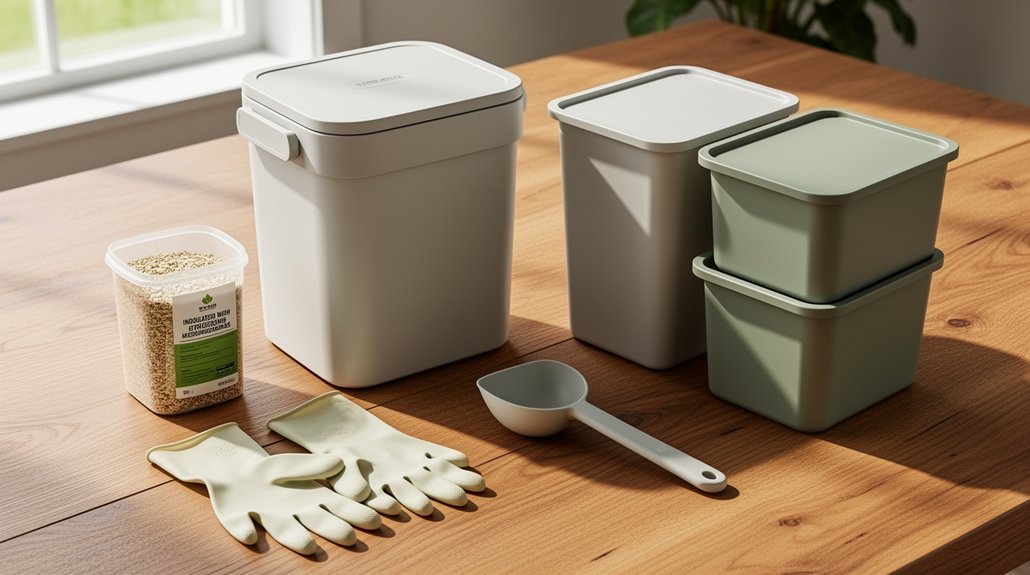
When should you choose a two-bin bokashi system over a single bin? It depends on your household’s needs and lifestyle. Here’s what to consider:
- Food waste volume – Two bins support continuous collection for active households; single bins work for low-waste situations.
- Daily routine – You’ll appreciate two bins if you can’t pause kitchen composting during the 10–14 day fermentation window.
- Available space – Single-bin setups fit smaller homes or tight kitchens, while two-bin systems require more room.
- Convenience priority – Two bins eliminate downtime between filling cycles, keeping your bokashi routine uninterrupted.
Most starter kits market two-bin packages as the standard choice because they maintain consistent waste capture. However, a single bin remains viable if you’re comfortable temporarily storing scraps elsewhere during fermentation. The BOE’s oval shape makes it easier to fill and manage, whether you’re operating a single or dual-bin setup.
What Kitchen Scraps Can You Compost?
You’ll find that bokashi systems handle meat, fish, and dairy products remarkably well—materials traditional composting often rejects—though you should be cautious with oils and fatty scraps since they don’t ferment as predictably.
When it comes to bones, you can safely add small ones to your bin, but you’ll want to exclude large bones that won’t break down efficiently during the fermentation process. After 2–3 weeks, microbes colonize scraps and break down these materials into nutrient-dense compost that integrates seamlessly into soil.
Understanding these distinctions helps you maximize what you can recycle while keeping your bokashi bin running smoothly.
Meat And Dairy Foods
One of bokashi composting’s greatest advantages is its ability to handle meat, dairy, and cooked foods that traditional backyard systems can’t process safely. Here’s why you’ll want to embrace this capability:
- High fermentation efficiency – Bokashi’s anaerobic process breaks down proteins and fats without the high temperatures traditional composting requires.
- Pathogen control – The fermentation process neutralizes harmful bacteria like E. coli and Salmonella that survive in low-heat backyard piles.
- Odor and pest management – Unlike open composting, bokashi contains smells and eliminates fly and rodent attraction. Large bones may require extended breakdown time beyond the standard 4–6 week fermentation window.
- Increased bran usage – You’ll need larger amounts of bokashi bran when adding meat and bones to ensure sufficient beneficial microbes.
Your bokashi system transforms kitchen scraps others discard into valuable pre-compost.
Oily And Fatty Scraps
Grease and oils that’d clog a traditional compost pile work beautifully in bokashi systems when you handle them correctly. You can ferment small amounts of cooking oil and fatty residues by spreading them through absorbent materials like paper towels and dry scraps. This approach prevents clumping and guarantees even microbial breakdown. The high nutrient and energy content in fats and oils provides valuable nutrients to your finished compost, making it an excellent organic fertiliser for your garden.
| Scraps to Include | Scraps Needing Caution | Preparation Tips |
|---|---|---|
| Lightly oiled vegetable trimmings | Large volumes of oil | Wipe pans with paper towels |
| Residual plate fats | Thick grease layers | Mix with dry kitchen waste |
| Plant-based oil residues | Heavily saturated drippings | Add in thin layers |
You’ll divert valuable organic material from landfills while protecting your plumbing. Always keep your bokashi bucket sealed tightly between additions to support anaerobic fermentation and minimize odors.
Bones And Hard Materials
Bones and hard materials present a unique challenge in bokashi systems—they’re welcome in your kitchen bucket, but they won’t fully break down during the fermentation stage. You’ll need to plan for longer soil burial time after fermentation completes.
Here’s how to handle bones effectively:
- Add extra bran when including meat, bones, and high-protein scraps
- Pre-process large bones by crushing or grinding them into smaller pieces
- Bury processed bones in the center of active compost piles for better microbial contact
- Consider grinding bones into bone meal for faster nutrient availability to plants
Small bones decompose more readily than large, dense ones. Whole large bones can persist in home compost for years. The fermentation microbes in bokashi bran thrive on the carbohydrates and proteins found in bone scraps, which helps kickstart the anaerobic decomposition process. Ground bone contributes valuable calcium and phosphorus while breaking down substantially faster than intact material.
Set Up Your Bokashi Bucket in 5 Steps
Ready to start your bokashi composting journey? Here’s how to set up your bokashi bucket properly.
First, confirm all bucket components are present: the drainer plate, spigot, tight-sealing lid, and food-grade plastic bucket. Turn the spigot to closed and place the drainer plate level at the bottom.
Next, add food scraps in thin 1-4 inch layers, then sprinkle bokashi bran over each layer. Press down to eliminate air pockets and compact the contents.
Continue layering scraps and bran until your bucket approaches full capacity, finishing with a heavier bran layer for odor control.
Finally, seal the lid tightly to maintain anaerobic conditions. Let your filled bucket ferment undisturbed for 14-21 days before burying the fermented contents in soil or a processing box.
Make Sure Your First Batch Succeeds
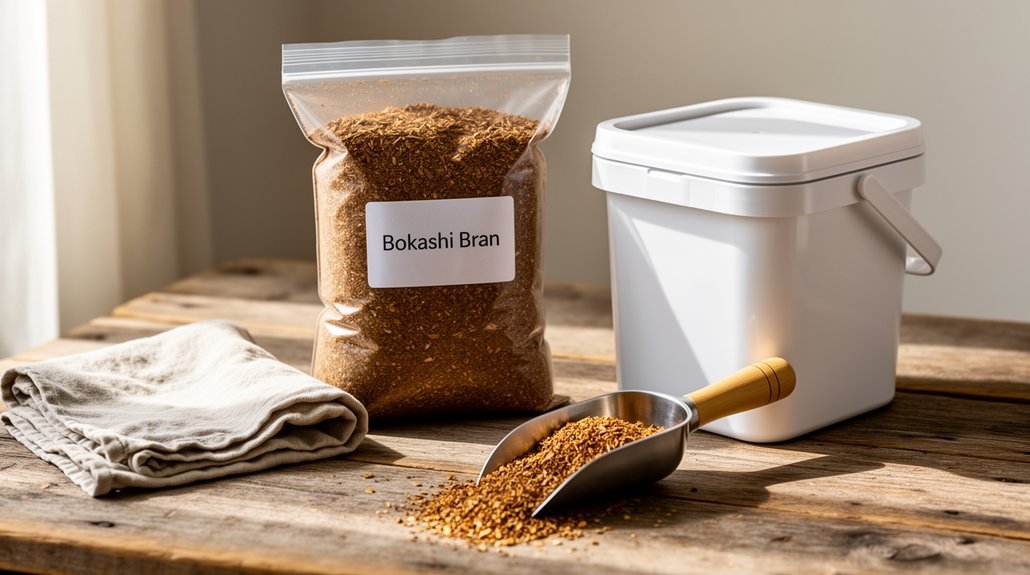
Now that you’ve set up your bucket correctly, you’ll want to focus on what makes your first batch succeed.
- Layer consistently – Sprinkle bokashi bran over each food-scrap addition to coat everything thoroughly. This triggers anaerobic fermentation and suppresses odors.
- Seal immediately – Close your lid tightly after every addition. Minimizing air exposure maintains the oxygen-free conditions your microbes need.
- Drain frequently – Use your spigot to collect bokashi tea regularly. This reduces putrefaction risk and keeps your fermentation environment clean.
- Add scraps regularly – Feed your bucket small, frequent portions of fresh waste. You’ll accept meat, dairy, and cooked foods without worry.
These steps work together to create the ideal fermentation environment for your first successful batch.
Troubleshoot Common Bokashi Problems
What’s gone wrong with your batch? Several issues can derail bokashi fermentation. Check your lid first—even slight gaps let oxygen in, halting microbial activity. You’ll need an airtight seal to prevent this.
Even slight gaps in your lid let oxygen in, halting microbial activity. You’ll need an airtight seal to prevent this.
Next, inspect your bran distribution. Insufficient or uneven coverage leaves waste untreated, causing rancid smells and blue or green mold. Sprinkle bran across every 30–40 mm layer, using extra for high-protein items like meat and fish.
Excess moisture also drowns beneficial microbes. Drain juice regularly and monitor for wet, soggy contents.
Finally, assess mold color. White fuzz signals healthy fermentation, but green, blue, or black indicates failure. Rotten odors confirm problems.
If your batch has failed, bury it deeply in soil with extra bran and start fresh.
Frequently Asked Questions
Can I Use My Bokashi Kit Outdoors, or Is It Strictly for Indoor Use?
You can use your bokashi kit both indoors and outdoors. You’ll ferment food scraps inside your airtight bin, then transfer the pre-compost outdoors to garden beds, soil, or traditional compost piles for final breakdown.
How Do I Know When My Fermented Food Waste Is Ready for the Next Stage?
You’ll know your batch is ready after about two weeks when it’s softened, smells pickled or sour, shows white mold only, and feels compacted with even bran coverage. Then you’re ready to bury or compost it.
What’s the Difference Between Bokashi Tea and the Fermented Waste Itself?
You’ll drain the liquid bokashi tea regularly through your spigot as a plant feed, while you’ll keep the solid fermented waste layered in your bin until fermentation completes, then bury or compost it.
Can I Mix Bokashi With Traditional Composting Methods in My Garden?
Yes, you can mix bokashi with traditional composting. You’ll layer your bokashi-fermented scraps with carbon-rich browns like leaves and cardboard, then add soil to inoculate beneficial microbes. This speeds up decomposition considerably.
Is Bokashi Composting Suitable for Apartment Dwellers With Limited Space?
Yes, bokashi composting suits you perfectly in apartments. You’ll fit compact, sealed bins under counters, process diverse food scraps including meat and dairy, and eliminate outdoor space needs. Airtight fermentation minimizes odors and pests indoors year-round.
In Summary
You’re now ready to transform your kitchen waste into nutrient-rich compost. With your bokashi bucket properly assembled and stocked with effective microbes, you’ll tackle fermentation like a pro. You’ve learned which scraps work best, how to manage drainage, and what troubles might pop up. You’ve got everything you need to reduce waste sustainably. Start your first batch today and watch your garden thrive.