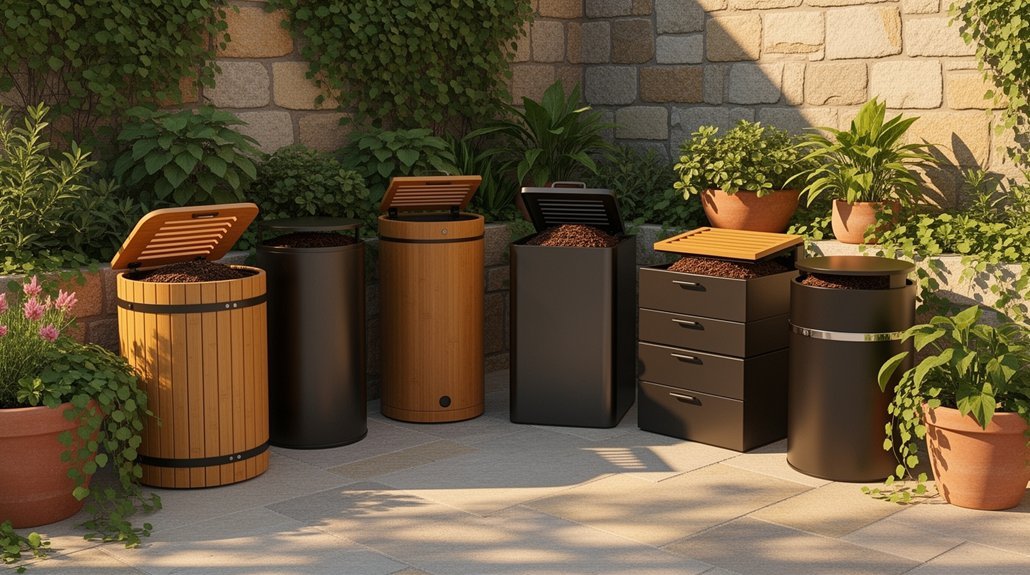

Put your compost bin within arm’s reach of the prep area and choose a tight‑locking lid; after each drop of fruit or veg scraps, cover them with an inch of dry shredded paper or cardboard to soak up moisture and block flies. Keep the bin cool, shaded, and turn the pile every week or two to stay it aerobic and odor‑free. Use a vinegar‑soap trap nearby and freeze or refrigerate scraps if you need a pause. Follow these steps and you’ll discover even more tricks.
Locate Your Kitchen Compost Container(s)
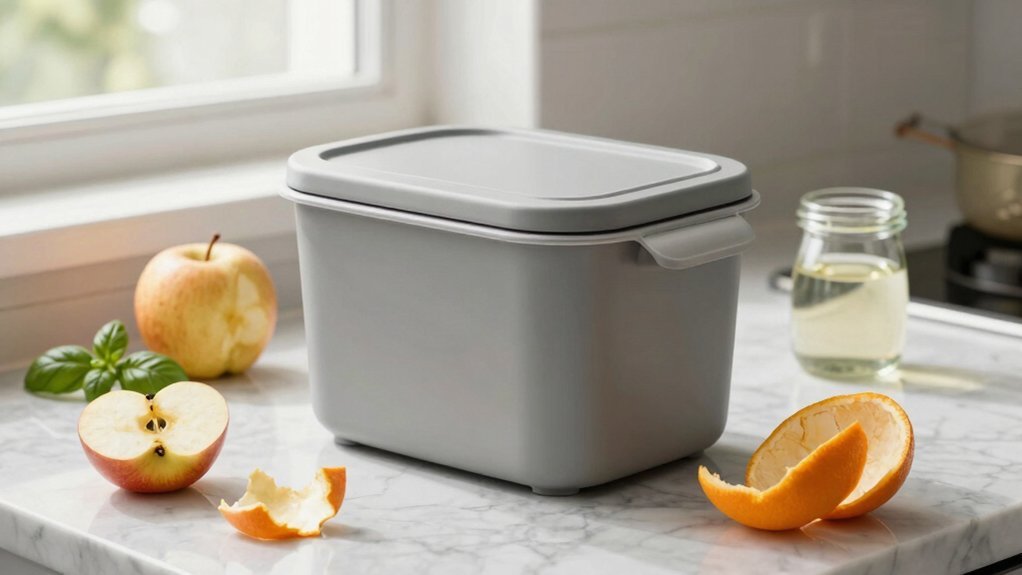
Where should you put your kitchen compost container? Keep it within arm’s reach of the main food‑prep area—on the counter, next to the sink, or under the sink—so you can toss scraps without extra trips. A spot near the sink lets you rinse peels and wet waste cleanly, while a cool, shaded location slows decomposition and curbs odor. Choose a place that fits your kitchen layout: a countertop bin works in compact spaces, an under‑sink bin saves surface room, and a pull‑out near the cleanup sink streamlines disposal. Avoid high‑traffic walkways and cluttered zones where spills or knocks are likely. By positioning the bin where it’s easy to use and far from bright sunlight, you’ll maintain a tidy workflow and keep fruit‑fly attractants at bay. Consider central placement to minimize travel distance from multiple prep stations. Look for stainless steel handles that allow you to easily transport your container between the prep area and your outdoor compost bin.
Seal the Bin for a Fruit‑Fly‑Free Indoor Compost
A snug, tight‑fitting lid is the single most effective barrier against fruit flies in an indoor compost bin. Choose a sealed container design—screw‑on or locking lids, minimal seams, and hot‑bin style enclosures block both adults and egg‑laying sites. After each addition, close the lid fully; never leave it ajar while you prep scraps. Keep the waste layer covered with a paper towel, newspaper, or similar barrier before sealing. Reduce exposure time by moving scraps to the freezer or emptying the bin promptly; smaller countertop pails force quicker turnover. Models with vented lids and charcoal filters provide odor control while maintaining fruit fly protection. Clean the lid and rim regularly to eliminate residue, cracks, and odors that attract flies. Consistent sealing and maintenance keep your indoor compost fruit‑fly‑free. A sealed container prevents flies from accessing the waste.
Add Dry Carbon Materials to Balance Moisture and Odor
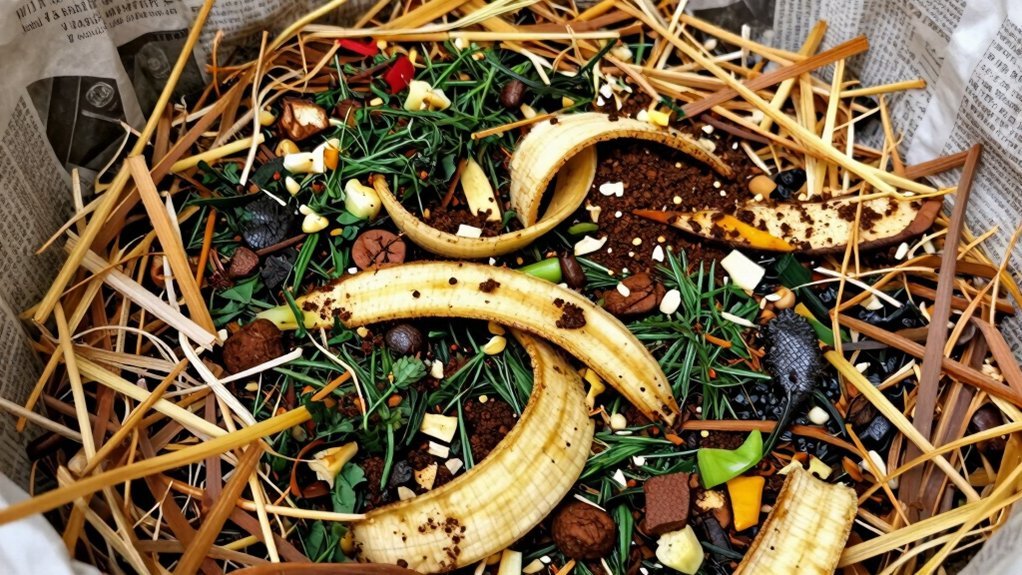
You can layer shredded paper, cardboard, and paper towels over fresh scraps to soak up excess moisture. Adding wood chips or sawdust creates extra air pockets and speeds up aerobic breakdown, keeping odors low. These dry carbon materials give the pile a balanced C/N ratio, making it far less appealing to fruit flies. Incorporate cardboard to absorb excess moisture and improve aeration. Pairing these carbon-rich materials with removable inner buckets allows you to manage waste layers more effectively and maintain proper moisture balance in your composting system.
Shredded Paper Layers
Dry shredded paper acts as a carbon‑rich “brown” that soaks up excess moisture from kitchen scraps, cutting off the damp, nutrient‑rich environment fruit flies love. You’ll want to layer it directly over fresh greens, keep the surface dry, and mix it in before the pile compacts. This simple step creates a barrier that absorbs leachate, improves airflow, and balances the nitrogen‑rich foods that attract flies. When you add new scraps, repeat the process to keep the pile feeling like a wrung‑out sponge. Adding structured aeration helps prevent compaction and maintains aerobic conditions. Using mesh screens or sifters alongside your layering strategy allows you to monitor decomposition progress and remove any larger undecomposed materials that might harbor insects.
- Cover every addition of fruit or veg with a thick paper layer.
- Use small shreds to avoid matting and speed decomposition.
- Re‑apply after each topping, especially in warm weather.
Cardboard and Paper Towels
After the shredded‑paper barrier, toss in clean cardboard tubes and plain paper towels to boost the “brown” side of your bin. Cardboard tubes act as dry carbon, soaking up excess moisture that attracts fruit flies and creates odor. Tear them into strips or leave them whole for slower breakdown, but never use greased or coated tubes. Unbleached paper towels are ideal; they absorb liquid, add air pockets, and keep the carbon‑to‑nitrogen ratio balanced. If a towel has food residue, it’s fine as long as the contamination is organic. Avoid towels soaked in cleaners, solvents, or heavy grease, and discard any with plastic debris. Consider pairing your cardboard and paper layers with charcoal filters in your countertop bin to enhance odor control even further. After each fruit‑veggie addition, layer a few strips of cardboard or towel to mask smells and improve airflow, keeping the bin dry, airy, and pest‑free. Paper contributes to air flow and moisture absorption in the compost bin.
Wood Chips or Sawdust
Ever notice how a thin layer of wood chips or sawdust can instantly quiet a fruit‑fly invasion? You’re giving the pile a dry carbon shield that soaks up excess moisture, cuts slime, and traps the scent that calls flies. Apply it as a thick top coat, mix it in, and pair it with other browns for structure and airflow.
How to use it effectively
- Cover fresh fruit scraps with a generous layer of wood chips or sawdust, then blend the material into the bin.
- Keep the ratio roughly 1:1 (wet scraps to dry carbon) to prevent soggy spots.
- Turn the pile weekly so the carbon spreads evenly, maintains aeration, and keeps flies out.
A drier surface limits egg‑laying sites, reduces odor, and keeps your compost bin fly‑free. Adding dry carbon helps maintain the proper moisture balance, which deters flies. For additional odor control in indoor kitchen composters, consider using activated carbon filters alongside your wood chip layer to maximize fly prevention and scent elimination.
Bury Each New Scrap Under a Layer of Carbon
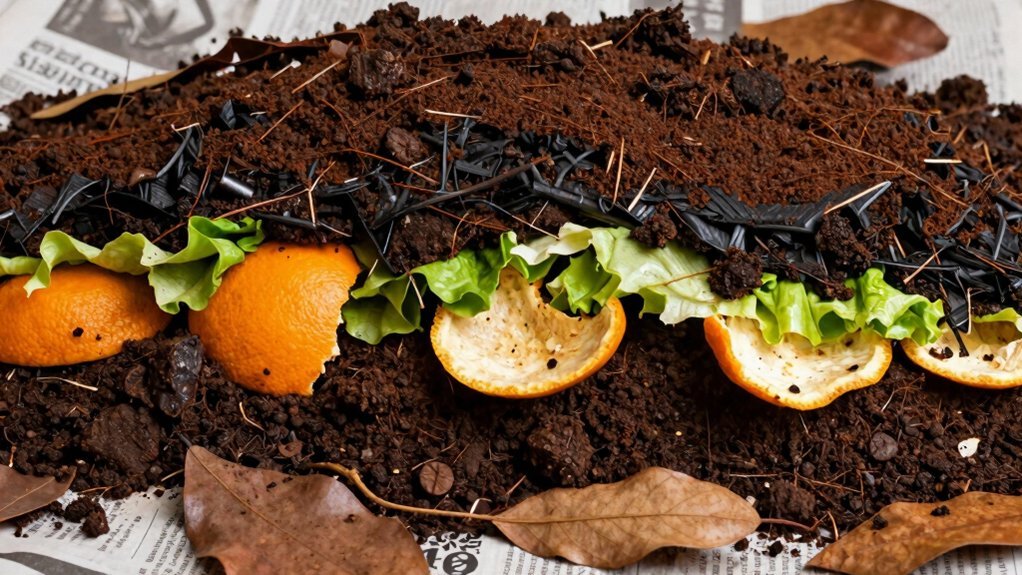
Cover each fresh kitchen scrap with a thin layer of dry carbon—like shredded cardboard, dry leaves, or straw—right after you add it to the bin. This immediate barrier blocks fruit flies from seeing or smelling the waste, and the dry material soaks up excess moisture, keeping the surface inhospitable for egg‑laying. Use enough carbon that the food can’t poke through; a generous, loose cap works better than a compacted one because it stays dry and resists caking. Shredded paper or cardboard are handy, while straw and dry leaves add airflow without inviting pests. By burying every peel, coffee ground, or vegetable trimmings under this carbon blanket, you suppress odor, deter flies, and keep rodents and raccoons out, maintaining a clean, low‑maintenance compost bin. This method also directly enriches soil as the organic material decomposes underground, providing nutrients to plant roots. For optimal results, ensure the mesh size and filtration of any compost tea bags used later accommodates the decomposed material without clogging.
Turn the Pile Every 1–2 Weeks to Keep It Active
Burying each scrap under a carbon blanket keeps flies at bay, but the pile still needs oxygen and heat to stay alive. Turning it every 1–2 weeks injects fresh air, spreads moisture, and keeps the temperature high enough for microbes to race. This regular mix also pushes exposed food away from the surface, shortening the window fruit flies can land and breed. The temperature drop signals when turning is needed to restart microbial activity. For those composting indoors with bokashi systems, airtight lids provide additional odor control and fly prevention alongside traditional turning methods.
- Aerate – lift and flip the material to feed aerobic microbes.
- Even moisture – blend wet spots with dry ones, preventing soggy pockets.
- Distribute heat – spread the warm core, accelerating breakdown and reducing odors.
Stick to this rhythm and you’ll see faster compost, fewer flies, and a cleaner kitchen.
Keep the Bin and Kitchen Tidy
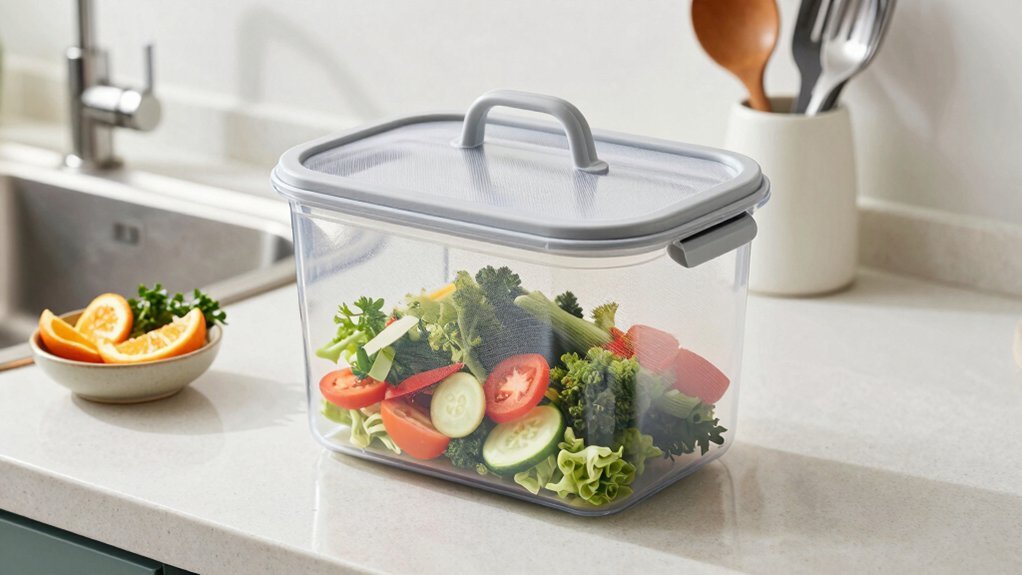
When you keep the kitchen‑scrap bin sealed, clean, and dry, you cut off the odors and moisture that attract fruit flies. Use a lidded, tight‑sealing countertop bin—preferably one with a charcoal filter—to trap smells. Close the lid whenever you’re not adding scraps, and choose a wide‑mouth design for easy access while preserving the seal. Empty the bin daily or at least every other day; smaller bins make this quicker and reduce rot. Carry the full container straight to the outdoor compost pile to avoid spills. Wash the bin regularly with mild soap or a vinegar‑water mix, scrubbing the lid, handle, and exterior, then dry thoroughly to prevent mold. Line the bin with compostable paper or newspaper to absorb moisture, and store it in a cool, shaded spot—under the sink or in a pull‑out compartment—to keep the kitchen tidy and fruit‑fly free. Regular emptying helps prevent odor buildup and fruit‑fly attraction.
Freeze or Refrigerate Scraps Before Adding Them
Keeping your bin sealed and tidy already cuts down on fruit‑fly attractants, but adding a cold‑storage step gives you an extra barrier. When you freeze scraps, decomposition halts and odors drop dramatically, so flies lose the scent cue they need to locate a food source.
Refrigerating works similarly for short‑term storage, slowing microbes and keeping smells near‑invisible. Both methods also kill any larvae that may already be present, preventing a new generation from emerging.
- Store scraps in airtight containers or sealed bags.
- Freeze for long‑term holding; refrigerate for a day or two.
- Transfer thawed material promptly to the compost bin to keep the workflow smooth.
Cold storage also ruptures cell walls, which can speed up later breakdown, giving you a faster, cleaner compost pile while keeping flies at bay. Freezing also helps curb pests by preventing fruit‑fly breeding.
Set Up Apple‑Cider‑Vinegar Traps to Catch Flies
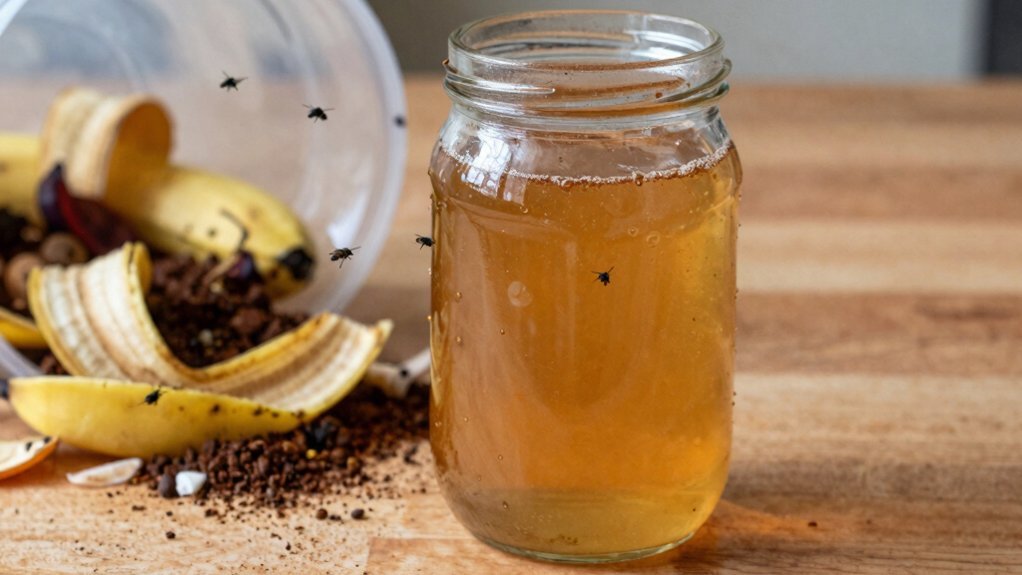
Looking for a quick, low‑cost way to ditch those buzzing intruders? Grab a small jar, pour in about ½ cup of apple‑cider‑vinegar, and add two or three drops of dish soap. Stir gently so the mixture stays mostly bubble‑free. Cover the opening with plastic wrap, secure it with a rubber band, and poke several tiny holes with a needle. Place the trap near your compost bin, sink drain, trash can, or any spot where flies hover. The fermented scent lures them, while the soap breaks surface tension so they drown. Swap the mixture when it looks dirty or full of insects, and consider multiple traps if flies are spread out. This simple setup catches adult flies without chemicals. Rapid reproduction makes timely trapping essential.
Pause Composting and Reset After an Infestation
Why let fruit flies ruin your compost? Pause adding fresh scraps for 1–2 weeks, let existing material finish decomposing, and remove visible adults. This break stops the breeding cycle because eggs need about two weeks to become flies. When the infestation persists, empty the bin, scrub it clean, and rebuild with dry carbon bedding—shredded paper, cardboard, or leaves—covering any remaining scraps with at least an inch of material to block flies and absorb excess moisture. Consider using compostable bin liners to maintain a cleaner bin structure during the recovery process. Finally, resume feeding only after activity drops, adding small, buried portions and freezing scraps beforehand.
- Stop new inputs and clean the bin.
- Re‑stock with dry carbon layers.
- Restart feeding cautiously after a moisture‑controlled, aerated recovery.
They belong to the Drosophilidae family, which prefers damp, organic environments.
Frequently Asked Questions
Can I Compost Meat or Dairy Without Attracting Flies?
Yes, you can compost meat or dairy without attracting flies if you bury them deep, cover each addition with plenty of brown material, keep the top dry, and use a sealed, hot‑compost system.
How Often Should I Replace the Carbon Material Layer?
You should replace the carbon layer every three to six months, checking for sour odors or visible grime. If you notice flies, moisture, or the filter feels saturated, swap it out sooner.
Do Indoor Compost Bins Work in Humid Climates?
Yes, they work if you control moisture. Keep the mix about a wrung‑out sponge, add dry browns, ventilate well, turn regularly, and drain excess liquid. This prevents soggy, anaerobic conditions.
What Temperature Is Ideal for Freezing Scraps Before Composting?
You should freeze scraps at 0 °F to –10 °F (‑18 °C to ‑23 °C). This range stops microbial activity, kills odors, and prevents fruit flies, keeping your compost ready for later use.
Can I Use a Dishwasher Rack as a Compost Bin Lid?
You can try it, but a dishwasher rack alone won’t seal the bin, so fruit flies may still get in. Pair it with a tight‑fitting cover or use a purpose‑built lid for better protection.
In Summary
By following these steps, you’ll keep fruit flies out of your kitchen compost and enjoy a clean, odor‑free bin. Keep the container sealed, balance wet scraps with dry carbon, and turn the pile regularly. Use traps and refrigerate problem when needed. If flies do appear, pause the process, clean the bin, and restart. Your compost will stay healthy, and you’ll keep your kitchen fly‑free.