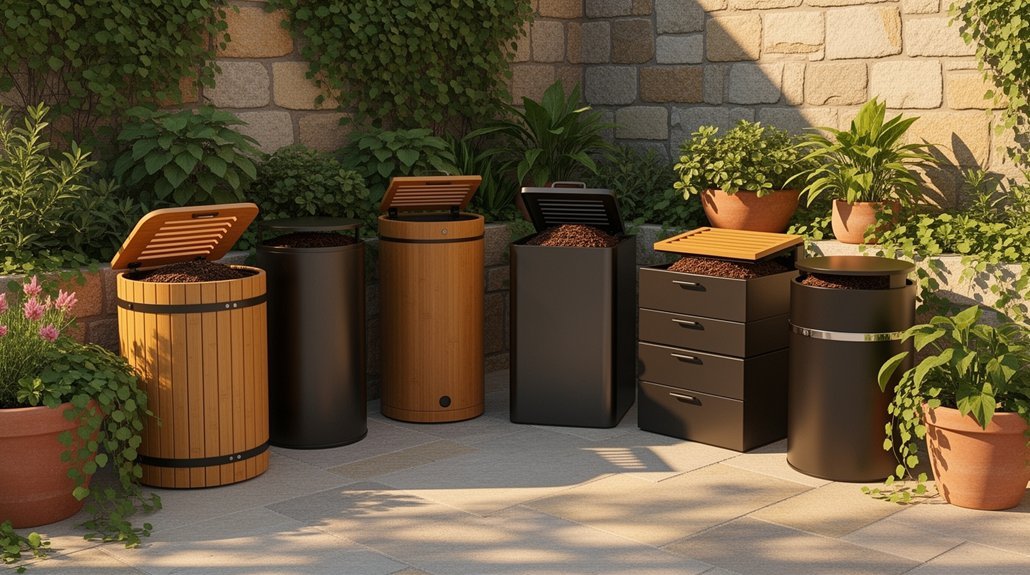

Use a tight‑fitting, rubber‑gasketed lid that sits flush with the rim and overlaps the edge, then seal any gaps with steel wool and caulk. Add screened vents made from ¼‑inch hardware cloth, securing them in rigid frames and sealing the perimeters with silicone. Bolt the bin to a brick or rock base and line the bottom with fine mesh to block burrowing. Keep the lid closed except when loading and replace cracked seals regularly. If you follow these steps, you’ll discover even more ways to keep pests out.
Choose a Tight‑Fitting Lid for a Pest‑Proof Compost Bin
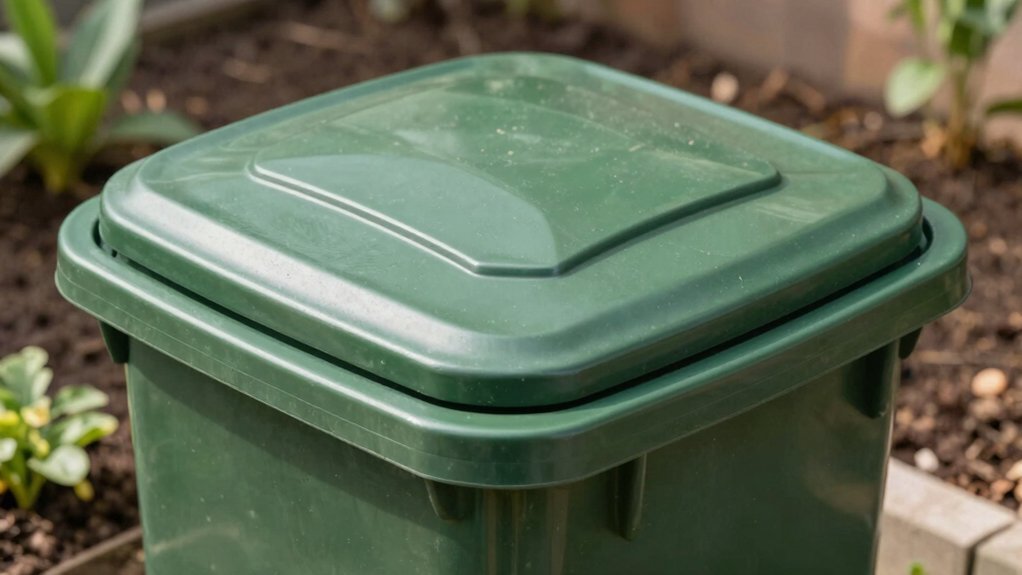
Ever wonder why a snug lid makes all the difference in keeping rats, mice, and flies out of your apartment compost? You’ll find a tight‑fitting lid is the first line of defense. A rubber‑seal or gasketed lid snaps flush with the rim, eliminating side gaps that rodents exploit. Choose a lid with a downward overlap or recessed edge; it blocks side entry while staying easy to lift for daily use. Rigid plastic or coated metal keeps the shape intact, so the seal doesn’t warp over time. A good seal also traps odors, cutting the scent that draws flies and rats. For apartment dwellers with space constraints, compact countertop bins with airtight lids offer effective odor control while maintaining pest protection in smaller living spaces. Clean the lid regularly, replace cracked seals, and keep it closed except when loading—your pest‑proof compost depends on it. Vermin mesh can be added under the bin for extra protection.
Install Screened Vents on a Pest‑Proof Compost Bin
Why bother with open holes when you can keep airflow while blocking pests? Install screened vents made from 1/4‑inch hardware cloth (18–22 gauge) over every intake and exhaust opening. The fine mesh stops flies, ants, and small rodents while still letting oxygen in. Mount each screen in a rigid frame, screw it down, and seal the perimeter with a snug gasket to eliminate gaps. Inspect the vents monthly for tears or clogs, and replace damaged sections promptly. In high‑insect areas, choose tighter mesh; for raccoons or squirrels, opt for heavier gauge. Properly screened vents keep your compost aerated and pest‑free. For apartment dwellers using airtight bokashi bins, screened vents provide an additional layer of pest protection beyond the sealed lid design.
| Feature | Benefit |
|---|---|
| 1/4‑in hardware cloth | Blocks insects, allows airflow |
| 18‑22 gauge wire | Resists chewing, tearing |
| Rigid frame & screws | Keeps screen tight, durable |
| Sealed perimeter | Eliminates edge entry points |
| Regular inspection | Maintains aeration & exclusion |
Seal the Bin Completely to Block Odors and Pests
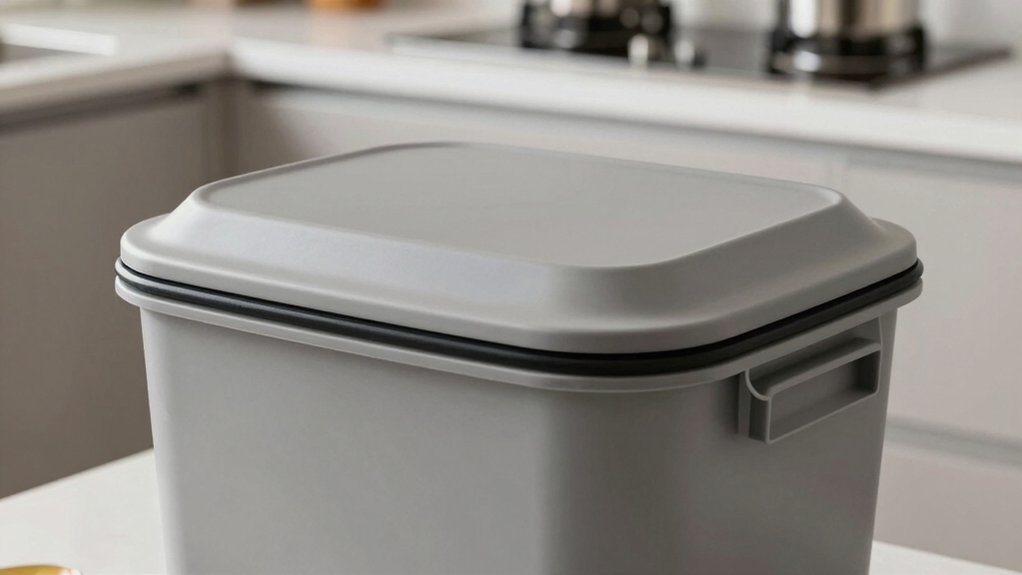
You’ll want a tight‑fit lid that locks shut, because even a penny‑sized gap lets rodents slip in.
Pair that seal with mesh‑screened ventilation openings so air can circulate without giving pests a way in.
Together they keep odors contained and the compost bin pest‑free.
Most ceramic crocks feature built-in charcoal filters in their lids to maximize odor control alongside physical sealing.
Rodents are especially attracted to compost heaps in winter due to warmth and availability.
Tight‑Fit Lid Seal
How can a tight‑fit lid keep your apartment compost pest‑free? A lid that seals completely blocks odors that lure flies, ants, and rodents, while keeping moisture in to speed decomposition. Use a hard‑plastic container with a simple, smooth lid, and add weatherstripping or a gasket for a tighter seal. Clamp or latch the lid to compress it against the rim, eliminating gaps from warped edges. Keep the lid airtight, empty the bin weekly, and rinse it after each use to prevent residue buildup. Pair the sealed bin with absorbent newspaper or wood shavings to further curb smells. Regular aeration every one to two weeks accelerates decomposition while maintaining proper moisture balance. Adding a drilled‑hole base improves drainage and reduces excess moisture.
- Add foam tape or a rubber gasket for a snug fit.
- Use clips or a latch to press the lid firmly.
- Choose a hard‑plastic bin with a smooth, removable lid.
- Empty and rinse the bin weekly to avoid residue.
- Layer newspaper or wood shavings inside to absorb moisture and odor.
Mesh‑Screened Ventilation Openings
A well‑designed mesh‑screened vent gives your compost bin the oxygen it needs while keeping flies, ants, and rodents out. Choose galvanized steel or stainless steel hardware cloth with fine perforations; it resists chewing, corrosion, and moisture better than plastic. Overload the screen past the opening, fasten it with screws, epoxy, or a snap‑fit frame, and seal all edges to eliminate gaps. This tight fit blocks even tiny rodent entry points while maintaining airflow that keeps the pile aerobic and odor‑free. By preventing odor spikes, you remove the main attractant for pests. For additional protection, consider layering recyclable paper material at the base to absorb excess moisture and further deter pest entry. Combine the screened vent with sealed lids, doors, and joints for a fully pest‑proof, odor‑controlled compost system in your apartment. Sealed tumblers can also provide a completely closed environment that stops insects from entering.
Install Rodent‑Proof Materials (Steel Wool, Hardware Cloth, Metal Sheeting)
Choosing the right rodent‑proof materials is the first step to sealing your apartment compost from pests. Start with galvanized hardware cloth (¼‑inch mesh) under the bin and around vents, using thick wire and secure staples or zip ties. Fill any tiny cracks with steel wool, then cover it with caulk or tape so the fibers stay in place. For larger openings, attach metal sheeting to create a solid, chew‑resistant barrier. Prioritize the bottom of the container, because rodents love to burrow upward. Fasten all edges tightly, and inspect regularly for rust or wear. Keep the compost moist to deter nesting. Moisture control helps prevent rodents from establishing a habitat. Using beneficial microbes in your composting system can further discourage pest colonization by accelerating decomposition and creating unfavorable conditions for rodents.
- ¼‑inch galvanized hardware cloth for fine mesh protection
- 2 mm‑thick steel wool as a filler for narrow gaps
- Metal sheeting to block larger access zones
- Staples, screws with washers, or zip ties for secure attachment
- Routine checks for corrosion and re‑tightening of fasteners
Apply Odor‑Control Techniques Specific to Compost Bins
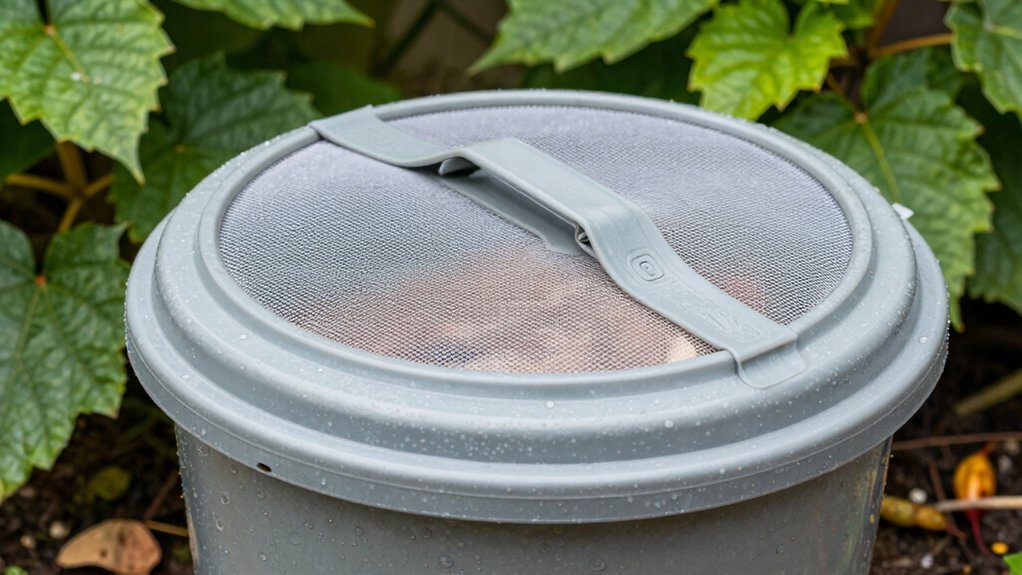
Now that your compost bin is sealed against rodents, the next step is to keep the smells from escaping. Fit a tight‑closing lid with no gaps; this is your primary odor barrier. Slip an activated‑charcoal filter into the lid compartment and replace it every three to six months to trap volatile compounds. Every time you add scraps, layer dry browns—shredded newspaper, cardboard, or sawdust—on top to absorb moisture and mask odors. Use paper towels or egg cartons to soak excess liquids, and rinse the bin weekly to prevent residue buildup. Keep the bin in a cool spot and turn the contents occasionally to maintain aerobic conditions and a balanced carbon‑to‑nitrogen ratio, which further reduces foul smells. Avoid meat and dairy, as they are the worst contributors to odor.
Follow Daily Compost‑Management Practices to Keep Pests Away
How can you keep pests at bay while your compost works? By balancing carbon and nitrogen, turning the pile regularly, and covering every food‑scrap layer, you create an environment that’s hostile to flies, rodents, and maggots. Keep the mix roughly 2–3 parts browns to 1 part greens, add dry cardboard or leaves after each kitchen deposit, and avoid thick grass clippings. Turn the pile often enough to bury fresh scraps, then top with a fresh layer of browns. Cover each food‑scrap addition with leaves, soil, or wood chips, and maintain a damp‑but‑not‑soggy texture. Finally, exclude meat, dairy, and pet waste, and use a lidded bin with mesh‑covered vents.
- Add a dry brown layer after every food drop
- Turn the compost daily to bury scraps
- Keep moisture level just damp, never soggy
- Cover scraps immediately with leaves or wood chips
- Use a sealed bin with fine‑mesh vents
Sprinkling diatomaceous earth can further deter insect larvae without harming beneficial worms.
Troubleshoot Leaks and Gaps for a Fully Pest‑Free Bin
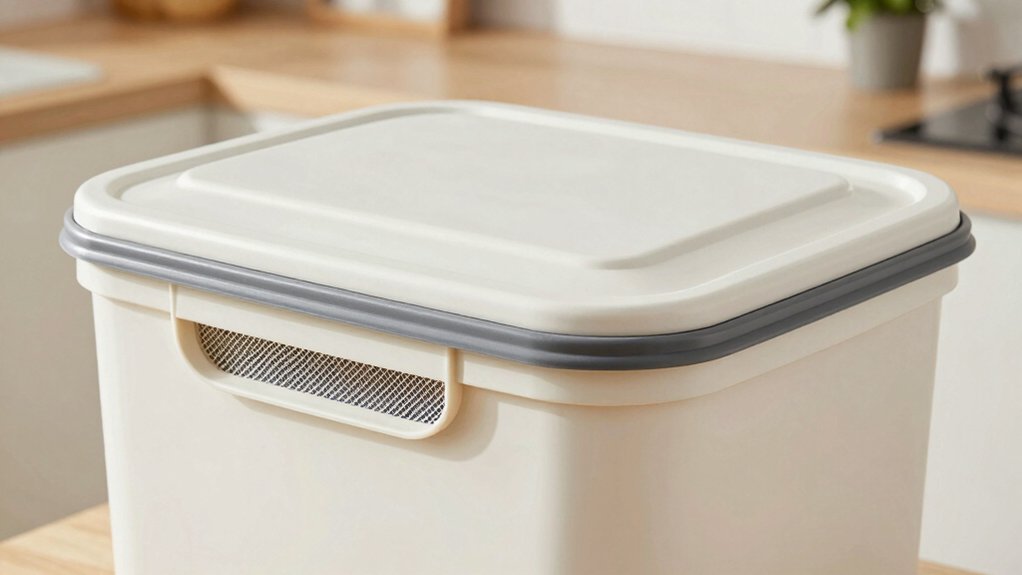
Ever wonder why a seemingly solid compost bin still lets pests slip in? Check every seam, lid edge, and corner for hair‑line cracks; even a penny‑size hole invites a mouse. Tighten mesh liners and seal them with durable tape or silicone, ensuring no loose edges.
Line the bottom with fine wire mesh or landscape fabric, then bolt the bin to a brick or rock base to block burrowing entry. Cover ventilation holes with fine screen that lets air flow but blocks insects and rodents. Keep the bin away from walls, surround it with stones, and clear nearby food scraps. For apartment composters, models with removable interior dividers allow you to manage two separate batches, reducing pest exposure during transitions between compartments. Regularly inspect joints, replace worn seals, and reinforce the site so pests have no path to your compost. Adequate aeration helps prevent anaerobic odors that attract pests.
Frequently Asked Questions
Can I Use a Silicone Sealant Around the Lid Rim for Extra Protection?
Yes, you can apply silicone sealant around the lid rim for extra protection, but make sure the surface is clean, dry, and fully cured before using the compost, and keep ventilation open to prevent moisture buildup.
Do I Need a Carbon Filter to Control Odors in a Sealed Compost Bin?
You don’t need a carbon filter; just keep the bin sealed, cover scraps with dry carbon‑rich material, and maintain proper moisture. That’ll control odors without extra filtration.
Will a Magnetic Lid Stay Closed Under Heavy Foot Traffic?
No, a magnetic lid alone won’t stay closed under heavy foot traffic; vibrations will jar it loose. Add a latch, strap, or weighted cover to secure the lid and keep pests out.
How Often Should I Replace the Hardware‑Cloth Vent Mesh?
You should replace the hardware‑cloth vent mesh every season or whenever you spot gaps larger than a quarter‑inch, rust, tears, or loose edges—especially after heavy rain, freezing, or noticeable pest activity.
Can I Compost Citrus Peels Without Attracting Flies?
Yes, you can compost citrus peels without attracting flies if you chop them finely, bury them under a thick carbon layer, and keep the bin sealed with fine‑mesh vents and a tight‑fitting lid.
In Summary
By sealing your compost bin tightly, installing screened vents, and using rodent‑proof materials, you block odors and entry points that attract pests. Keep the lid snug, line gaps with steel wool or hardware cloth, and apply odor‑control tricks like coffee grounds or citrus peels. Consistently manage moisture and turn the pile daily, and check for leaks or cracks. With these steps, your apartment compost stays pest‑free and odorless.