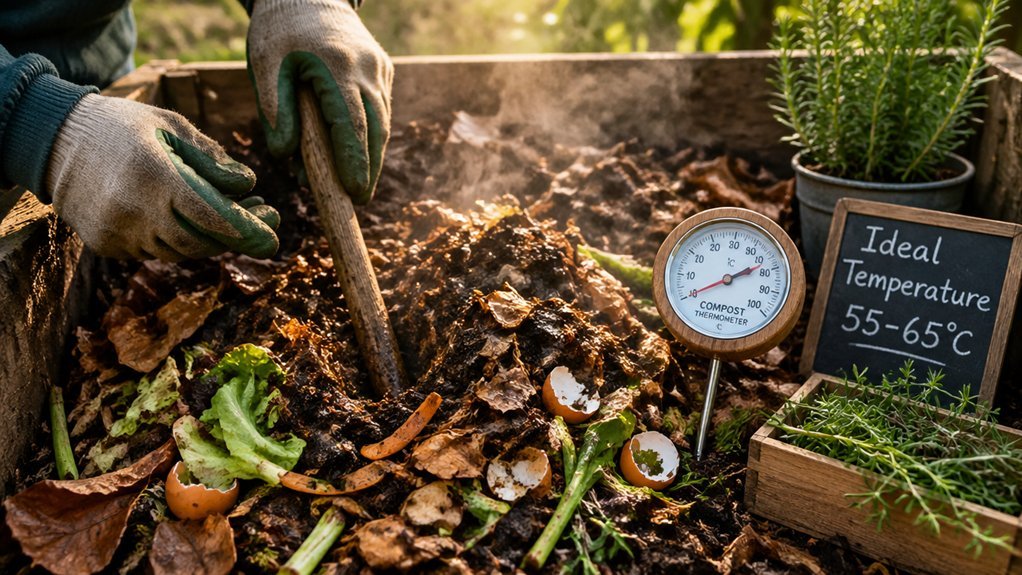
You can feel the heat by pushing a long tool into the pile and noting where warmth radiates, then use a long‑probe thermometer to record core temperatures at several spots. Try the tomato‑stake trick: drive a stake in, insert a probe, and wait thirty minutes for an interior reading. Observe steam or a glossy crust on the surface, and do a quick warm‑hand test a hand hand inches above the pile. Keep daily gradient logs to spot trends, and if you keep going you’ll discover even more practical tips.
Feel the Compost Temperature: Simple Tactile Checks
Wondering how hot your compost really is? You can gauge temperature without gadgets by probing the pile with a long tool. Push the stick deep until you reach the interior, then feel for warmth that radiates from the core, not just the surface. Move the probe to several spots, varying depth, because hot pockets and temperature gradients are common. Record each sensation, noting where the heat feels strongest.
In a well‑managed pile, you’ll notice a steady rise to roughly 40–50 °C (104–122 °F) within two to three days. By comparing the hottest locations over time, you’ll see if microbial activity stays high, indicating rapid decomposition. This tactile method keeps you connected to your compost’s health.
Insert a Long‑Probe Thermometer for Accurate Readings
How can you be sure you’re measuring the true heat of your compost? Grab a long‑probe thermometer that reaches the pile’s core and push it deep, not just on the surface. Insert the probe from several spots—top, side, and interior—to capture temperature gradients. Leave it in place until the reading steadies, then jot down the value for an accurate snapshot. Rotate the compost, repeat the measurement, and compare results to spot hot zones, often two‑thirds up in well‑aerated piles. Choose a durable, sufficiently long probe so you can reach the center without breaking it. By avoiding surface‑only checks and mapping the hottest locations, you’ll understand heat distribution and keep your compost thriving. Additionally, ensure the probe design features a reinforced head and a robust handle to withstand repeated insertion and removal long‑probe design.
Try the Tomato Stake Trick for DIY Compost Temperature
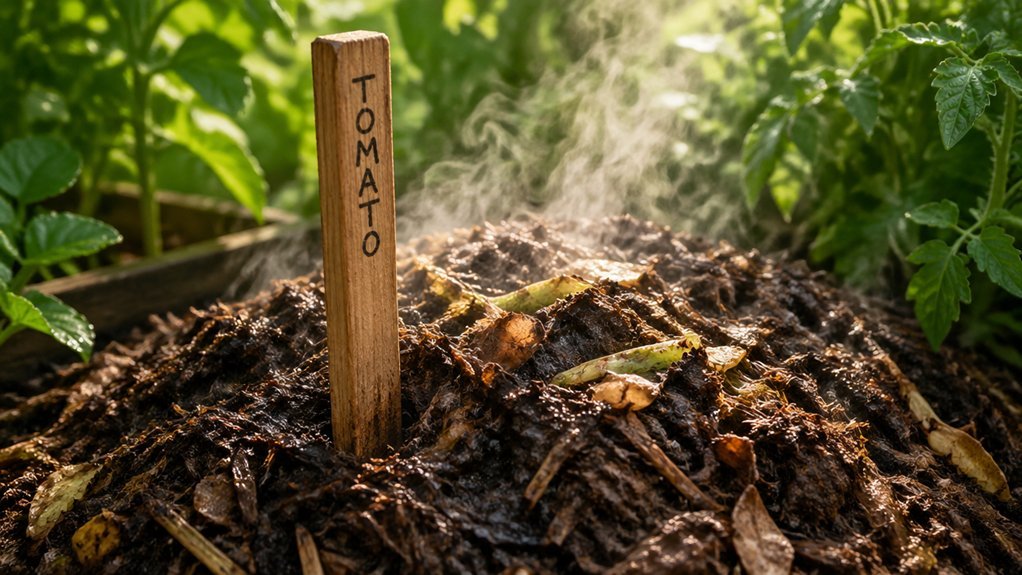
You’ll poke a hole in the pile and jam a cheap outdoor thermocouple or compost thermometer into the spot, then wait about thirty minutes for the reading to settle. Once the temperature stabilizes, move the probe to other locations and depths to map out the hottest pockets. This simple tomato‑stake placement lets you quickly gauge temperature gradients without fancy equipment. Keep in mind that using a compost thermometer with a stainless steel probe helps ensure durability in outdoor settings durable thermometers and provides more consistent readings over time.
Tomato Stake Placement
Curious about a quick, low‑tech way to monitor compost heat? You can use a tomato stake to create a reliable access point for your thermometer.
First, drive the stake into the pile at a spot where moisture is moderate, avoiding overly wet or dry zones. Then push the outdoor thermometer’s probe through the stake until it reaches the interior, not just the surface.
Take readings at several depths, moving the stake each time to map temperature gradients. Leave the probe in place for at least thirty minutes so it equilibrates, then record the stable temperature before relocating. Reading stability helps ensure you’re capturing an accurate interior temperature rather than a surface reading.
Reading Stabilized Temperatures
After placing the tomato stake, insert the thermometer’s probe through the hole and let it sit until the reading steadies. You’ll then record the temperature, but don’t stop at one spot. Move the probe to several depths—top, middle, and near the base—to map the interior heat. Look for 40–50 °C (104–122 °F) as the sweet spot that tells you microbes are thriving and moisture and nitrogen are balanced. Keep the probe in place for at least thirty minutes before noting the value; this stabilization period eliminates spikes caused by recent turning. By repeating the process across the pile, you’ll spot temperature gradients, pinpoint the hottest zones, and track how the compost evolves over days. This systematic approach gives you reliable data without fancy equipment Best Value.
Watch for Steam and Moisture: Visual Signs of Heat
Ever wonder how a compost pile tells you it’s heating up? Look for steam drifting from the top; that vapor means the interior has hit thermophilic temperatures (40‑50 °C) and moisture is evaporating. When you see a thin fog or a glossy, moist crust after turning, the heat is actively breaking down organic matter. Dark, damp patches inside the heap signal thriving microbes and localized warmth. A steady rise of steam shows the pile is aerated and hot, while occasional puddles or leachate on the surface suggest too much moisture, which can cool the heap and stall aerobic activity. Keep an eye on these visual cues to gauge whether your compost is staying hot enough for efficient decomposition.
Take Gradient Readings to Locate the Hottest Spot
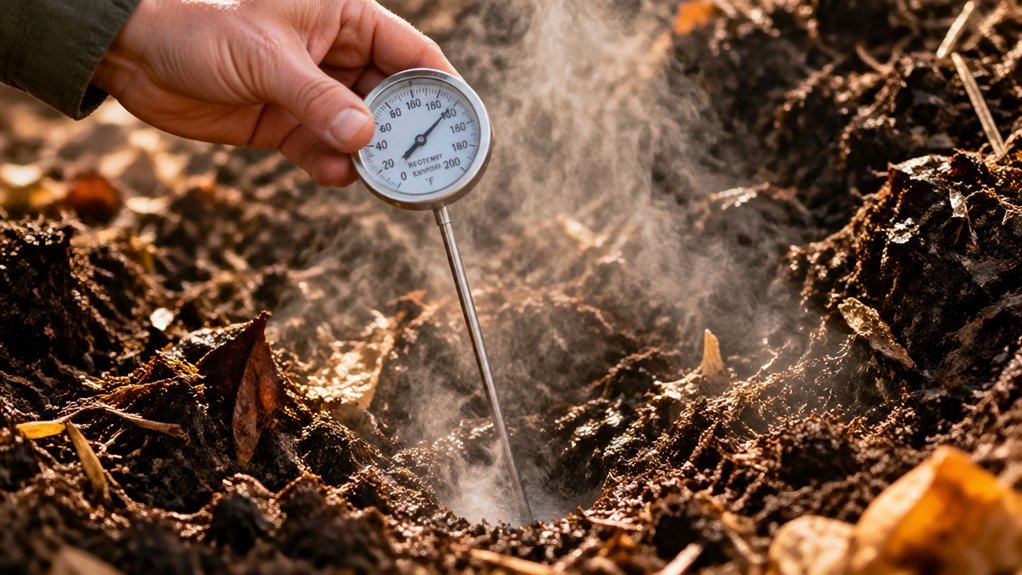
Seeing steam rise tells you the pile’s heating, but pinpointing where the heat is strongest requires a temperature gradient map. You’ll need a long probe or digital thermometer that can reach the compost’s interior. Insert it deep, wait until the reading steadies, note the temperature, then move to a new spot—both horizontally and vertically. Record each measurement, then compare the gradient readings. Hotter pockets often sit two‑thirds up from the bottom, especially with bottom air intake, so focus on that zone. Plot the numbers over several days; a stable 40–50 °C (104–122 °F) spot signals active microbes. By mapping vertical and horizontal gradients, you’ll identify the hottest region and understand airflow patterns that drive the pile’s heat. Gradient readings can guide you in adjusting aeration to sustain warmth and microbial activity.
Perform the Warm‑Hand Test for Quick Temperature Check
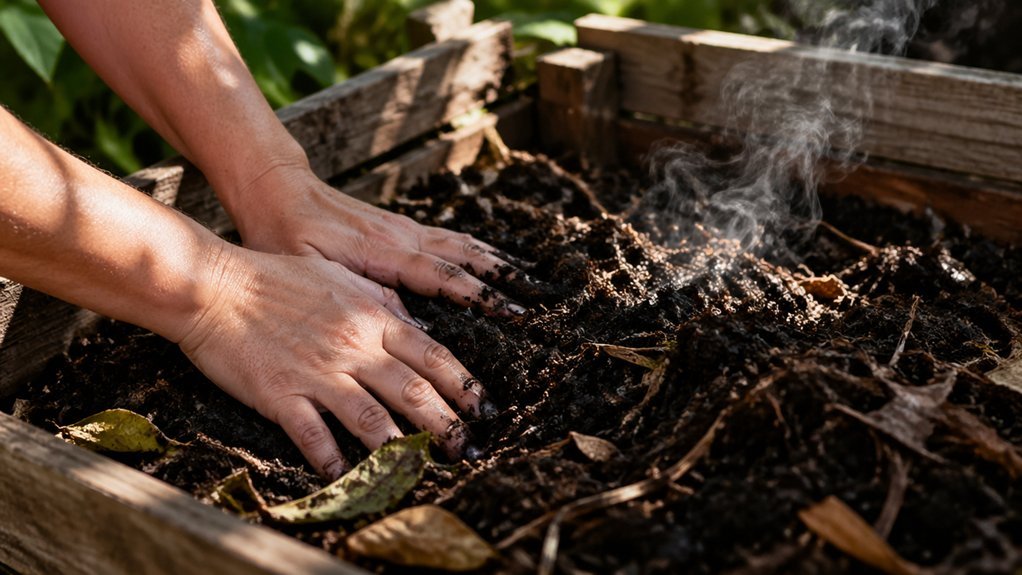
You can feel the compost’s heat by slipping a gloved hand onto the surface for a quick pocket test, noticing any noticeable warmth without touching the core. This immediate temperature feel tells you whether microbial activity is strong enough to generate heat. When in doubt, repeat the test in multiple spots to compare warm and cooler areas and gauge overall activity. temperature balance
Feel Hand Warmth
A quick way to gauge compost activity is the warm‑hand test: hold the back of your hand or palm about 6–12 inches from the pile and notice whether the air feels noticeably warmer than the surrounding environment. You’ll sense a gentle rise in temperature that signals microbial heat, not just surface coolness. Moving your hand around the edges and middle helps you map overall warmth and spot hot spots that need turning.
- Position your hand 6–12 inches from the pile, keeping it steady.
- Scan multiple locations—top, sides, and middle—to detect consistent warmth.
- Compare the felt heat to ambient air; if it’s noticeably warmer, the compost is active.
Use this feel‑hand test as a fast check before pulling out a thermometer for exact readings.
Quick Pocket Test
Wondering how to check compost heat without a thermometer? You can use the quick pocket test, also called the warm‑hand test, by feeling the pile with a gloved hand.
Gently press a finger against the surface, then move deeper, probing several spots at different depths. The inner sections should feel noticeably warm to hot, while the outer pockets stay cooler. That contrast signals active thermophilic activity.
Keep your hand away from the hottest zones—just hover close enough to sense the heat. This method gives you a rapid, qualitative snapshot between formal readings, helping you decide whether to turn the pile or add moisture. It’s fast, inexpensive, and perfect for everyday monitoring. Azomite amendments can also support mineral balance in soils as part of a broader compost and soil health strategy minerals and soil remineralization.
Immediate Temperature Feel
Is the compost warm enough to signal active microbial heating? You can gauge that instantly with the warm‑hand test, a quick, tool‑free way to feel heat and infer how the pile’s moisture levels are holding up. Hold your hand 6–8 inches above the surface; if it feels noticeably warmer than your skin (around 98–100 °F), microbes are active and the pile is generating heat. Use this as a rapid screen between thermometer checks, but remember ambient air and pile size can affect perception. Pair the feel test with regular moisture checks to keep the balance right.
- Raise your hand to the pile’s top.
- Sense the temperature difference.
- Note whether it exceeds your skin temperature.
Log Temperature Trends to Track Compost Heat Over Time
Ever wondered how to see your compost’s health at a glance? You can log temperature trends by taking readings at the top, sides, and interior of the pile each day. Plot those numbers on a simple graph; the curve will reveal how heat production mirrors microbial activity and moisture shifts.
Log daily top, side, and interior temperatures; plot them to instantly gauge compost activity.
When you notice a steady rise to 40‑50 °C within two to three days, you’ve hit the thermophilic sweet spot. A plateau means decomposition continues, while a gradual drop signals waning activity.
Pay special attention to deeper interior zones—especially two‑thirds up in piles with bottom‑entry air—because hotter readings there show how aeration and pile structure trap heat. By comparing multiple depths over weeks, you’ll spot gradients, identify the most active pockets, and adjust moisture or turning to keep the process humming.
This systematic logging turns raw numbers into a clear, actionable picture of compost health.
Frequently Asked Questions
How to Check Compost Temperature?
You check compost temperature by inserting a sturdy thermometer deep into the pile, waiting for a stable reading, then taking multiple measurements at different spots and depths to spot the hottest zones.
What Is a Natural Accelerator for Compost?
You accelerate compost naturally by balancing carbon‑to‑nitrogen, keeping moisture around 50‑65%, ensuring plenty of oxygen, and maintaining a pile at least three feet each side so thermophilic microbes can thrive.
Do Potato Peelings in Compost Attract Rats?
Yes, if you leave peeled potatoes exposed, rats will sniff them out. Bury or chop the peels, keep the pile covered, and turn regularly to deter rodents and maintain healthy compost.
Can I Put Toilet Paper Rolls in My Compost?
Yes, you can add plain toilet‑paper rolls to your compost. Tear them into small pieces, avoid colored inks or glue, and mix with greens for balanced carbon, moisture, and faster decomposition.
In Summary
By feeling, probing, and watching your pile, you’ll quickly learn where the heat’s strongest and how it changes. Use a thermometer for precision, the tomato‑stake trick for a DIY gauge, and steam or moisture as visual cues. Take gradient readings to pinpoint the hottest spot, and the warm‑hand test for a fast check. Keep a log, spot trends, and you’ll keep your compost humming efficiently all season.